

30 Seconds
The watch industry has no shortage of ideas—or asking prices. MB&F revives its original Legacy Machine with everyday durability, Fortis lights up the Novonaut, and Jaquet Droz turns a unique watch into a canvas for contemporary art. Our features visit Swatch’s factories, explore French watchmaking’s racing connections, and examine Vacheron Constantin’s vintage treasures. But enthusiasm isn’t automatically translating into transactions: yesterday’s Bovet stopped at $35,500 against a $73,995 reserve, while today’s Losing Time quartet finished 55.8% below combined asking prices. Tonight, a blue-dial 2023 Patek Philippe Nautilus Travel Time Chronograph tests bidder appetite at 8:15 p.m. EDT.
Time Graphing Today’s Watch Universe
Plenty of Attention. Where Are the Buyers?
There are two watch markets running through today’s issue. In one, the machinery of enthusiasm is operating beautifully. New watches arrive with brighter dials, cleverer engineering, more unusual materials, and increasingly elaborate reasons to want them. In the other, sellers put watches in front of actual bidders and discover that admiration has a spending limit. The first market produces headlines. The second produces the numbers at the bottom of this newsletter.
Start with our look at the world’s leading watch influencers. Follower counts and engagement rates tell brands something about their ability to attract attention. They tell us much less about how many people will commit money at a particular price. A collector can watch the video, save the photograph, attend the event, and still decline to buy. Somewhere along the way, the industry became very good at counting expressions of interest. The auction room remains stubbornly interested in expressions of payment.
None of that diminishes the watches themselves. The MB&F LM1 EVO is an example of a manufacturer giving collectors a substantive reason to look again: a familiar mechanical spectacle reworked for more practical use. Fortis’s fully luminous Novonaut makes visibility part of the attraction. At the other end of the price spectrum, the Sternglas Zirkel X offers a considered design for $399. Creativity is alive at several price levels. Whether demand will support every price attached to it is a separate question.
That distinction becomes difficult to ignore in our Losing Time section below. Across 44 failed lots reviewed by BuyingTime over roughly the past two weeks, including one desk clock, asking prices totaled $1,620,914. Final bids amounted to $853,671. That is a $767,243 disagreement, or 47.3% below the combined asks. Twenty-four of those lots failed to attract even half the requested money, and the median individual shortfall was 51.4%. Seller confidence, apparently, remains available without a production limit.
Today’s four selections finished 55.8% below their combined asking prices, following another group at 55.2%. Earlier selections produced gaps of 62.9% and 66.4%. These are persistent, substantial disconnects across repeated groups and multiple brands. They are not new records every day, and they do not form a neatly worsening daily sequence. They also represent a selection of failures, so they cannot establish the overall auction failure rate or measure how many bidders have left the market. But they deserve more attention than a shrug about optimistic sellers.
My own experience following Grailzee and Bezel suggests fewer bidders participating and less willingness among those remaining to stretch. That is an observation from watching (and participating) in these platforms, rather than a comprehensive market census. Combined with the repeated shortfalls, however, it raises a serious possibility: the secondary market may be weakening more sharply at the point of sale than headline price measures suggest. A watch can retain an impressive estimated value while becoming considerably harder to sell. Try paying an invoice with the estimate.
WatchCharts’ methodology helps explain why those experiences can coexist. It uses known transaction prices, but substitutes the last asking price when the transaction price is unavailable and may supplement thin data with unsold listings. Its weighted 30-day window can also lag changing conditions. That does not make the index useless. It means a reassuring price line cannot, by itself, answer the seller’s immediate question: how much money will somebody actually put on the table today?
Yesterday’s Bovet offered an uncomfortable demonstration. The Récital 30 reached $35,500 against a $73,995 reserve, missing by approximately 52%. Its mechanical ingenuity did not disappear when bidding stopped. Neither did the seller’s price suddenly become a completed-sale valuation. What disappeared was the possibility of a transaction at the terms offered. If enough owners eventually need to sell rather than merely hope to sell, that kind of standoff can become pressure on prices.
There are encouraging signs elsewhere in the issue, although they measure something different. Windup’s New York fair brings collectors and makers together around accessible discovery. HSNY’s leadership transition keeps education and the next generation of watchmakers in view. Vacheron Constantin’s concours finalists remind us that condition, scholarship, and historical significance remain reasons to care about watches regardless of the next resale quote.
I am increasingly concerned that we are seeing a buyer retreat in this auction segment, with the potential for a sharper correction if sellers begin accepting what bidders are offering. The evidence does not yet establish a market-wide crash. It does establish a recurring failure to convert expectations into transactions. Collectors can continue enjoying the extraordinary work in today’s issue while taking that warning seriously. The watches are still showing up. The money seems less committed.
-Michael Wolf
News

Horological Society of New York Names Gregory Brown Executive Director
The Horological Society of New York has appointed Gregory Brown executive director, succeeding Nicholas Manousos. A member of the society since 2016, Brown brings more than two decades of experience building businesses and nonprofit organizations, including his recent work as chief operating officer of Sailworks. His responsibilities span education, preservation, and the community programs that connect enthusiasts with the people who make and maintain their watches.
The appointment comes as HSNY continues putting substantial resources behind watchmaking’s future. The society recently awarded $450,000 in financial aid to students, schools, and independent watchmakers, while its 160th-anniversary gala raised $1.2 million. Brown inherits an institution whose influence increasingly extends from the lecture hall to the workbench.

Who Really Has Influence in the Watch World?
The largest watch audiences do not always produce the strongest audience response. A new examination of watch influencers places Khaled Mohammed Ebrahimi and Anish Bhatt among the leaders in Instagram reach, while smaller creators demonstrate that engagement can be considerably stronger without seven-figure follower counts. Established names such as Ben Clymer, Roman Sharf, and Wei Koh sit alongside voices including Justin Hast and Emily Marsden in an increasingly varied media landscape.
For watch brands, the useful question is what they want a partnership to accomplish. Broad exposure, sustained conversation, and credibility within a particular collecting niche require different strengths. A large audience may open the door, but relevance—and whether anyone is listening closely enough to act—determines what happens next.
Features
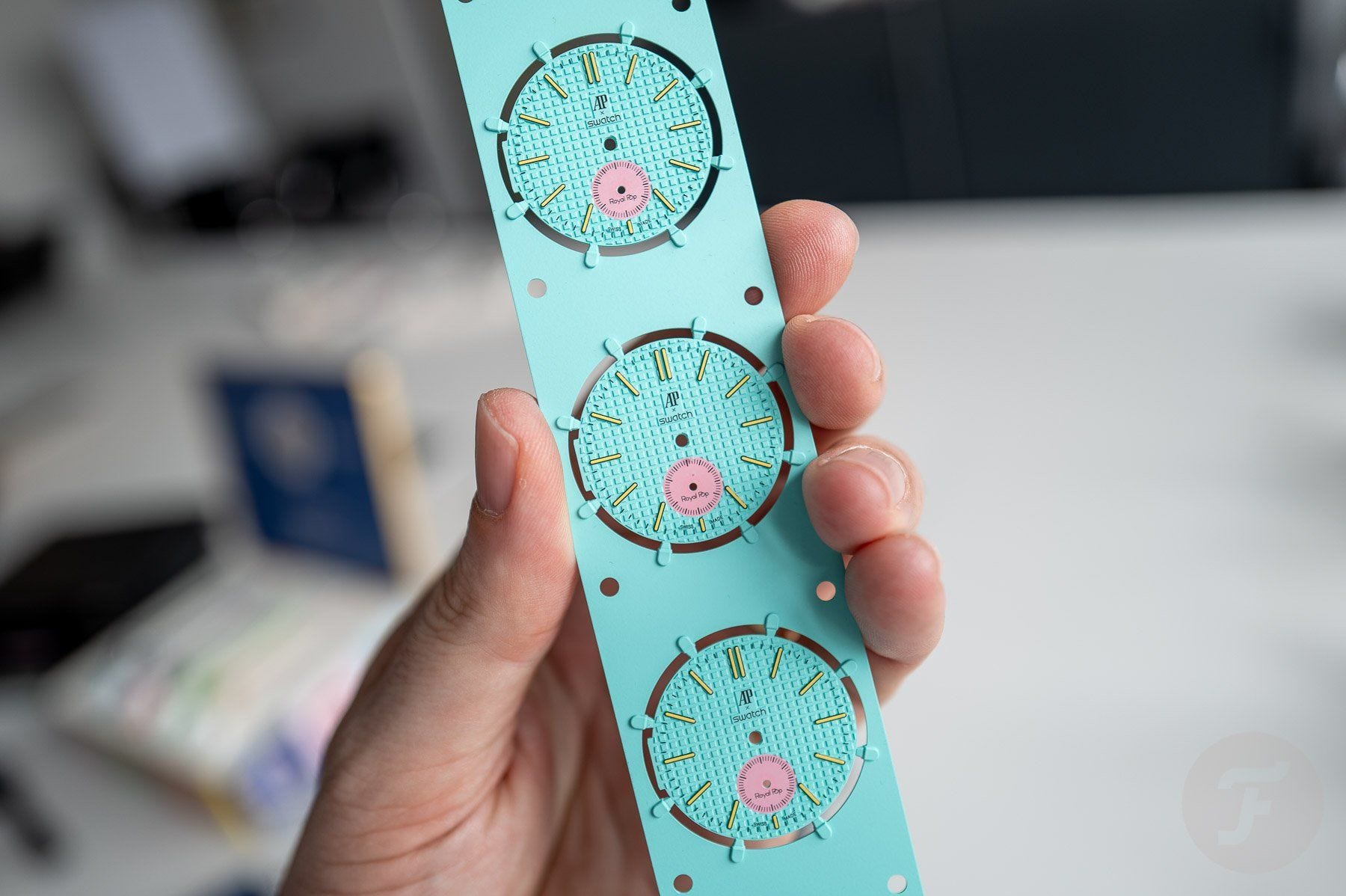
Inside Swatch’s Sistem51 and Bioceramic Factories
A visit to Swatch Group facilities in Boncourt and Grenchen reveals the industrial choreography behind products that can look deceptively simple in a shop window. Metal strips become movement components through stamping, cutting, and finishing, while assembly and laser regulation help turn the Sistem51 concept into repeatable production. The tour also follows the manufacturing of Bioceramic components and the contributions of specialist operations including ETA, Comadur, and Nivarox-FAR.
The appeal is seeing how much engineering supports an affordable, playful watch. Swatch’s collaborations and colorful releases command the public attention, but the factories provide the less glamorous foundations: material expertise, process control, and production at scale. Even a watch bought on impulse has a complicated journey before it reaches the counter.
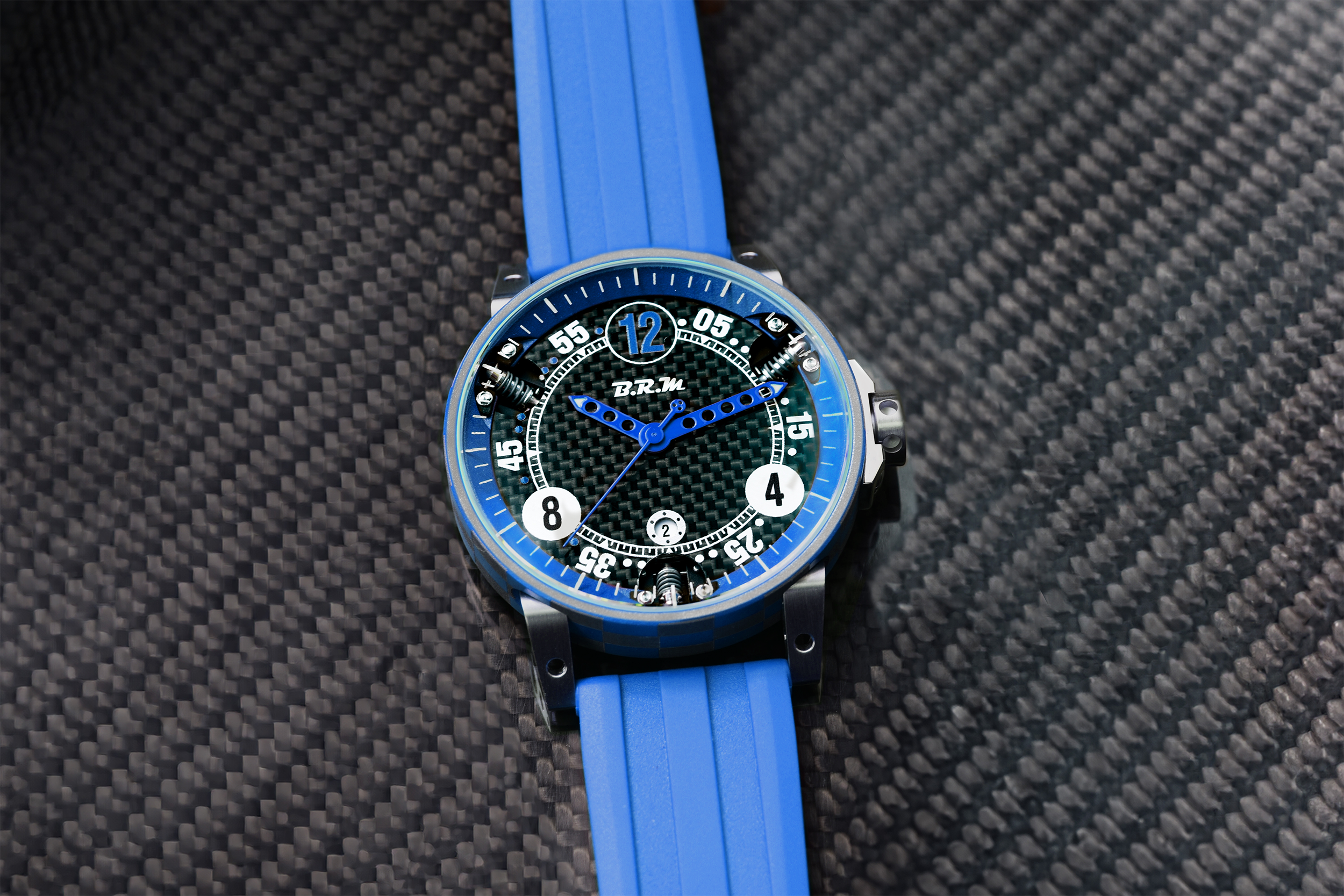
French Watchmakers Put Motorsport in the Driver’s Seat
French watchmaking’s relationship with racing extends well beyond adding a checkered flag to a dial. Reservoir, B.R.M Chronographes, Lorige, Depancel, Kelton, and Yema draw from instruments, engineering, materials, and the visual language of performance cars. Dashboard-inspired displays and lightweight construction offer different ways to translate an automotive obsession into something wearable.
Some of the most interesting connections begin with the material itself, including Lorige’s use of carbon brake components in watch cases. Others focus on legibility, shock resistance, or the emotional pull of a familiar racing era. Together, these makers show how a shared mechanical vocabulary can produce distinctly different watches rather than another interchangeable commemorative edition.
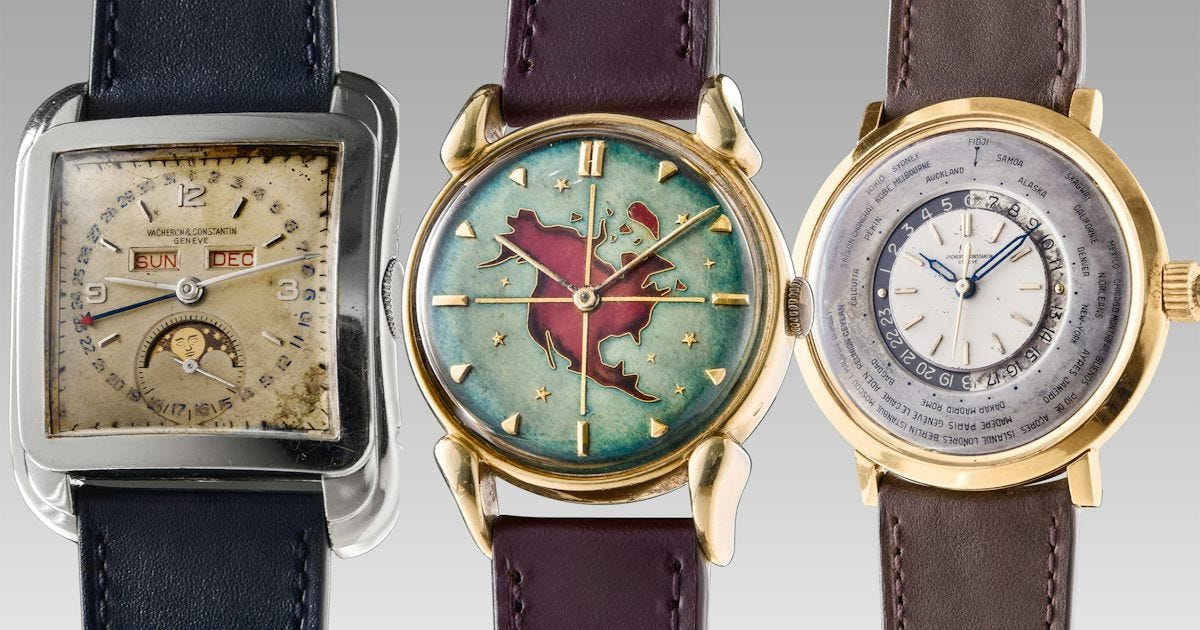
Vacheron Constantin and Phillips Select 34 Concours Finalists
Vacheron Constantin and Phillips have selected 34 finalists from 550 entries for the inaugural Concours D’Élégance Horlogère. The competition spans seven categories, including chronographs, artistic crafts, astronomical complications, design, and chiming mechanisms. The finalists will be displayed in Geneva from November 4–8, with awards presented November 10.
A fourteen-member jury evaluated authenticity, documentation, and condition, bringing the scrutiny of serious vintage collecting to the competition. Highlights include a platinum reference 6448 from 1962, the “Don Pancho” minute repeater, and rare reference 4764 triple calendars. The selection offers a reminder that Vacheron’s historical range is considerably broader than the handful of references that dominate contemporary collecting conversations.
New Watches
Converted dollar figures are approximate equivalents of the quoted overseas prices, rather than confirmed U.S. retail prices.
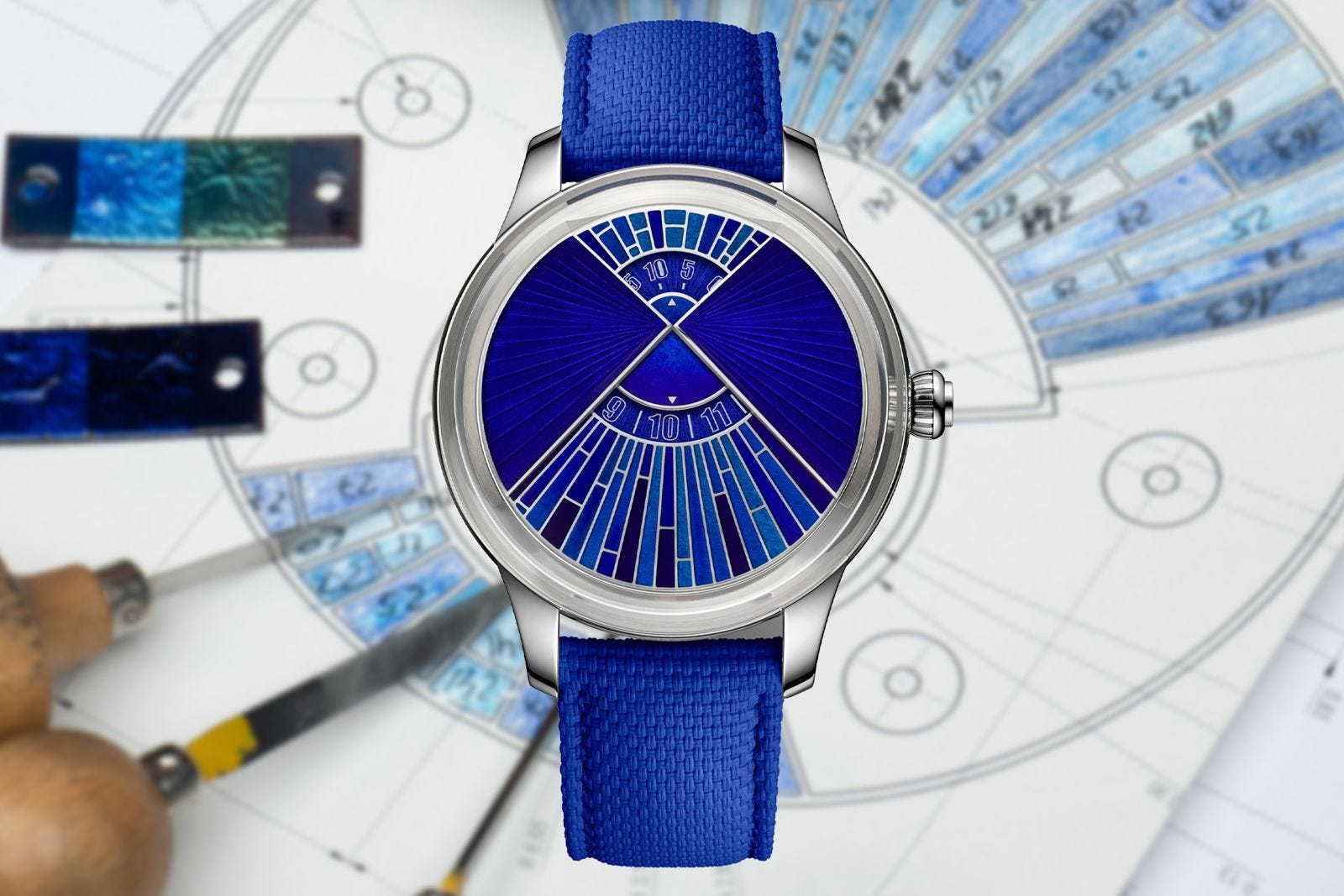
Jaquet Droz Creates a Sculptural Unique Piece for TimeForArt
Jaquet Droz’s Petite Heure Minute Les Volumes du Temps brings contemporary art and traditional enameling together in a unique watch created for TimeForArt. Designed with student artist Fiona Djukanovic, the sculptural display uses dragging hour and minute discs alongside grand feu, champlevé, and flinqué enamel techniques. A 41mm white-gold case houses the automatic JD2653.SI movement with a 68-hour power reserve. Scheduled for Phillips’ New York Watch Auction XV on December 5, the piece will support the Swiss Institute’s TimeForArt initiative. Auction estimate: approximately US$120,100–$180,200, converted from CHF100,000–150,000.
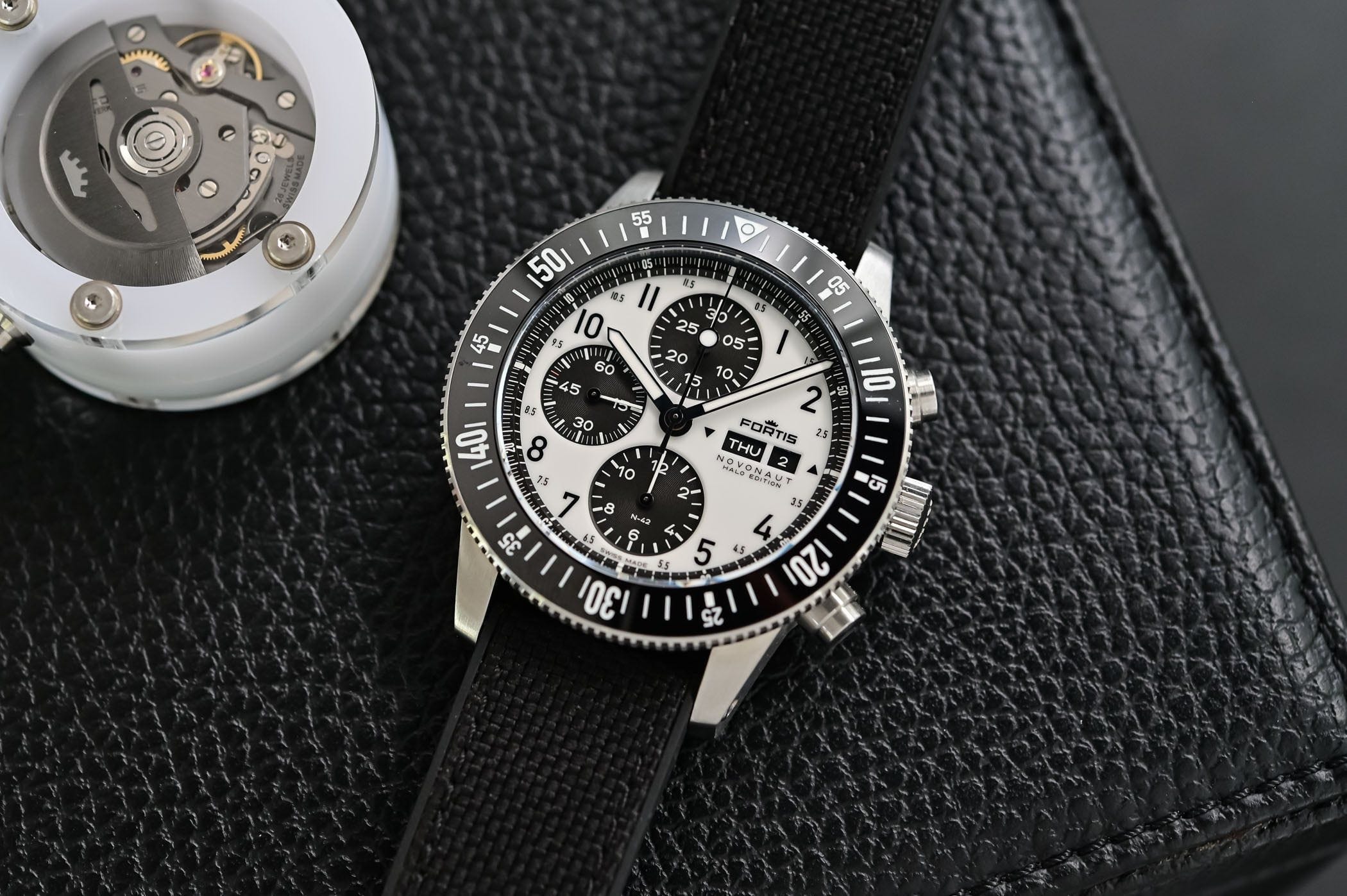
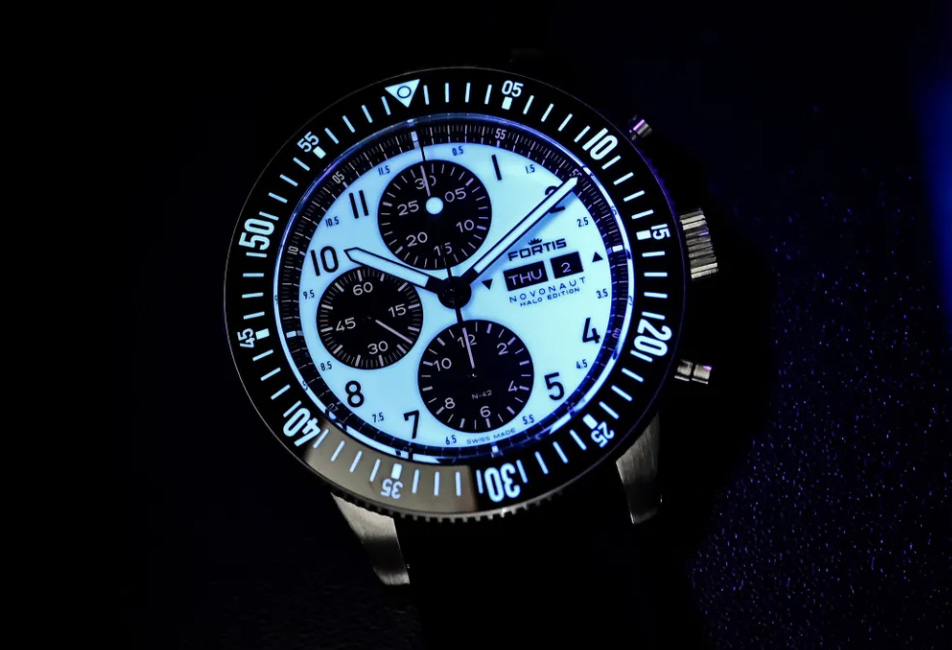
Fortis Novonaut N-42 Halo Makes the Entire Dial Glow
Fortis gives its Novonaut N-42 a dramatic nighttime identity with fully luminous Lumicast X1 dials and contrasting chronograph displays. Black, blue, and green variations pair ceramic bezel inserts with a 42mm recycled stainless-steel case and 200 meters of water resistance. The updated automatic Werk 17 TR movement brings a column-wheel chronograph, enhanced shock resistance, and a 70-hour power reserve. A textured strap completes a watch whose brightest design feature also has an obvious practical purpose. Price: US$5,950.
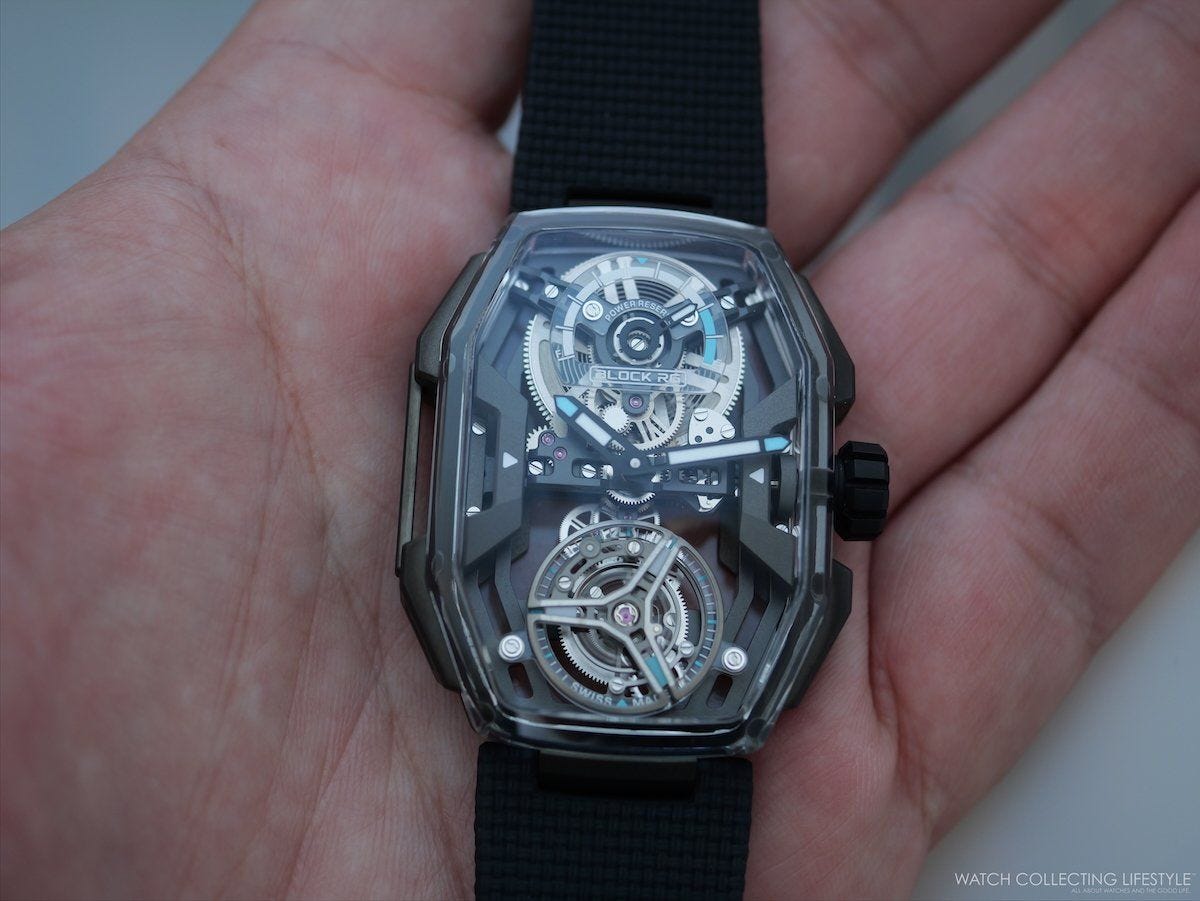
BLOCK RG Stealth Tourbillon Azure Blue Is Limited to Eight Pieces
BLOCK RG adds vivid blue accents to the faceted titanium architecture of its Stealth Tourbillon, creating an eight-piece Azure Blue edition. The skeletonized construction exposes the manually wound BLOCK01 calibre, including its tourbillon and power-reserve indication, while the case measures 46.7mm by 36.7mm and 13.9mm thick. A 96-hour reserve gives the movement four days of running time, and a black rubber strap keeps the presentation focused on the angular case and open mechanical display. This is an emphatically individual proposition, with both its production count and price aimed at a very narrow collecting audience. Price: approximately US$268,500, converted from €240,000.
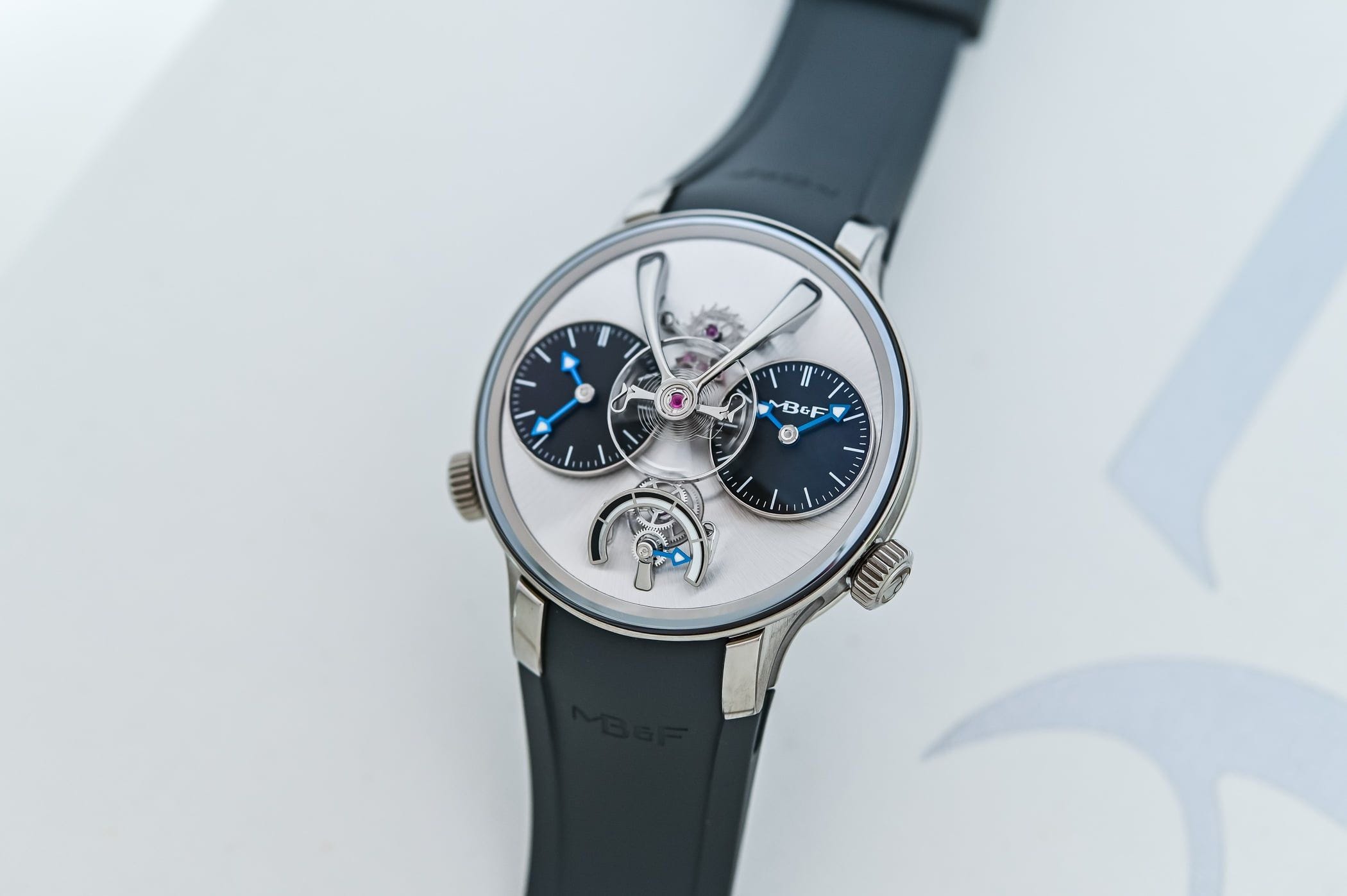
MB&F Brings Its Original Legacy Machine Back as the LM1 EVO
MB&F revisits the Legacy Machine that began the series in 2011, retaining its theatrical suspended balance and two independently adjustable time displays while making the watch more adaptable to everyday wear. The LM1 EVO introduces a 42mm case, a bezel-free sapphire presentation, a screw-down crown, and the FlexRing shock-absorption system, with water resistance increased to 80 meters. Its manually wound movement offers a 60-hour reserve, while a double hairspring, revised power-reserve display, and luminous hands extend the redesign beyond the case. Buyers can choose titanium or a rose-gold version limited to 33 pieces, both supplied with interchangeable rubber straps. Price: US$109,000 in titanium; US$137,000 in rose gold.
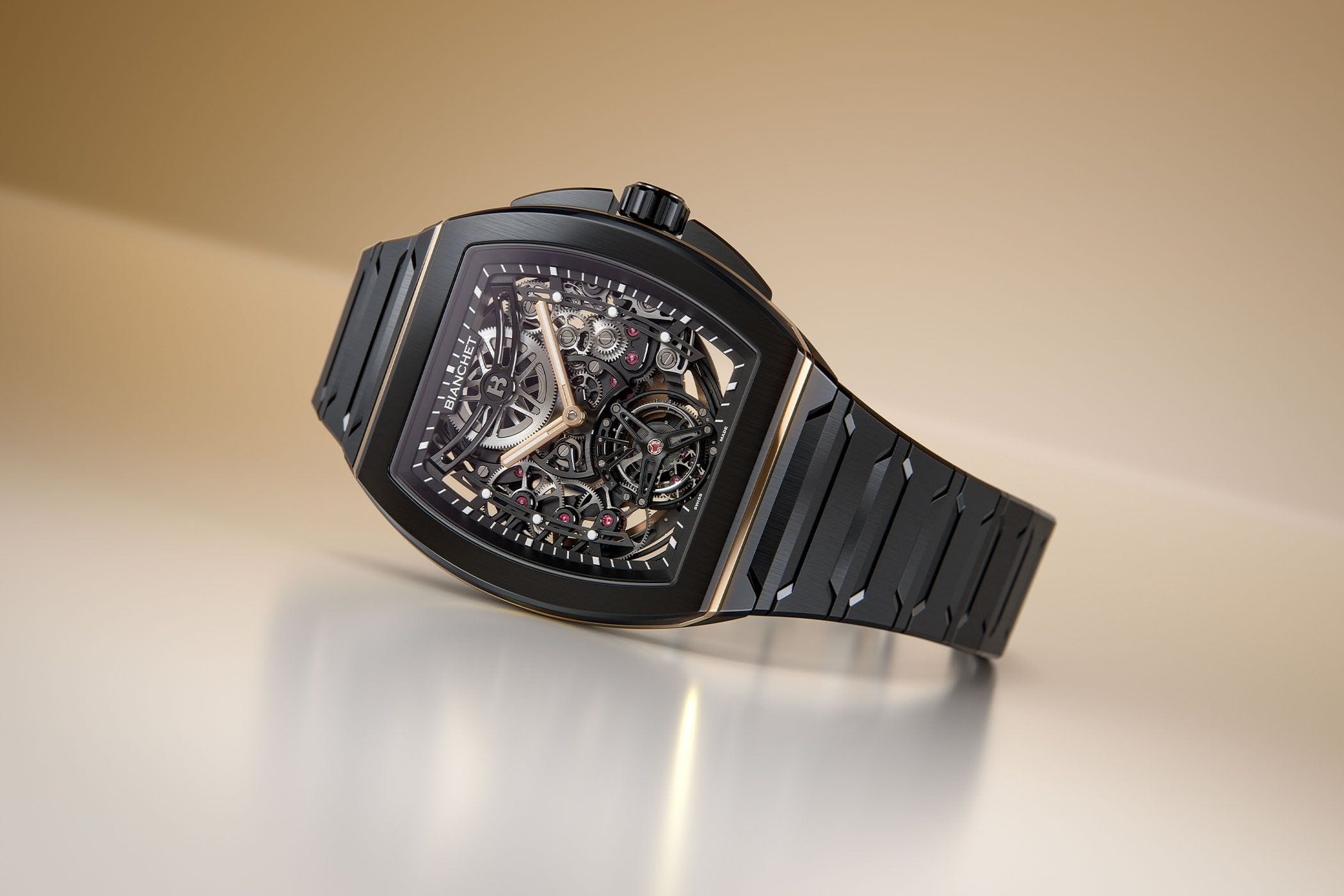
Bianchet Adds a Gold Accent to Its Black Ceramic UltraFino
Bianchet’s UltraFino Tonneau Black Ceramic and Gold places a narrow seam of 18K rose gold beneath the bezel, giving its dark ceramic construction a restrained flash of warmth. The case measures 40mm across, 47.5mm long, and just 8.9mm thick, with an integrated bracelet carrying the angular design around the wrist. Inside, the openworked UT01 automatic movement combines a flying tourbillon with a 60-hour power reserve, while rose-gold accents connect the mechanics visually to the case detail. An additional black rubber strap and quick-release system provide a second wearing option. Price: approximately US$96,700, converted from CHF80,500.
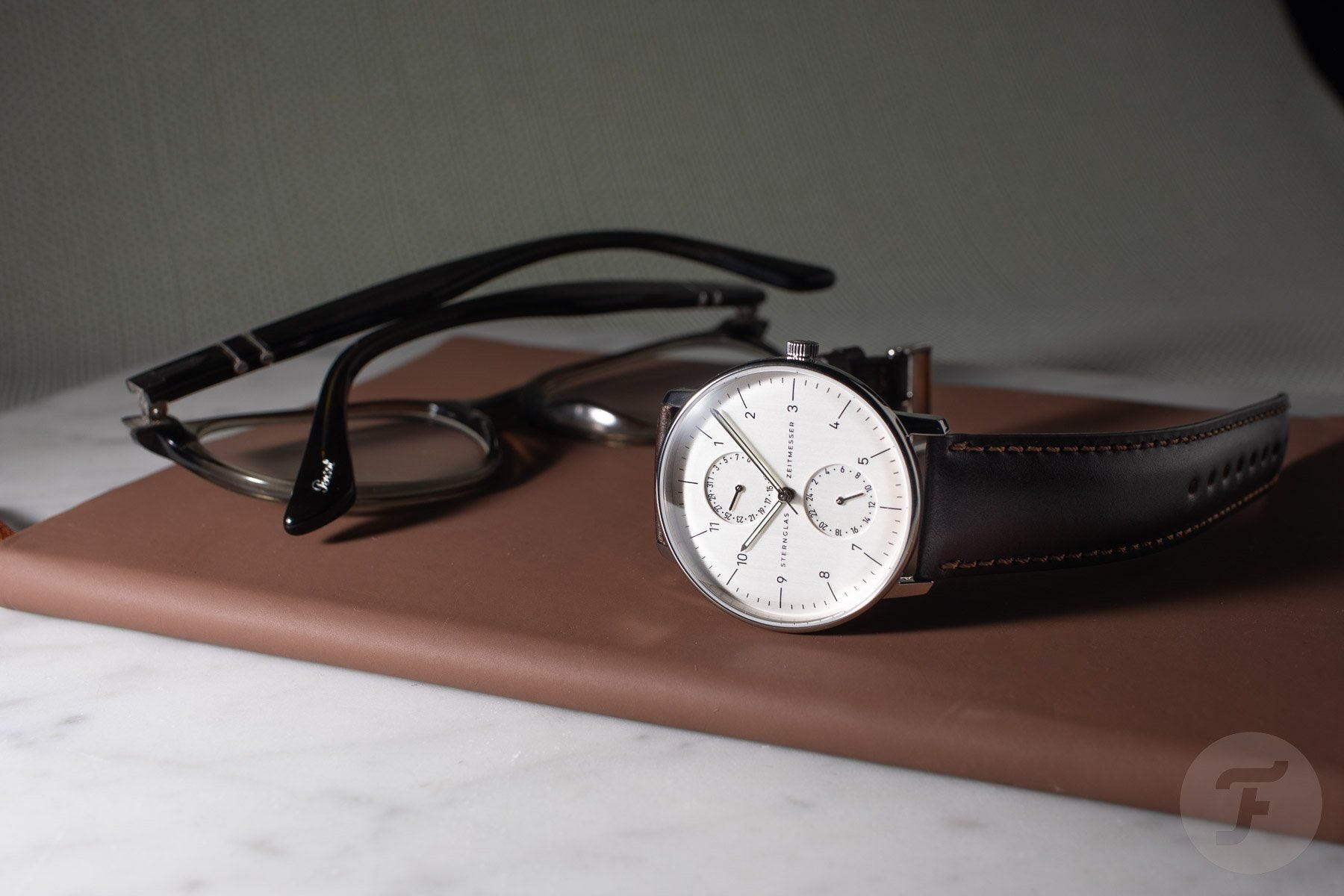
Sternglas Zirkel X Marks Ten Years With a Fresh Take on the Circle
The Sternglas Zirkel X celebrates the brand’s tenth anniversary with a design developed using feedback from 5,000 community members. Its 38mm stainless-steel case surrounds a vertically brushed silver dial with separate date and 24-hour displays, powered by a Miyota 6P23 quartz movement. A double-domed sapphire crystal and 50-meter water-resistance rating support everyday use, while the first 1,000 examples receive individually numbered anniversary casebacks. The design is deliberately restrained, although the supplied waxed leather strap reportedly demands some patience during break-in. Price: US$399.
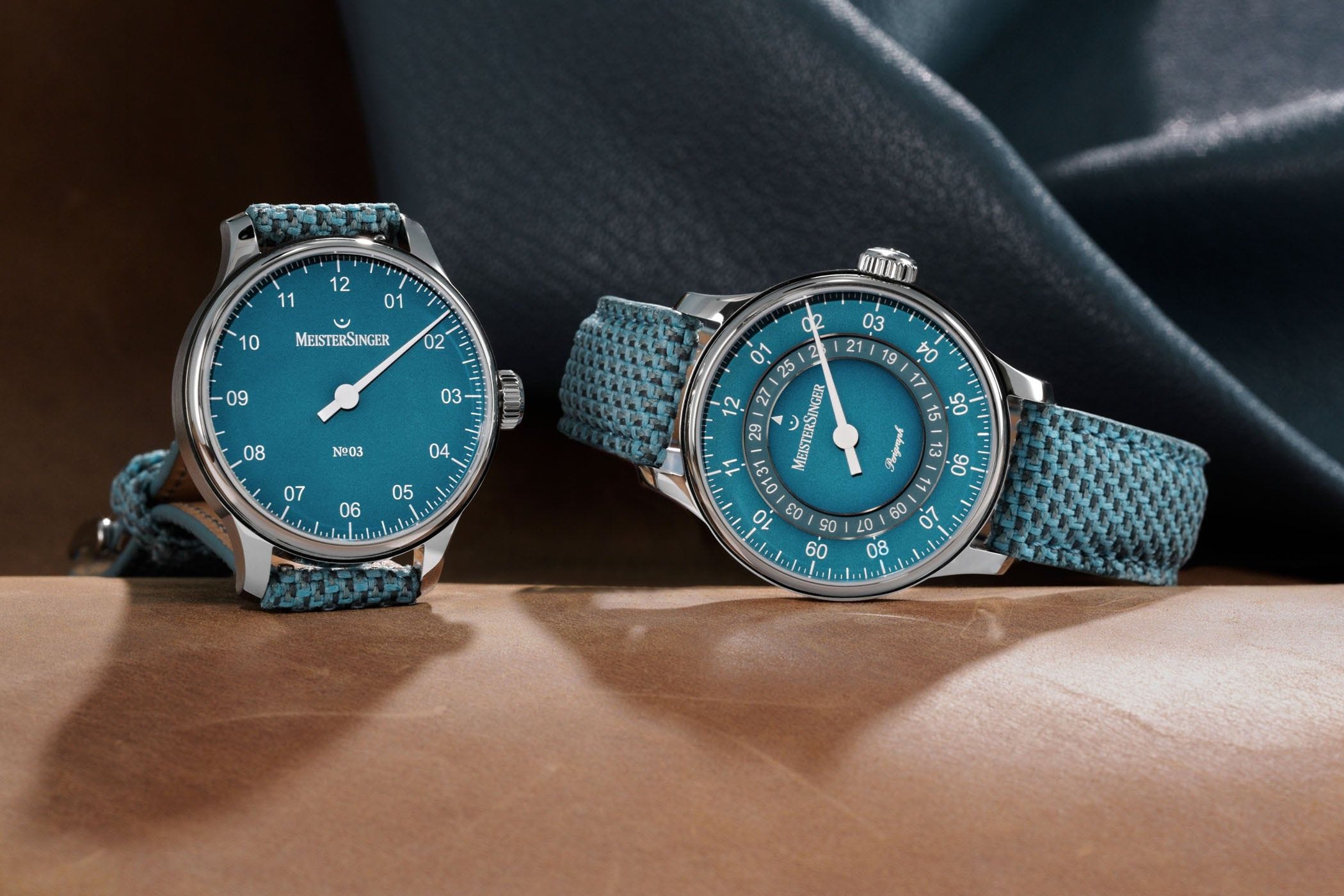
MeisterSinger Gives the No03 and Perigraph a Turquoise Detour
MeisterSinger brings turquoise dials to special editions of the No03 and Perigraph, adding a lively color to its deliberately unhurried approach to timekeeping. Both retain the brand’s single-hand display and automatic movement, while the Perigraph distinguishes itself with an exposed rotating date ring. Light-blue textile straps continue the dial’s color theme, with a mahogany-colored leather alternative offering a more traditional finish. These editions give familiar designs a different personality without abandoning the spacious layouts that make MeisterSinger recognizable. Price: approximately US$2,450 for the No03 and US$2,786 for the Perigraph, converted from €2,190 and €2,490.
Comparisons
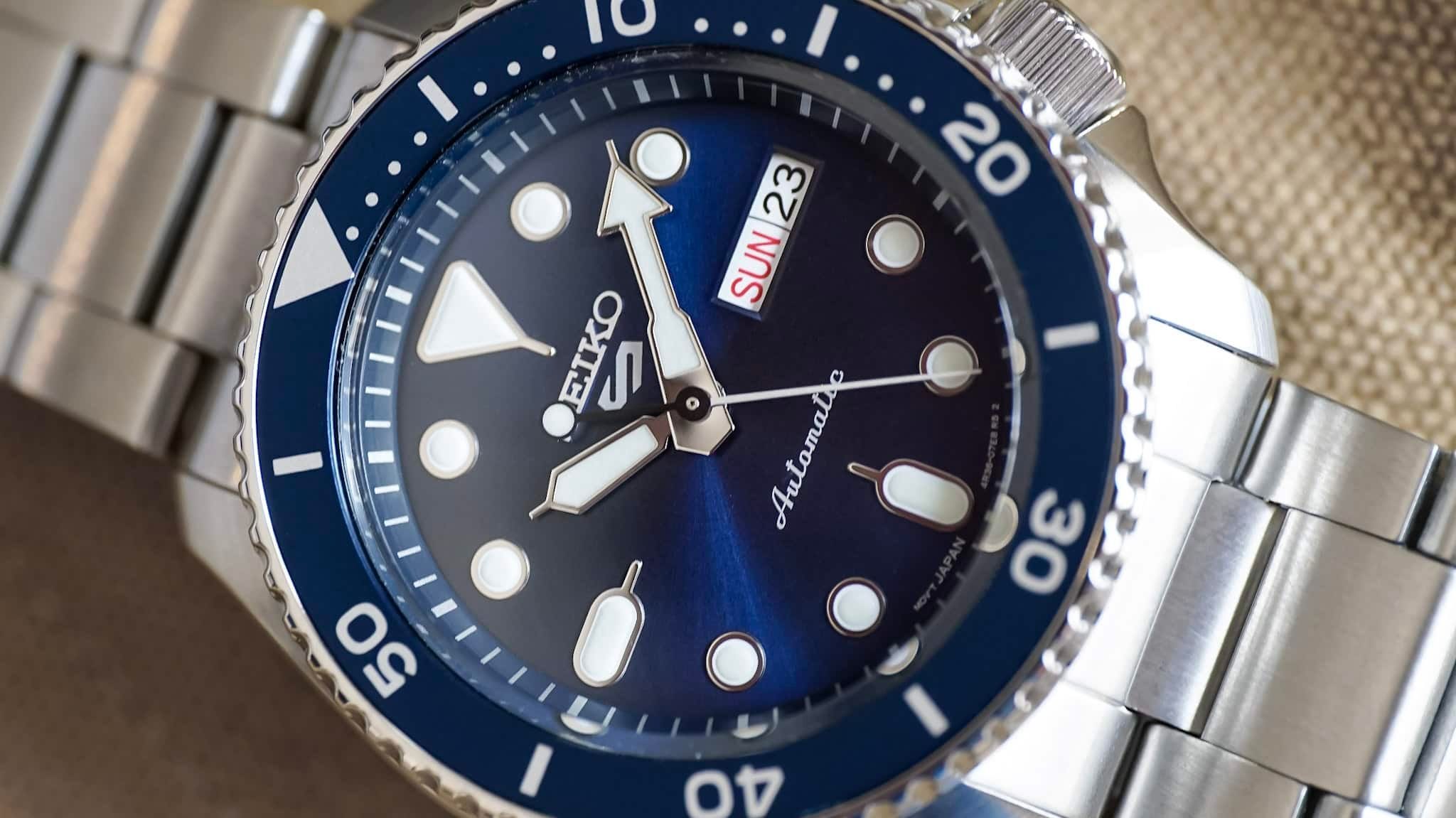
Seiko 5 Sports vs. Invicta Pro Diver: Two Routes Into Affordable Automatics
The Seiko 5 Sports SRPD51 and Invicta Pro Diver 8926OB approach the affordable automatic watch from different directions. Seiko offers its own recognizable case shape, a sunburst blue dial, and the dependable 4R36 movement, while Invicta delivers a more familiar Submariner-inspired silhouette around an NH35A automatic. The Seiko carries a 100-meter water-resistance rating; the Invicta advertises 200 meters.
The comparison favors Seiko as a versatile everyday choice with a stronger individual identity, while acknowledging shortcomings in bracelet fit and case size. Invicta’s appeal lies in how much mechanical watch it delivers for very little money, provided its branding and finishing compromises do not bother you. The decision ultimately comes down to which compromises matter more on your wrist.
Reviews
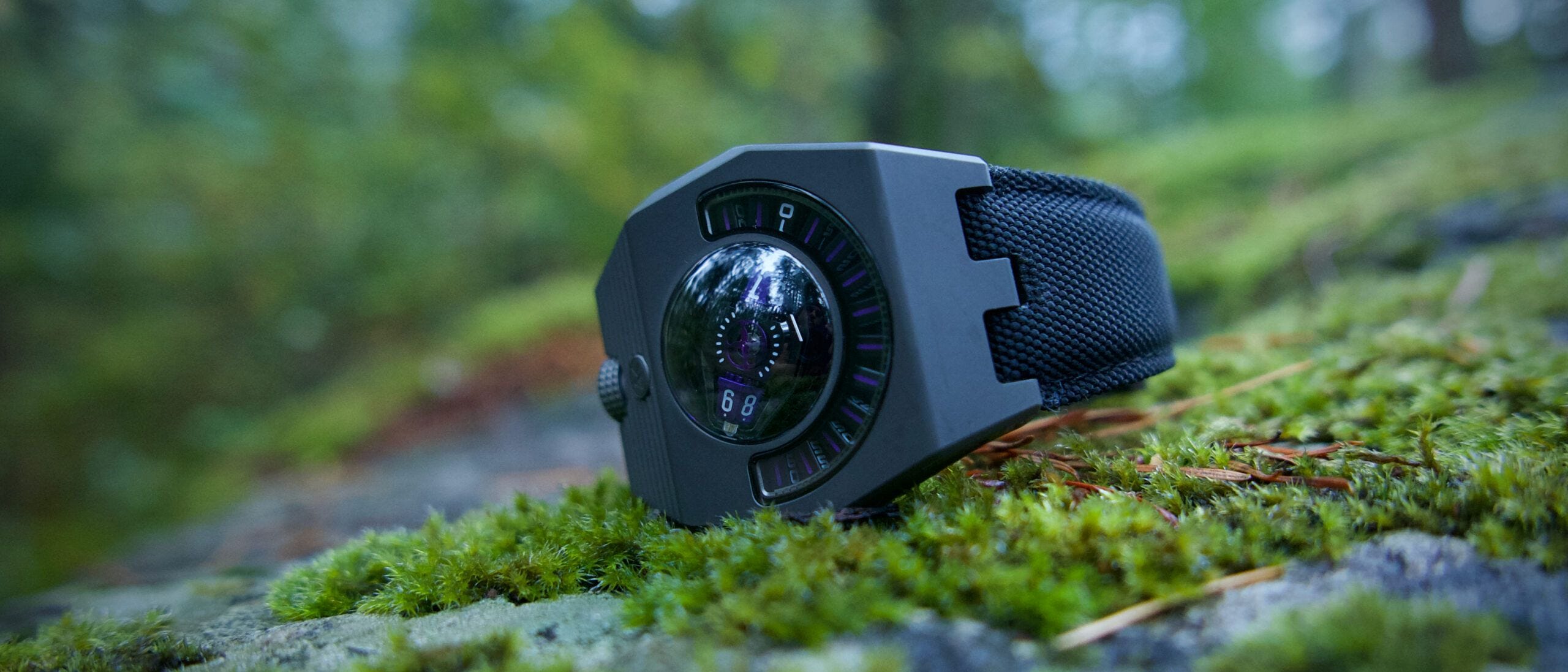
Atowak Manta-X Violet Purple Turns Timekeeping Into Mechanical Theater
Atowak’s Manta-X replaces the conventional hands-and-markers routine with a wandering-hours display built around its Hexa-Prism system. The changing indications create a miniature performance across a dark titanium case, with violet accents emphasizing the watch’s futuristic character. Despite its unconventional appearance, the underlying movement begins with a modified Sellita SW200, offering a 38-hour power reserve.
At approximately 74 grams and 42mm across, the watch aims to make its visual complexity wearable. The 30-meter water-resistance rating keeps expectations firmly away from diving, and the attraction is clearly the display rather than tool-watch credentials. Priced at US$3,799 and limited to 200 pieces per color, it offers collectors a relatively accessible route into unusual mechanical time displays.
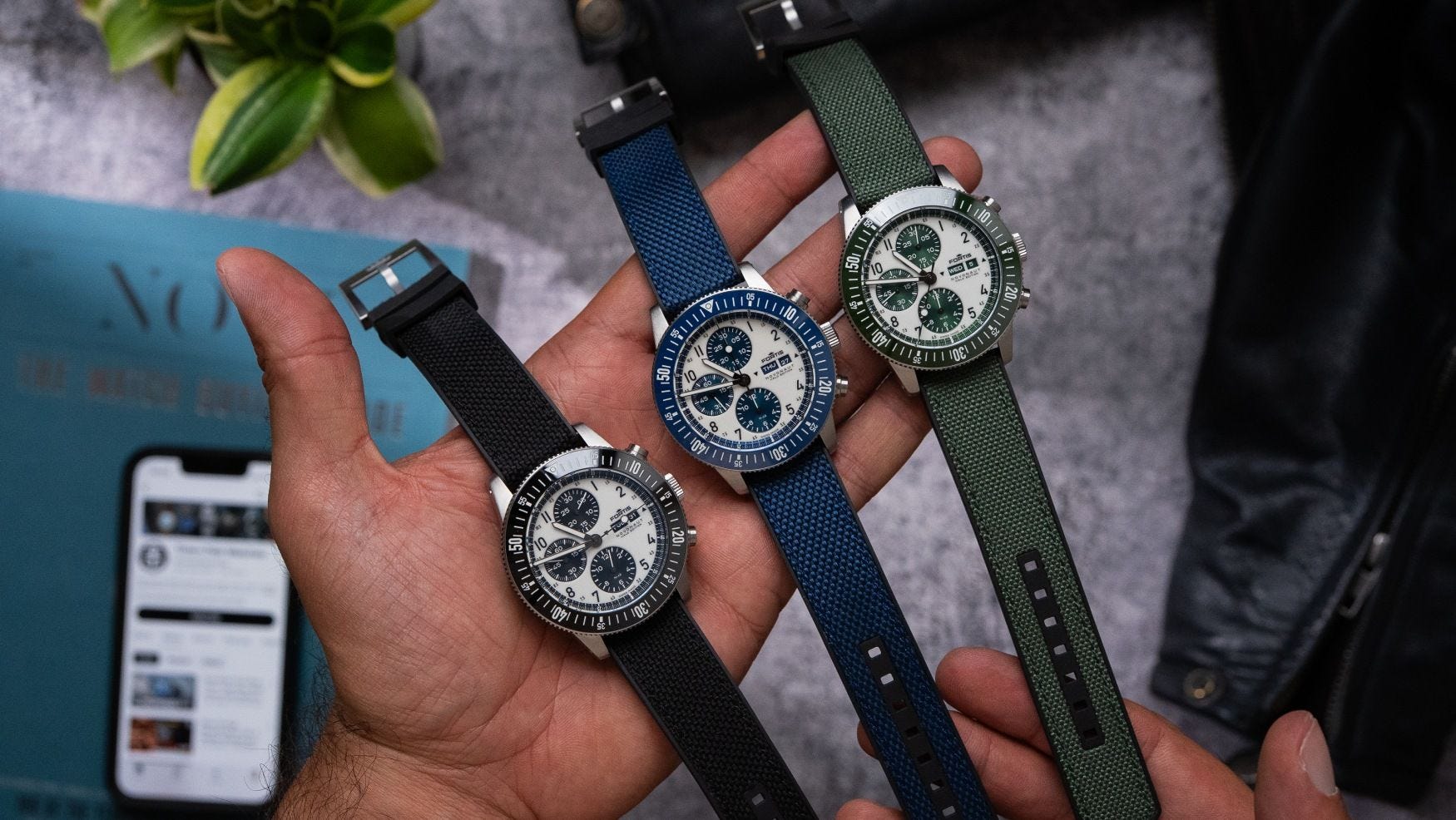
Hands-On: Fortis Gives the Novonaut a Glow-Up
The Novonaut Halo’s fully luminous dial is the immediate attraction, but the hands-on perspective examines how that spectacle works within a substantial sports chronograph. Contrasting subdials help organize the information, while the ceramic bezel and brushed steel case maintain the watch’s functional appearance. The result is a brighter personality without abandoning the Novonaut’s rugged proportions.
The updated movement’s 70-hour reserve and shock resistance reinforce that practical direction, as do the 200-meter water-resistance rating and textured strap. For anyone intrigued by the launch specifications, this closer look considers the watch as something to wear rather than simply photograph in the dark.
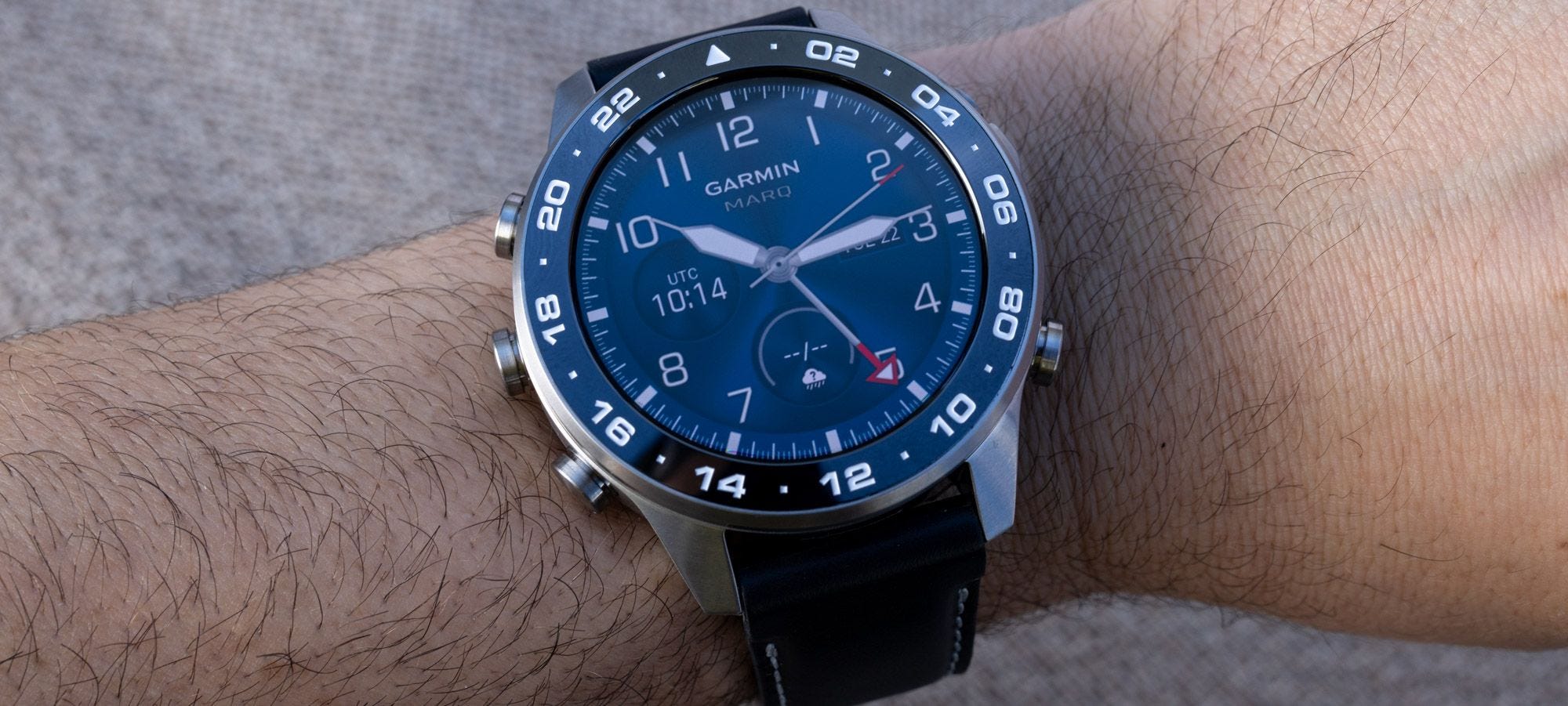
Garmin MARQ Gen 3 Brings Premium Materials to the Connected Tool Watch
Garmin’s third-generation MARQ collection combines titanium and ceramic construction with the company’s extensive navigation, training, and activity-tracking capabilities. Six versions—Adventurer, Athlete, Commander, Aviator, Diver, and Golfer—tailor the proposition to different pursuits. Larger AMOLED displays, extended battery life, and specialized functions make the collection an ambitious alternative for buyers who expect their wristwatch to do considerably more than tell the time.
The interesting question is how the premium materials and finish change the experience of wearing familiar Garmin technology. With prices ranging from US$2,500 to US$3,100, MARQ competes for discretionary spending that might otherwise go toward a mechanical sports watch. Its argument rests on the combination of physical refinement and daily utility.
Events
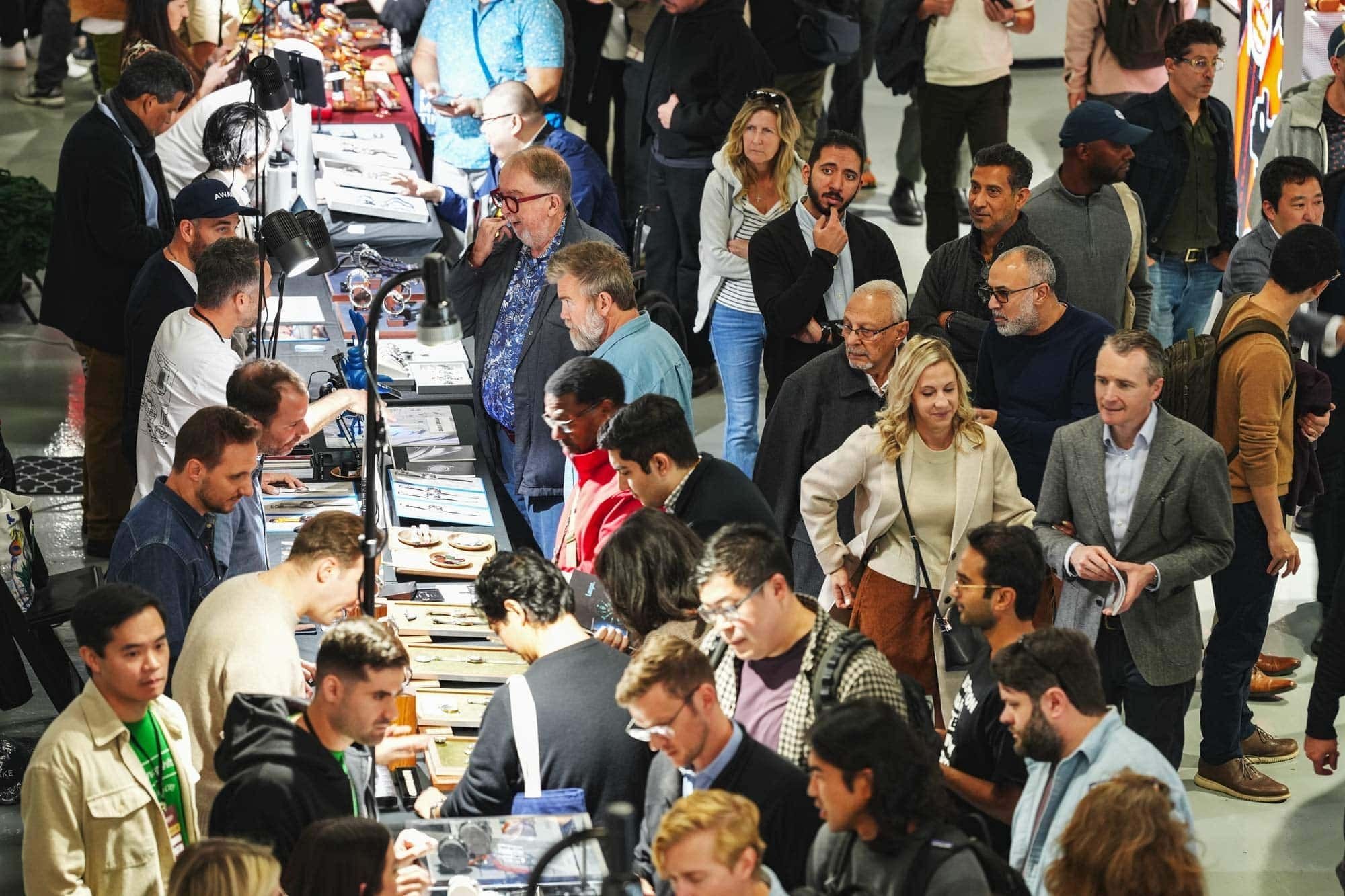
Windup Watch Fair Returns to New York This Weekend
The Windup Watch Fair takes over Center415 on Fifth Avenue from Friday, October 16, through Sunday, October 18, with free admission and a schedule built around discovery. New releases, brand installations, expanded exhibition space, and live programming give visitors plenty to explore beyond the display tables. Among the attractions are G-SHOCK’s “Breaking Ground” room and Bulova and Accutron’s “A Moment in Time” installation.
The weekend also includes podcasts, livestream auctions, screenings, watch evaluations, strap changes, and opportunities to meet the people behind participating brands. For collectors who spend most of their time looking at watches through a screen, the central benefit remains refreshingly straightforward: the chance to put them on.

Inhorgenta Adds a Dedicated Vintage Section for 2027
Inhorgenta will introduce a vintage, antique, and pre-owned jewelry and watch section in Hall B0 during its February 19–22, 2027 fair. The addition creates a dedicated setting for heritage pieces, bringing dealers and specialists together around collecting, provenance, and the continuing appeal of previously owned objects.
Participating dealers will be joined by experts offering valuations and assessments of authenticity and quality. The initiative recognizes that the secondary market has become a significant part of the industry’s public identity, with buyers increasingly interested in the history and condition of an object as well as its maker.
Videos
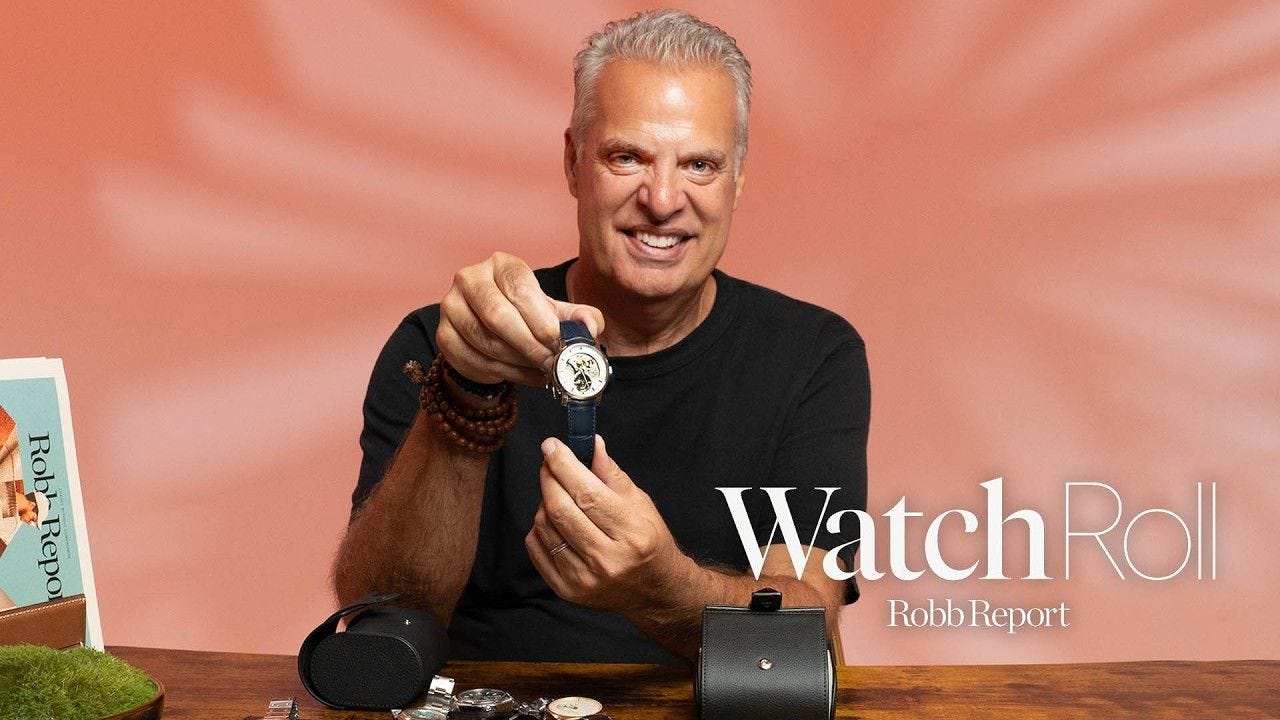
Eric Ripert Opens His Watch Roll
Chef Eric Ripert shares a collection that includes vintage Cartier, a blue-dial Rolex, and Vacheron Constantin watches. The appeal lies in the selections themselves and the opportunity to see how one collector’s taste connects pieces from different makers and periods. It is a useful reminder that a watch collection can express a consistent sensibility without repeating the same design.

Dual Time Podcast: TraxNYC, Scam Exposés, and the Business of Trust
Roman Sharf’s Dual Time conversation examines the relationship between publicly exposing scams and generating business. The episode’s premise is that demonstrating vigilance can build trust with customers in a market where confidence in the seller matters enormously. It also invites a broader question about the point at which consumer education, entertainment, and salesmanship become part of the same production.
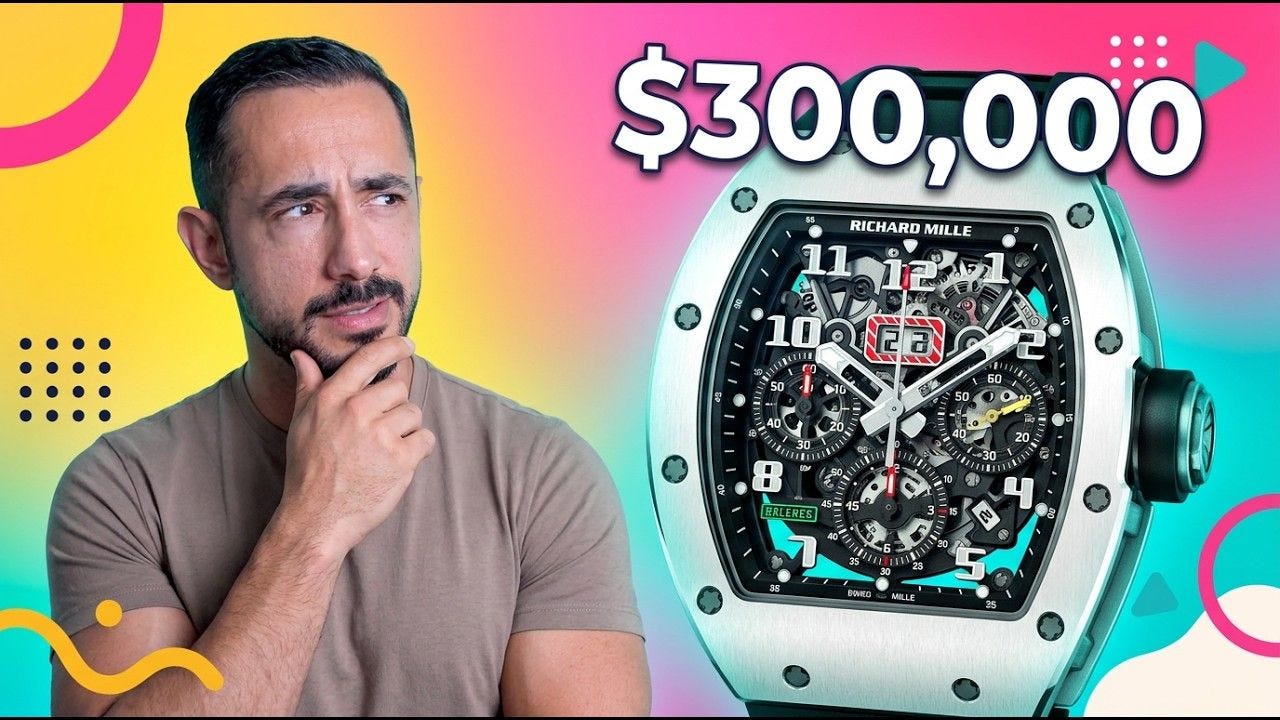
Who Can Afford a Richard Mille?
Wristlock Watches explores the financial reach required to enter Richard Mille ownership and the status attached to the brand. The discussion looks beyond the watches’ visual identity to the way extraordinary prices shape both the customer base and public perceptions. For viewers interested in the intersection of watch collecting, wealth, and aspiration, the subject provides plenty to consider.

WatchChris Examines Swatch Group’s Challenges
WatchChris presents a critical assessment of Swatch Group, looking at competitive pressures, strategic decisions, and the challenges facing its business. Consider it alongside today’s factory feature: one examines the group’s industrial capabilities, while the other questions how effectively the business is meeting its commercial challenges. The video offers an argument to evaluate rather than a verdict supplied by the headline.

SJX Podcast: Is It Time to Reconsider Quartz?
SJX turns the conversation toward quartz and its place in serious watch enthusiasm. Accuracy, cost, industrial history, and collector attitudes all help explain why the technology deserves more than a dismissive comparison with mechanical movements. The subject is particularly relevant in an issue that includes both a $399 quartz watch and six-figure mechanical creations.
Podcasts
Talking Watches: Eric Wind and Charlie Dunne on the Stories That Stay With Us
Eric Wind and Charlie Dunne discuss watches through the relationships, research, and personal experiences attached to them. Their conversation moves among pieces including a Rolex Explorer, Vulcain Cricket, and engraved Jaeger-LeCoultre Reverso, showing how an object’s significance can extend well beyond its specifications or market ranking.
Condition and provenance remain part of the discussion, but friendship, mentorship, and memory supply much of its character. This Talking Watches installment is presented as a filmed conversation, with the full episode available at the link below.
Scottish Watches #822: A Live Show From Ireland
Scottish Watches takes its microphones to Ireland for a live recording at Chronography, bringing together the people building the country’s watch community. The episode features perspectives from retail, independent watchmaking, and emerging brands, including Paul Sheeran, John McGonigle, and Nomadic, alongside visiting supporters such as Vertex.
The live format gives the conversation the energy of a gathering rather than a conventional studio interview. It is an opportunity to hear how local expertise and collector enthusiasm can support a watch culture with its own identity.
Auction Report
A Blue-Dial Nautilus Meets a Market That Wants to Negotiate
Yesterday’s October 13 auction of the 2026 Bovet Récital 30 Universal World Timer, reference R30-0027, ended at $35,500 without meeting its $73,995 reserve. The $38,495 shortfall left bidding approximately 52% below the seller’s threshold on Bezel.
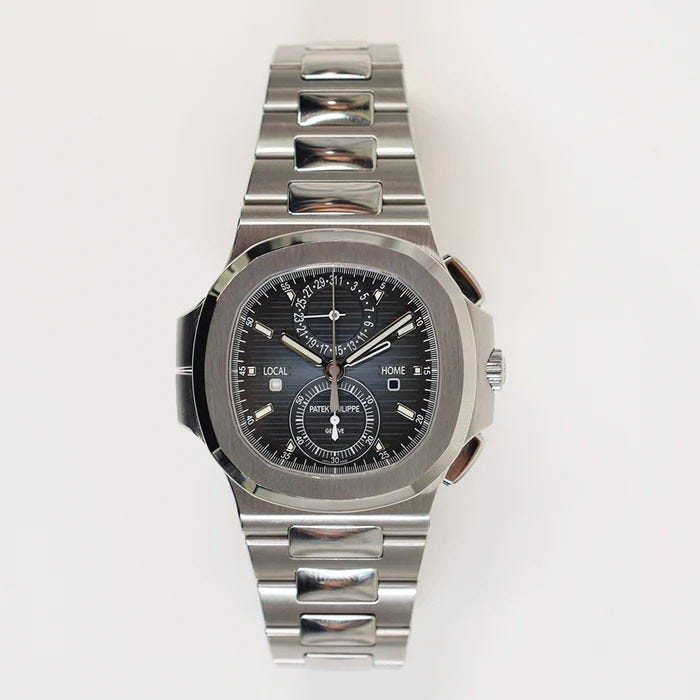
A Blue-Dial Nautilus Meets a Market That Wants to Negotiate
Today’s featured watch is a different proposition: a 2023 Patek Philippe Nautilus Travel Time Flyback Chronograph, reference 5990/1A-011, with a blue dial and steel bracelet. Its auction is scheduled to end at 8:15 p.m. EDT tonight, Wednesday, October 14, 2026.
The Nautilus family began in 1976, while the 5990 arrived in 2014, combining a flyback chronograph with Patek’s Travel Time system. The blue-dial 5990/1A-011 followed in 2022, bringing a sunburst blue-gray face with a darkened perimeter to the complicated steel Nautilus. Its automatic CH 28-520 C FUS movement displays home and local time, provides separate day/night indications, and couples the date to local time. The practical attraction is that the local hour hand can be adjusted as the wearer travels while home time remains visible.
This U.S.-located example has a 40.5mm steel case and is offered with box, papers, product literature, and hangtags. The dial is described as excellent, with minor wear to the case, bezel, and bracelet. The listing identifies it as pre-owned and includes the links pictured; its general condition language allows for possible prior servicing or polishing without confirming either. That makes the photographs and the individual watch’s condition important parts of the buying decision, even with a desirable reference and accompanying accessories.
Patek Philippe currently lists the reference at $76,895 in the United States, while WatchCharts’ October 12 estimate for the blue-dial variation was €123,930, approximately $139,000 using October 13 exchange rates. That estimate is a broad market reference, not a guaranteed sale price or a valuation specific to this example. No reserve was supplied for today’s lot, so the useful comparison will be the eventual bidding level and total acquisition cost against comparable watches in similar condition. The Nautilus name should command attention; tonight will show how much of that attention becomes money.
Current bid: $10,750
Losing Time


Today’s Big Losers at Auction on Grailzee
Four watches arrived with combined asking prices of $141,020. Bidders responded with $62,317. The resulting $78,703 gap left this group 55.8% below asking, which is a substantial amount of optimism to carry home unsold. The watches offered precious metal, limited production, bright colors, and mechanical personality. Buyers apparently wanted one additional feature: a different price.
The 2025 Rolex Sky-Dweller 42mm with green dial, yellow-gold case, and Oyster bracelet, reference 336938, carried a $67,000 ask. Bidding stopped at $35,100, leaving a $31,900 shortfall, or 47.6% below asking. That was the largest dollar gap in the group. Gold, green, and a crown remain a persuasive combination, just apparently not persuasive enough to cover the entire invoice imagined by the seller.
The 2026 H. Moser & Cie. Pioneer Centre Seconds “Sunny-Side Up” 40mm, reference 3201-1200, brought a yellow dial and rubber strap to a $17,500 proposition. Its $7,667 high bid missed by $9,833, or 56.2%. The name supplied the optimism. The bidding supplied the weather report.
The 2021 H. Moser & Cie. Pioneer Limited Edition 42.8mm with green dial and steel bracelet, reference 3200-1210, produced the group’s most severe percentage shortfall. Against an asking price of $24,520, bidders offered $6,600—a $17,920 gap, or 73.1% below asking. Buyers were willing to provide barely 27 cents for every dollar requested. Limited production was matched by limited enthusiasm at that price.
The 2026 Ulysse Nardin Freak X Gumball 3000 Edition 2 Limited Edition 43mm, reference 2303-270LE-2B-GUM, asked $32,000 and reached $12,950. Its $19,050 shortfall amounted to 59.5% below asking. For a watch associated with a rally, the bidding made surprisingly little progress toward the destination.
These results join a persistent pattern across BuyingTime’s recent failed-auction selections. The 44-lot review totaled more than $1.62 million in asks against approximately $854,000 in final bids, and more than half the lots failed to attract half the requested money. These gaps measure disagreement between sellers and bidders, rather than equivalent declines in completed-sale values. Even so, alongside our observation of thinner and more cautious bidding on Grailzee and Bezel, they raise concern that the secondary market is under greater strain than headline price indexes reveal. Sellers can continue polishing their expectations. Buyers seem content to let them keep the watches.
Closing Time
Thank you for spending part of your day with BuyingTime. Enjoy the ingenuity, follow the stories, and remember that the most important number on a watch listing is the one a buyer will actually pay. We’ll be back tomorrow with more watches, more perspective, and the result of tonight’s Nautilus auction.