

BuyingTime in 30 Seconds
Patek Philippe is planning for another generation of family ownership, while Deloitte examines an industry adapting to persistently lower sales volumes. Our features connect long-term craftsmanship with neighborhood repairs, unconventional Rolex collecting, and the appeal of fixed lugs. Seiko’s literal panda chronograph brings some welcome humor, Frederique Constant pairs complications with stone dials, and RGM returns to the perpetual calendar. Tudor’s GMT-equipped Northflag once again gets a closer look, and New York prepares for a busy watch week. Yesterday’s Moser auction stopped at US$23,055, missing its US$40,110 reserve by 42.5%. Today’s spotlight falls on a convertible Parmigiani Fleurier annual calendar, with bidding scheduled to close at 7:05 p.m. EDT.
Time Graphing Today’s Watch Universe
What Makes a Watch Worth Keeping?
The watch industry spends an extraordinary amount of energy persuading us to want the next watch. Today’s issue raises a question that matters just as much: What makes us want to keep one? The answers run through family ownership, the repair bench, thoughtful design, mechanical invention, and the sometimes uncomfortable distance between an asking price and an actual bid.
Start with Patek Philippe’s succession plans. Thierry Stern’s insistence that the company will remain independent gives the familiar language of stewardship a practical foundation. Ownership determines who gets to make decisions, how much patience those decisions receive, and which obligations survive a difficult sales year. A family preparing the next generation has a different planning horizon from a business preparing its next transaction.
That does not make every family-owned company wise or every corporate owner impatient. It does make continuity something we can examine. In Stern’s discussion of heritage and craftsmanship, the most compelling idea is that a watch being designed today should remain repairable a century from now. That promise has consequences for materials, construction, training, and the preservation of knowledge. It requires people who understand how to maintain what earlier generations made.
Which brings us to a much smaller business in Brooklyn. Jewelers on Court’s repair-centered approach belongs in this conversation because the long life of an object eventually becomes somebody’s hands-on responsibility. A customer brings in something scratched, stopped, loose, or inherited. Someone examines it, explains the problem, and makes it useful again. Trust grows through that ordinary exchange. The industry’s grand promises about permanence need those everyday encounters to mean anything.
The economic pressure behind all of this is laid out in Deloitte’s assessment of lower Swiss watch volumes. Higher prices can support revenue for a time, but fewer watches also mean fewer opportunities to bring people into the hobby and less work moving through the supplier network. If the middle of the market becomes too thin, the consequences extend beyond the brands whose names appear on the dial. Skills and production capacity need regular demand.
That is one reason I like seeing Seiko’s panda chronograph in this issue. At US$540, it gives someone a clear, immediate reason to smile. The panda is the design, right down to the arrangement of the counters and the bamboo-inspired hands. Nobody needs to construct a resale thesis to explain its appeal. Enjoyment can be enough, and the industry needs more watches that make that proposition easy to understand.
The Citizen Promaster–Omega Seamaster comparison asks a related question from the practical side. A more expensive watch can deliver better finishing, a more interesting movement, and greater emotional satisfaction. Those qualities are worth discussing honestly. They do not automatically make it twenty times more useful. Collectors benefit when we can describe the pleasure of luxury without pretending that every dollar purchases additional necessity.
There are other ways to build an enduring attachment. Fixed-lug watches invite us to appreciate a simple construction choice and the character it gives a watch. Unconventional Rolex models remind us that even the most familiar manufacturer contains corners worth exploring. A collection becomes more personal when curiosity reaches beyond the models we have already been told to admire.
At the more complicated end, RGM’s new perpetual calendar offers a different kind of staying power: traditional proportions, an enamel dial, and a calendar whose appeal rewards patient attention. Today’s Parmigiani auction adds another interpretation, with an annual calendar conceived as part of a system that could move between wrist, pocket, and desk. These are objects with ideas behind them. Understanding those ideas deepens ownership, even when the secondary market gives them an uneven reception.
Yesterday’s Moser result supplies the necessary dose of discipline. The top bid was substantial, but it remained US$17,055 below the seller’s reserve. One unsuccessful auction cannot diagnose an entire market. It can show us that admiration, rarity, and a seller’s expectations do not always converge at the same number. Anyone buying an unusual watch should leave room for that distinction.
A watch worth keeping might be a family heirloom, a beautifully finished complication, a dependable diver, or a panda that makes its owner laugh. What connects them is a reason to care that survives the purchase itself. The strongest watch businesses will keep giving us those reasons—and maintain the people, skills, and service that let the relationship continue.
-Michael Wolf
News
Patek Philippe Plans for Succession, Not a Sale
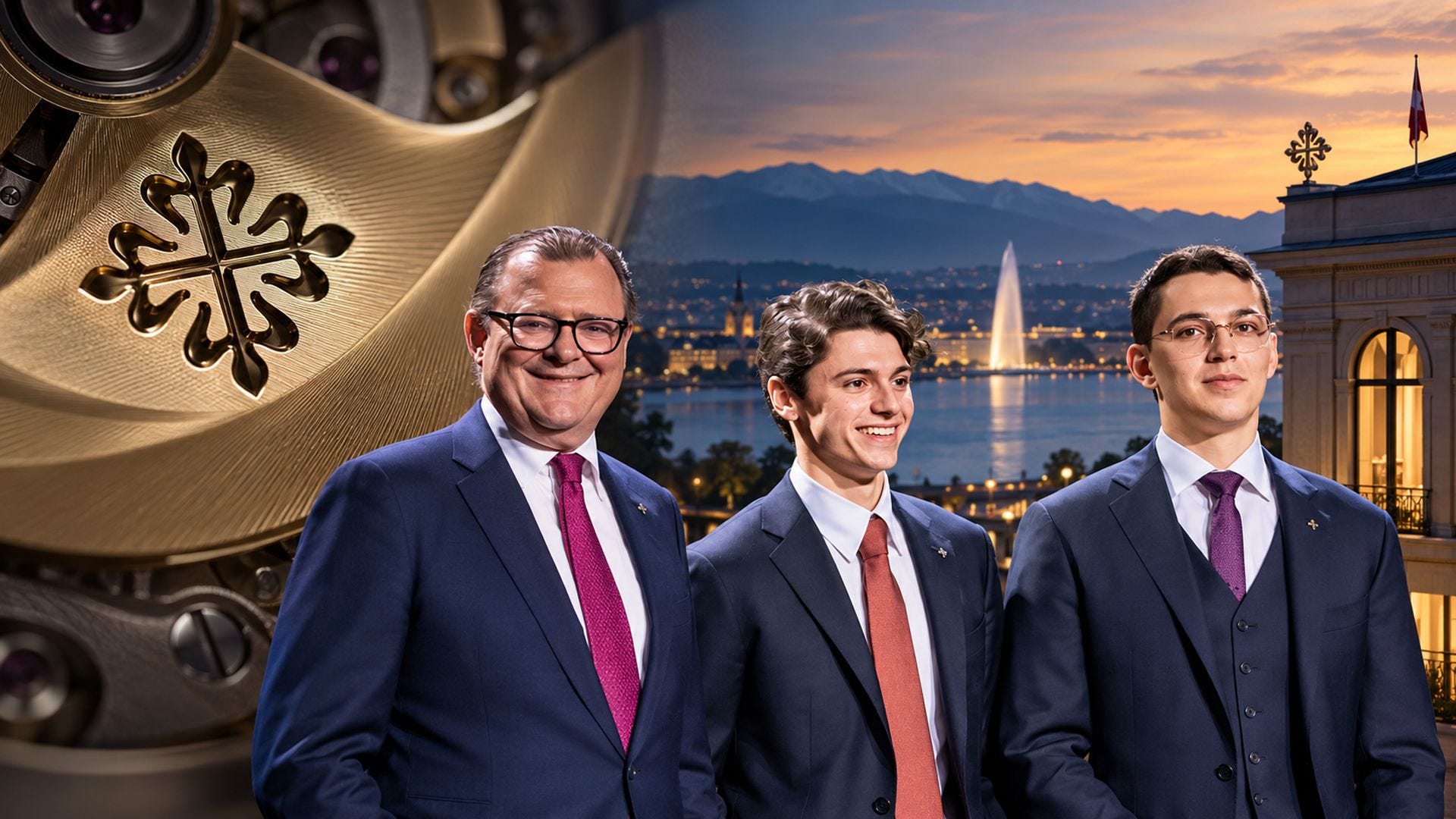
Thierry Stern is again dismissing speculation that Patek Philippe could be sold, emphasizing that the Stern family’s complete ownership allows the company to follow its own course. Succession remains a gradual process rather than an announced handover, with Stern suggesting that his sons need considerably more experience before assuming the responsibility. He has also indicated that he would prefer to step aside earlier than his father did.
The family acquired Patek Philippe in 1932, establishing an ownership structure that has now endured across four generations. Today’s discussion concerns more than who eventually occupies the president’s office: it touches investment, product development, and the preservation of an identity built around independence. For collectors, Stern’s message is continuity, with leadership preparation taking precedence over an exit.
Deloitte: Swiss Watchmakers Adjust to Permanently Lower Volumes
Swiss watchmaking’s volume problem is increasingly being treated as a structural change rather than a temporary setback. Deloitte’s study describes manufacturers moving beyond immediate cost reductions toward product development, research, and broader geographic exposure. Higher average selling prices have helped support revenue, but declining output creates pressure throughout the network of companies supplying components and specialist services.
The consumer findings make the challenge more pointed: many prospective customers remain reluctant to spend beyond CHF1,500 on a traditional watch, while value, design, and Swiss provenance retain their appeal. Pre-owned watches and smartwatches compete for attention, and multibrand retailers remain important to shoppers who want choice. Suppliers, meanwhile, are exploring automation, AI, and opportunities in fields such as medical technology and aerospace. The industry must preserve its capabilities while producing watches that enough people actually want—and can afford—to buy.
Features
Five Rolex Watches for Collectors Thinking Outside the Box
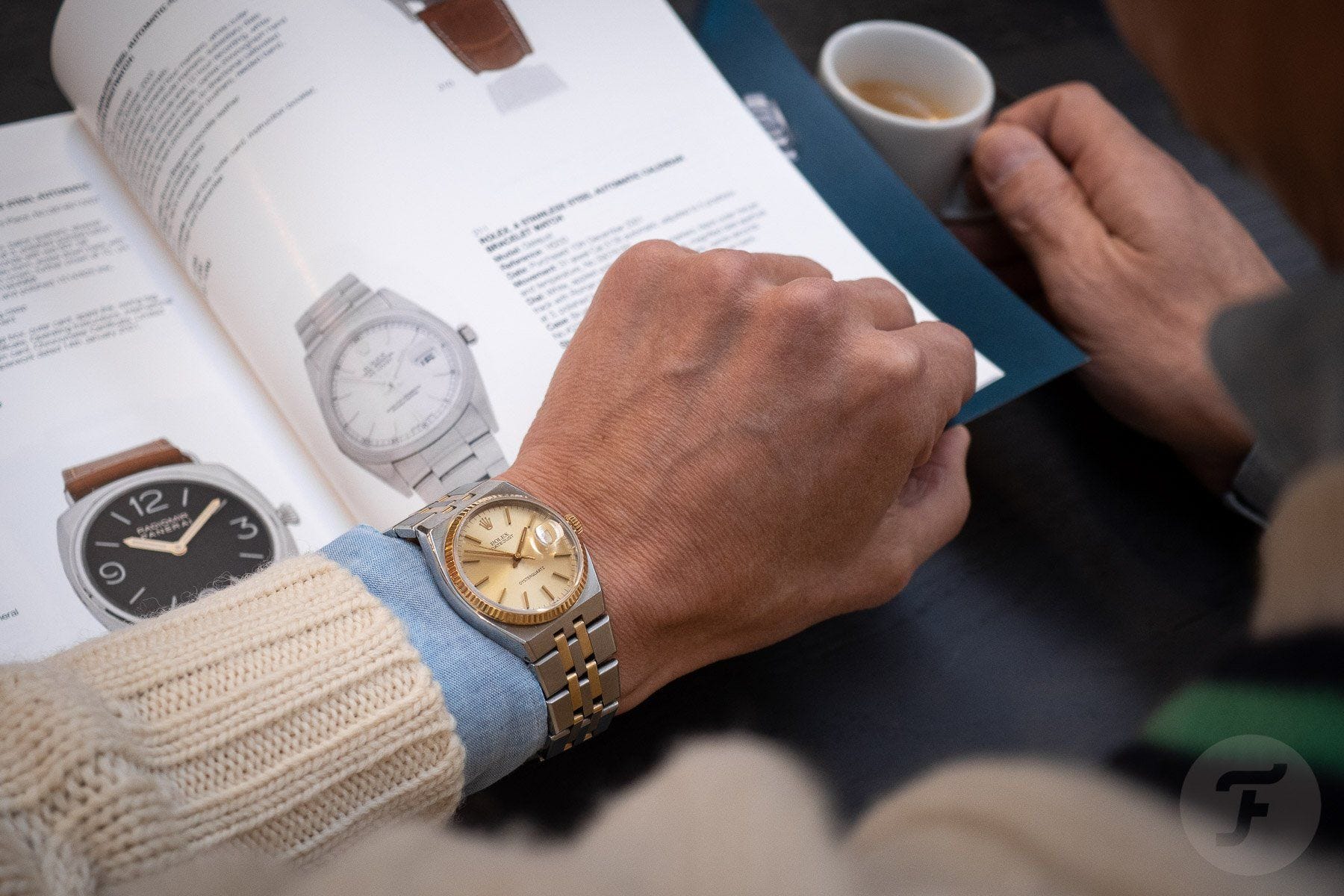
There is considerably more to Rolex collecting than the familiar procession of Submariners, Daytonas, and GMT-Masters. This feature looks toward the Yacht-Master family, the compact Oyster Perpetual, the angular Oysterquartz, the dress-oriented Cellini, and the rectangular Prince. Each opens a different chapter in the manufacturer’s design history and offers a way to build a collection with a more individual emphasis.
The contrasts are the attraction. A 34mm Oyster Perpetual delivers uncomplicated everyday proportions, while an Oysterquartz brings the sharply drawn case and integrated-bracelet character of another era. Cellini models explore formal watchmaking, and the Prince reaches back to the architectural elegance of the late 1920s. Together, they demonstrate how much variety remains available within a brand often discussed through a surprisingly narrow selection of watches.
Jewelers on Court Puts the Repair Bench at the Heart of the Store
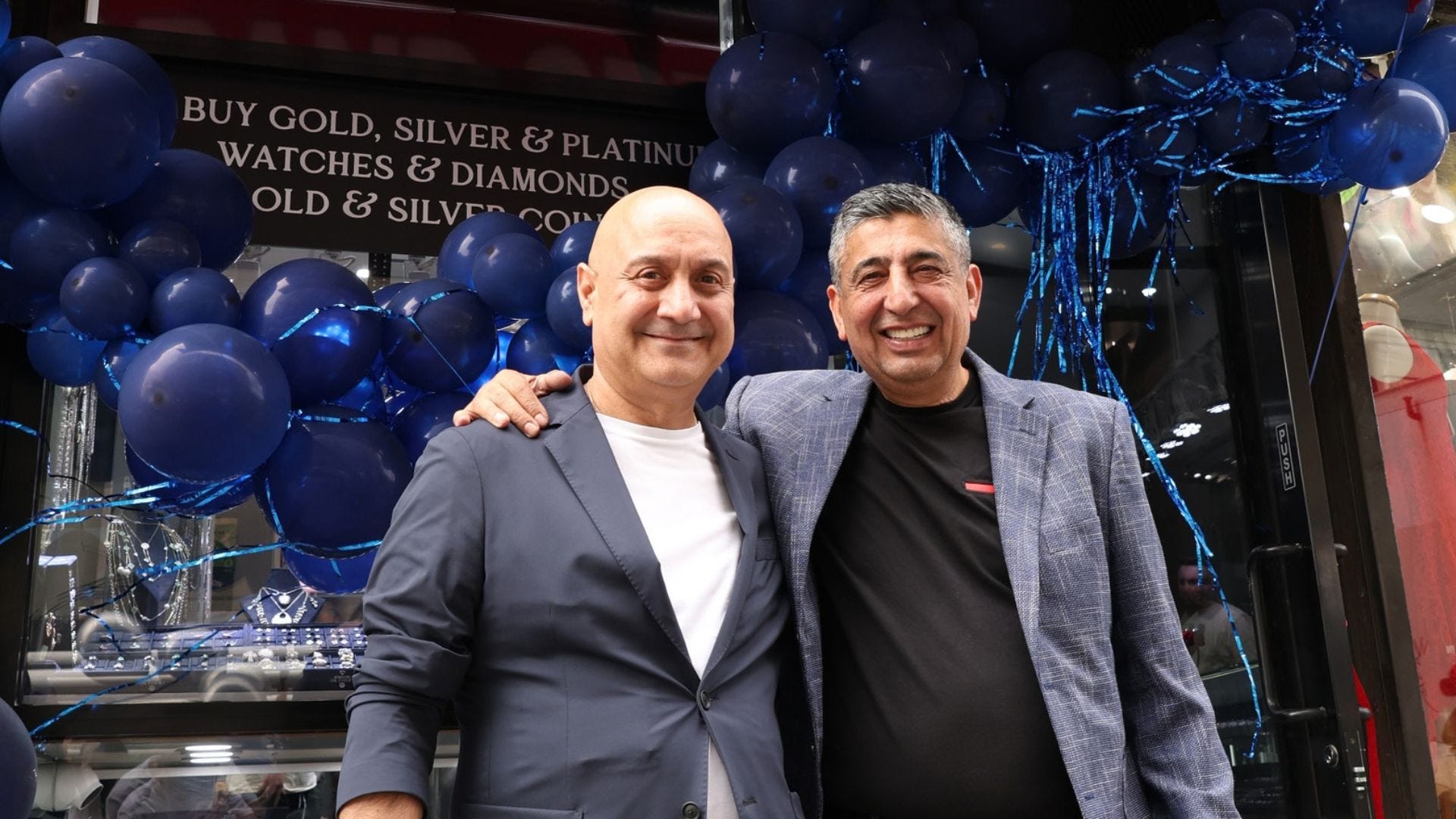
At Brooklyn’s Jewelers on Court, the work itself is part of the customer experience. Brothers-in-law Armen and David built their family business around visible, hands-on repairs, allowing customers to see the care their watches and jewelry receive. Since opening in September 2025, the store has attracted strong word-of-mouth support and, according to the profile, more than 300 five-star Google reviews.
The founders also built much of the interior themselves, giving the space a direct connection to the people operating it. Plans include expanded custom design, appraisals, and resale services, but the central proposition remains personal attention and clear communication. In a luxury market often preoccupied with presentation, this is a reminder that explaining a repair and doing it well can be a powerful way to earn repeat business.

Thierry Stern on Heritage, Craftsmanship, and Patek Philippe’s Future
Thierry Stern’s vision of innovation begins with an unusually long obligation: the watches Patek Philippe makes now should be serviceable by watchmakers far in the future. His discussion of materials, engineering, and traditional handcrafts places restorability alongside technical advancement. The Grand Exhibition in Milan provides a setting for that argument, bringing historical watches into conversation with contemporary complications and decorative arts.
Stern also describes a changing audience, including younger collectors and women interested in smaller watches with substantial mechanical content. Planning extends through 2039, with an ambition to deliver two major technical innovations annually. The broader message is that heritage must remain productive: it should guide new ideas, support training, and preserve the human expertise that gives complicated watchmaking its continuity.
Fixed-Lug Watches Find a Fresh Following
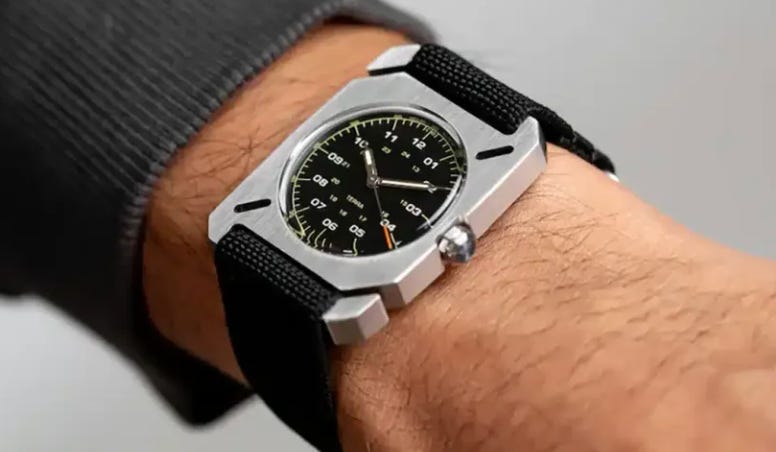
Fixed lugs bring an old construction approach into a contemporary collecting conversation. Instead of relying on removable spring bars, these designs incorporate permanent attachment points that help determine both the watch’s appearance and how its strap is fitted. Their appeal combines structural simplicity with a distinctive relationship between case and strap.
The feature ranges from Tudor’s military-oriented Pelagos FXD to the Delhi Watch Company Terra, Donut Watch Company’s Glazed, and Bertucci’s DX3 Glow, while also exploring unconventional historical and modern attachment designs. These watches approach the wrist with very different personalities, but each makes the lug arrangement part of its identity. For collectors accustomed to judging a watch primarily by its dial and movement, the story offers a useful reason to look at the case more closely.
Audemars Piguet and Konstantin Chaykin Take Watchmaking Beyond the Wrist
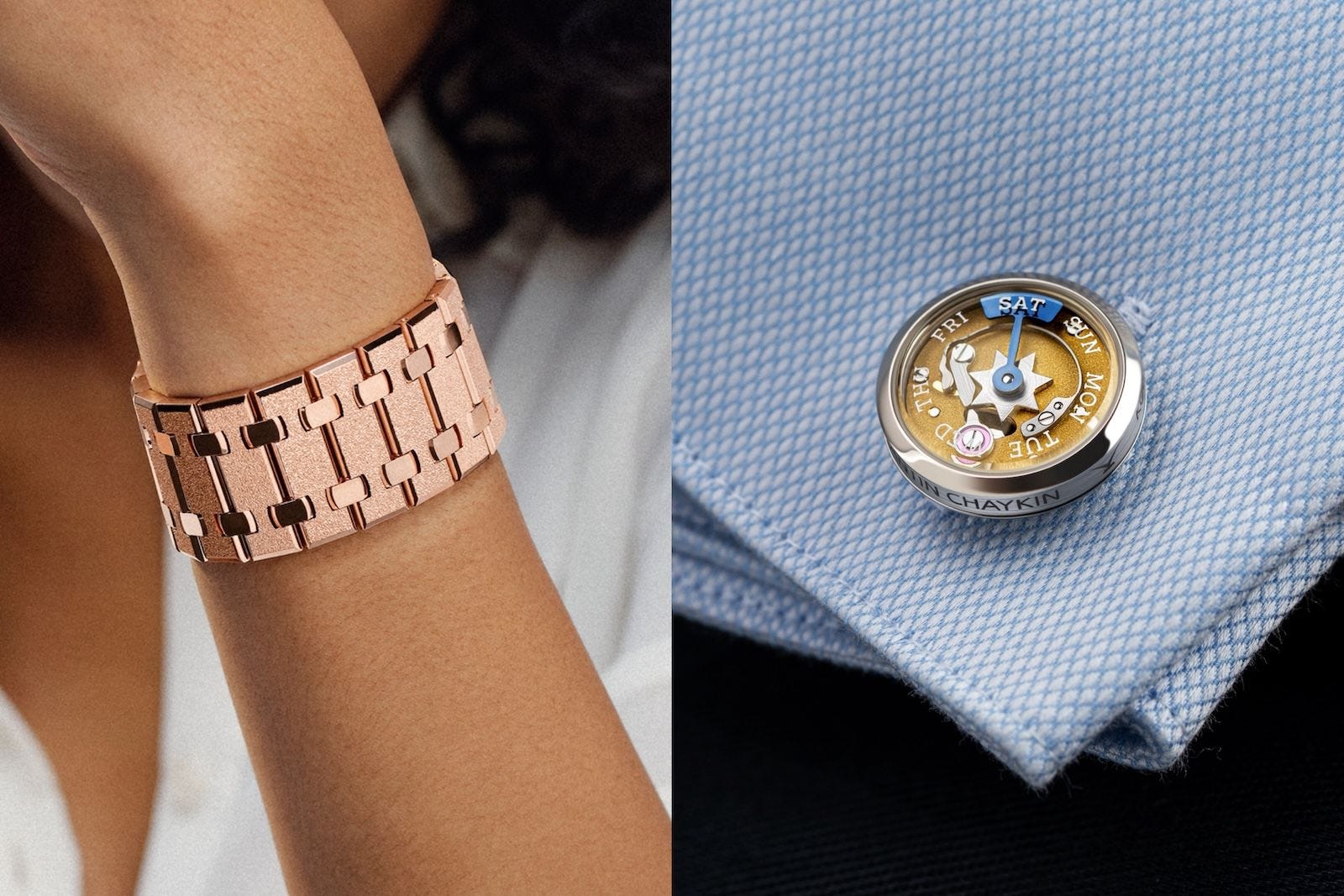
Audemars Piguet and Konstantin Chaykin are extending recognizable watchmaking ideas into accessories. AP’s Royal Oak jewelry translates the collection’s visual language into necklaces, earrings, and cuffs, using precious metals and gemstones to carry familiar design cues into another category. Chaykin takes a mechanical route: his Master of Days cufflinks incorporate miniature mechanisms that display the day of the week.
The two approaches show how a watchmaker’s identity can support products beyond watches themselves. AP emphasizes sculptural jewelry and the reach of an established design, while Chaykin gives enthusiasts another small mechanical object to operate and enjoy. Royal Oak jewelry pricing is available on request; the cufflinks are listed at CHF4,500. Both invite collectors to carry an interest in watchmaking into a different part of the wardrobe.
New Watches
Seiko’s Panda Chronograph Makes the Nickname Literal
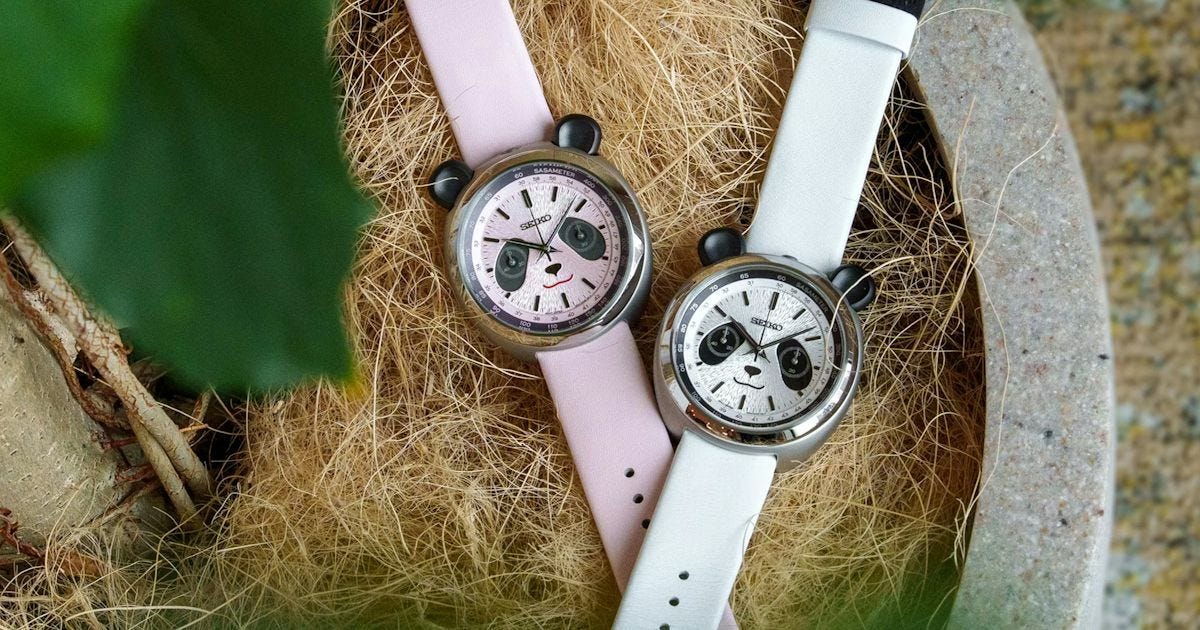
Seiko is bringing one of its most memorable power design project concepts into production, turning the familiar “panda” chronograph description into an actual animal-inspired watch. Designed by Kiyotaka Sakai, the dial uses its counters as eyes, the pushers as ears, and bamboo-inspired hands to complete the idea. A playful “SASAMETER” scale adds another detail for owners to discover.
The 43mm stainless-steel watch uses Seiko’s quartz caliber 8T61 and comes on a leather strap, with splash resistance suited to ordinary wear rather than aquatic adventures. The white version is limited to 3,000 pieces and the pink version to 2,000, with release planned for November 2026. Some details have changed from the exhibition concept, but the essential humor survives intact. Price: US$540 each.
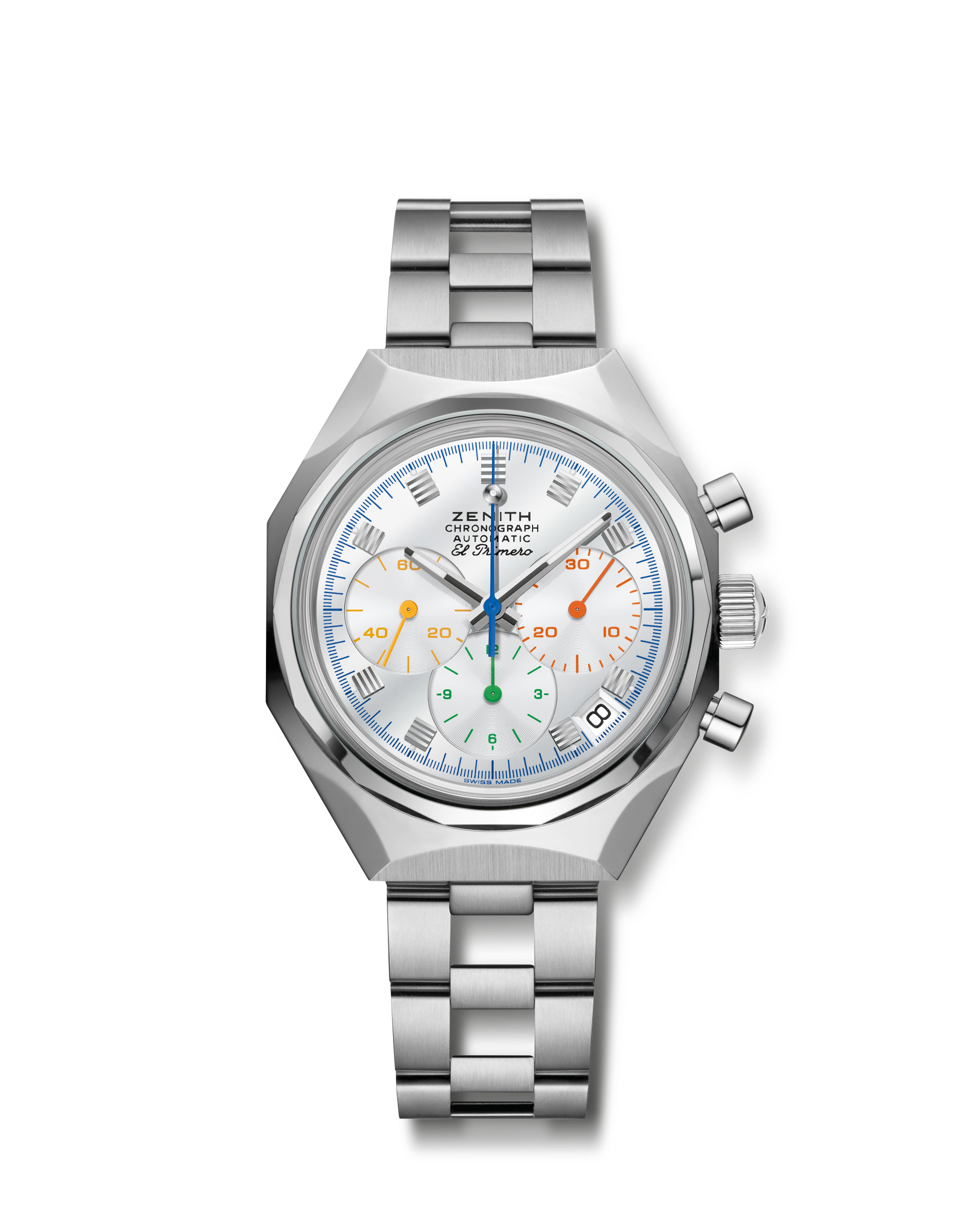
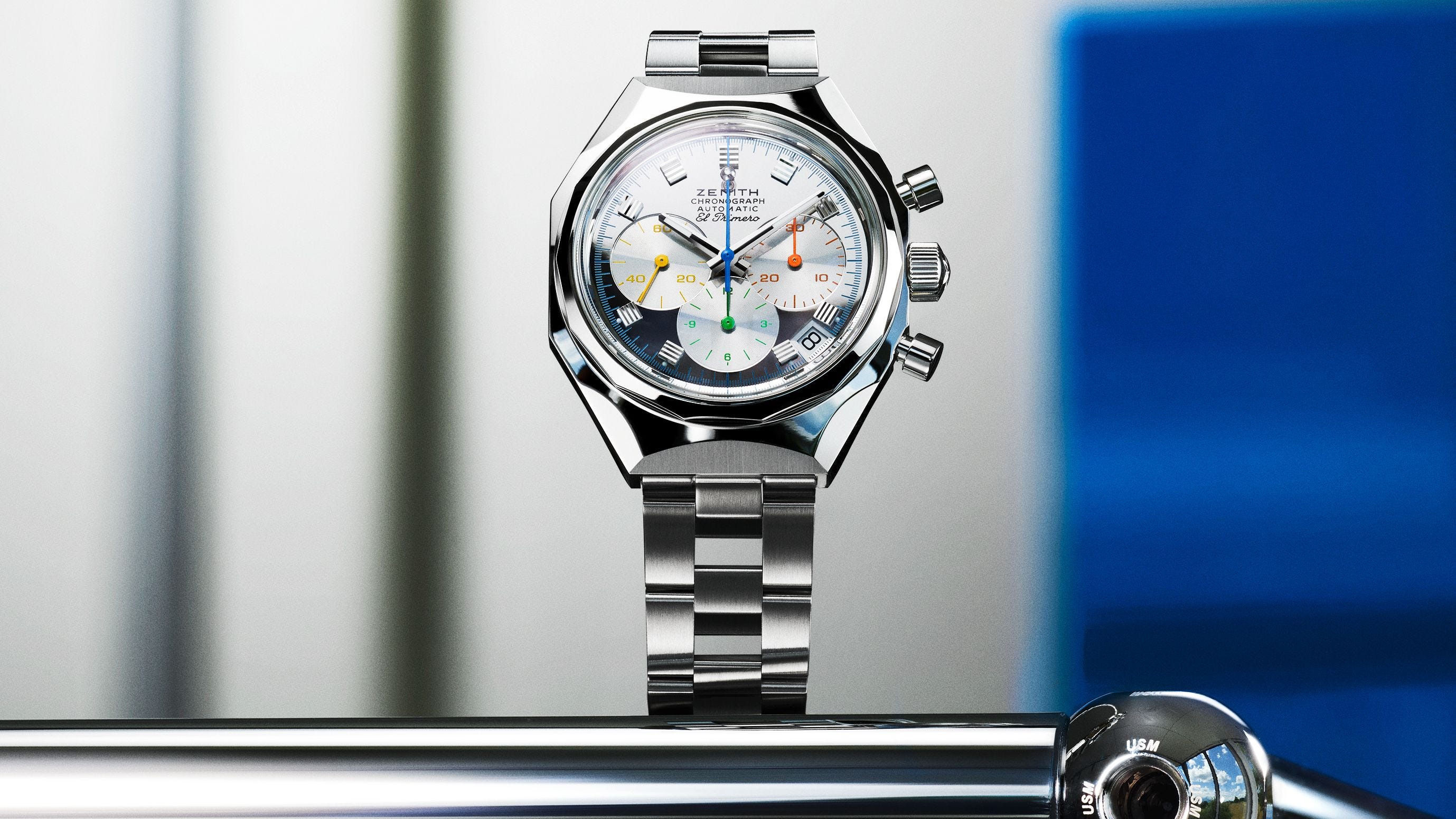
Zenith and USM Create a Mirrored Defy Chronograph for TimeForArt
Zenith and USM Modular Furniture are contributing a unique watch-and-furniture pairing to the TimeForArt benefit auction. The Defy Chronograph USM combines a mirror-polished dial with accents in USM’s Golden Yellow, Pure Orange, Green, and Gentian Blue. Its 37mm steel case, angular geometry, fourteen-sided bezel, and ladder bracelet preserve the compact architectural character of the collaboration.
Inside is the automatic El Primero 400, a high-frequency column-wheel chronograph with a stated 55-hour power reserve. USM complements the watch with a matching mirrored Haller sideboard designed to accommodate up to 24 watches, including a glass-topped display area and a lockable lower compartment. The unique pairing is scheduled for Phillips New York on December 5, with proceeds supporting the Swiss Institute’s contemporary-art programs. Price: No fixed U.S. dollar retail price; auction estimate not provided in the announcement.
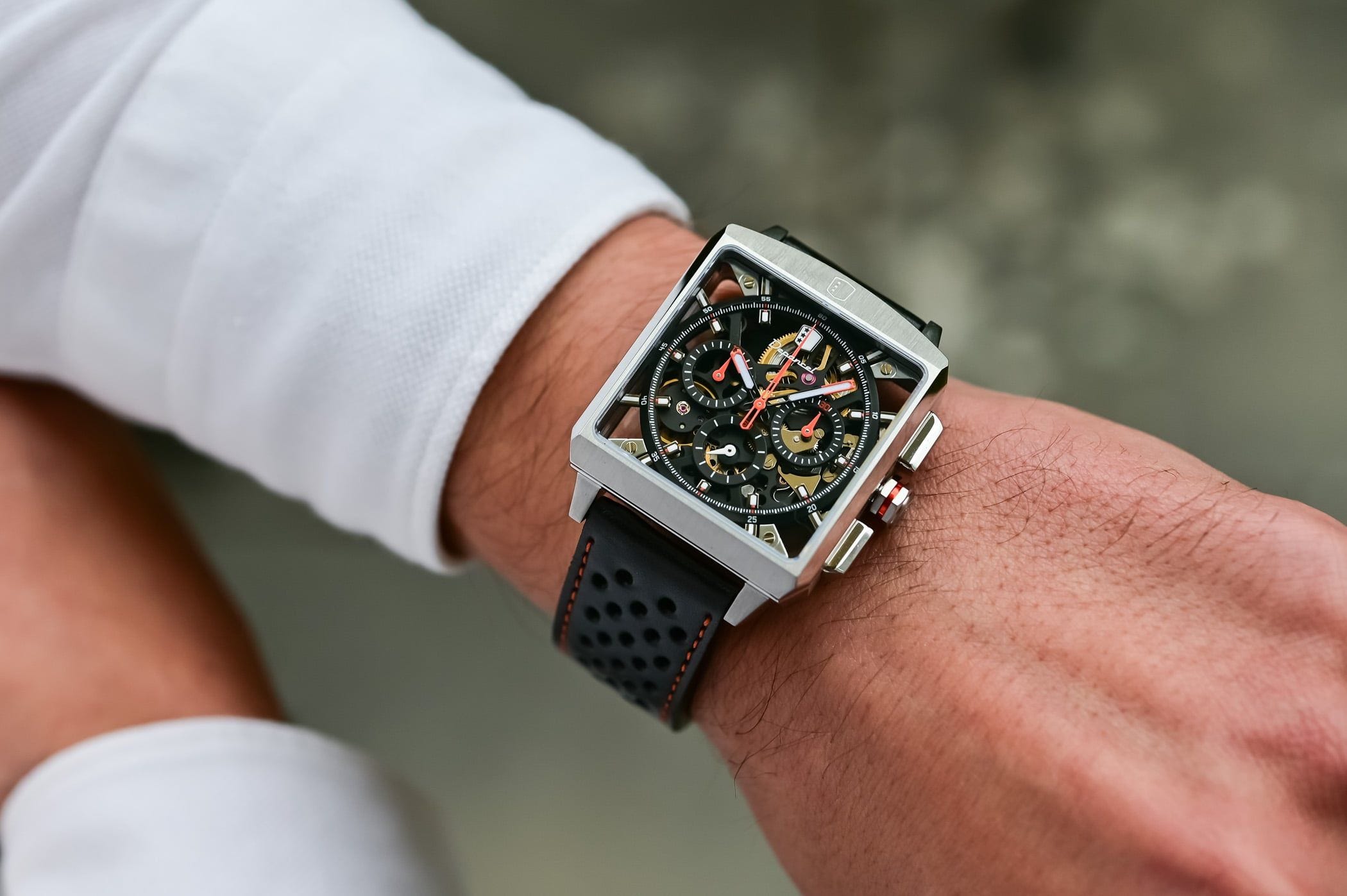
Depancel Opens Up the Serie-R Chronograph
Depancel’s Serie-R Chronograph Skeleton puts the movement at the center of its racing-inspired rectangular design. The stainless-steel case measures 40mm by 36mm and 13.7mm thick, pairing brushed and polished surfaces with a bevelled sapphire crystal. Orange chronograph indications and luminous dashboard-style hands help separate the displays from the exposed mechanical architecture.
Power comes from the automatic Peacock SL-4802 chronograph movement, offering a stated 55-hour reserve, while water resistance is rated at 50 meters. The watch is limited to 100 numbered examples and is supplied on a bull-leather strap with a steel buckle. Preorders open October 8 at 4 p.m. Paris time, with deliveries expected in mid-December. Price: US$1,595, as quoted in the release.
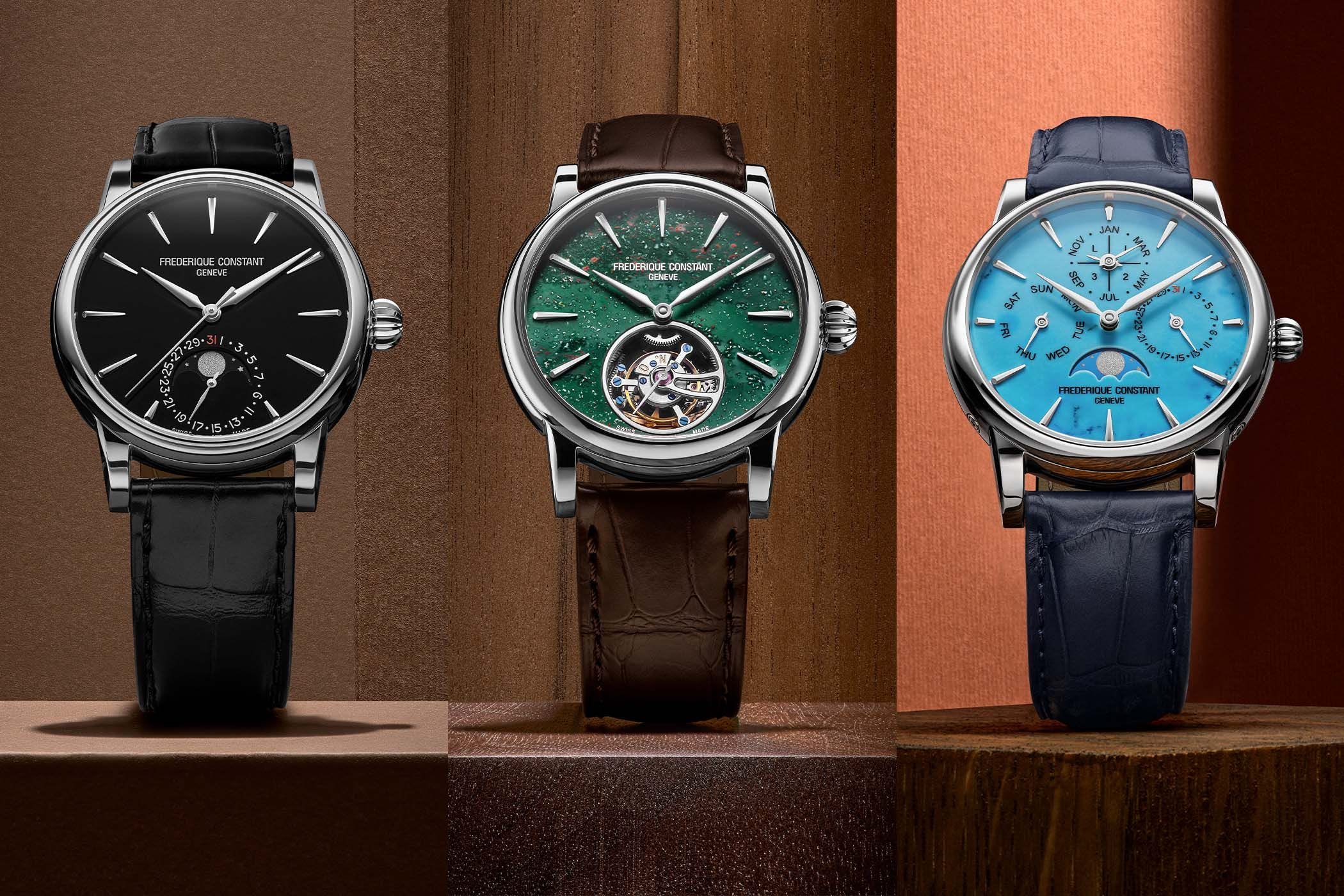
Frederique Constant’s Elements Collection Pairs Stone Dials With Manufacture Complications
Frederique Constant’s 2026 Elements Collection brings together three watches whose natural stone dials give familiar complications a different visual character. Black onyx provides the setting for the Classic Moonphase Date Manufacture, heliotrope surrounds the Classic Tourbillon Manufacture’s rotating cage, and turquoise brightens the Classic Perpetual Calendar Manufacture. All three use steel cases and sapphire backs, allowing their decorative surfaces and mechanical interiors to share the attention.
The moonphase-date and perpetual-calendar watches measure 40mm and offer three-day power reserves, while the tourbillon is described in the collection presentation as 39mm with a 38-hour reserve. The release comprises 88 numbered three-watch sets, with matching individual numbers across each set. Natural variations in the stones ensure that identical specifications will still produce visibly different examples. Price: Approximately US$5,895–US$19,260 per watch using the supplied CHF4,895–CHF15,995 reference range; the official U.S. dollar price for the complete set is available on request.
Go Deeper · Go Deeper: Official Collection
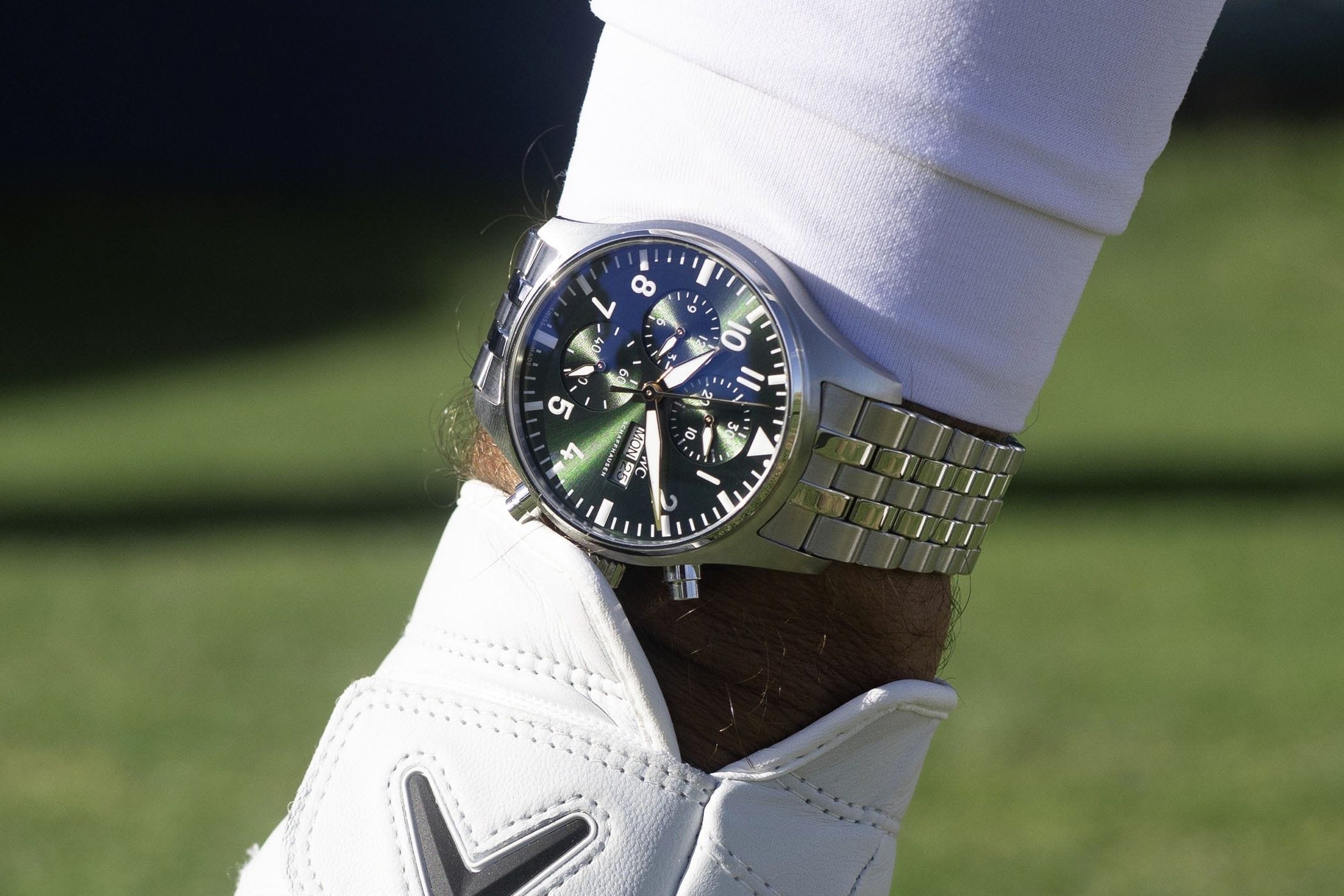
IWC Takes Its Pilot’s Watch Chronograph 43 Onto the Golf Course
IWC’s new olive-green Pilot’s Watch Chronograph 43 accompanies its continuing association with the Alfred Dunhill Links Championship. Reference IW378008 combines the warm dial color with white markings and gold-plated luminous hands, giving the familiar aviation-inspired layout a softer appearance. The 43mm steel case retains sapphire glazing and 100-meter water resistance.
The automatic caliber 69385 supplies column-wheel chronograph operation, a day-date display, and a 46-hour power reserve, with its finishing visible through the caseback. A five-link steel bracelet is included, and an optional olive-green rubber strap offers a more casual alternative through IWC’s EasX-CHANGE system. This is a permanent-collection addition, giving buyers time to consider whether the new color suits their everyday rotation. Price: US$9,500.
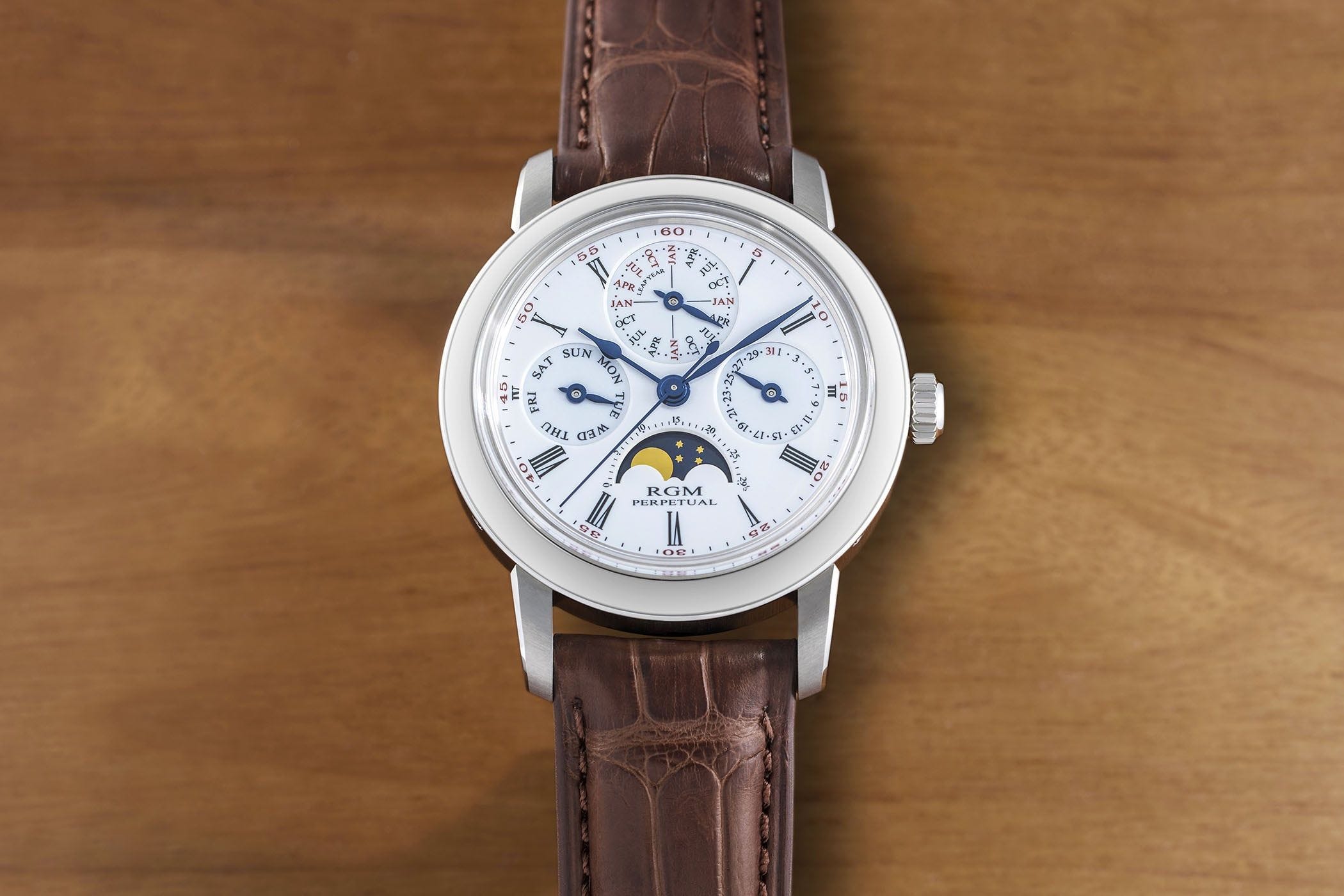
RGM Returns to the Perpetual Calendar With the Model 501-PC
American independent RGM is returning to the perpetual calendar with a watch that looks toward traditional pocket-watch design. The Model 501-PC combines a 39mm stainless-steel case with a white Grand Feu enamel dial, Roman numerals, blued hands, and red accents on the minute track. Day, date, month, leap-year information, and moon phase create a substantial calendar display within restrained dimensions.
The movement combines a heavily modified ETA 2892-A2 base with a custom Dubois Dépraz calendar module and a solid-gold winding rotor. Traditional finishing is visible through the sapphire back, while curved lugs and a raised sapphire crystal contribute to the period-inspired appearance. Supplied on a brown alligator strap, the watch offers 50-meter water resistance and a stated power reserve of 52–56 hours. Price: US$39,900.
Comparisons
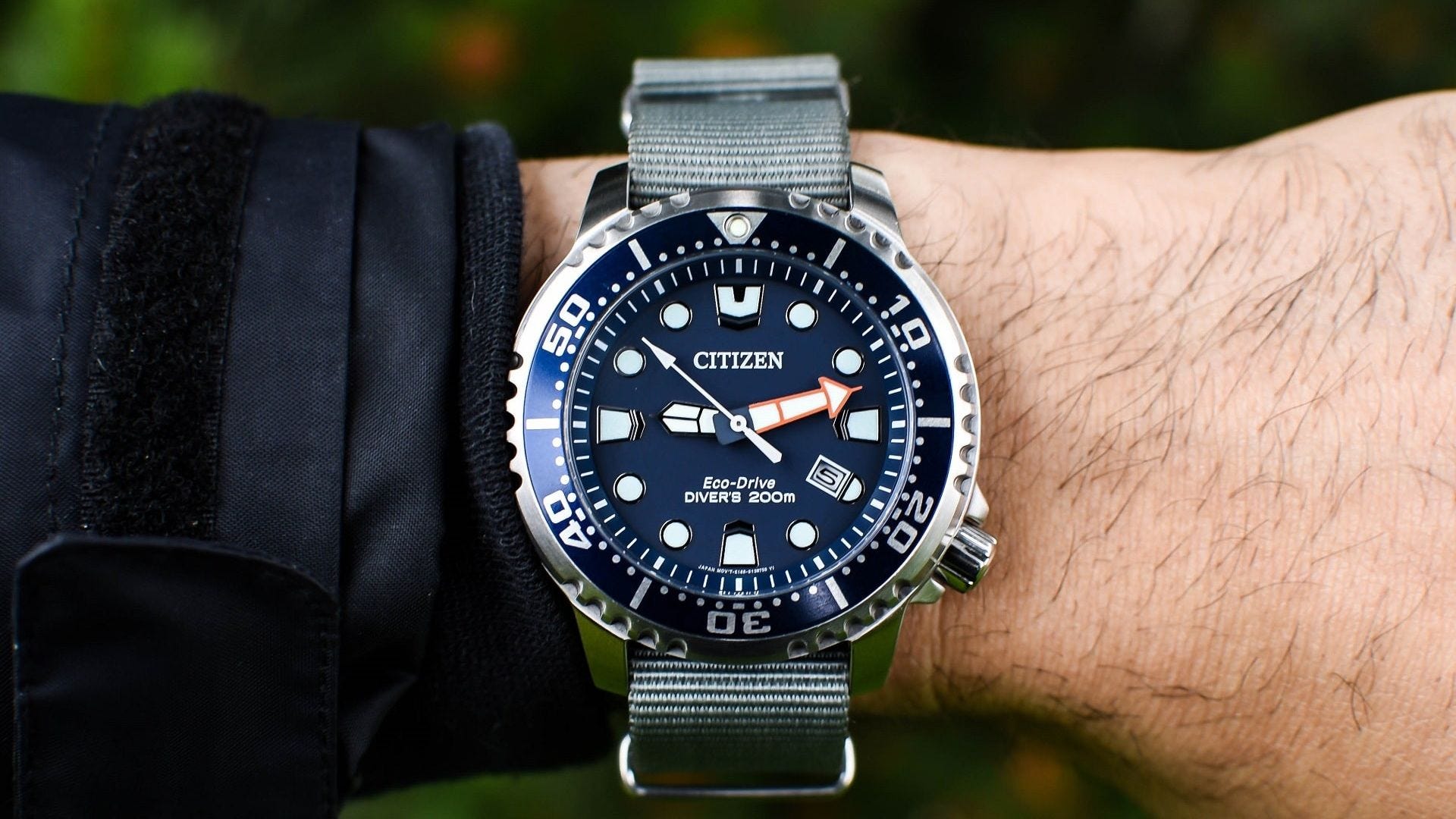
Citizen Promaster vs. Omega Seamaster: What Does the Extra Money Buy?
A roughly US$300 Citizen Promaster Eco-Drive Diver and a roughly US$6,000 Omega Seamaster Diver 300M can both fulfill the ordinary demands placed on a dive watch. The Citizen emphasizes straightforward ownership: solar-powered quartz timekeeping, clear displays, and the freedom to wear it through swimming, outdoor activities, and daily errands without much ceremony. Its appeal is strongest when usefulness and cost carry the most weight.
The Omega adds a METAS-certified mechanical movement, more elaborate finishing, sapphire crystal, and the visual depth of a more expensive dial and bezel. Those are meaningful attractions for enthusiasts, but the comparison asks readers to distinguish them from basic functional requirements. The Citizen emerges as the practical choice, while the Seamaster makes its case through craftsmanship, mechanical interest, and the pleasure of wearing it. The decision depends on which of those qualities matters most to the owner.
Reviews
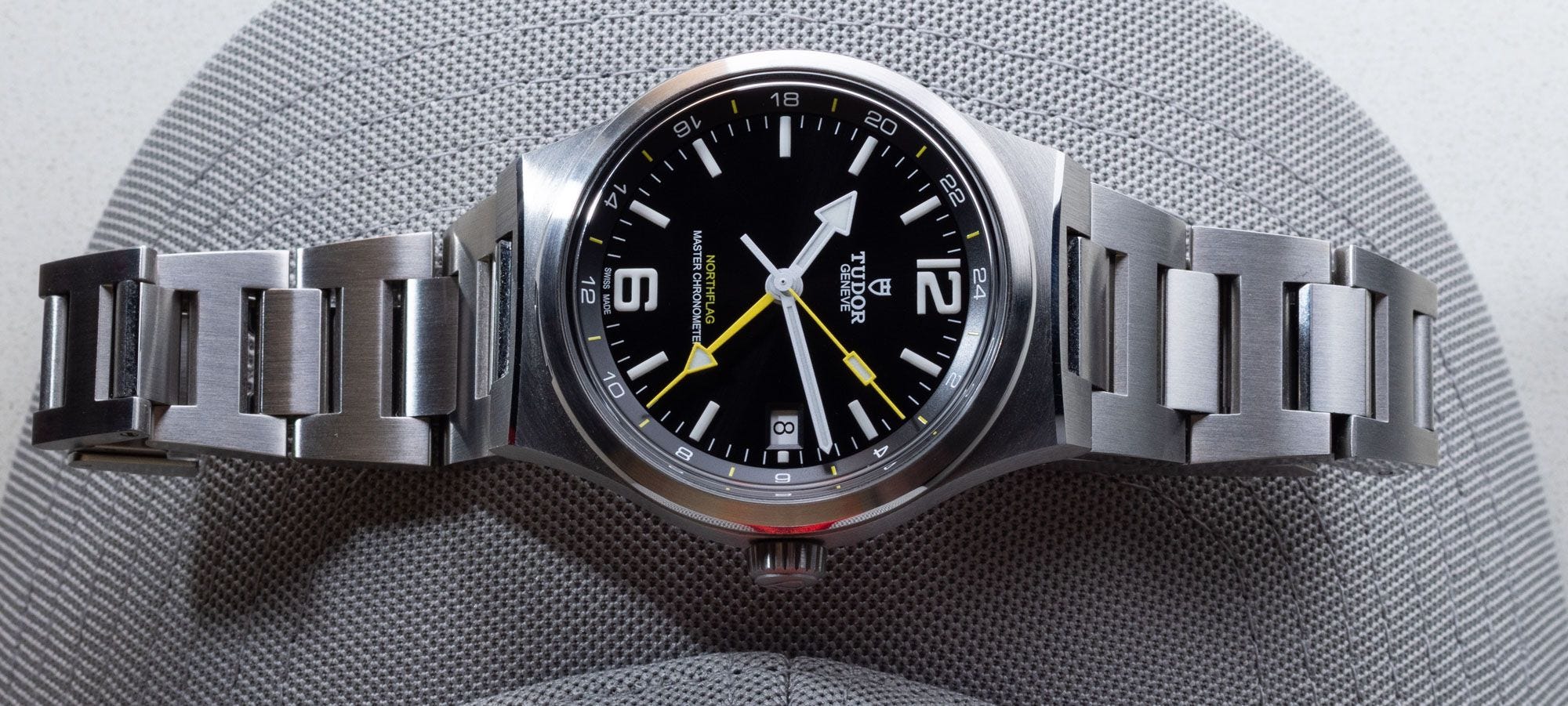
Hands-On With Tudor’s GMT-Equipped Northflag
Tudor’s Northflag returns with a travel complication and a renewed emphasis on its angular, instrument-like character. The reviewed M9140G1A0U pairs a 40mm steel case with a matte black dial, high-contrast white indexes, and yellow accents on the seconds and GMT hands. Replacing the original model’s power-reserve display with a second-time-zone indication gives the layout a different practical purpose.
The automatic MT5652-U offers Master Chronometer certification and a stated 65-hour reserve, with a sapphire back providing a view of the movement. The case measures 12.7mm thick and carries a 100-meter water-resistance rating, while the steel bracelet includes Tudor’s T-Fit adjustment system. At US$5,525, the watch offers an alternative for buyers drawn to Tudor’s technical capabilities but interested in a more angular design than its better-known Black Bay models. Its reception may depend as much on that distinctive shape as on the specifications.
Events
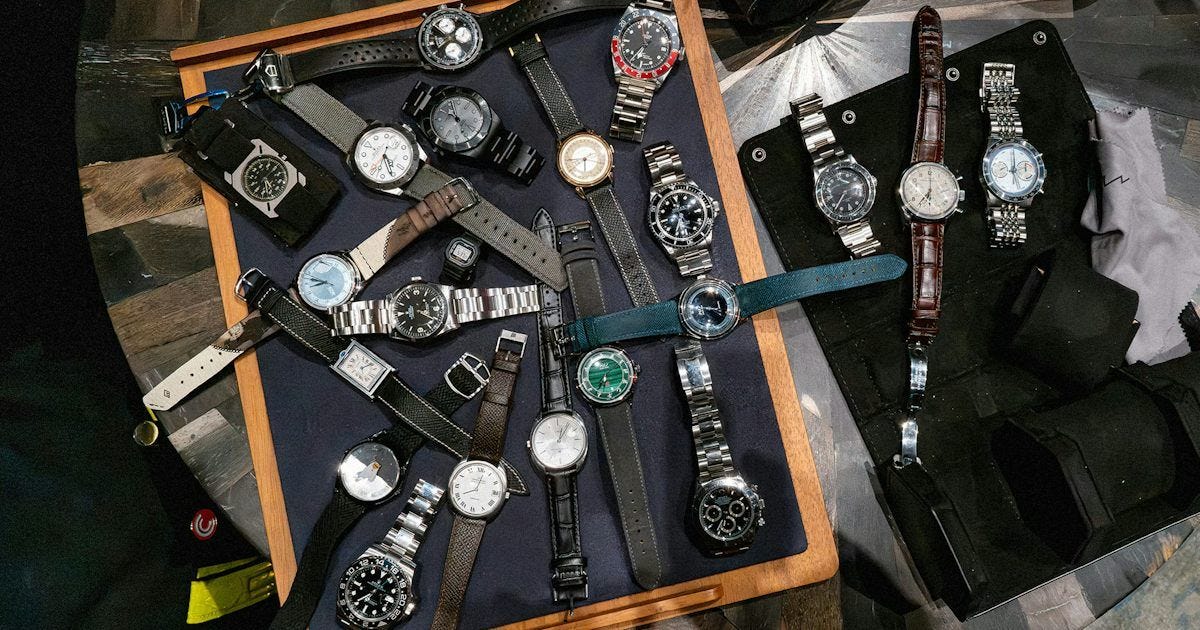
New York Watch Week Is Almost Here
New York’s watch calendar fills up October 15–18 with opportunities to meet brands, handle watches, and hear directly from the people making them. WatchTime New York runs October 16–18 at Gotham Hall with 48 participating brands, while the free-admission Windup Watch Fair brings more than 160 microbrands to Center415. The combination gives visitors access to a broad range of prices, production scales, and design approaches.
Thursday’s schedule includes the Fondation Haute Horlogerie Summit, with discussions of value and sustainability, and Indies.NYC, presenting 25 independent watchmakers. Additional talks and social gatherings round out the weekend. For enthusiasts accustomed to evaluating watches on screens, the central attraction is straightforward: seeing the dimensions, finishing, colors, and personalities in person.
HSNY Brings Hands-On Watchmaking Classes to Boston and Los Angeles
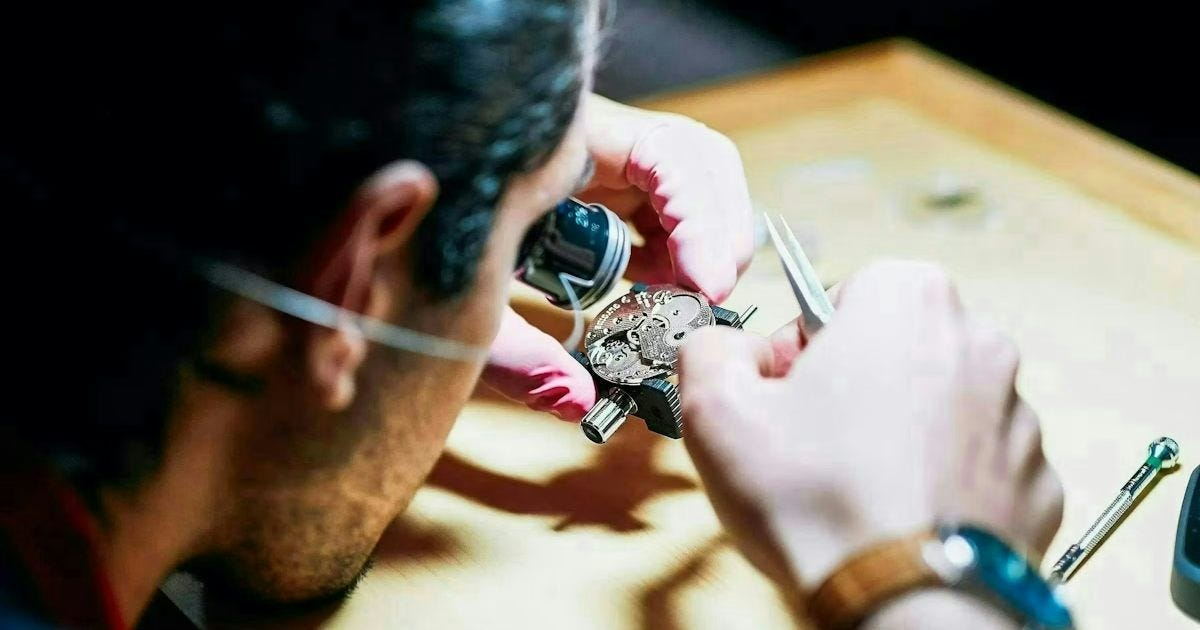
The Horological Society of New York is taking its educational workshops to Boston and Los Angeles in November. Boston sessions are scheduled for November 7–8 at Shreve, Crump & Low, followed by a Los Angeles class on November 14 at F.P. Journe. The half-day courses introduce participants to the mechanisms they usually encounter only through a dial or exhibition caseback.
Students work with mechanical movements while exploring gear trains, winding and setting systems, and escapements under the guidance of professional watchmakers. The format provides a practical introduction to the precision and patience involved in servicing a watch. Enrollment is open, with the traveling classes offering a chance to develop a more concrete understanding of the hobby.
Podcasts
Fratello On Air: Are You Safe Online as a Watch Collector?
Balazs and Mike consider how much collectors reveal when they discuss watches through social media, messaging platforms, and online groups. The episode raises questions about location sharing, the people behind unfamiliar accounts, and the privacy implications of bringing AI tools into conversations. Their approach is grounded in personal habits and experience, with an acknowledgment that they are enthusiasts rather than security specialists.
The discussion also makes room for the usual watch talk, including Hanhart’s 417 ES Steve McQueen, Citizen, and the Delhi Watch Company Terra. The useful takeaway is to think deliberately about what a post reveals beyond the watch itself. A wrist shot can communicate more than the owner intended, particularly when it is accompanied by location details and a predictable routine.
Videos

“The 2027 Watch Market Crash Has Begun” — Luxury Secret
Luxury Secret presents a bearish argument about the watch market, using a claimed inventory of 3.2 million unsold watches as the basis for its warning. The video discusses how excess stock could pressure prices, encourage production cuts, and increase competition among sellers. Its dramatic title frames those possibilities as the beginning of a broader downturn.
The inventory figure and crash prediction should be understood as the creator’s claims, rather than established conclusions presented by BuyingTime. The useful question is how inventory, pricing, and demand interact—and how differently those pressures can affect individual brands and models. Watch it as a market argument to evaluate alongside more measured industry reporting.

“I Broke a Rolex Band” — Watch Hospital NYC
Watch Hospital NYC puts a broken Rolex bracelet at the center of this video, bringing attention to a component owners often take for granted. A bracelet is handled, flexed, fastened, and exposed to daily wear every time a watch goes on the wrist. When something fails, that familiar piece of hardware suddenly becomes the most important part of the watch.
The clip offers a more immediate, workshop-oriented counterpoint to discussions of prestige and resale prices. The supplied description does not establish the cause of the break, so it should not be taken as evidence of a general Rolex defect. Its appeal lies in the incident itself and the attention it directs toward the physical realities of ownership.
Auctions
Toledano & Chan’s Oshinobi Hides Its Diamonds in Plain Sight
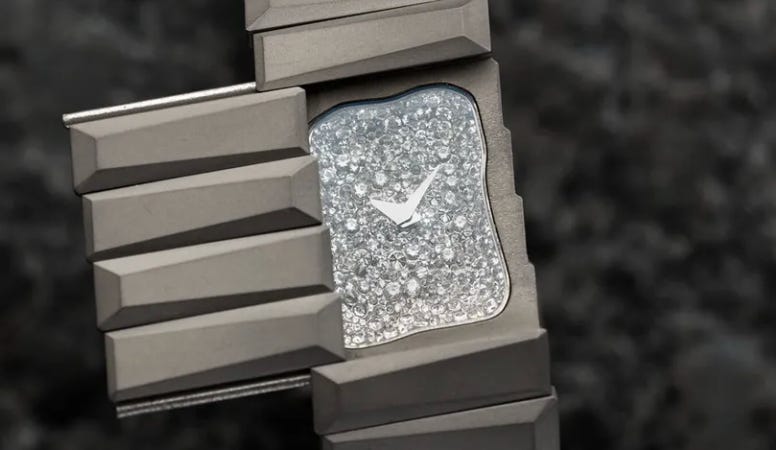
Toledano & Chan’s unique Oshinobi begins with an austere exterior: a sculptural, sandblasted titanium bracelet concealing the watch display beneath a small cover. Open it, and the visual character changes completely. Approximately 387 natural diamonds, totaling about two carats, create a snow-set interior inspired by the crystalline surfaces inside a geode.
The 21mm titanium watch uses a manually wound Swiss LTM caliber and carries a special TimeForArt engraving. It is scheduled for the December 5 Phillips New York benefit auction, supporting the Swiss Institute’s contemporary-art programming. A limited production interpretation is planned for 2027, but this unique piece makes the initial statement with an unusually theatrical approach to discovering the time.
Marteau’s “Encore” and Antiquorum’s New York Return Put Collectors on Alert
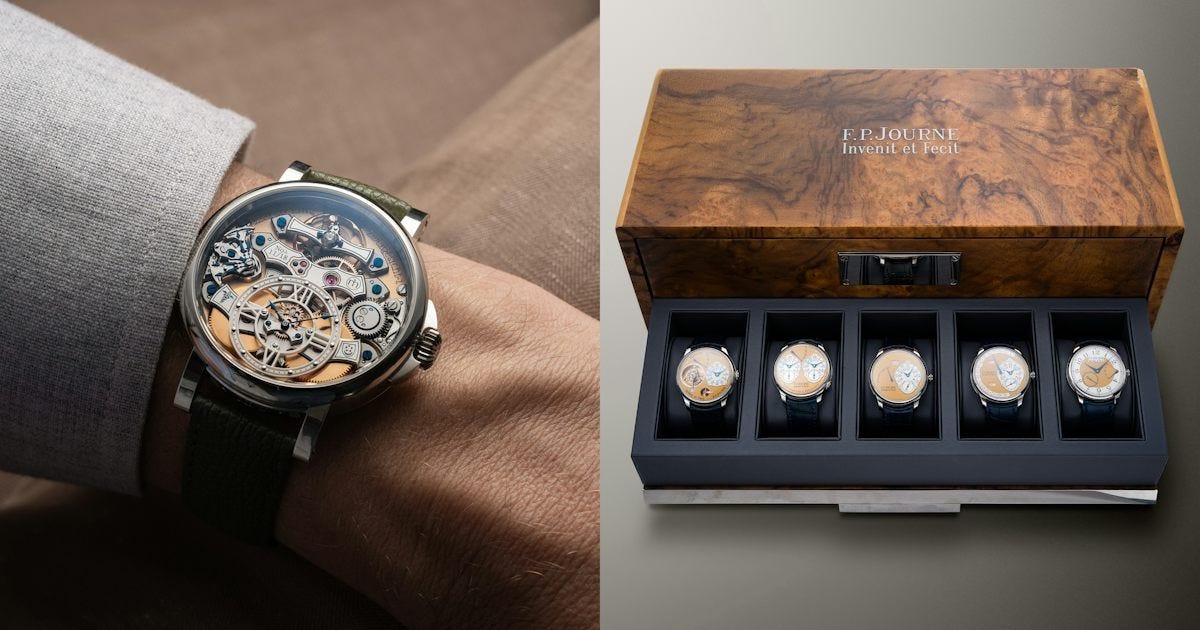
Two upcoming auctions offer different views of the collecting market. Marteau & Co.’s “Encore” concentrates on roughly 40 selected pieces, bringing established independent names together with less familiar makers. Highlights include a steel F.P. Journe set and work by Sylvain Pinaud, Yosuke Sekiguchi, Ludovic Ballouard, Marco Lang, Reuben Schoots, Ondrej Berkus, and Habring².
Antiquorum’s New York return takes a broader approach with 157 lots, including vintage Rolex and Patek Philippe, Cartier Crash watches, and a complicated Vacheron Constantin. A first-year 1932 Patek Philippe reference 96 and a Tiffany-signed gold Rolex Daytona illustrate the historical interest available alongside contemporary independent watchmaking. Together, the catalogs provide an opportunity to observe where collectors place their bids across very different forms of rarity.
Auction Results
Moser’s Aventurine Moon Falls US$17,055 Short of Reserve
The October 6 auction of the 2021 H. Moser & Cie. Endeavour Perpetual Moon Concept Aventurine, reference 1801-0402, reached a top bid of US$23,055, failing to meet its US$40,110 reserve. The gap was US$17,055, or approximately 42.5% below reserve, leaving the watch unsold.
That is a significant miss for a distinctive complicated watch, though it remains the outcome of one auction rather than a comprehensive valuation of the reference. The bidding demonstrates interest at a substantial price; the reserve demonstrates how much further the seller expected that interest to extend. On this occasion, the two did not meet.
Auction Report
Three Ways to Wear Time: Parmigiani’s Transforma Annual Calendar Meets the Market
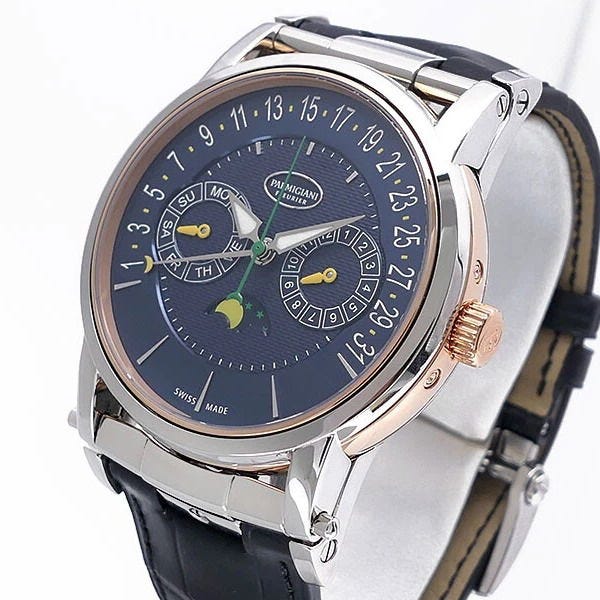
Today’s auction features the Parmigiani Fleurier Tonda Transforma Annual Calendar, reference PFC272-1002500-XA1432, a 43mm watch combining a blue dial, an 18-karat rose-gold watch head, and a steel holder. The USA-based example is described as unworn, with box and papers, and with its dial, case, and bezel in excellent condition. The listing allows for minor handling marks, while its “2019–present” year range does not establish a specific manufacturing date. Its appeal begins with the combination of precious metal and a substantial calendar complication, but the unusual construction gives collectors considerably more to investigate.
The Transforma concept debuted in 2011, allowing a watch head to move between wristwatch, pocket-watch, and table-clock configurations. The blue-dial annual calendar followed in the CBF collection presented in 2013, associated with Parmigiani’s partnership with the Brazilian Football Confederation. That collection included a set with separate chronograph and annual-calendar heads. This auction should therefore be evaluated according to the components actually included: box and papers alone do not confirm that a second watch head, pocket-watch fittings, or desk-clock accessories accompany it.
Inside is Parmigiani’s automatic PF339, providing a retrograde date, day and month indications, and a precision moon-phase display. The caliber offers approximately 50 hours of power reserve and manages the differing lengths of 30- and 31-day months, with calendar correction generally required at the end of February in non-leap years. The retrograde date adds a distinctive visual event as its hand returns to the beginning of the scale. Taken together, the calendar and convertible architecture make this a particularly individual expression of Parmigiani’s earlier design language.
Current advertisements provide useful price context, although they do not establish a completed-sale value. One specialist dealer lists the corresponding blue-dial Transforma annual calendar at approximately US$28,700 and cites a US$45,500 retail reference; another advertised example is offered at US$29,500. Those figures place visible seller expectations in the high US$20,000s, but an auction result may be lower, and accessory completeness and service history can materially affect comparability. The attraction is substantial mechanical content in a distinctive, relatively uncommon package; the uncertainty is what today’s bidders will pay for that combination. Bidding is scheduled to end at 7:05 p.m. EDT today, Wednesday, October 7, 2026.
Current bid: $800
Losing Time


Today’s Big Losers at Auction on Grailzee
Four watches, four failed sales, and four reminders that an asking price is a wish until someone agrees to pay it. These bidders had rather different numbers in mind.
The Audemars Piguet Royal Oak 39mm White Dial on Steel Bracelet (15300ST.OO.1220ST.01) carried a $36,500 ask but attracted a final bid of just $21,300. That’s a $15,200 shortfall, or 41.6% below asking. Apparently, the seller and the bidders were admiring two very differently priced versions of the same watch.
The 2024 Audemars Piguet Code 11.59 Chronograph 41mm Blue Dial on Textile Strap (26393OR.OO.A348KB.01)came closest to bridging the gap, although “closest” is doing considerable work here. Against a $41,080 ask, the high bid reached $29,600—$11,480 short, or 27.9% below asking. The seller’s oddly precise price suggested careful calculation. The bidders supplied a less flattering calculation of their own.
The 2020 Audemars Piguet Royal Oak Perpetual Calendar 41mm Blue Dial on Rose Gold Bracelet (26574OR.OO.1220OR.02.02) delivered the largest disconnect. Its $149,500 ask met a $76,666 final bid, leaving a $72,834 gap, or 48.7% below asking. A perpetual calendar can account for leap years, but apparently it cannot account for this level of seller optimism. Bidders offered barely more than half the requested price.
The 2026 Rolex Land-Dweller 40mm White Dial on Rose Gold Flat Jubilee Bracelet (127335) asked $62,500 and drew a $40,000 high bid. That left it $22,500 short, or 36.0% below asking. A current-year Rolex and a rose gold bracelet gave the seller plenty to talk about. They did not persuade bidders to supply the missing $22,500.
Together, the four sellers sought $289,580, while the final bids totaled $167,566—a combined $122,014 shortfall, or 42.1% below asking. These were substantial pricing disagreements, not deals that fell apart over the last few dollars. The Code 11.59 had the smallest percentage gap; the Royal Oak Perpetual Calendar had the largest, in both dollars and percentage terms.
Four failed auctions cannot establish the direction of the entire watch market, and an unsold high bid is not a completed-sale valuation. They do show that these bidders were unwilling to validate these sellers’ expectations. Closing the gap would require higher offers, lower asks, or a different audience. For now, the sellers still have the watches—and their opinions.
Closing Time
The watches we remember are often the ones that give us a reason to keep looking: an ingenious calendar, an unexpected design, a beautifully repaired heirloom, or a panda hiding in plain sight. Today’s issue offers all of those pleasures, along with a reminder to keep our enthusiasm and our price expectations in conversation.
Thank you for spending part of your day with BuyingTime. Enjoy what is on your wrist, stay curious about what you have yet to discover, and we’ll see you tomorrow.