

BuyingTime in 30 Seconds
Omega gives collectors a choice between James Bond and Spectre, MeisterSinger dresses its jumping-hour Panthero in blue guilloché, and Seiko takes the panda chronograph quite literally. King Seiko’s titanium VANAC and Shinola’s mechanical Duck offer very different approaches to everyday personality. Our features explore dress watches, rotating bezels, and the importance of human judgment in a hobby increasingly shaped by automated recommendations. Bell & Ross celebrates Defender Rally’s championship, while our reviews examine everything from an approximately US$1,000 Orient Star to Louis Moinet’s elaborate chronograph. Yesterday’s Harry Winston reached just US$4,200 against an US$18,445 reserve. Today, a 2021 H. Moser & Cie. Endeavour Perpetual Moon Concept Aventurine takes the auction spotlight, with bidding scheduled to close at 2:05 p.m. EDT.
Time Graphing Today’s Watch Universe
Who Decides What Deserves Your Wrist?
A watch can find its way onto your radar for almost any reason. A movie connection. An unusual dial. A clever complication. A familiar name returning after years away. Someone whose taste you respect telling you to take another look. Today’s issue contains all of those invitations, and together they raise a question that deserves more attention than it usually receives: How much of our collecting taste have we developed ourselves?
That is why the argument for human watch curation feels especially relevant. Recommendations influence what we encounter, and what we encounter repeatedly can begin to feel inevitable. A watch appears in enough feeds, videos, and conversations, and suddenly it seems like the watch everyone should want. Familiarity becomes a substitute for consideration. The useful curator interrupts that process by explaining what makes something interesting, where its compromises lie, and who might actually enjoy owning it.
Human judgment has its own weaknesses, of course. Enthusiasts develop loyalties, reviewers have preferences, and a persuasive personality can make an ordinary watch sound indispensable. What matters is having a point of view that can be examined. Tell me why you admire a watch. Tell me what disappoints you. Give me enough substance to disagree intelligently. A collector learns more from a thoughtful disagreement than from another unqualified declaration that something is a must-have.
Consider Omega’s James Bond and Spectre Seamasters. The emotional invitation is immediate. These watches arrive with characters, imagery, and decades of cinematic association already attached. That can be a perfectly good reason to enjoy one. But the ownership decision still comes down to the object: the dial, the bracelet, the fit, the movement, and the price. A beloved fictional spy can introduce you to a watch. He cannot tell you whether you will still enjoy wearing it after the novelty settles.
Then there is Seiko’s Panda Chronograph, which turns an established watch nickname into an actual design idea. Its appeal is playful and direct. You do not need a complicated argument about heritage to understand the joke. The Shinola Duck Automatic approaches the same opportunity from another direction, wrapping an accessible mechanical watch in a campaign built around personality. Both remind us that pleasure belongs in the conversation. A watch collection does not have to resemble a committee’s approved list.
The quieter objects deserve equal consideration. The feature on wearing fine dress watches makes a case for proportion, restraint, and the daily satisfaction of something that fits comfortably beneath a cuff. MeisterSinger’s blue guilloché Panthero asks you to appreciate the relationship between a traditional decorative technique and an unconventional time display. Neither needs to win an argument about how much attention it attracts. The reward comes from looking closely.
Practical knowledge also changes what we notice. After reading about rotating bezels, a ring around a crystal becomes a timing instrument, a travel aid, or a compact calculator. That understanding gives the Inercy Compass a different context. You can evaluate how its design supports its functions instead of treating the second crown as a styling flourish.
The same independence of thought should extend to heritage and resale. The Gallet revival editorial asks whether corporate enthusiasm for an old name will translate into lasting collector demand. Yesterday’s Harry Winston auction provides a sharper example of the distance between a seller’s expectations and the bids a particular sale attracts. Neither a celebrated name nor expensive materials can guarantee that buyers will agree on a price.
Today’s Moser auction brings the discussion back to the pleasure of the watch itself: a moon display, a sparkling blue dial, and considerable mechanical ambition presented with remarkable restraint. It also reminds us that admiration and scrutiny belong together. Even an appealing watch deserves a careful reading of its reference, condition, and market comparisons.
The best collection is one you can explain in your own words. Let the stories introduce you to something unfamiliar. Let the reviews challenge your first impression. Then give yourself permission to choose the watch that continues to interest you after everyone else has moved on.
-Michael Wolf
News

Bell & Ross-Backed Defender Rally Wins World Championship
Defender Rally’s 2026 campaign has delivered the FIA World Rally-Raid Championship Stock Manufacturers’ title, giving official timing partner Bell & Ross a championship season to celebrate. The team won its class at all four W2RC events it entered—Dakar, Portugal, Argentina’s Ruta 40, and Morocco—while Rokas Baciuška and Oriol Vidal secured the corresponding drivers’ and co-drivers’ titles with 233 points.
Bell & Ross supplied its BR-X3 Black Titanium to the crew, connecting the partnership to a watch built around lightweight grade-2 titanium and a COSC-certified movement. The appeal of the association is easy to understand: rally-raid competition places endurance, preparation, navigation, and precise timing under sustained pressure. Defender Rally now turns toward the 2027 season, with Dakar again providing the opening challenge.
Features
How to Wear the Finest Dress Watches
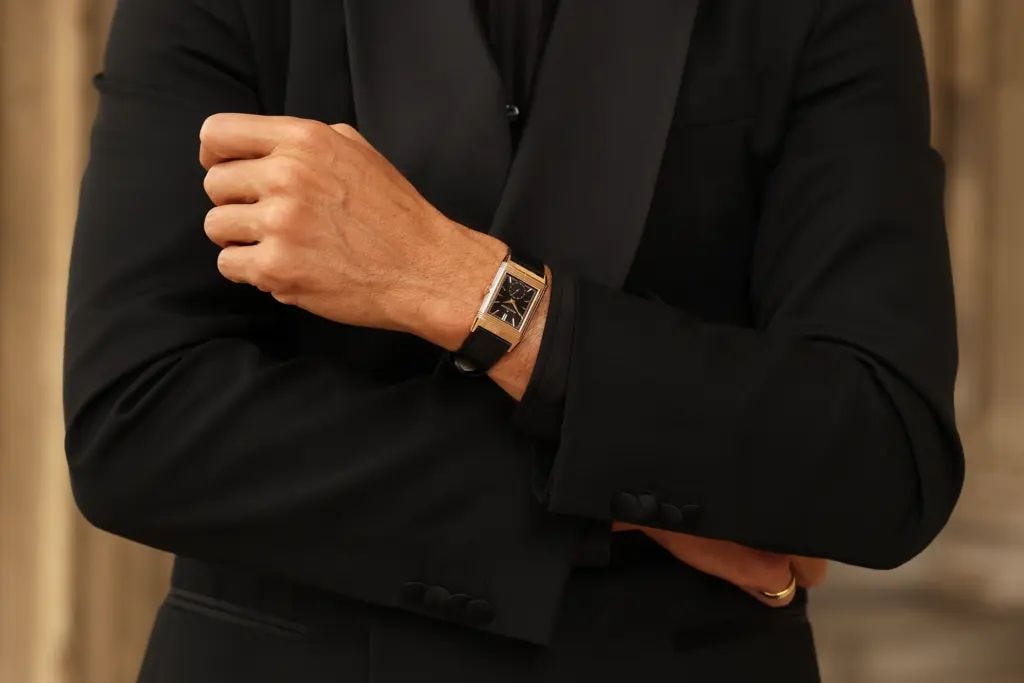
The dress watch is finding renewed relevance through the qualities that have always distinguished it: restrained dimensions, a legible dial, balanced proportions, and the ability to disappear comfortably beneath a shirt cuff. Interest in smaller watches gives those virtues a fresh audience, including younger collectors who are discovering that visual presence does not depend on case size.
This feature considers how that approach appears across watches including Blancpain’s Villeret Ultraplate, Vacheron Constantin’s Historiques American 1921, Breguet’s Classique 5177, Chopard’s L.U.C 1860, and Patek Philippe’s Calatrava. Their personalities vary considerably, from deliberately angled displays to traditional numerals and quietly elaborate dial work. What connects them is an emphasis on considered design. Wearing one well begins with proportion and comfort, while leaving room for a dress watch to become an everyday companion.
The Small Complications: Understanding the Rotating Bezel
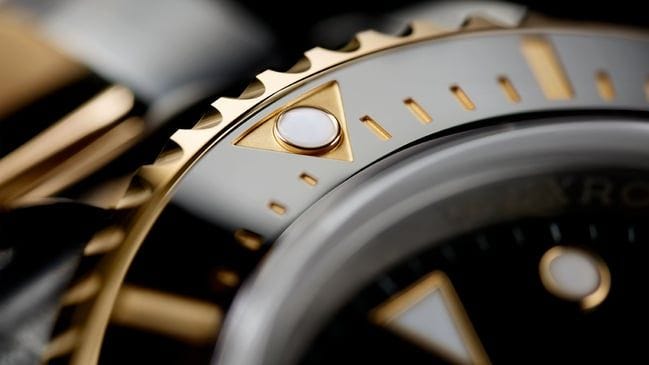
A rotating bezel can add considerable usefulness without adding another hand or a more complicated movement. Depending on its scale, it can track elapsed time, support the reading of another time zone, count down toward a deadline, or perform calculations that once mattered directly to pilots and navigators.
This guide explains the differences between those applications and the safety features associated with them. A dive bezel’s unidirectional action, for example, serves a practical purpose by limiting the consequences of an accidental adjustment. Internal rotating rings, locking systems, compass markings, and slide-rule scales demonstrate how much functionality can be built into the case surrounding a movement. It is a useful reminder that some of watchmaking’s most satisfying complications are operated directly by the wearer.

According to Ariel: Make Room for Human Watch Curation
Discovering watches through an experienced enthusiast can offer something an automated recommendation struggles to provide: an explanation grounded in taste, experience, and context. Ariel’s argument for human curation centers on the value of recommendations that help collectors understand an object and develop their own preferences.
The concern is that engagement-driven feeds repeatedly promote familiar names and commercially effective imagery, narrowing the apparent range of choices. A knowledgeable curator can introduce an overlooked design, explain a historical connection, or challenge a fashionable assumption. The strongest version of that relationship encourages curiosity and disagreement. For collectors, the reward is a broader understanding of watches and a clearer sense of why a particular piece deserves attention.
New Watches
MeisterSinger Panthero Jumping Hour Gets a Light-Blue Guilloché Dial
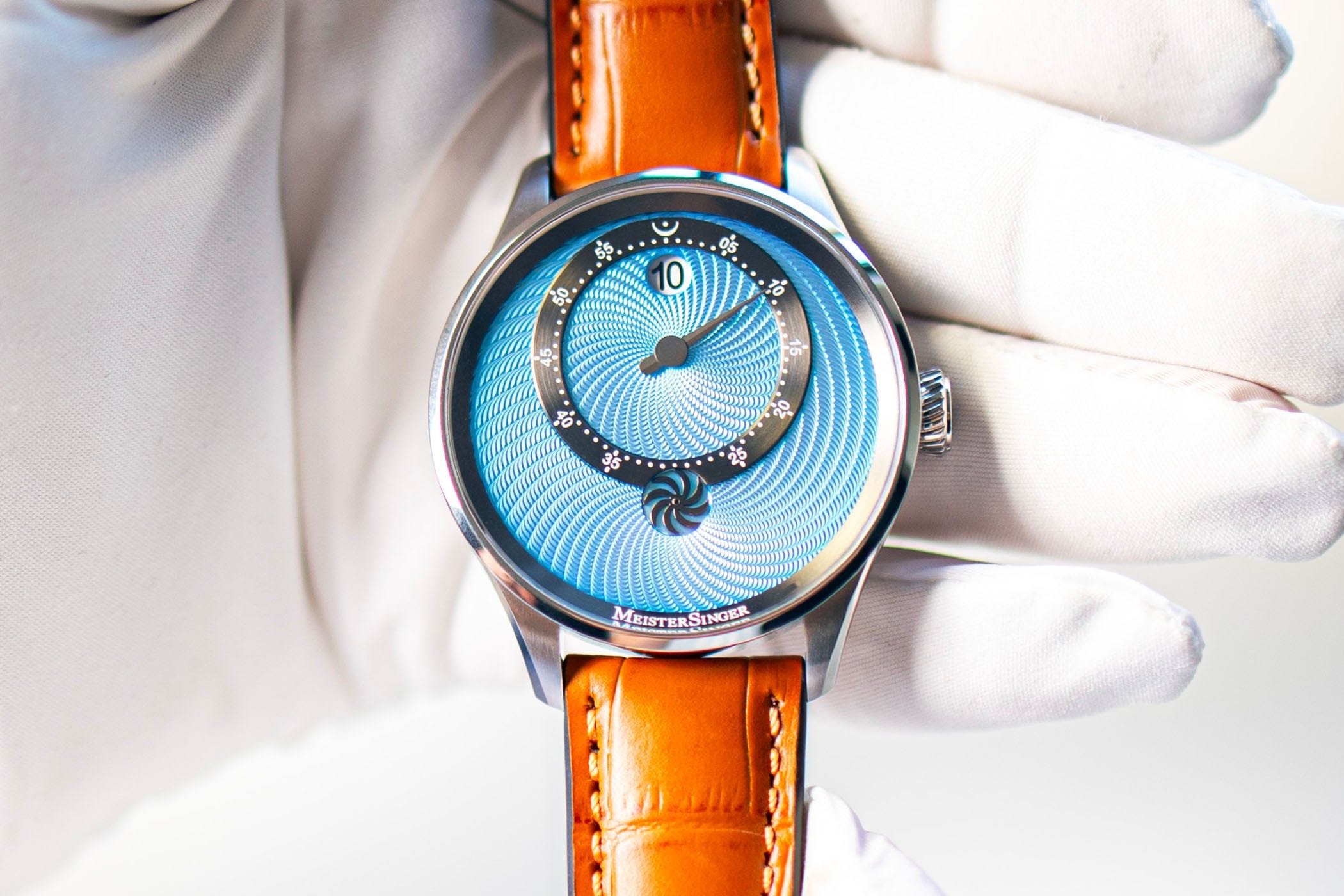
MeisterSinger gives its Panthero Jumping Hour a more decorative expression with a light-blue dial finished using traditional hand-operated guilloché machinery. The textured surface works against dark-gray accents, an off-center minute display, and the brand’s rotating sun-wheel detail, creating a composition with considerably more movement than the usual restrained dress watch. A 40.5 mm stainless-steel case combines polished and brushed surfaces, sapphire crystals, and 50 meters of water resistance.
Inside is the automatic MS-JH-01, based on the Sellita SW300 and fitted with a jumping-hour module, with a stated 47-hour power reserve. Limited to 25 examples, the edition arrives on a cognac-colored, crocodile-embossed calfskin strap with a double-folding clasp. Its attraction rests on the pairing of a distinctive time display with a dial that rewards close inspection. Price: approximately US$8,950, converted from €7,990 including VAT.
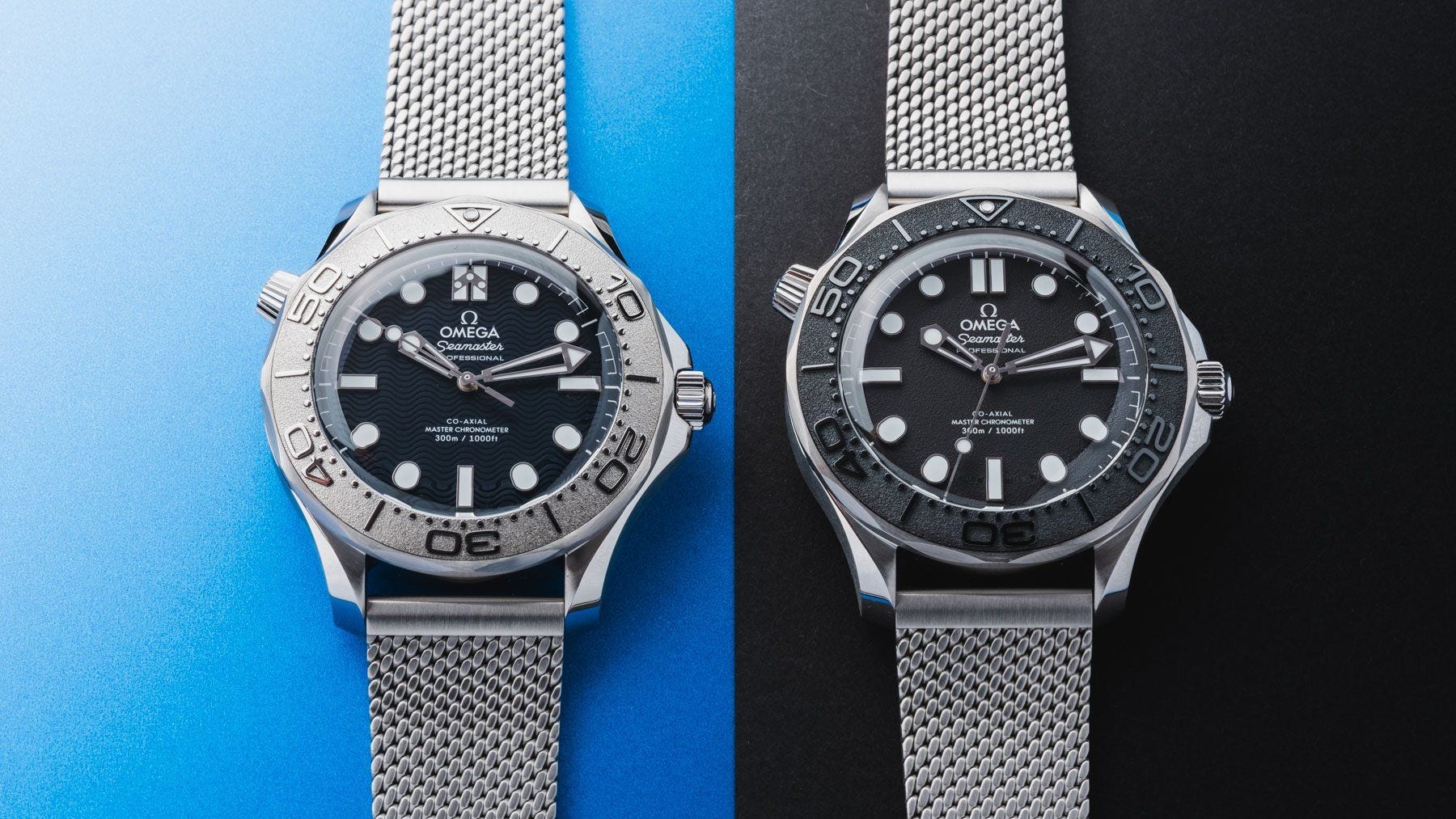
Omega Seamaster Diver 300M: James Bond Meets Spectre
Omega turns its enduring connection with James Bond into a choice between opposing identities, introducing James Bond and Spectre interpretations of the Seamaster Diver 300M. Both stainless-steel watches use a 42 mm case, offer 300 meters of water resistance, and run on the automatic caliber 8806. Their personalities emerge through the details: the Bond version pairs a blue gun-barrel dial motif with a titanium bezel, while the Spectre edition adopts a darker treatment with a black ceramic bezel and matte black aluminum dial.
Steel mesh bracelets feature a slimmer clasp, and the display backs reveal customized rotors that extend the theme beyond the dial. For collectors seeking the more elaborate presentation, separate Bond and Spectre box sets each combine a steel watch with a platinum-gold counterpart and special accessories; each set is limited to 77 numbered examples. Price: US$8,700 for an individual stainless-steel watch; US$89,800 for either two-watch limited-edition box set.
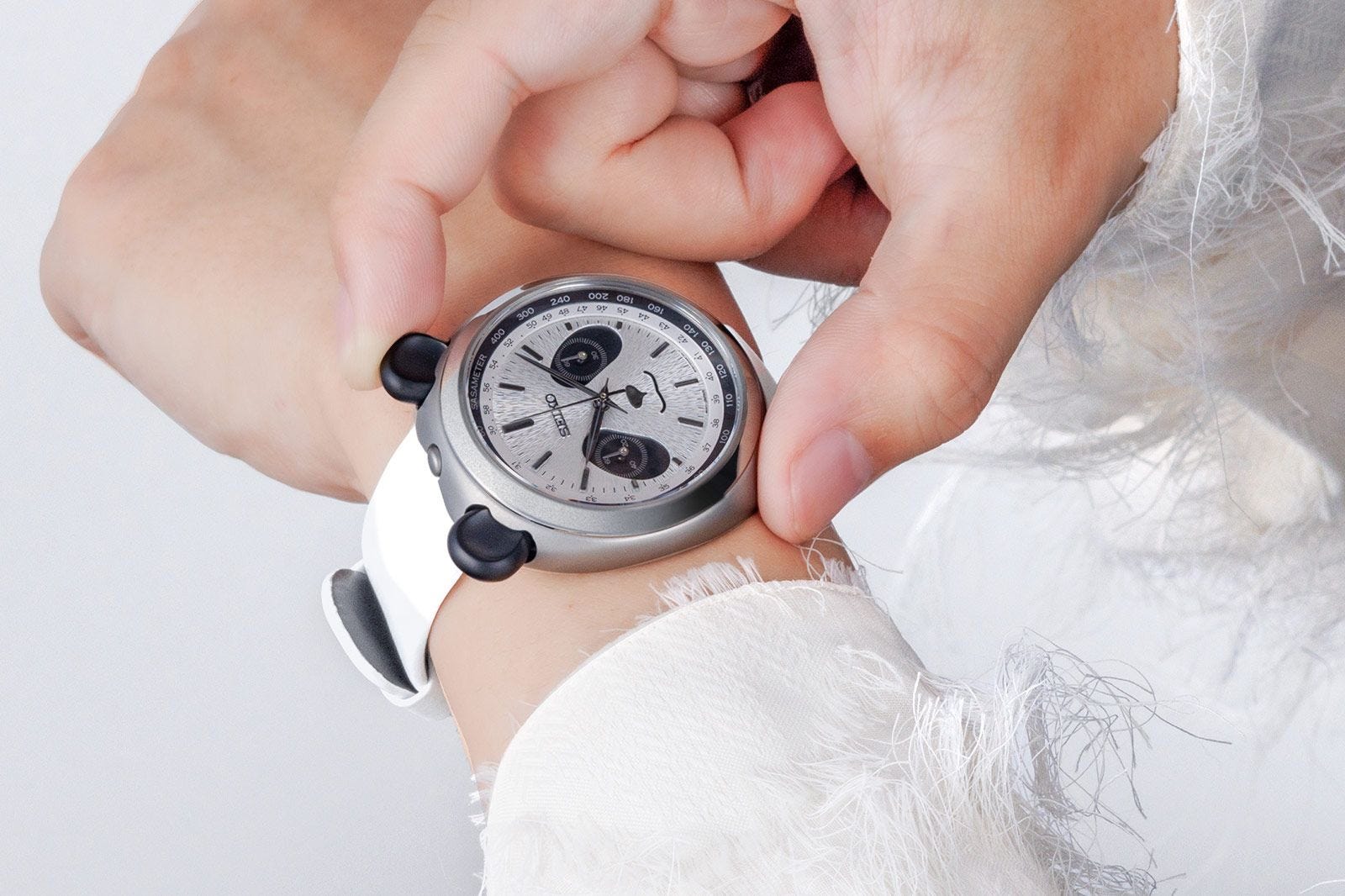
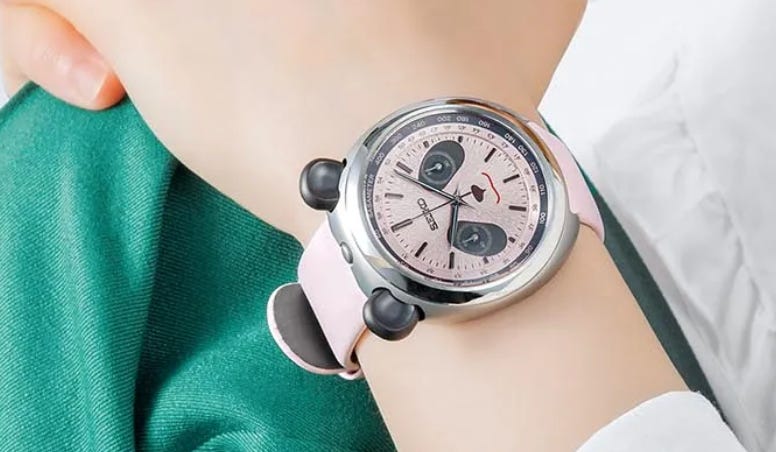
Seiko’s Power Design Project Makes the Panda Chronograph Literal
Seiko’s Power Design Project Panda Chronograph takes one of watch collecting’s most familiar nicknames and gives it an unmistakably animal-inspired interpretation. White and pink versions arrange their contrasting subdials like facial markings, while pushers positioned at 11 and 1 o’clock suggest ears. A bamboo-referencing “Sasameter” scale carries the theme into the dial’s finer details.
The watch measures 43 mm across and 14.6 mm thick, making this a deliberately expressive design rather than a discreet vintage-style chronograph. Seiko’s quartz caliber 8T61 supplies the timing functions and a stated accuracy of plus or minus 15 seconds per month. Production totals 5,000 examples—3,000 white and 2,000 pink—with preorders opening October 6 and deliveries expected in November. Price: approximately US$675, converted from £510.
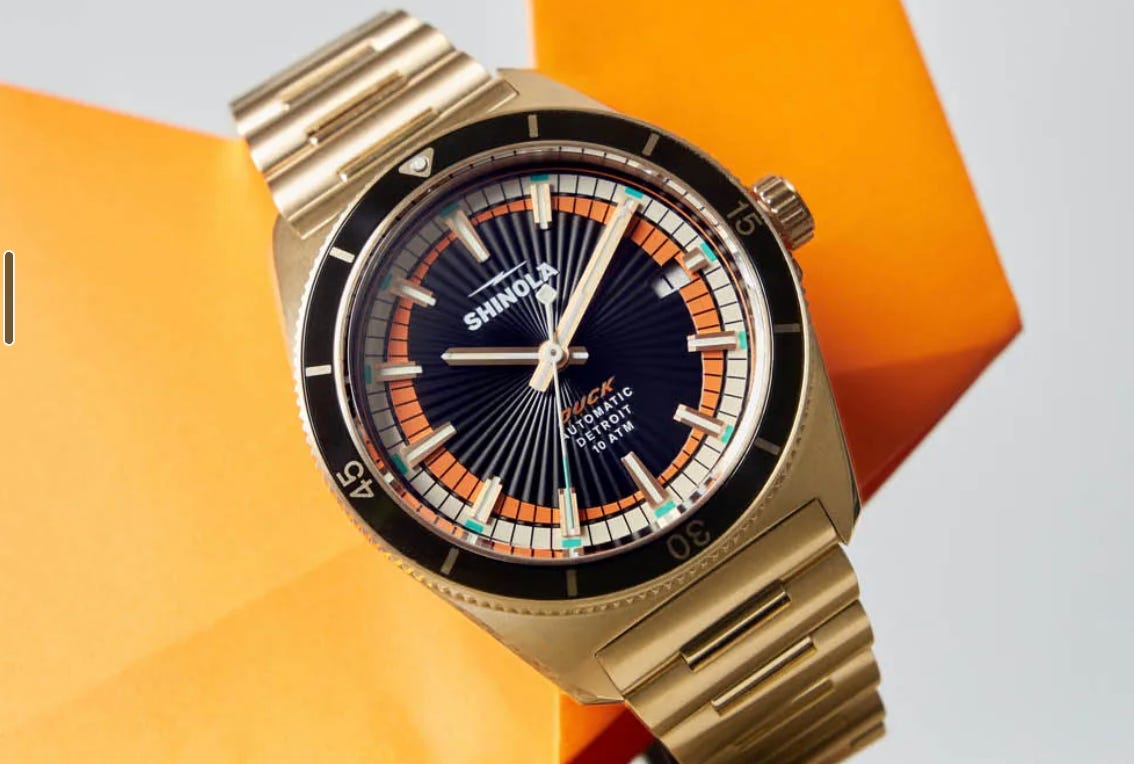
Shinola’s Duck Goes Automatic—and Keeps Its Sense of Humor
Shinola brings mechanical power to its Duck collection with a range of automatic watches housed in approachable 38 mm cases. The launch includes two conventional stainless-steel versions, a gold-PVD model, and a gift-set offering, all built around the collection’s recognizable H-link bracelet with quick-release attachment. Standard models use Miyota’s automatic caliber 9015, with a stated 42-hour power reserve.
The surrounding campaign is as conspicuous as the watch itself, bringing together Tefi Pessoa, Kareem Rahma, Benton McClintock, and NEMS, alongside a Cheerios collaboration billed as a “Duck Watching Snack.” That playful presentation gives Shinola a way to introduce mechanical watches without making the conversation overly formal. The compact case and familiar bracelet format provide the practical foundation beneath the marketing. Price: US$895 for the standard stainless-steel models; US$1,095 for the gold-PVD and gift-set editions.
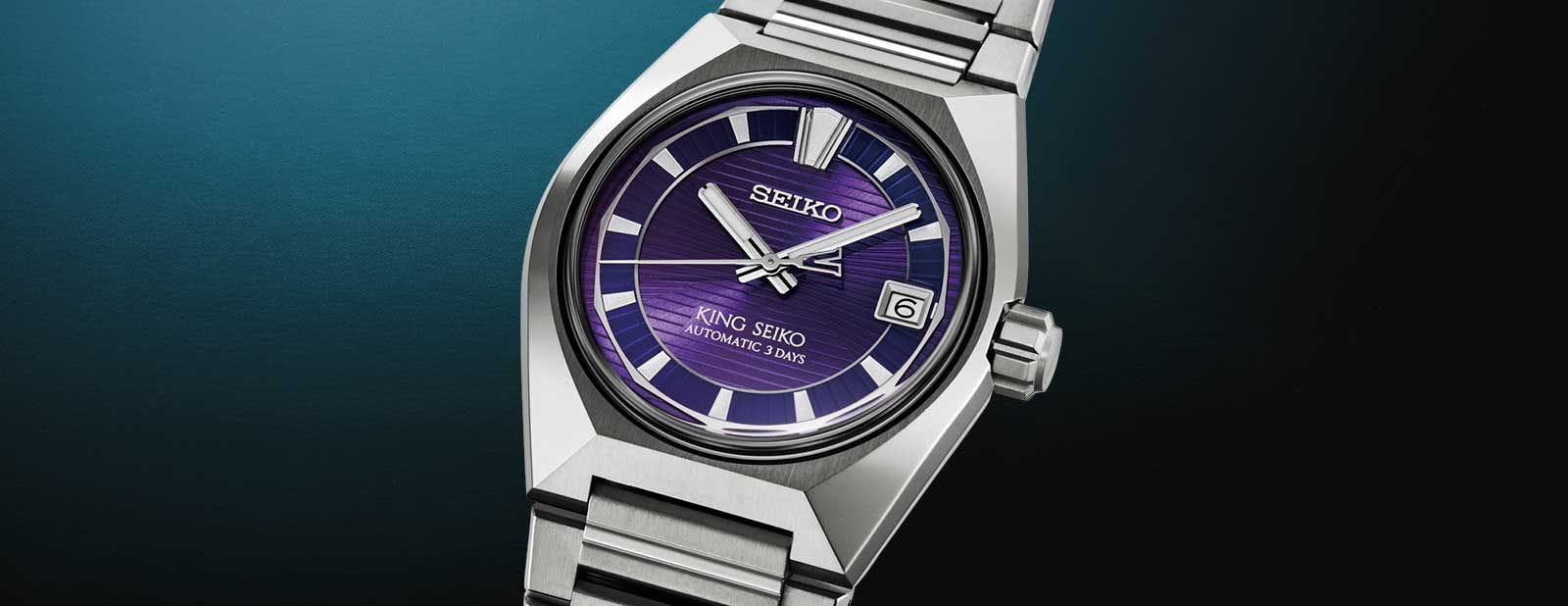
King Seiko VANAC Finds a New Angle in Titanium
King Seiko’s VANAC continues its reinterpretation of 1970s design with titanium construction and three dial treatments inspired by Tokyo. References HKF001, HKF002, and HKF003 preserve the collection’s angular case and flowing bracelet architecture while reducing the weight associated with an otherwise substantial sports watch. The 41 mm case combines multiple surfaces and pronounced geometry, giving the design much of its identity before the dial comes into view.
Power comes from the automatic caliber 8L45, which operates at 28,800 vibrations per hour and provides approximately 72 hours of running time. A sapphire display back, luminous hands and markers, and 100 meters of water resistance support its everyday ambitions. For collectors drawn to integrated-looking sports watches, the titanium VANAC offers an unusually assertive interpretation of that familiar category. Price: US$3,850.
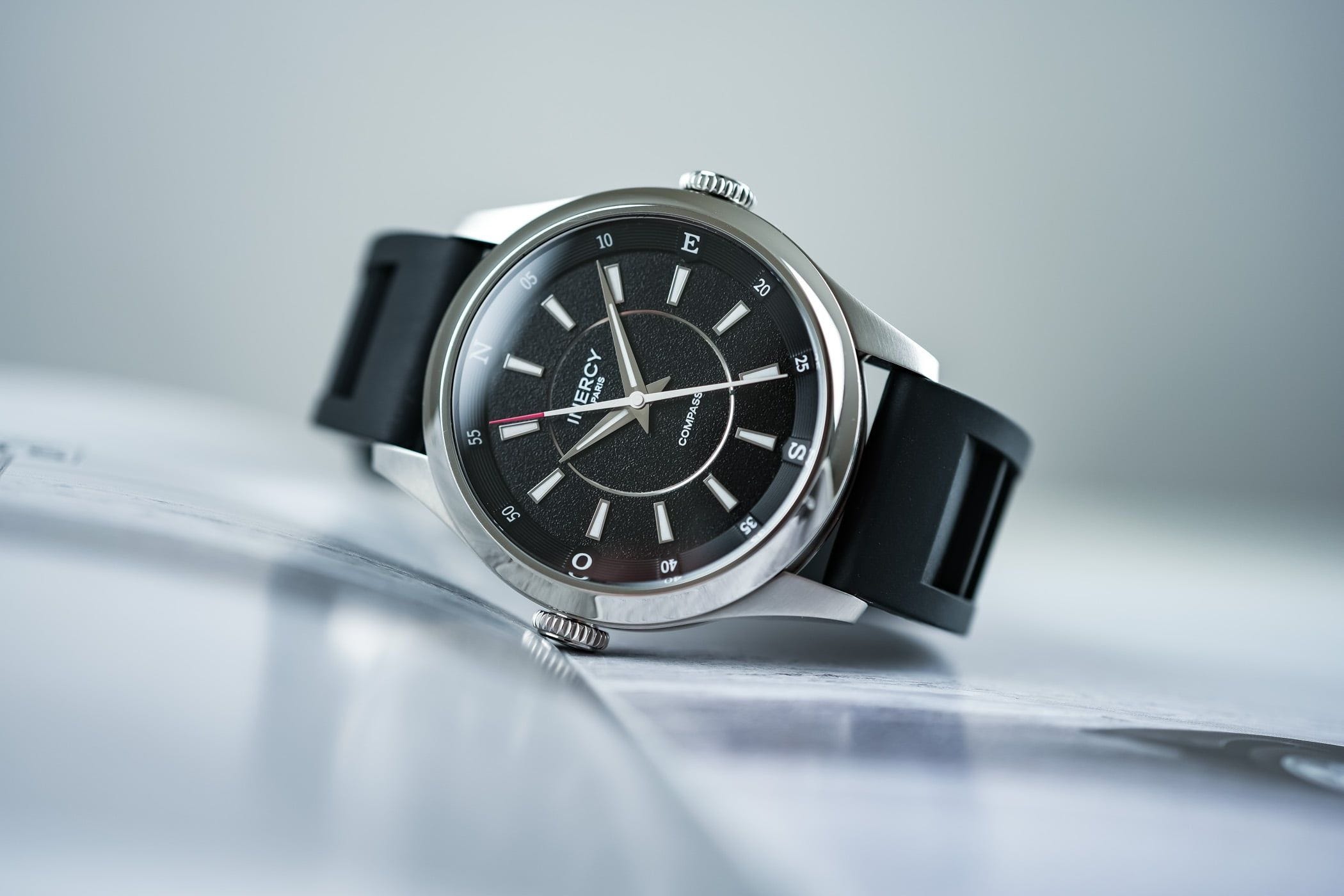
Inercy Paris Introduces the Compass Collection
Inercy’s Compass collection builds its identity around a 39 mm stainless-steel case with two crowns and an internal rotating bezel. The bezel supports timing and solar-compass use, while textured Light and Dark dials, luminous Dauphine hands, and a red-tipped, double-ended seconds hand create a distinctive visual arrangement. A sapphire exhibition back reveals the customized rotor of the Swiss La Joux-Perret G101 automatic movement, which offers a 68-hour power reserve.
Each color is limited to 150 examples and comes with both a black nubuck leather strap and a vented black rubber strap. The launch also includes a promotional treasure hunt: three randomly distributed gold cards among the first 300 deliveries entitle their recipients to an additional watch with a brown dial and gold-toned case. Preorders open October 6, giving the young collection a combination of practical functionality and launch-day theater. Price: approximately US$2,005, converted from €1,790.
Reviews
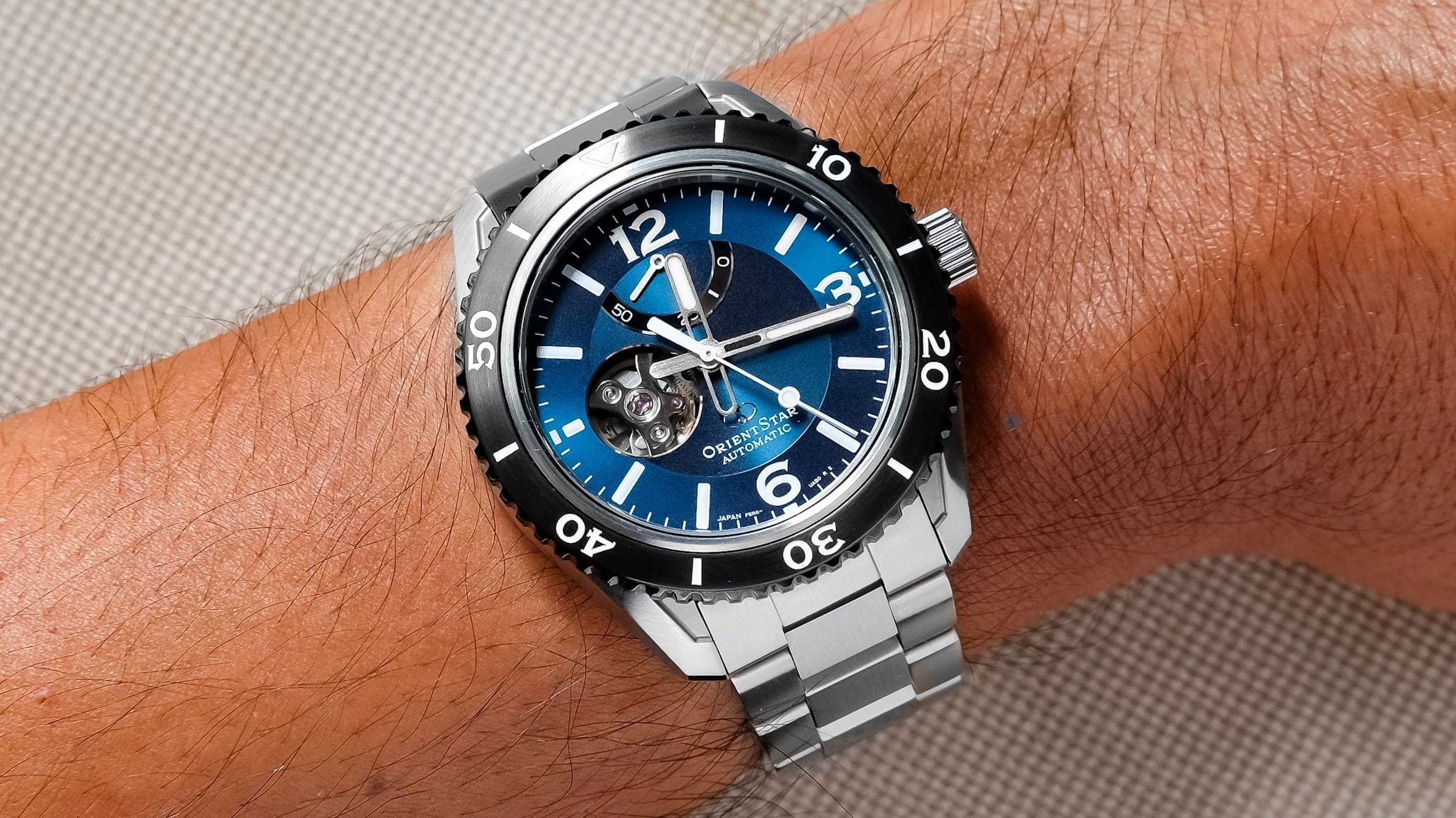
Can Orient Star Build a Better US$1,000 Diver?
The Orient Star RK-AT0106E makes a strong first impression through its teal-green dial, elaborate casework, and combination of an open-heart display with a power-reserve indicator. Its 43.2 mm case and substantial bracelet place it firmly in the large sports-watch category, while the visible mechanics give it a more decorative personality than many straightforward tool divers.
The review finds plenty to admire in the finishing and changing dial color, but daily wear introduces qualifications. Size and weight are noticeable, particularly on smaller wrists, and the reviewer reports a crown-tightening concern on the tested example. Luminous performance is useful without matching the brightest Seiko alternatives. At approximately US$1,000, the Orient Star makes its case through visual richness and detail; buyers should give equal attention to fit and handling.
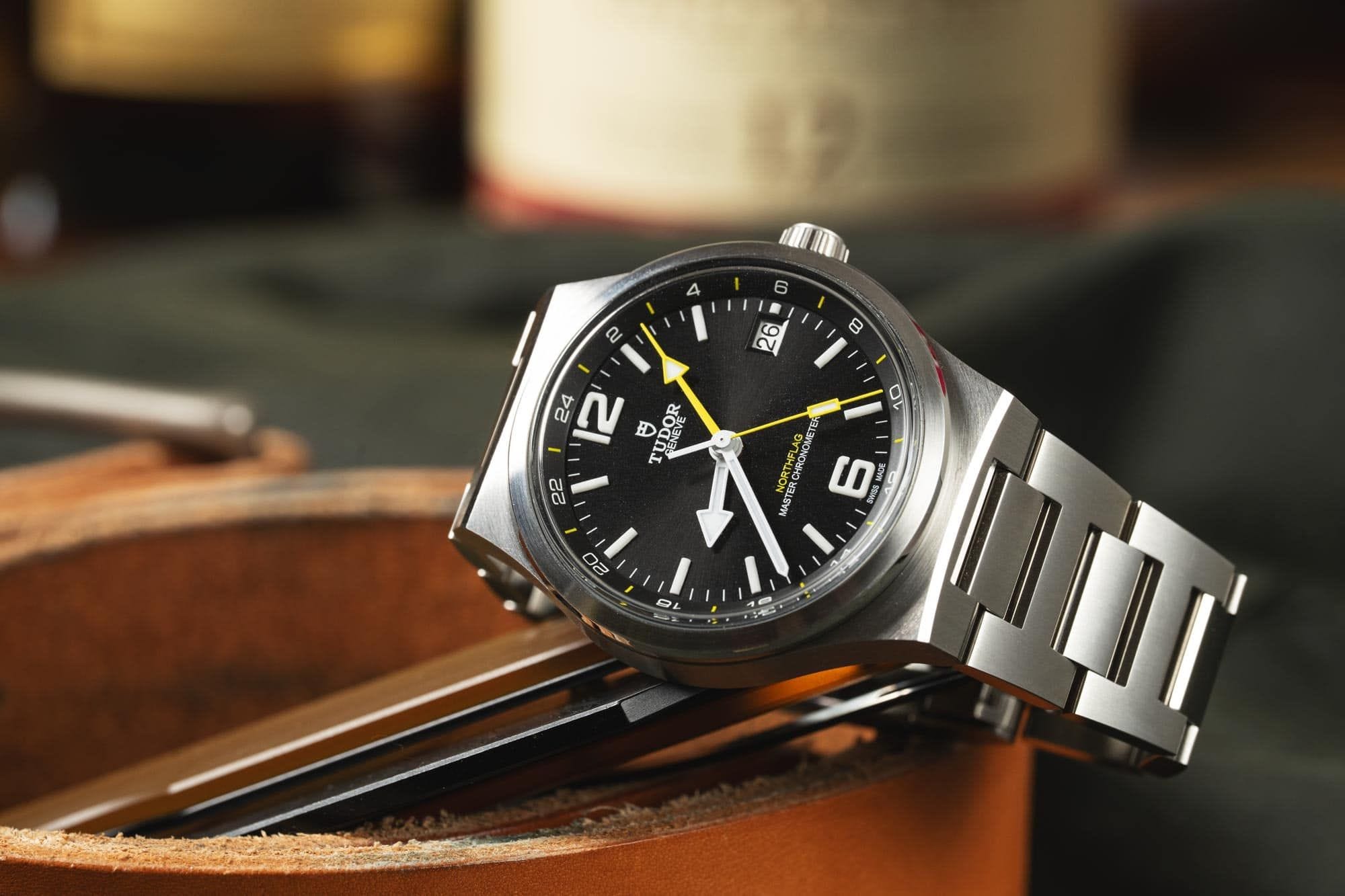
The Tudor Northflag Gets a Second Chance
Tudor’s Northflag returns to a market far more receptive to integrated-bracelet sports watches than the one that greeted the original North Flag in 2015. The new interpretation retains a 40 mm steel case and recognizable design ancestry while introducing GMT functionality, a revised black sunburst dial, and a more polished approach to the case and bracelet.
The MT5652-U movement brings Master Chronometer certification and a stated 65-hour power reserve. The changes also remove two memorable elements of the original: its power-reserve display and contrasting ceramic bezel ring. That trade-off sits at the center of the review, which weighs improved balance and refinement against the loss of some unconventional charm. At US$5,525 and 12.7 mm thick, the new Northflag offers a distinct alternative within Tudor’s sports-watch range, particularly for buyers who prefer travel functionality without a dive-watch format.
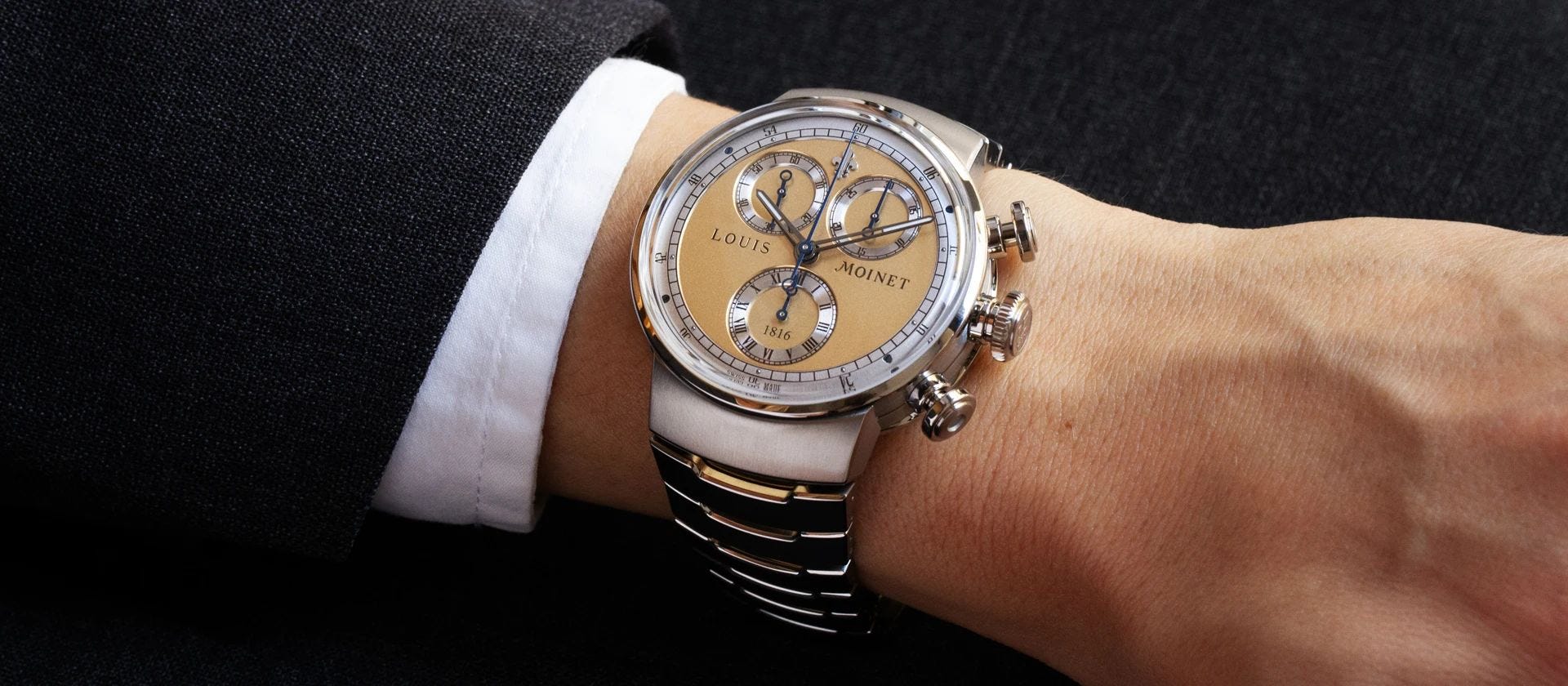
Louis Moinet 1816 Chronograph Champagne
Louis Moinet’s 1816 Chronograph Champagne builds its identity around the Compteur de Tierces and the early history of the chronograph. Its 40.6 mm grade-5 titanium case combines polished and satin-finished surfaces, while a champagne dial, Roman numerals, and three counters establish a more traditional visual language.
The hand-wound LM1816 caliber is central to the attraction, with column-wheel construction, a 48-hour power reserve, and decorative work visible through the sapphire caseback. The review considers how effectively the watch combines historical references with a contemporary material and a detailed movement presentation. Marking 210 years since the original 1816 instrument, this version places heritage firmly at the center of its appeal. Its stated CHF31,900 price, including VAT, converts to approximately US$38,385.
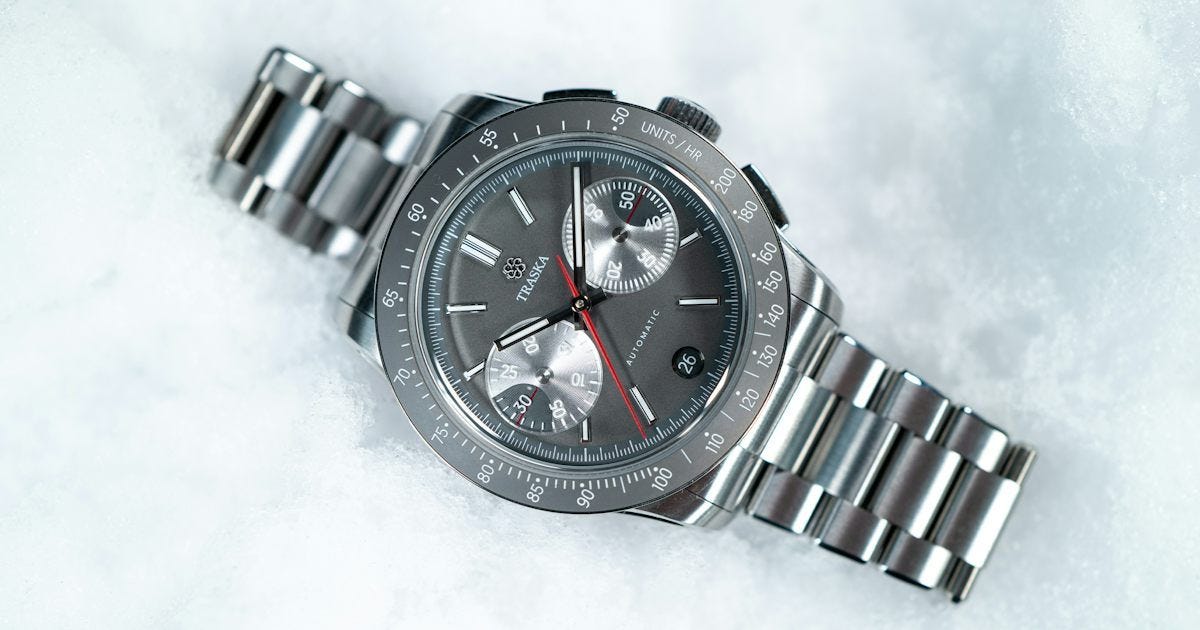
Traska Chronograph Tungsten Gray
Traska’s Chronograph Tungsten Gray represents an ambitious step for a brand better known for comparatively straightforward everyday watches. A mechanical chronograph brings greater complexity and a higher price, while the 39 mm steel case and bracelet preserve the compact, durable character that has helped establish Traska’s following.
Seiko’s NE86 automatic movement provides the mechanical foundation, and the design adds a stronger case profile, detailed bracelet finishing, and a distinctive chronograph display. The review examines whether those additions create a convincing next chapter for the brand while retaining the wearability that existing owners expect. At US$1,650, the watch enters a more demanding competitive field, where buyers will judge its movement, construction, and visual identity together.
Editorial
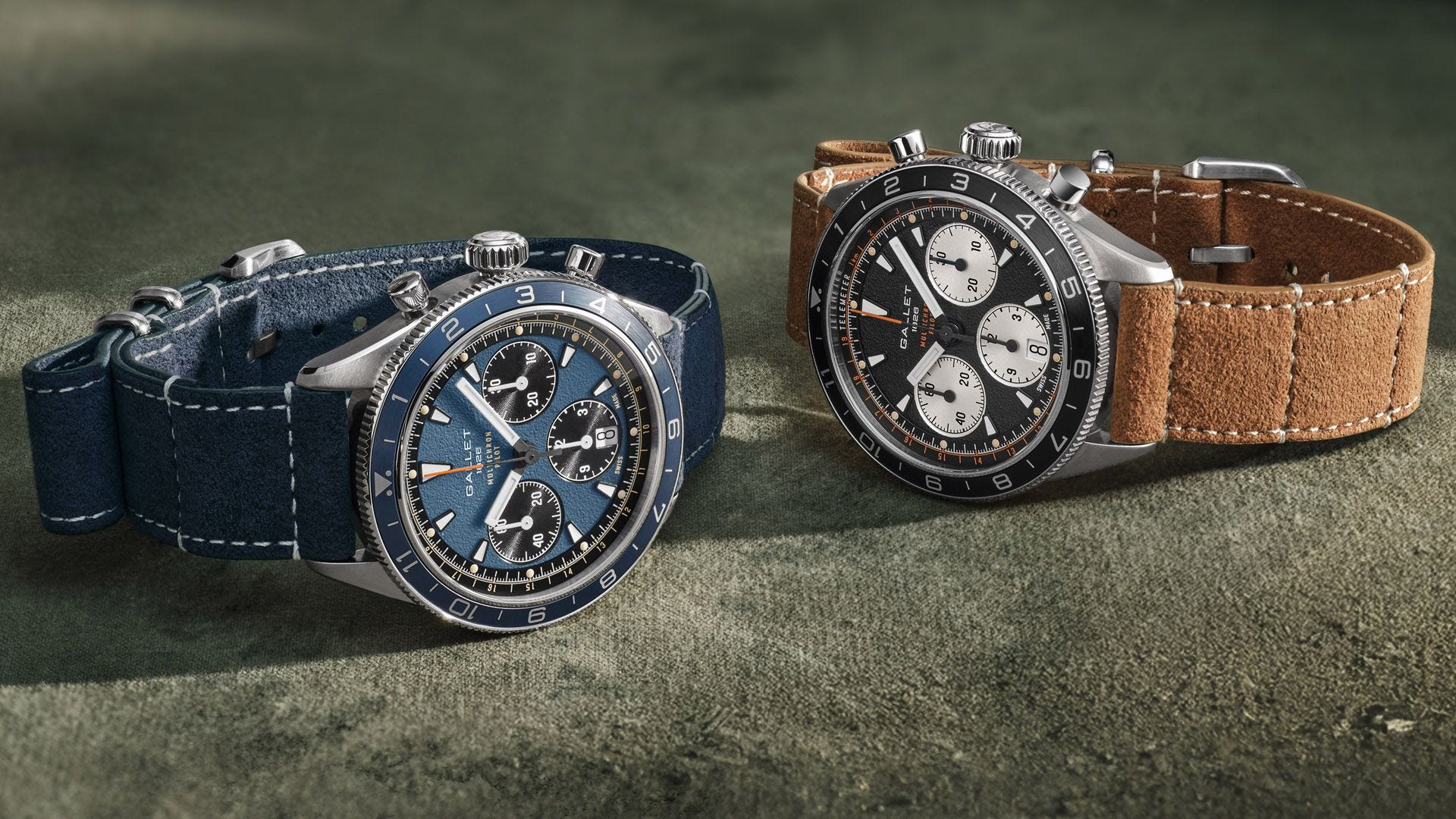
Nobody Was Asking for a Gallet Revival
Reviving a historic watch brand can make strategic sense long before collectors demonstrate that they want the resulting watches. This editorial examines Gallet’s return within the broader grouping of Breitling, Universal Genève, and Gallet, asking how corporate ambitions align with actual demand.
The market evidence described in the piece is mixed. Gallet’s auction median reportedly doubled after the acquisition announcement, while dealer prices rose only about 8 percent—a useful distinction between attention around a relatively small auction sample and the wider market’s willingness to pay. Universal Genève occupies a different position, with heightened activity and expectations surrounding its return, while Breitling’s much larger supply shapes its secondary-market behavior. The central challenge is turning renewed visibility into products collectors want to own for years. A respected archive can provide a starting point; the watches must supply the lasting reason to care.
Podcasts
Scottish Watches #820: Karl Brown Brings Chronography to Dublin
Designer, collector, and Chrome Calibre founder Karl Brown joins Scottish Watches to discuss the creation of Chronography, the watch event scheduled for October 10 at Dublin’s Smock Alley Theatre. More than 20 brands and independent Irish makers are expected to participate, with exhibitions, launches, talks, and a live podcast recording giving collectors several ways to engage.
The conversation explores the work involved in turning an enthusiast’s idea into a public event and the value of letting Irish collectors meet brands they often encounter primarily online. A magazine and a charity raffle supporting breast cancer research add further dimensions to the program. With the event scheduled from 10:30 a.m. to 5:30 p.m., the episode serves as both an introduction to the organizer and a preview of a day built around direct conversation.
Videos

MB&F at 20: Max Büsser on Risk, Survival, and What Comes Next — EsperLuxe
Max Büsser reflects on two decades of MB&F, looking at the decisions and risks involved in building a watch company around unconventional ideas. The anniversary provides a chance to consider the less visible work behind spectacular products: sustaining a business, maintaining conviction, and continuing to experiment.
The discussion also turns toward the company’s future and the challenge of preserving a distinctive creative identity as expectations grow. For anyone interested in independent watchmaking, the appeal is the opportunity to hear a founder describe the relationship between imagination and survival in his own terms.

“New Omega Bond Seamaster Has One Big Problem” — Britt Pearce
Britt Pearce takes a critical look at the new Bond Seamaster, adding a skeptical voice to the attention surrounding Omega’s latest cinematic tie-in. The video offers a companion to today’s launch coverage, particularly for viewers who want to consider objections alongside the collection’s visual appeal.
The headline signals a strong criticism, but should not by itself be read as evidence of an established mechanical defect. Watch for the substance of Pearce’s argument and how it affects the ownership proposition, then compare that assessment with your own priorities for a Bond-themed Seamaster.

“The Rolex Waitlist Is Dead”—Examining the Argument — Zenikura Finance
Zenikura Finance considers whether changing market conditions are weakening the waitlist culture associated with buying a Rolex. The video frames availability, supply, and buyer behavior as parts of a broader reassessment of the brand’s scarcity narrative.
Its sweeping title is best approached as an argument to examine. Access can differ substantially by reference, retailer, and location, so a broad market claim needs to be weighed against those distinctions. For collectors following the relationship between retail availability and resale premiums, the discussion offers another perspective on how expectations may be shifting.

Thierry Stern on Patek Philippe’s Heritage, Future, and Watch Art Grand Exhibition — Perpetual Passion
Thierry Stern discusses Patek Philippe’s identity through the connected subjects of heritage, craftsmanship, and the company’s future. The conversation considers how an established watchmaker continues to develop while maintaining the continuity that collectors associate with its name.
The Watch Art Grand Exhibition 2026 provides a setting for that broader discussion, bringing the manufacture’s history and present-day ambitions into public view. For viewers interested in the thinking behind a major watch house, the interview offers a useful complement to product announcements and individual watch reviews.
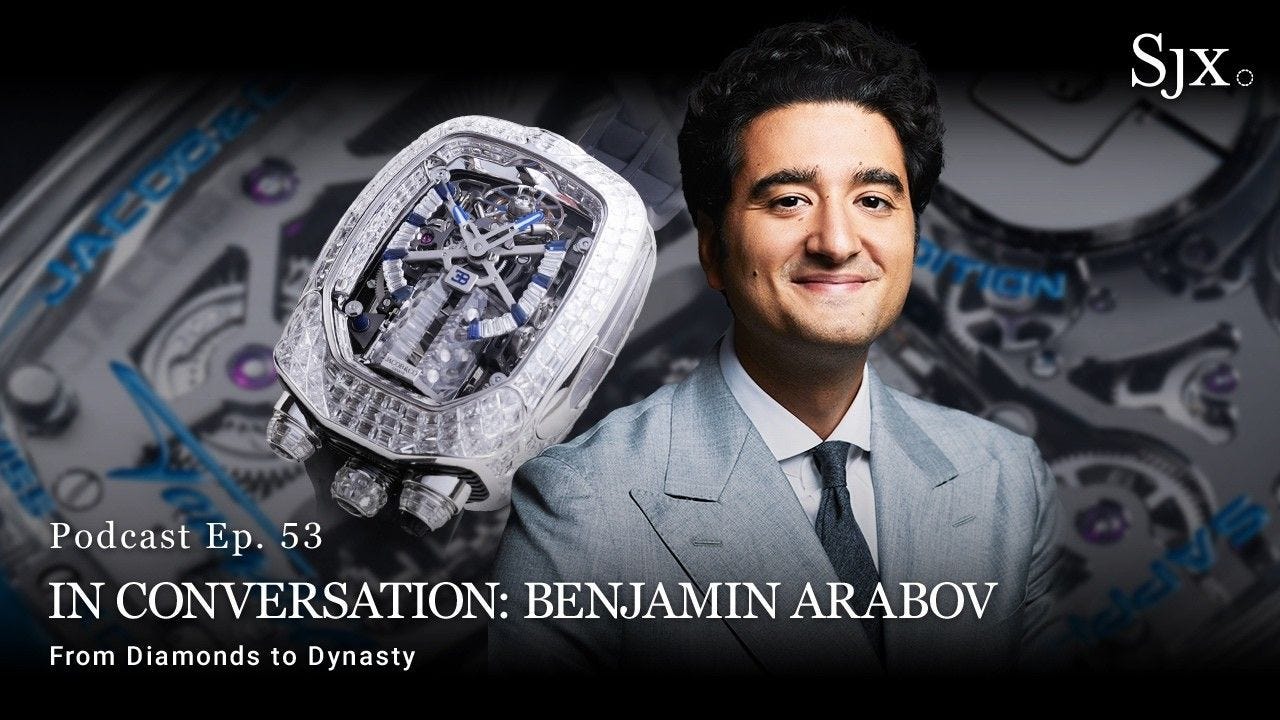
SJX in Conversation With Benjamin Arabov: Building Jacob & Co. Beyond the Spectacle
Benjamin Arabov joins SJX to discuss Jacob & Co.’s development from the Five Time Zone era into increasingly ambitious mechanical watchmaking. The conversation addresses the engineering behind its attention-grabbing designs, how ideas become products, and the role smaller cases can play in reaching additional collectors.
Partnerships involving Bugatti and The Godfather provide examples of how the company translates outside associations into watchmaking concepts. The interview also examines celebrity clientele, retail relationships, and the longer-term challenge of building a family business that can sustain its founder’s creative ambition. It offers considerably more business and product context than the brand’s most photographed watches typically receive.
Auction Results
Harry Winston Falls US$14,245 Short of Reserve
The October 5 auction of the 2025 Harry Winston Midnight Moon Phase 39, reference MIDQMP39RR002, ended with a high bid of US$4,200, leaving the rose-gold, diamond-set watch unsold against its US$18,445 reserve. The shortfall was US$14,245, or approximately 77.2 percent below reserve. Bidding reached just 22.8 percent of the seller’s minimum.
That is a substantial disconnect between the seller’s expectations and the demand expressed in this auction. The result should not be treated as a completed sale or a definitive valuation of every comparable Harry Winston. It does show that this offering attracted nowhere near the bidding required to establish a transaction at the reserve.
Auction Report
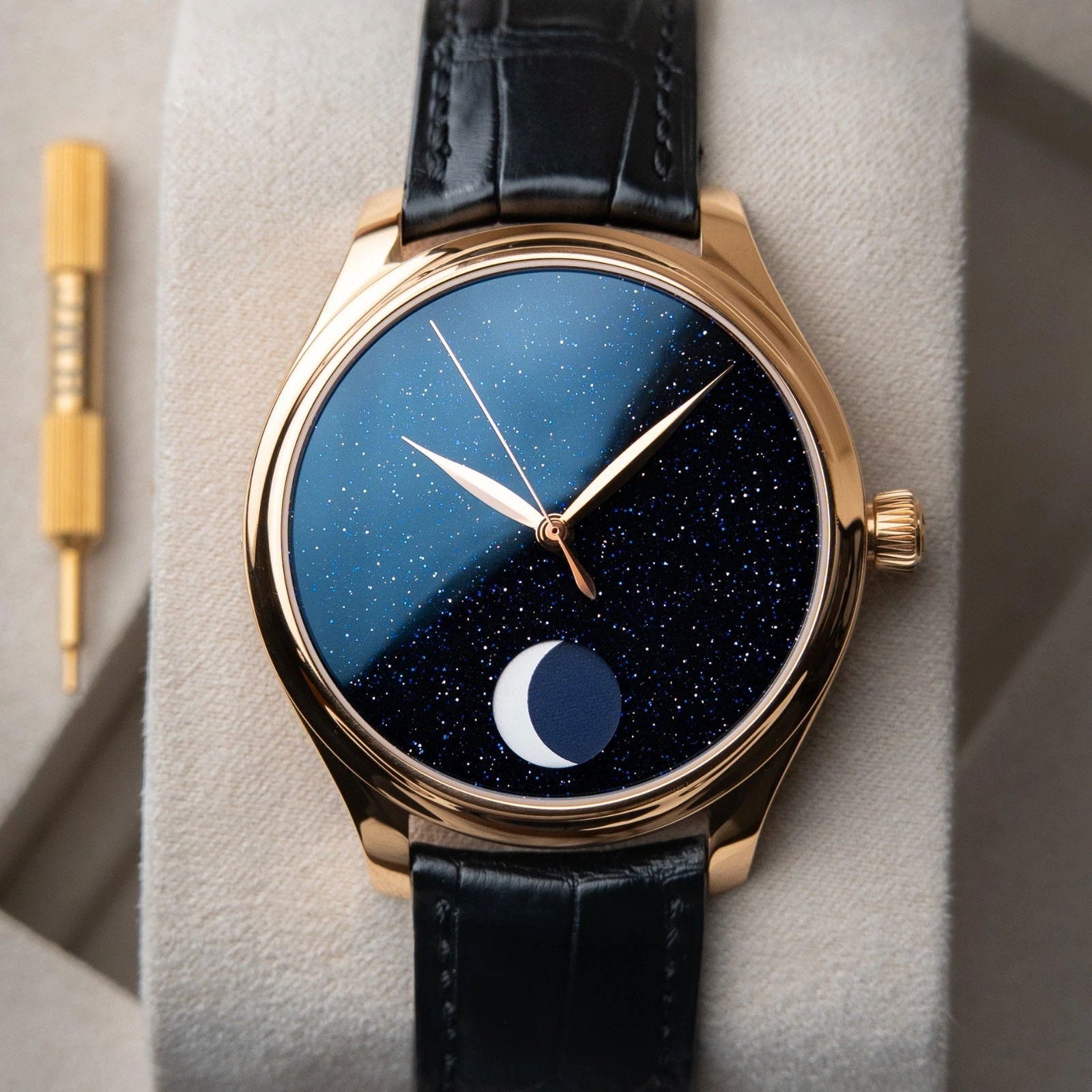
A Thousand-Year Moon Meets Today’s Market: Moser’s Aventurine Endeavour Goes to Auction
Today’s auction features a 2021 H. Moser & Cie. Endeavour Perpetual Moon Concept Aventurine, reference 1801-0402, with bidding scheduled to end at 2:05 p.m. EDT today, Tuesday, October 6, 2026. One discrepancy deserves immediate attention: the listing calls the watch stainless steel, but Moser identifies 1801-0402 as the 18-karat red-gold version; the steel aventurine model is reference 1801-1201. The supplied condition notes also describe wear to rose-gold surfaces. The reference, case hallmarks, and accompanying papers therefore need to agree before bidders apply red-gold market comparisons.
The aventurine edition appeared in 2019, extending a Perpetual Moon lineage introduced in 2010, with production limited to 50 examples in each metal. Its appeal is unusually concentrated: a sparkling blue glass dial, an oversized moon display, and the absence of the usual logo and hour markers. The 42 mm case houses the hand-wound HMC 801, offering a seven-day power reserve and a moon-phase mechanism calculated to accumulate roughly one day of error in 1,027 years when kept running and correctly set. That figure describes the lunar indication’s precision, not a promise that the watch can operate for centuries without maintenance.
The red-gold reference launched at CHF39,900. Current advertised examples of reference 1801-0402 place dealer asking prices at approximately US$31,800 to US$39,500, with differences in completeness, condition, and seller location. Those figures establish a retail asking range rather than proven transaction values, and an auction bid should not automatically be expected to match them. No reserve or current bid was supplied for today’s lot, so its relative attractiveness will depend on where bidding finishes, any applicable fees, and confirmation that the watch is the red-gold reference described.
The U.S.-located example comes with its box, papers, product literature, and hangtags. The dial is described as excellent, while the case and bezel show minor wear, including small nicks; the listing’s bracelet or strap category also records minor wear. Its service and polishing history remain unspecified. For the right collector, the combination of limited production, an unusually precise lunar complication, and a strikingly spare dial gives this Moser considerable appeal. The strongest bid will be informed by that appeal and by careful confirmation of exactly what is being offered.
Current bid: $19,000
Losing Time


Today’s Big Losers at Auction on Grailzee
Four watches, four failed sales, and four reminders that an asking price is a wish until someone agrees to pay it.
The 2026 Rolex Oyster Perpetual 34MM (124205), with black dial and Oyster bracelet, led the optimism parade. Against a $44,500 ask, the final bid reached just $9,999—a $34,501 shortfall, or 77.5% below asking. Bidders offered less than a quarter of the seller’s target. Apparently, the Rolex name wasn’t enough to get everyone reading from the same price sheet.
The 2016 Blancpain Villeret 37.5MM (6025-1542-55B), with white dial and leather strap, attracted a $10,300 high bid against a $27,000 ask. That left a $16,700 gap, finishing 61.9% below asking. An elegant watch, certainly. The expectation that bidders would supply another $16,700 was perhaps its most ambitious complication.
The 2025 Jaeger-LeCoultre Reverso Tribute Monoface Small Seconds (Q713216J), with gold dial and rose gold bracelet, brought plenty of precious metal to the proceedings. Buyers brought considerably less enthusiasm: a $12,000 final bid against a $43,000 ask. The $31,000 shortfall put it 72.1% below asking. The Reverso can turn its case around; turning that bid into $43,000 would require a different mechanism entirely.
The 2022 Breguet Tradition Seconde Retrograde 7097 (7097BR/G1/9WU), with skeleton dial and leather strap, came closest to its target—although “closest” is doing some generous work here. Its $14,100 high bid fell $9,400 short of the $23,500 ask, or 40.0% below asking. In this group, attracting 60% of the requested price qualifies as a comparatively grounded conversation.
Together, the sellers wanted $138,000, while the final bids totaled $46,399—a combined shortfall of $91,601, or 66.4% of the total asking amount. These weren’t deals that narrowly missed over a little last-minute haggling. Three of the four watches failed to attract even 40% of their asking prices. The Breguet showed the smallest disconnect; the Rolex showed the largest, both in dollars and percentage terms. These results alone don’t establish fair market values, but they do show that this bidding audience had very different ideas about price. To get these watches sold, sellers would likely need substantially lower expectations or buyers this auction failed to find.
Closing Time
A memorable watch can begin with a technical achievement, a familiar character, an unexpected color, or a detail that only its owner notices. Today’s issue offers examples of each—and plenty of reasons to look beyond the first impression.
Thank you for spending part of your day with BuyingTime. Keep asking questions, take time to enjoy what is already on your wrist, and we’ll see you tomorrow.