

BuyingTime in 30 Seconds
TimeVallée passes 50 locations with a Cairo opening, while retailers prepare for a holiday season shaped by fewer visits and more deliberate shoppers. Marathon and Watches of Espionage introduce a titanium SAR, Panerai explores both practical proportions and tourbillon territory, and MeisterSinger puts Dutch heritage on the dial. A features decode Speedmaster references and examine crown construction. In the auction room, rarity drives the conversation around Rolex and Cartier. Yesterday’s Parmigiani sold for US$10,199; today’s Moser Streamliner Tourbillon Rainbow closes at 12:25 p.m. EDT.
Time Graphing Today’s Watch Universe
What, Exactly, Are We Paying For?
Today’s issue stretches from a titanium military watch to a miniature Arthurian forest, with a rainbow-set tourbillon waiting in the auction room. Somewhere between those extremes sits a question that every collector eventually has to answer: what, exactly, am I paying for? The movement is part of it. So are the materials, the workmanship, the history and the pleasure of ownership. The difficulty begins when we expect one of those things to explain the entire price.
The Marathon x Watches of Espionage Titanium SAR gives us a useful starting point because its changes have recognizable practical purposes. Titanium reduces weight. A longer power reserve makes an automatic easier to live with. A clear, no-date display serves the watch’s original reason for existing. There is still a collaboration story and a limited production run, but the buyer can identify what has changed and decide whether those improvements matter.
That is also the central question in today’s comparison of affordable and luxury military watches. More money can buy better materials, more sophisticated engineering and a stronger connection to actual military use. It can also buy an increasingly elaborate interpretation of military style. Both may be enjoyable, but they satisfy different desires. The useful exercise is to separate features you will appreciate on your wrist from features you mainly appreciate in the description.
Panerai makes that distinction especially interesting today. The new 42mm Luminor collection addresses something quite ordinary and quite important: fit. A watch can have an excellent movement and an unmistakable identity, yet still be the wrong size for someone who would otherwise buy it. Keeping the familiar crown bridge, strong dial and substantial water resistance while reducing the diameter gives more people a chance to enjoy the design.
Then comes the Luminor Tourbillon GMT Titanio, which moves the discussion toward mechanical ambition. Its horizontally rotating tourbillon and six-day reserve offer a very different reason to engage with the same brand. Few people need a visible tourbillon to organize their Wednesday. Plenty of collectors can nevertheless appreciate the ingenuity and work involved. Utility explains only a portion of why mechanical watches remain interesting.
The Blancpain Lady B makes a quieter engineering argument. At 19mm, it asks us to notice the achievement of fitting an automatic movement into a very small watch. Watchmaking accomplishments do not always arrive in large cases with openworked dials. Sometimes the difficult part is making the mechanism disappear into an object that looks effortless.
Elsewhere, the emotional proposition is more explicit. MeisterSinger’s Tulip edition draws on Delft blue, Dutch symbolism and the slower visual rhythm of a single hand. Roger Dubuis’s Metamorph Merlin builds an entire sculptural world around twelve knights. One is relatively approachable; the other belongs to an altogether different budget. Both demonstrate how decoration can become the principal reason someone wants a watch.
Auction results complicate the equation further. The Cartier Cheich story reminds us that a quartz movement does not prevent a watch from commanding an extraordinary price when rarity, design and collecting significance align. The Rolex “Paul Newman Lemon” operates in similarly specialized territory. At that level, buyers are evaluating particular objects with particular histories. Broad rules about which movement or metal should cost more become much less useful.
Today’s Moser auction brings several of these ideas together. The Streamliner Tourbillon Rainbow combines independent watchmaking, a distinctive integrated bracelet, a flying tourbillon and carefully matched sapphires. There is ample craftsmanship to admire. Yet a documented auction result and current dealer asking prices tell very different stories about its monetary value. The watch does not become less impressive because someone paid less for another example. It does become harder to justify treating an ambitious asking price as an established market fact.
Retailers face their own version of this challenge. TimeVallée’s expansion into Cairo creates a new setting in which customers can encounter watches, ask questions and obtain service. Today’s Golden Quarter editorial argues that fewer store visits make the quality of each encounter more important. An attractive showroom creates an opportunity. Knowledge, attention and trust help turn that opportunity into a lasting customer relationship.
There is no requirement that every watch purchase withstand an accountant’s interrogation. Pleasure is a legitimate part of the hobby, and sometimes the most honest explanation is simply that a particular watch makes you smile. But enjoyment and clear thinking work well together. Understand the mechanism, recognize the craft, investigate the history and examine the price. Then decide which combination is worth paying for—and leave room for someone else to reach a different answer.
-Michael Wolf
News

TimeVallée Expands Beyond 50 Locations With Its First Cairo Boutique
TimeVallée has opened its first Egyptian store in Cairo’s Downtown Katameya, taking the Richemont-created multibrand retail network beyond 50 locations worldwide. The approximately 2,500-square-foot boutique brings together names including Baume & Mercier, Cartier, IWC Schaffhausen, Jaeger-LeCoultre and Panerai.
Operated by Nile Projects, the store includes a private VIP salon and an in-store watchmaker for quick services. Those facilities give the opening significance beyond the addition of another luxury storefront: customers gain a place to compare brands, discuss purchases and obtain support after the sale.
For a market where the physical presence of major luxury watch brands has been relatively limited, the boutique represents a meaningful expansion of access. Richemont and Nile Projects see the opening as the beginning of a broader opportunity in Egypt, with established international watchmaking presented through an experienced local retail partner.
Features
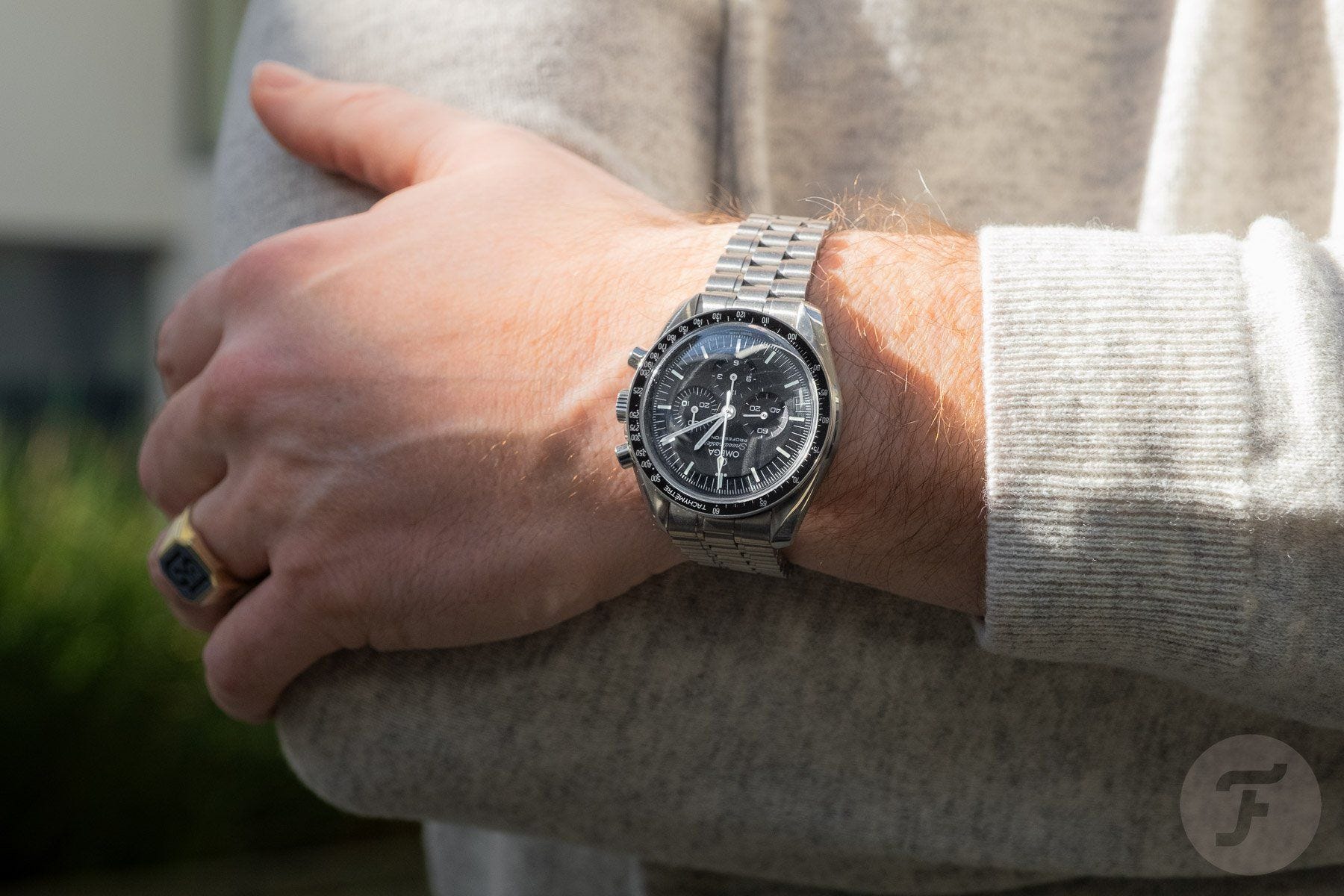
Omega Speedmaster Reference Numbers Explained
Speedmaster reference numbers can look like an exercise in making a familiar watch unnecessarily complicated. In practice, they provide a useful route through the collection’s many variations—provided the reader knows which numbering system applies.
This guide follows the progression from early identifiers through Mapics and the later PIC and PIC14 structures. Depending on the system, the codes help distinguish characteristics such as case material, movement category, dial configuration and bracelet or strap. The modern format is more detailed, but it belongs to a longer history of changing identification conventions.
The distinction between a reference number and a serial number is especially useful. A reference identifies a model or configuration; a serial identifies an individual watch and can assist with dating. For collectors comparing listings, checking a seller’s description or trying to understand an inherited Speedmaster, learning that vocabulary is time well spent.

Screw-Down Showdown: What Really Keeps Water Out?
A screw-down crown offers reassuring resistance beneath the fingertips, but the threads are only part of the story. Water resistance depends on an entire sealing system, including gaskets, crown-tube construction, case-back design and the condition of those components.
This feature examines how push-in and screw-down crowns secure their seals, along with the multiple sealing arrangements found in systems such as Twinlock and Triplock. A screw-down design helps hold the crown securely in its intended position, but a watch’s tested rating remains more informative than the crown style alone.
Gaskets also age, which means yesterday’s specification is not a permanent guarantee of today’s performance. For owners who swim or dive with their watches, maintenance and pressure testing deserve as much attention as the depth rating printed on the dial. The engineering is interesting; keeping the seals healthy is what makes it useful.
New Watches
Dollar conversions below are approximate equivalents of the quoted European prices, including VAT where specified, rather than confirmed U.S. retail prices.
MeisterSinger NL Edition Tulip: Dutch Heritage in Blue and White
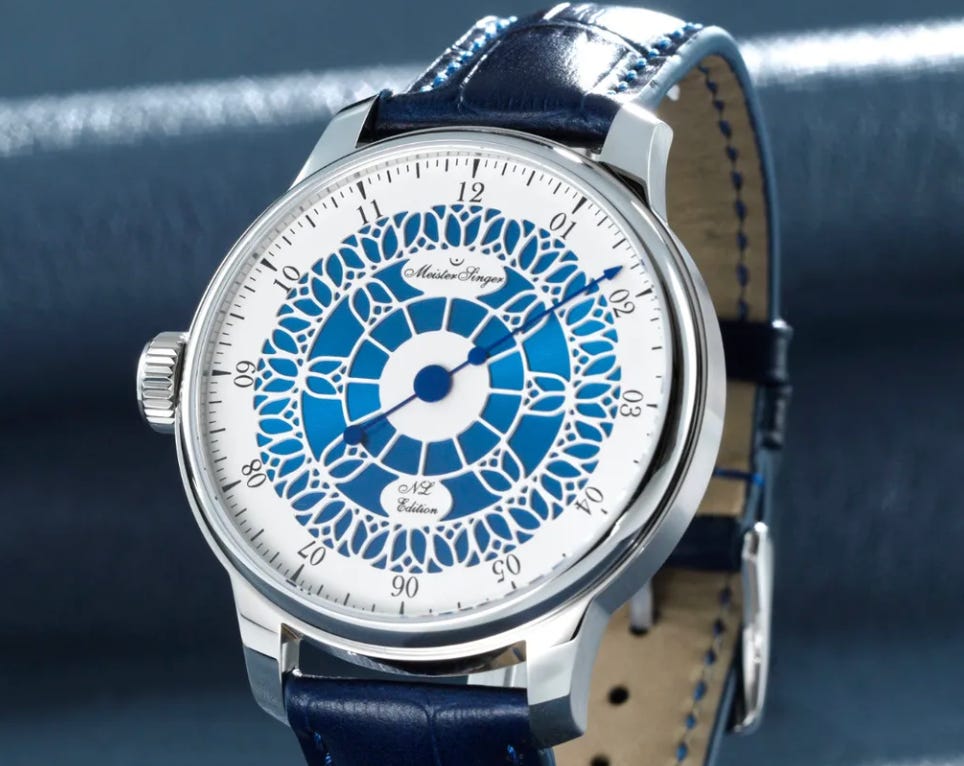
MeisterSinger’s latest Netherlands edition builds its identity around the tulip, combining a medium-blue sunburst foundation with a silver-white ornamental upper dial. The layered construction adds depth, while the blue-and-white palette recalls Delft ceramics. A left-side crown supplies another distinctive detail on the 43mm stainless-steel case.
The modified Sellita SW200 automatic movement drives MeisterSinger’s signature single hand, with the peripheral scale divided into five-minute increments. A sapphire exhibition back, blue calfskin strap and 50-meter water-resistance rating complete the package. Production is limited to 66 pieces; although the supplied introductory coverage quotes a higher figure, a Dutch retailer lists the watch at €2,590 including VAT. Price: approximately US$2,980.
A Closer Look at the MeisterSinger NL Edition Tulip 2026
A second look at the Tulip edition focuses on how its decorative dial works with MeisterSinger’s deliberately unhurried display. The long, needle-shaped hand reaches a five-minute scale around the perimeter, allowing the floral design to occupy the center without displacing the watch’s basic reading system. The blue sunburst surface changes character with the light, while the pale upper layer gives the pattern definition.
The 43mm case houses a modified SW200 running at 28,800 vibrations per hour with an approximately 38-hour reserve. A tulip motif also appears on the sapphire case back, extending the theme beyond the dial. Limited to 66 examples, this is the same Dutch-market edition explored above, presented through a more detailed examination of its construction and design. Price: approximately US$2,980, converted from €2,590 including VAT.
Marathon x Watches of Espionage Titanium SAR: A Familiar Tool Watch Gets Lighter
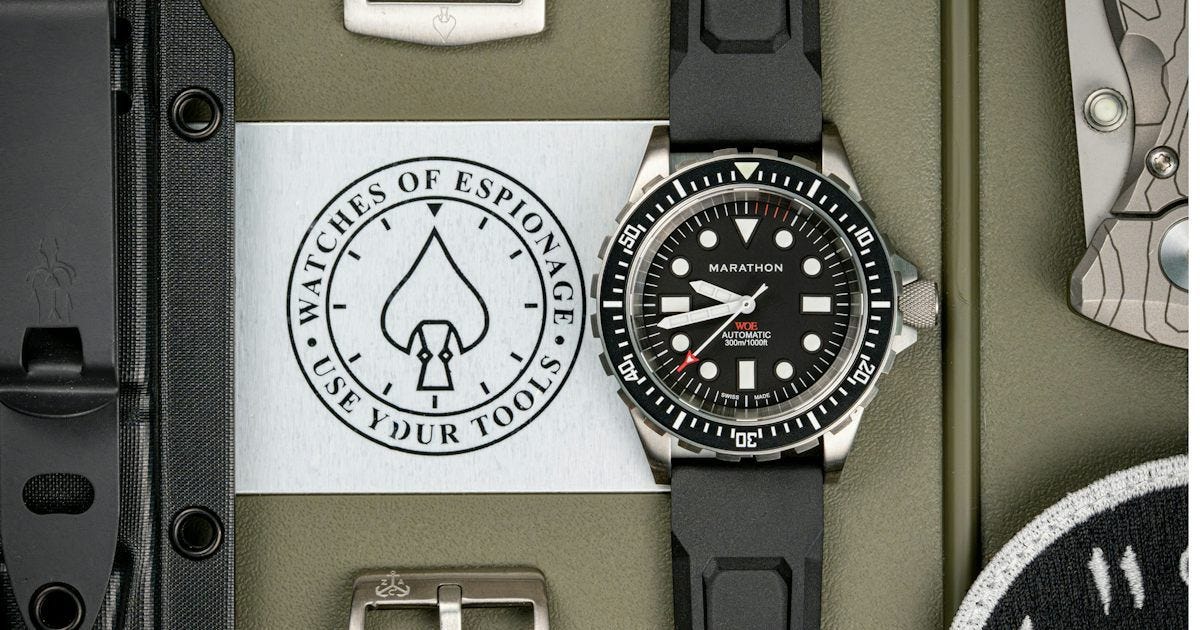
Marathon and Watches of Espionage have developed a 41mm SAR that introduces grade 5 titanium to Marathon’s watchmaking lineup. The lighter case retains the purposeful character of the search-and-rescue design, with 300 meters of water resistance, a black dial and applied markers illuminated by MaraGlo. A red W.O.E. wordmark and engraved Spearhead details identify the collaboration.
Inside is the no-date Sellita SW200-2B automatic movement, offering up to 65 hours of power reserve. The emphasis is on practical changes to an established platform, with reduced weight and an uncluttered display complementing the military connection. Production is limited to 200 pieces, with preorders scheduled for Thursday, September 24, and tentative deliveries beginning in January 2027. Price: US$2,250.

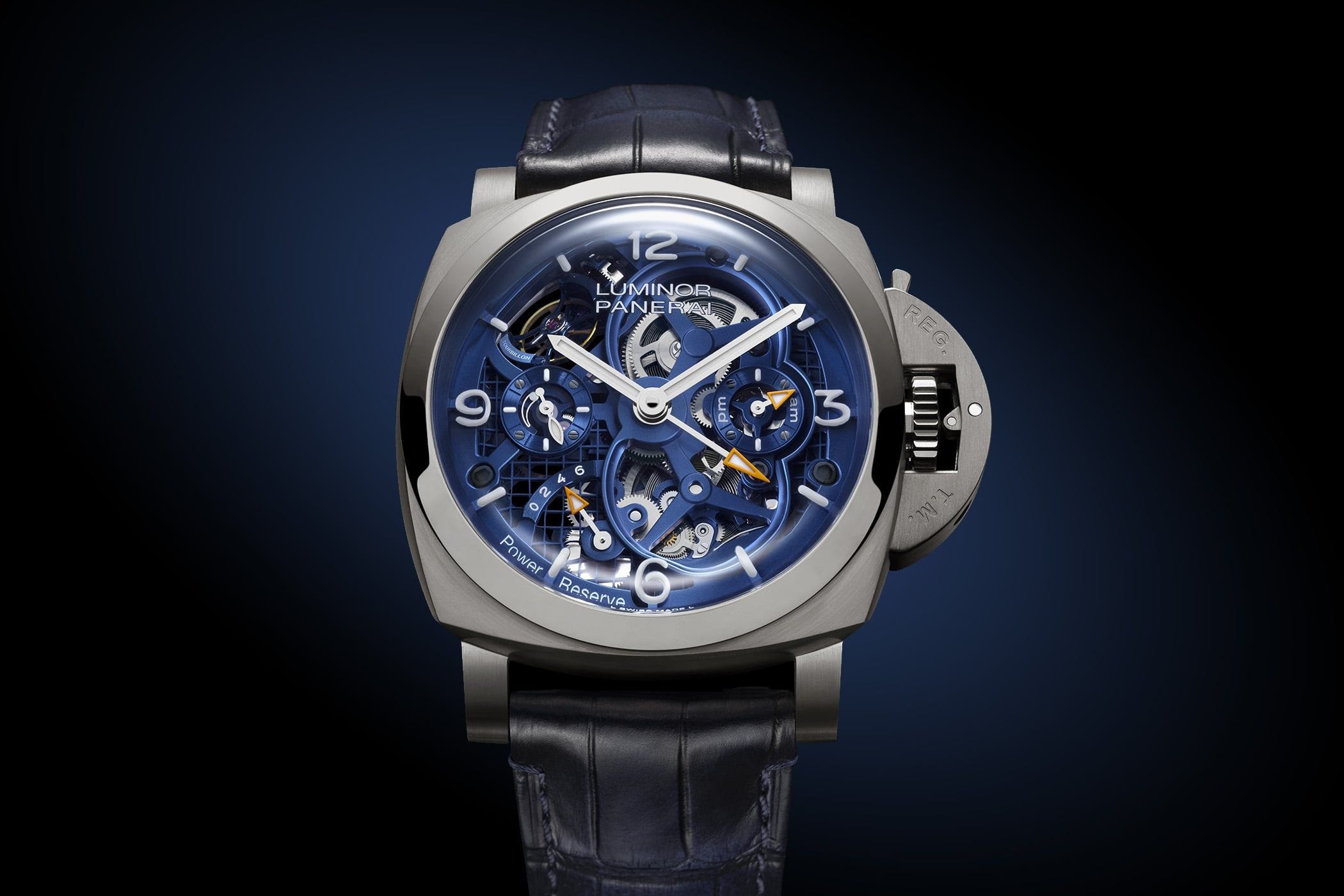
Panerai Luminor Tourbillon GMT Titanio PAM01784: Six Days of Mechanical Theater
Panerai’s Luminor Tourbillon GMT Titanio puts the manually wound P.2005/T caliber inside a substantial 47mm grade 5 titanium case. Its tourbillon rotates once every 30 seconds around an axis perpendicular to that of the balance, creating a distinctive display within the skeletonized movement. The titanium construction helps keep the reported weight around 105 grams despite the watch’s size.
The movement offers a 144-hour power reserve alongside GMT, an AM/PM indication and small seconds. Blue alligator and additional blue rubber straps provide different wearing options, while 100 meters of water resistance preserves a measure of Panerai’s sporting character. Release is scheduled for December 2026, placing this firmly at the mechanically ambitious end of the Luminor family. Price: approximately US$183,840, converted from €160,000.
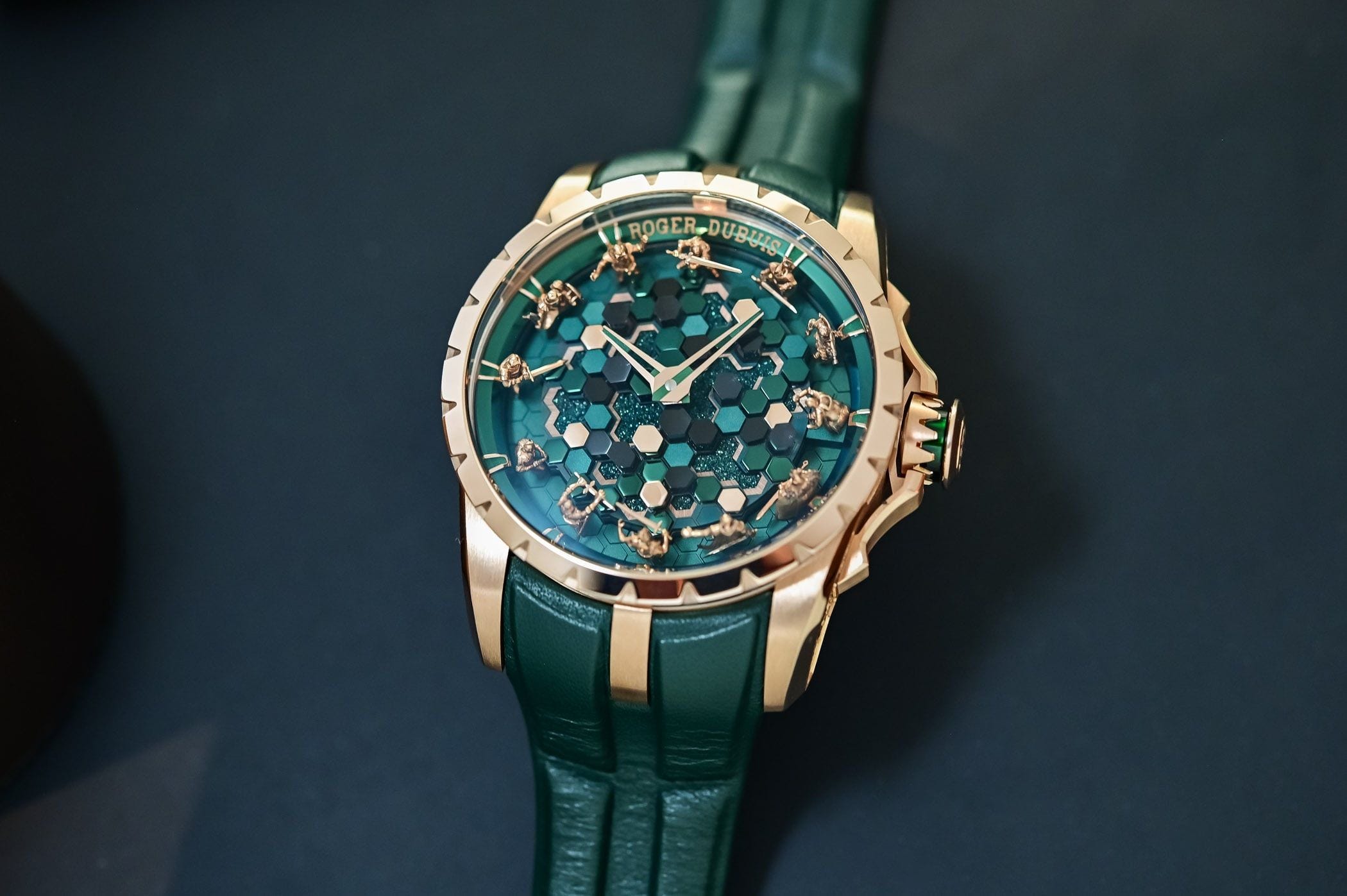
Roger Dubuis Metamorph Merlin: The Round Table Enters an Enchanted Forest
Roger Dubuis concludes its Merlin trilogy with a 45mm pink-gold watch that turns Arthurian storytelling into miniature sculpture. Twelve individually crafted knights surround a multidimensional landscape of 57 blocks, with green treatments, glass and gold creating the impression of an enchanted forest. Hand engraving on the case depicts Merlin’s transformation into a white stag.
The automatic RD821 caliber provides a 48-hour power reserve, with its finishing and open case back supplying mechanical interest beneath the elaborate exterior. A sapphire ring beneath the bezel offers a lateral view of the dial, and a green calfskin strap continues the color scheme. Production is limited to 28 watches; although some coverage lists pricing on request, published reporting gives a dollar figure. Reported price: US$439,000.
Comparisons
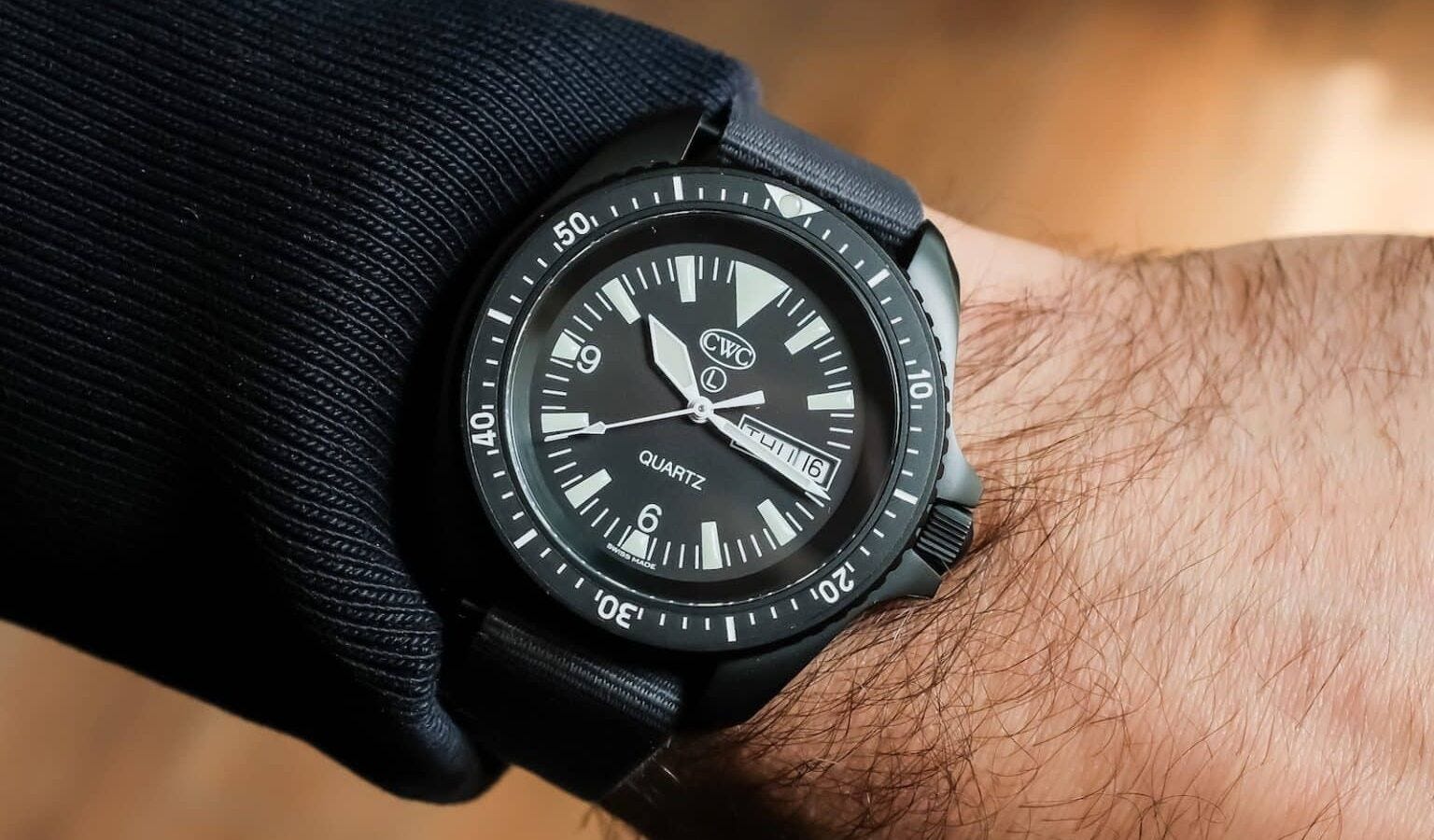
Affordable vs. Luxury Military Watches: What Does the Extra Money Buy?
Military watches begin with straightforward priorities: legibility, durability, reliability and ease of use. An affordable quartz or solar-powered watch can satisfy those requirements extremely well, which makes the case for spending more less obvious than a luxury advertisement might suggest.
Higher prices can bring tangible improvements, including titanium cases, sapphire crystals, better bracelets, specialized sealing systems and more sophisticated protection against environmental conditions. They can also buy historical credibility, refined finishing and the particular satisfaction of owning a watch connected to genuine military procurement.
This comparison explores where those benefits become meaningful and where personal preference takes over. A premium military watch may be an excellent purchase, but its value depends on what the owner actually wants from it. The most useful question is which added features improve the experience enough to justify the added cost.
Reviews
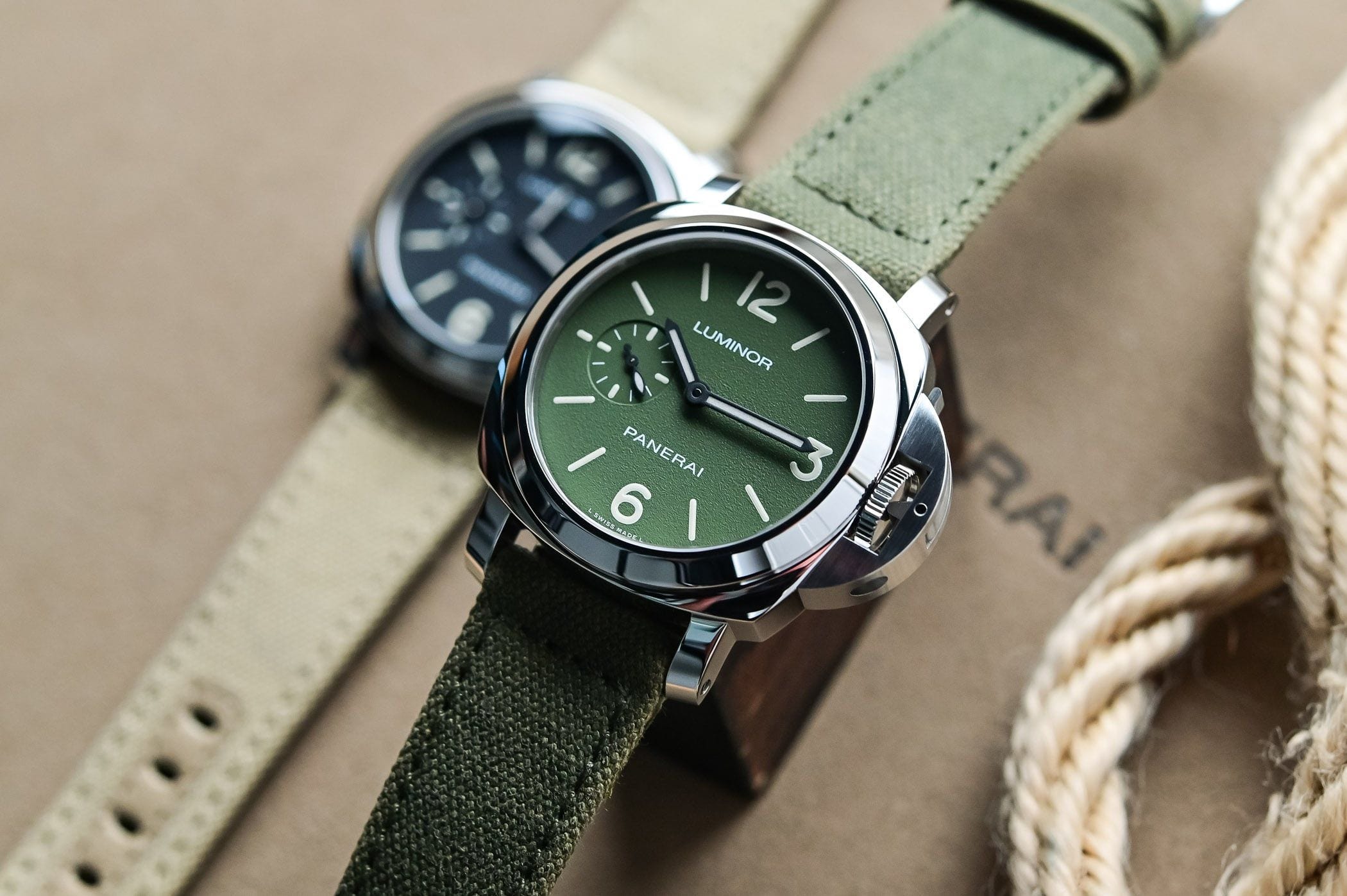
Panerai Goes Back to Basics With the New Luminor 42 Collection
Panerai’s latest 42mm Luminors retain the visual vocabulary that made the collection recognizable: a broad cushion-shaped case, prominent crown-protection bridge, strong numerals and an immediately legible dial. References PAM01710, PAM01711 and PAM01714 offer that familiar identity in a diameter more approachable than the traditional 44mm format.
The watches combine 500 meters of water resistance with an automatic movement providing a three-day power reserve. Black, green and blue dial treatments give the collection variety, while canvas straps reinforce its utilitarian appearance. The blue-dial PAM01714 adds a black DLC-treated case for a more contemporary presentation.
The review examines how successfully those proportions preserve the Luminor’s character. Reducing a case diameter is useful only if the resulting watch still feels coherent, and these models aim to make the design easier to wear without diluting its personality. Converted European pricing is approximately US$7,470 for the black and green versions and US$8,620 for the DLC model.
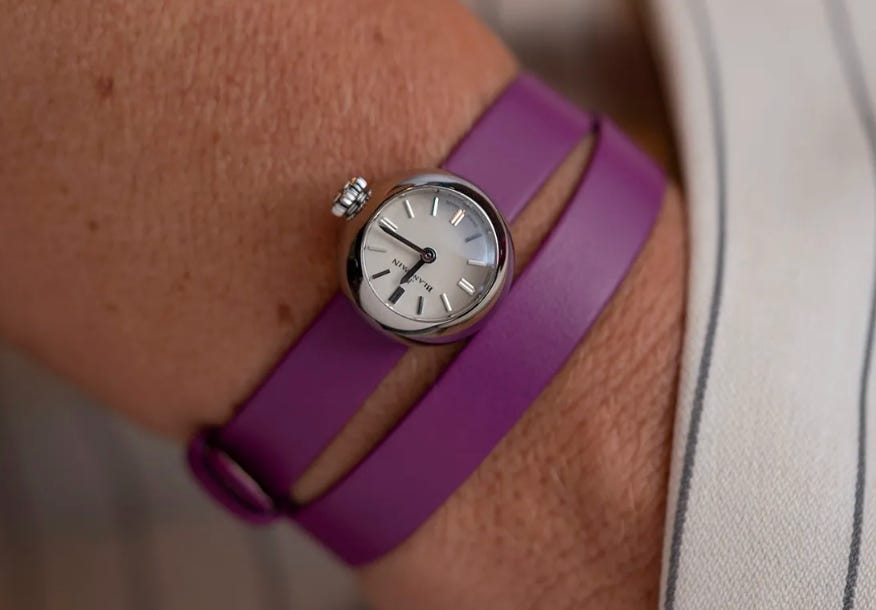
Blancpain Lady B: A Small Watch With Serious Mechanical Ambition
Blancpain’s Lady B takes automatic watchmaking into a compact 19mm case, challenging the assumption that a watch this small must depend on quartz. Its caliber 615 includes a silicon hairspring, a free-sprung balance and an approximately 38-hour power reserve.
The case is almost spherical in character, measuring 13mm thick, and replaces conventional lugs with a pass-through strap arrangement. That construction supports interchangeable straps while giving the watch a distinctive silhouette. A minimal hours-and-minutes display keeps attention on the overall form.
Available in steel or pink gold, the Lady B offers an unusual combination of miniature mechanics and contemporary styling. Its proportions will be as important to prospective owners as its specifications: this is a small-diameter watch with deliberate volume. Converted prices are approximately US$11,570 in steel and US$17,650 in pink gold.
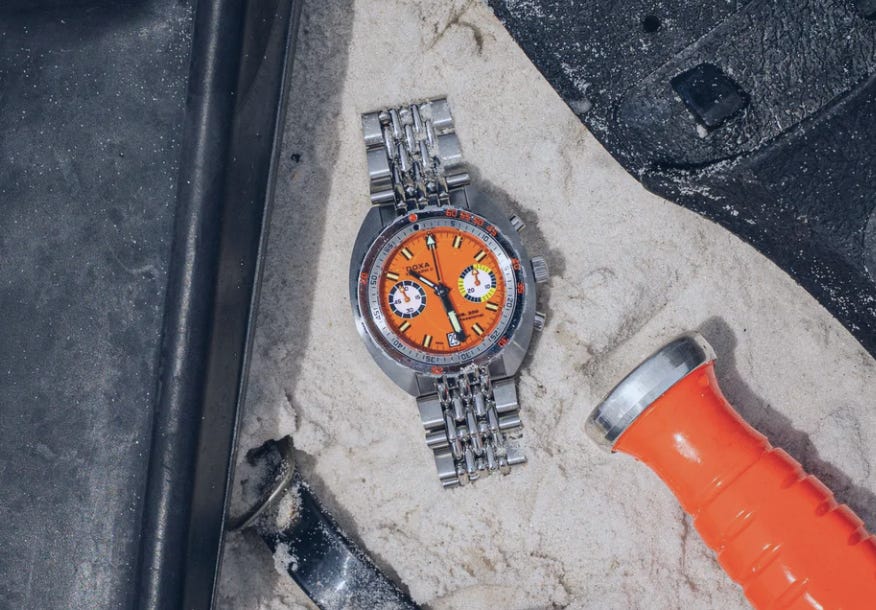
Diving With the Doxa SUB 200 T-Graph II
The Doxa SUB 200 T-Graph II carries its history visibly, combining an orange dial, broad steel case and chronograph layout with a design lineage reaching back to 1969. The modern watch measures 42mm and offers 200 meters of water resistance, while relatively short overall case proportions help make its substantial appearance manageable on the wrist.
This review takes the watch into the water off Florida’s St. Andrews State Park, where sunlight, salt water and actual use provide a more revealing setting than a desk. Legibility and comfort receive attention alongside the practical limitation that the chronograph pushers should not be operated underwater.
The bracelet draws a more mixed response, particularly around its clasp and flexibility, illustrating how much the wearing experience depends on components beyond the watch head. Pricing is US$4,250 on rubber or US$4,290 on the beads-of-rice bracelet. For collectors who have wanted a regularly available modern T-Graph, the appeal is substantial—even if there are details worth trying in person.

Exploring the 42mm Panerai Luminor PAM01710, PAM01711 and PAM01714
A second assessment of Panerai’s new Luminors concentrates on the differences among the three references and the significance of their smaller cases. At 42mm across and 13.8mm thick, they remain unmistakably substantial watches, but the reduced diameter broadens the audience for a design often associated with larger wrists.
PAM01710 pairs a black dial with beige canvas, PAM01711 combines green dial and strap, and PAM01714 brings a blue dial to a black DLC-treated case. All three use the automatic P.980 caliber with a 72-hour reserve and retain a 500-meter water-resistance rating.
The interesting question is how those colors and surface treatments alter the same underlying shape. The black version emphasizes familiarity, green offers a softer alternative, and the DLC model has the strongest modern sporting presence. Approximate converted prices are US$7,470 for PAM01710 and PAM01711 and US$8,620 for PAM01714.
Editorial

Fewer Visits, Stronger Intent: Preparing for the Golden Quarter
Falling footfall does not automatically mean disappearing demand. Today’s retail editorial argues that shoppers are becoming more deliberate, visiting fewer stores while arriving with clearer intentions about what they might buy.
That changes the work required of watch retailers heading into the Golden Quarter. An appointment, a useful conversation before the visit or a well-chosen invitation can matter more than simply hoping seasonal traffic will fill the showroom. Customers who have already researched a watch need a compelling reason to complete the purchase with a particular retailer.
For independents, the opportunity lies in relationships and informed service. Product knowledge, thoughtful follow-up and a credible understanding of the customer’s preferences can make a visit worthwhile. The challenge is to turn intent into confidence—and confidence into a purchase that leaves the customer comfortable returning.
Auctions
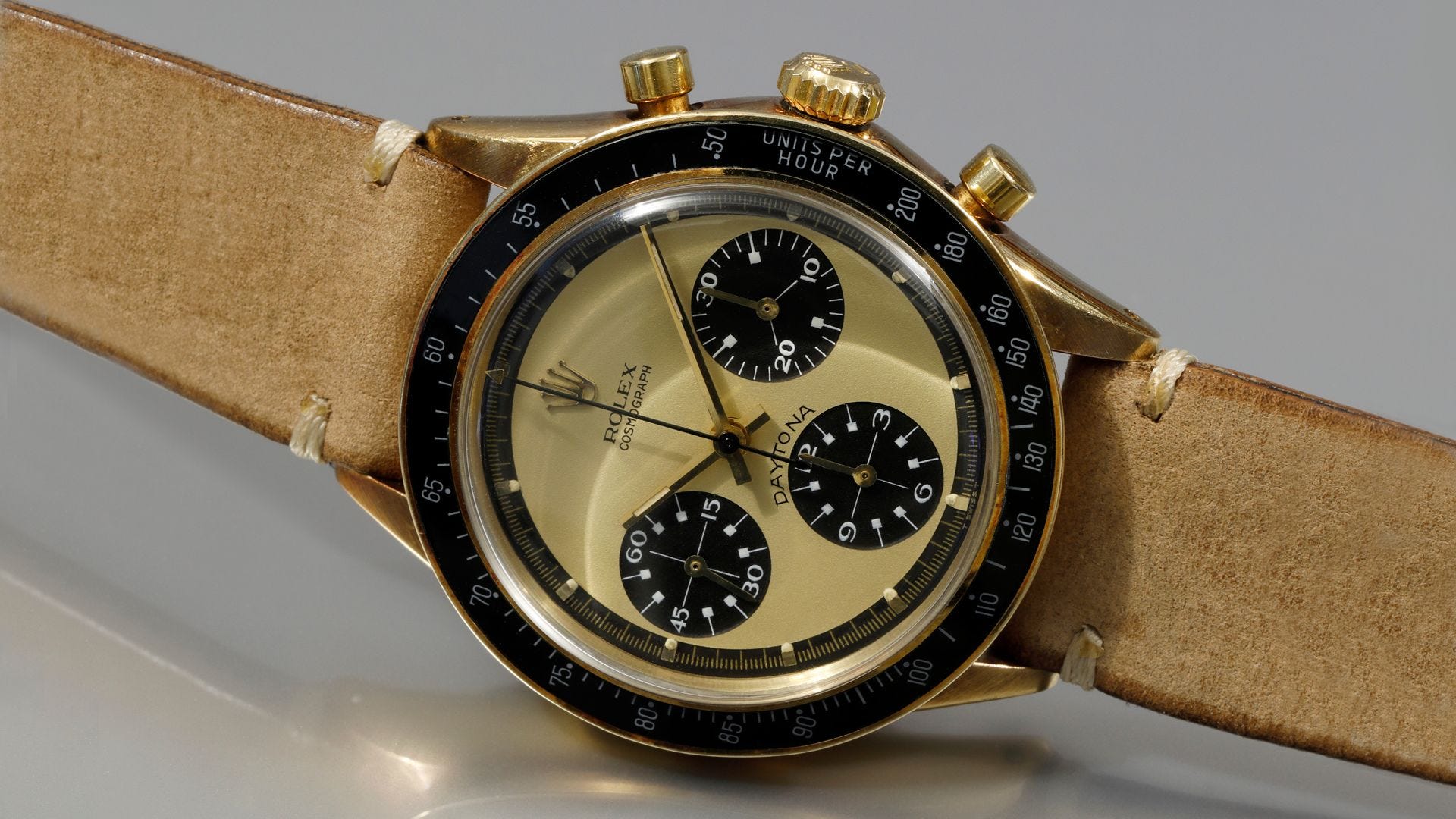
Rolex Daytona “Paul Newman Lemon” Brings Seven-Figure Expectations
A rare yellow-gold Daytona reference 6264 with a creamy “Paul Newman Lemon” dial leads a selection of historic Rolex chronographs associated with collector and author Pucci Papaleo. The watch’s appeal rests on a highly specialized combination of reference, case metal, dial configuration and scarcity, with expectations extending beyond CHF1 million.
The wider selection includes a reference 3525 “Bariletto,” a pink-gold reference 3335 and a reference 6239 “Paul Newman Musketeer.” Together, they offer a view of Rolex chronograph collecting that reaches well beyond the modern Daytona’s familiar commercial success.
For bidders, the details are the story. Provenance, originality and condition can produce enormous differences between watches that seem closely related at first glance. Papaleo’s involvement adds a knowledgeable curatorial perspective to a sale built around those distinctions.
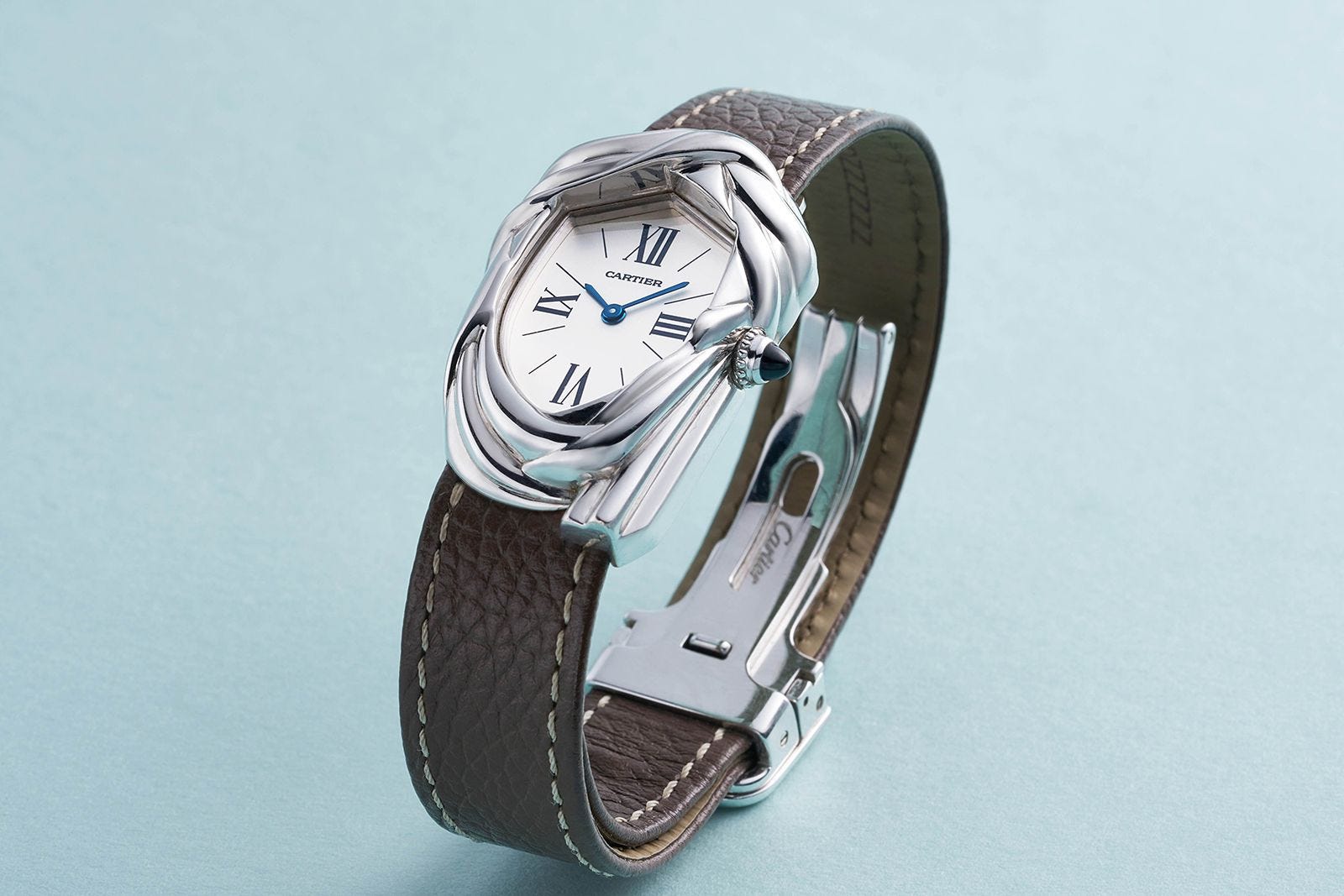
Sotheby’s Cartier Cheich Result Puts Quartz in Record Territory
A white-gold Cartier Cheich sold at Sotheby’s Hong Kong for HK$26.5 million, approximately US$3.38 million, with the reported result establishing records for Cartier and for a quartz wristwatch sold publicly. The price places extraordinary emphasis on design, rarity and the history of the individual object.
The Cheich originated in Cartier’s association with the Dakar Rally, with its distinctive form linked to the event’s visual identity. The white-gold example was made decades later for collector Giorgio Seragnoli, giving it a separate chapter within an already exceptionally small group of watches.
The result illustrates why movement categories alone cannot explain the upper end of collecting. A quartz watch with unusual cultural and design significance can inspire competition that far exceeds the value of its components. In this case, the object’s identity carried the argument.
Videos

ProducerMichael: “I Finally Bought a Richard Mille”
ProducerMichael makes a Richard Mille acquisition the center of a video about the excitement surrounding a major watch purchase. The appeal is as much about the collecting milestone as the object itself: the anticipation, the personal meaning and the experience of finally owning something long associated with ambition.
For viewers interested in the emotional side of luxury collecting, the video offers a counterpoint to specifications and auction comparisons. A watch’s place in someone’s life can explain enthusiasm that a price chart never quite captures.

Theo and Harris: “The New $66K Rolex Padellone Has a Problem”
Theo and Harris use a provocative title to examine an expensive watch proposition and question the expectations attached to it. The discussion invites viewers to consider how design, reputation and price work together—and where the presenters believe that relationship becomes less convincing.
The useful theme is scrutiny. A prestigious name and a substantial price create expectations, but buyers still have to decide whether the particular watch delivers what they want. Watch the discussion for the presenters’ specific argument and assessment.
Auction Report
September 22 Result: Parmigiani Toric Sells for US$10,199
Yesterday’s 2026 Parmigiani Fleurier Toric Chronomètre in white gold with a black Arabic-numeral dial, reference PFC423-1201400-HA1441, was bid to US$10,199 and sold. The result gives this classical automatic dress watch a completed-sale figure to place alongside dealer advertisements and earlier auction comparisons.
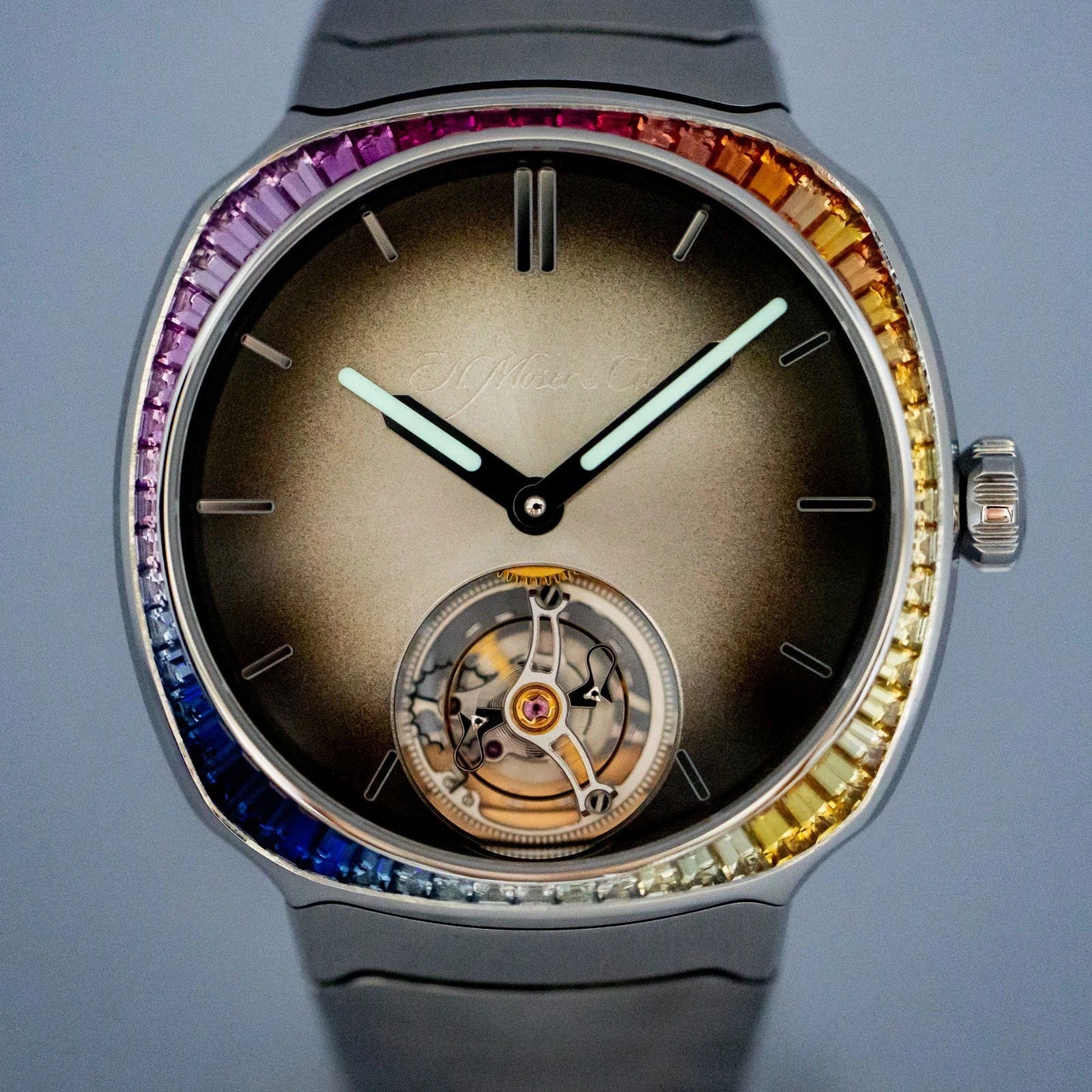
A Rainbow Meets the Market: Today’s Moser Streamliner Tourbillon Auction
Today’s auction features a 2024 H. Moser & Cie. Streamliner Tourbillon Rainbow in stainless steel, reference 6804-1201. The Streamliner collection debuted in 2020, bringing flowing case lines and a sculptural integrated bracelet to Moser’s independent watchmaking identity; the tourbillon and Rainbow interpretations followed in 2022. This version combines a 40mm cushion-shaped case with a bezel set with 60 baguette-cut colored sapphires. The auction describes the dial as black, while published specifications identify the reference with a gray fumé dial that darkens toward its perimeter.
The automatic HMC 804 provides a one-minute flying tourbillon, a double hairspring and a 72-hour power reserve. The model’s original specification includes 120 meters of water resistance, an unusually practical dimension to a watch with this much decorative and mechanical complexity. Today’s U.S.-located example includes its box, papers and hangtags. It is described as pre-owned, with an excellent dial and minor signs of wear on the case, bezel and bracelet; the supplied condition language does not establish whether this particular watch has previously been serviced or polished.
The price evidence spans a considerable distance. Moser’s archived product page lists CHF109,000 excluding VAT, approximately US$132,700 at the reference exchange rate used here. Advertised secondary-market examples currently visible in search results sit broadly around US$80,000–US$98,000, but those are seller expectations. A more concrete comparison comes from Monaco Legend’s June 5, 2025 sale in Lugano, where a 2023 example of the same reference, accompanied by its guarantee, presentation box and hangtags, achieved CHF33,750 including premium. That equals approximately US$41,100 using the same recent exchange rate, rather than the exchange rate on the sale date.
One auction does not establish a universal value, and differences in condition, service history and selling circumstances matter. Nevertheless, the completed result deserves substantial weight beside the much higher advertisements: it shows what a buyer actually paid for this reference in a public sale. Today’s watch offers a compelling combination of gem-setting, mechanical sophistication and distinctive design, but those qualities should be assessed alongside the full purchase cost and the available comparisons. Bidding closes at 12:25 p.m. EDT today, Wednesday, September 23, 2026.
Current bid: $10,150
Losing Time


Today’s Big Losers at Auction on Grailzee
Four watches, four failed sales, and four reminders that an asking price is a wish until someone agrees to pay it.
The 2026 Ulysse Nardin Freak X Gumball 3000 Edition 2 L.E., with its 43mm case, skeleton dial and rubber strap, carried a $32,000 ask. The bidding stopped at $12,000—a $20,000 shortfall, or 62.5% below asking. The Gumball name promised excitement; the bidders apparently preferred to observe the speed limit. This was the biggest miss of the group in both dollars and percentage terms.
The 2023 Hublot Big Bang Unico 44mm, featuring a skeleton dial and rubber strap, sought $16,000 but attracted a high bid of just $7,000. That left a $9,000 gap, or 56.3% below asking. Big Bang, small bid. Buyers were willing to entertain the watch, just nowhere near the seller’s preferred price of admission.
The 2026 Rolex Oyster Perpetual 36mm with the multicolor “Jubilee” dial asked $20,000 and reached $12,500, finishing $7,500 short, or 37.5% below asking. That makes it the best performer here, which is rather like winning a race in which nobody reaches the finish line. Even the Rolex name and a colorful dial couldn’t persuade this bidding audience to bridge the gap.
The 2021 H. Moser & Cie. Pioneer L.E. 42.8mm, with a green dial and steel bracelet, arrived with a remarkably precise $24,520 ask. Its $9,758 high bid delivered an equally precise disappointment: $14,762 short, or 60.2% below asking. Apparently, pricing to the nearest dollar does not make the underlying optimism any more scientific.
Together, the four sellers wanted $92,520. Combined bids reached $41,258—55.4% below the total asking amount. These weren’t near misses awaiting one more enthusiastic paddle. Three watches failed to attract even half their asking prices, while the Rolex managed 62.5% of its target. Limited editions, skeletonized spectacle and brand recognition gave sellers plenty to talk about; they gave bidders considerably less reason to meet the asks. These results don’t establish the watches’ definitive market values, but they do show that, in these sales, seller expectations and buyer willingness were operating in distinctly different time zones.
Closing Time
Thank you for spending part of your Wednesday with BuyingTime. Whether today’s favorite is a practical titanium diver, a tiny automatic or a tourbillon surrounded by sapphires, the pleasure is in understanding what makes it special to you. Enjoy the craftsmanship, keep the prices in perspective, and remember today’s Moser auction closes at 12:25 p.m. EDT. We’ll see you tomorrow.