

30 Second Read
Today’s issue follows the widening gap between a watch’s price and the reasons collectors want it. Ming’s team explores affordable design through Donut Watch Company, Citizen brings a 60-hour movement to the 37mm Tsuyosa, and Victorinox refreshes the Maverick. At the other extreme, MB&F adds diamonds to its floating mechanical architecture, while Louis Moinet brings lunar material to the wrist. We examine Swiss industry pressures, Tudor’s strongest design decisions, and Greubel Forsey’s commitment to staying small. Yesterday’s amazing Bovet stopped at $18,250 without selling; today, a 2014 yellow-gold Lange 1815 Up/Down takes its turn.
TIME GRAPHING TODAY’S WATCH UNIVERSE
Every Price Needs a Reason
There is a surprisingly direct conversation running through today’s issue, even if the participants occupy very different corners of watchmaking. A playful new brand associated with Ming’s team wants to make distinctive design more accessible. Citizen is improving an affordable automatic. Fears is explaining a substantial leap into complicated watchmaking. Greubel Forsey is explaining why it does not want to make more watches. They are all addressing the same question: what, exactly, is the customer paying for?
That question becomes uncomfortable when the answer relies too heavily on the name above the hands. Today’s editorial on the Swiss watch industry’s warning lights describes the pressure building around established assumptions about origin, prestige, and pricing. Collectors have alternatives at practically every level, and the secondary market makes those alternatives visible. A customer considering a new watch can also see what a more ambitious watch costs after its first owner has absorbed the depreciation. The boutique presentation may be carefully controlled. The comparison shopping is beyond anyone’s control.
The Donut Watch Company project is interesting because it starts with personality. Its 35mm Glazed prototype uses translucency, light, unusual lugs, and a playful running indicator to create something immediately recognizable. Production details and final pricing remain unsettled, but the idea already has substance: take design seriously without making the experience solemn. An affordable watch can have an identity of its own. It does not need to apologize for the movement inside or pretend to be an expensive watch with several ingredients removed.
Citizen’s 37mm Tsuyosa 60 approaches the same problem through practical improvements. A smaller case gives more people a comfortable fit. A 60-hour power reserve makes ownership a little easier. Dial texture and bracelet detailing provide something to enjoy beyond the specification sheet. None of those changes requires an elaborate explanation. They are benefits an owner can see, feel, and use. The refreshed Victorinox Maverick makes a similarly straightforward argument through wearable proportions and a choice of quartz or automatic power.
There is a useful lesson here for more expensive brands. Today’s feature on Tudor’s strongest design decisions celebrates watches that commit to a clear idea. The Black Bay 54 has a particular relationship to size and history. The Pelagos 39 has its own modern tool-watch character. The Monarch takes Tudor somewhere visually different. A coherent design gives a collector something specific to respond to. A familiar case with a fashionable dial color may generate a launch announcement, but that alone does not establish a lasting reason to own it.
Higher prices can have persuasive explanations, too. The Venezianico Redentore Levius asks buyers to consider a lightweight titanium case, decorative dial work, and an Italian mechanical proposition together. The Fears perpetual-calendar podcast addresses the more difficult task of moving a familiar brand into a dramatically higher price bracket. Existing affection helps, but buyers still deserve a clear account of the complication, construction, finishing, and design that accompany the increase.
At the upper end, MB&F’s SP One Pavée makes its case through visual theater and craftsmanship. The appeal lies in watching mechanical elements appear to float, with diamonds adding another response to light. Nobody needs this to replace a more practical daily watch. Its success depends on whether the object delivers an experience that the collector finds sufficiently compelling. That is a demanding standard, but at least it directs attention toward the watch itself.
The SJX conversation with Michel Nydegger adds another dimension. Greubel Forsey’s willingness to remain small ties production to the work its watches require. In that context, limited output can be a consequence of labor and standards. Collectors should be interested in that distinction. The number of watches made tells us relatively little until we understand why that number exists.
Yesterday’s Pinifarina-designed Bovet auction brings the discussion back to earth. A bid of $18,250 expressed real interest, yet it did not even come close to the reserve of $37,000. That is one result, not a verdict on an entire brand, but it illustrates the distance that can open between an owner’s expectations and a buyer’s willingness to act. Today’s yellow-gold Lange offers a different kind of attraction: restrained design, visible mechanical quality, and a useful complication with deep historical roots. Its bidders will make their own calculation.
The encouraging part of this issue is how many different answers are available. Value can mean a better daily companion, an original design, difficult handwork, or a mechanical idea that makes someone stop and look. Collectors do not have to agree on which matters most. They should be able to explain what matters to them—and expect the watch to hold up its end of that conversation.
-Michael Wolf
NEWS
Ming’s Team Serves Up a Playful New Watch Brand
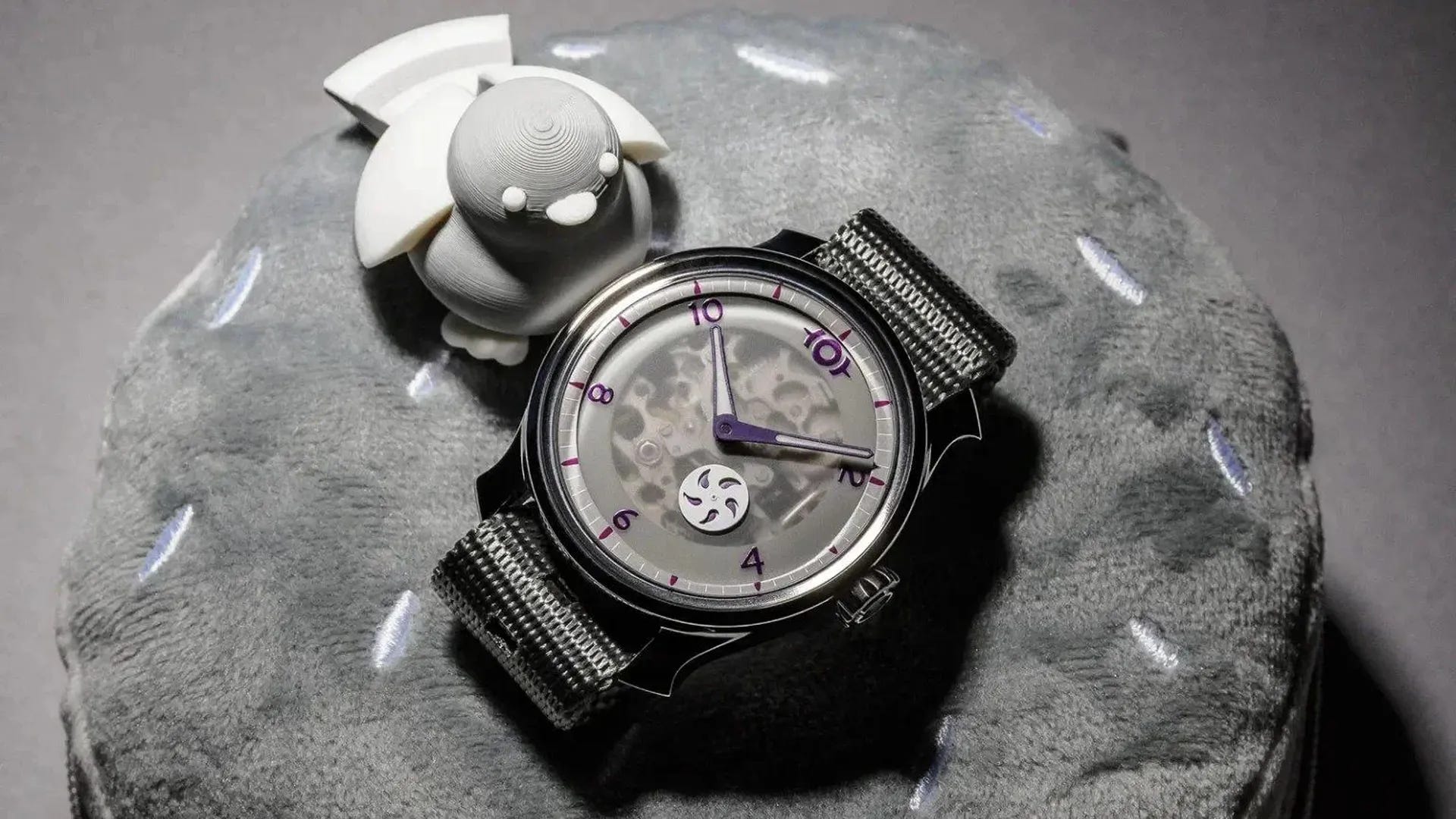
Donut Watch Company introduces a more accessible outlet for the design instincts associated with Ming’s team. Its Glazed prototype combines a compact 35mm polished-steel case, distinctive flying-blade lugs, and a frosted, translucent dial that offers glimpses of the Japanese automatic movement beneath. Luminous details and an unconventional running indicator near five o’clock give the watch a personality well beyond its modest dimensions.
The example shown to journalists and collectors is a promotional preview rather than a production watch currently available to order. Public-sale versions are expected to explore different colors, while the final price and launch date remain unconfirmed. The attraction is already clear: unusual design and an engaging treatment of light, delivered with considerably less ceremony than collectors usually encounter around independent watchmaking.
Rado Opens Its First Australian Standalone Boutique in Melbourne
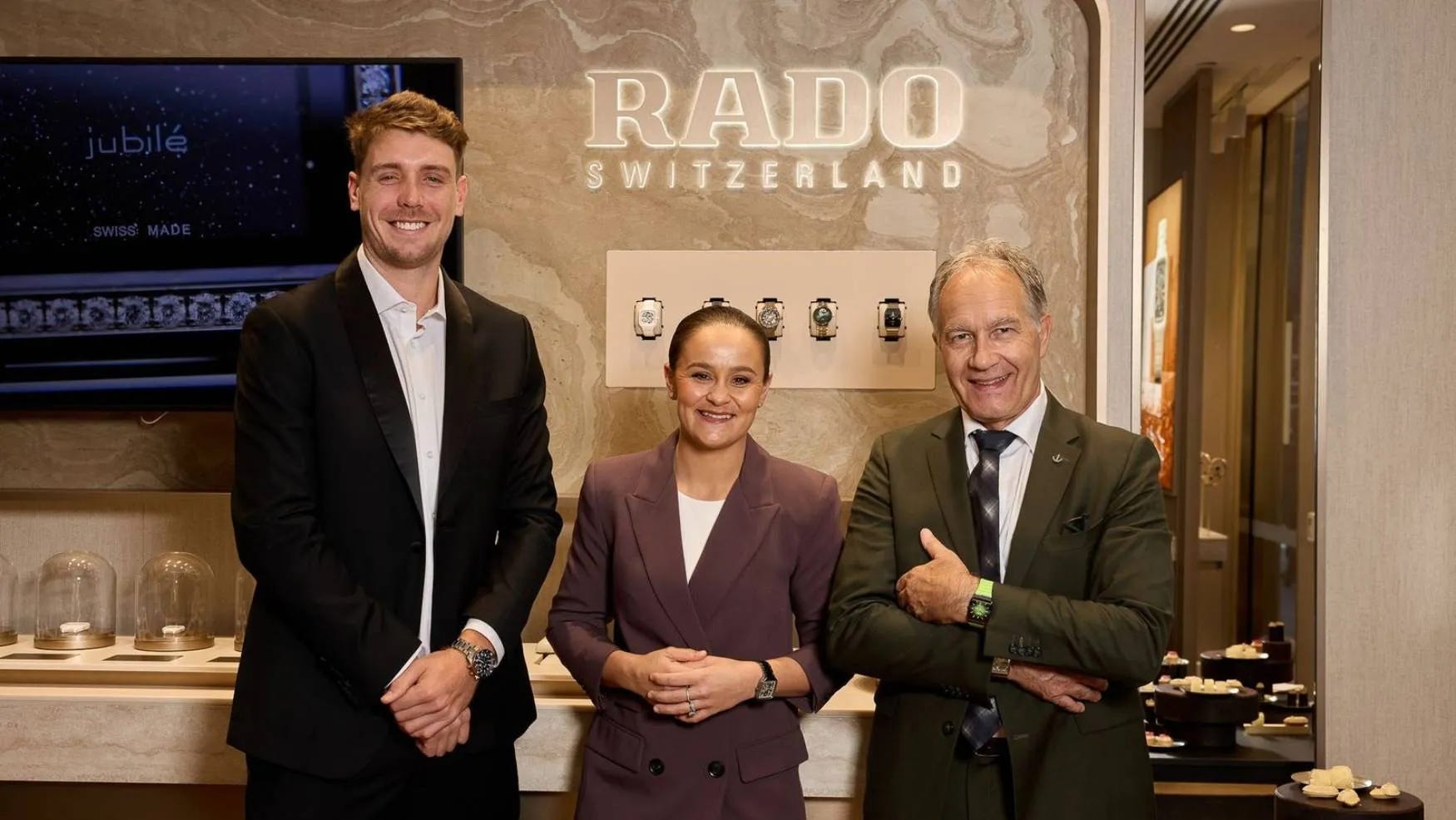
Rado has opened its first Australian standalone boutique at 298 Collins Street, adding another destination to Melbourne’s growing watch scene. The August 27 celebration brought together ambassadors Ash Barty and Cameron Green, CEO Adrian Bosshard, Australian Brand Manager Michael Graham, and Lord Mayor Nicholas Reece.
The store gives Rado a dedicated setting for explaining the materials that distinguish its watches, particularly ceramic and plasma ceramic. Those qualities benefit from an encounter in person: weight, temperature, surface finish, and the feel of a bracelet are difficult to communicate through photographs. Its proximity to the Time + Tide Discovery Studio also strengthens the area’s appeal for collectors planning a day of watch browsing.
FEATURES
Three Times Tudor Got the Design Brief Completely Right
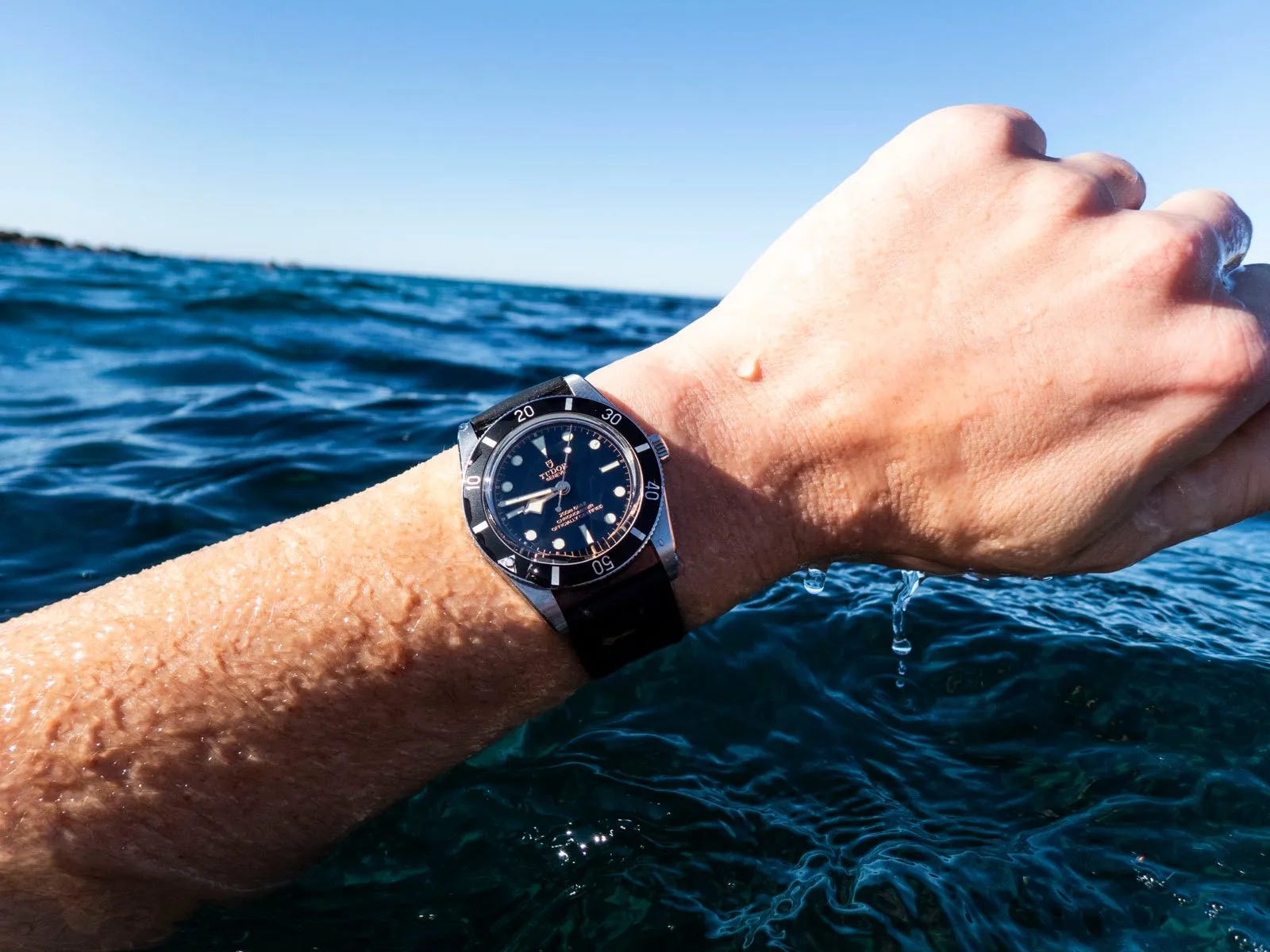
Tudor is often discussed in relation to Rolex, but its most convincing watches give that comparison less work to do. The Black Bay 54 commits to a compact 37mm format and a focused interpretation of early dive-watch design. The Pelagos 39 combines titanium construction with a distinctly modern visual identity, offering a different experience from Tudor’s more nostalgic divers.
The Monarch extends that argument through an octagonal case, mixed Roman and Arabic numerals, and a METAS-certified movement. These are three different approaches, connected by a willingness to follow an idea through rather than dilute it into something safely familiar. The feature makes a persuasive case that Tudor performs best when its watches give collectors a clear reason to choose Tudor itself.
NEW WATCHES
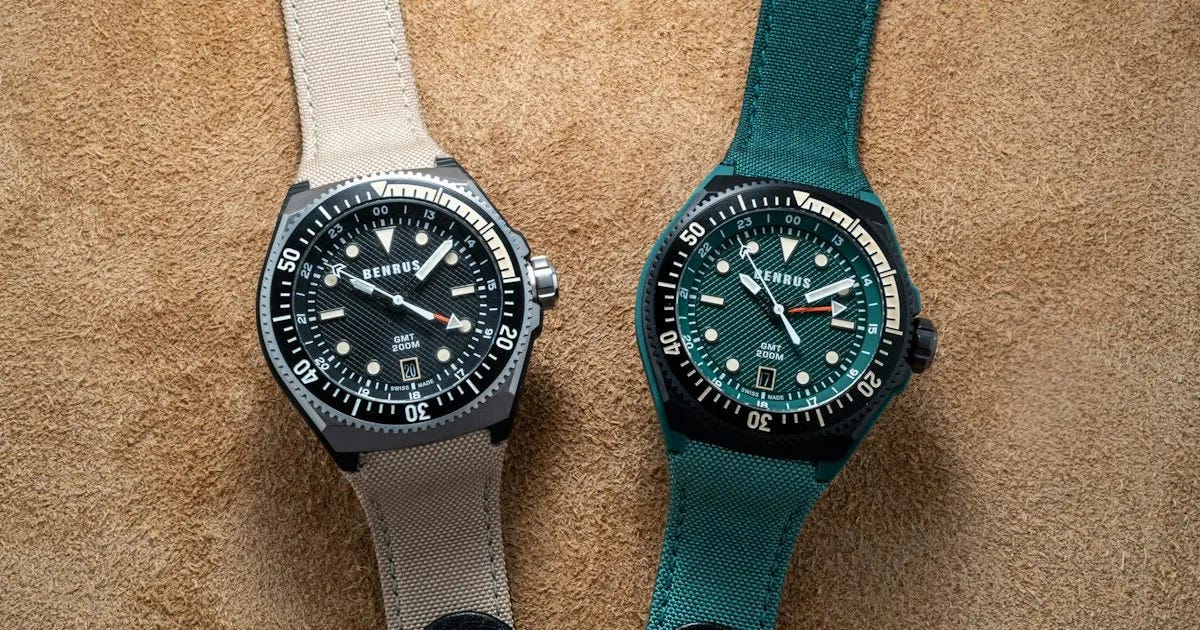
Benrus Type 3X: Military Roots Meet Carbon, Titanium, and GMT Functionality
The Benrus Type 3X updates the brand’s tool-watch heritage with a composite-carbon and titanium case developed with input from former U.S. Special Forces veterans. Its 42mm construction pairs a black or green dial with luminous markings, a titanium rotating bezel, and 200 meters of water resistance. An ETA 2893 automatic movement supplies a second time zone through an independently adjustable 24-hour hand and approximately 42 hours of power reserve. Short lugs help manage its wrist presence, while the supplied fabric and rubber straps offer two different approaches to everyday wear. Price: US$2,950.
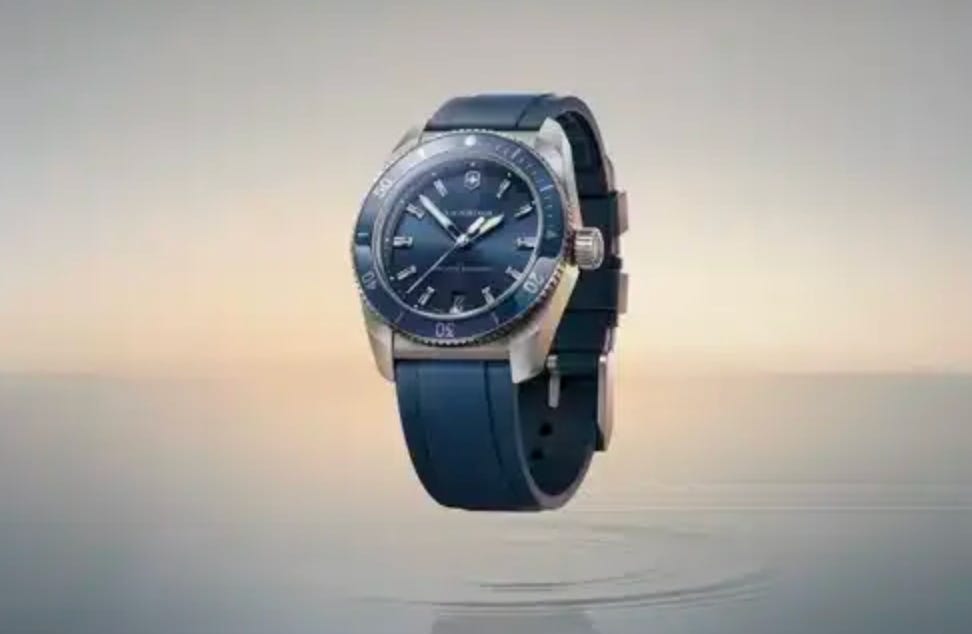
Victorinox Maverick: A Familiar Sports Watch Finds Better Proportions
Victorinox refreshes the Maverick with a 39mm stainless-steel case, revised finishing, and stronger attention to legibility. The collection offers automatic models powered by the Sellita SW200 alongside quartz versions using the Ronda 715, giving buyers a choice between mechanical interest and straightforward convenience. Different dial colors, bracelet finishes, and strap combinations broaden the range, while rotating bezels preserve its sporting character. The collection launches September 15 as a regular-production offering, with automatic pricing beginning on rubber and rising for bracelet versions. Prices: US$1,110–US$1,200 for automatics; US$650–US$900 for quartz models.
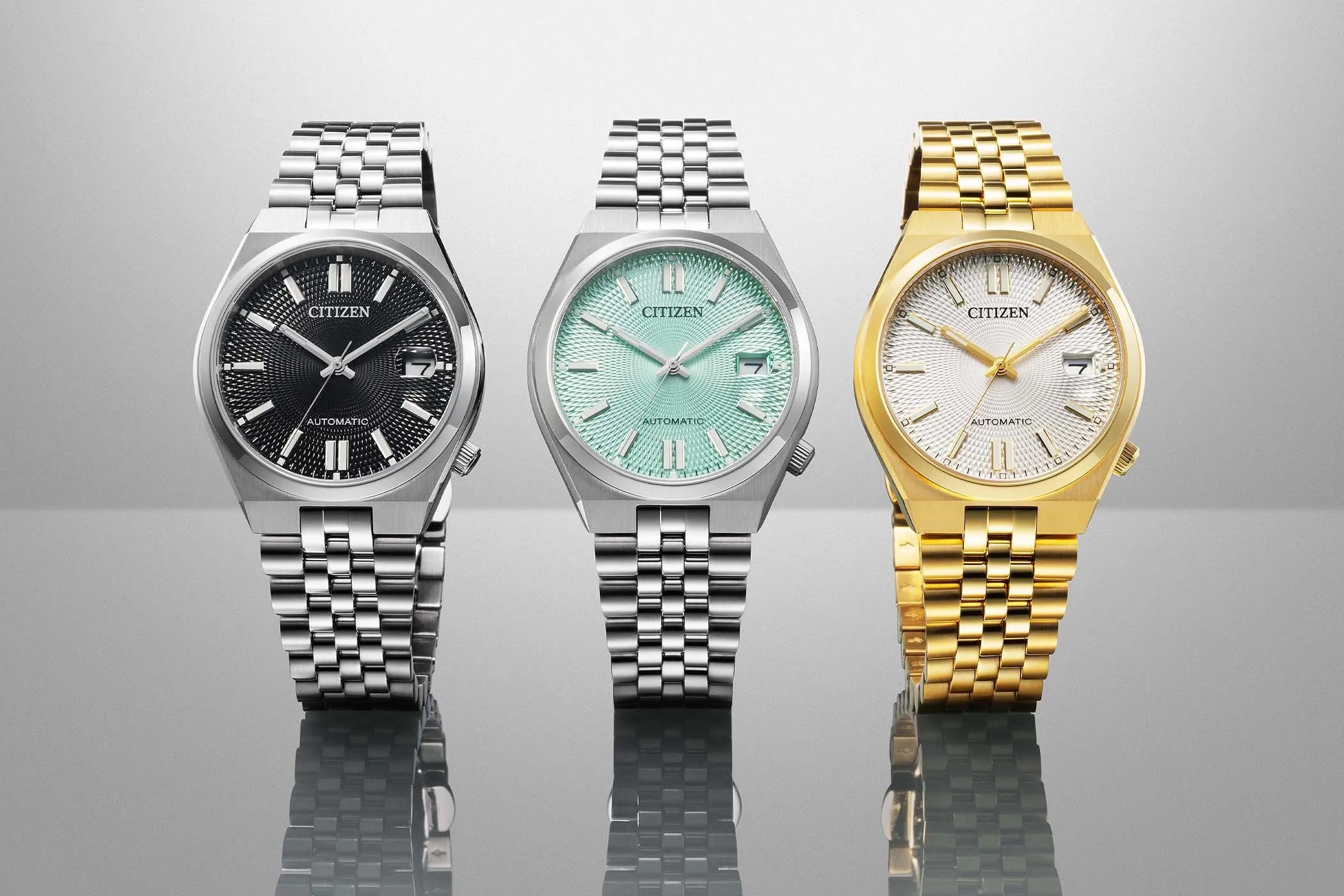
Citizen Tsuyosa 60 Automatic 37mm: Smaller Case, Longer Running Time
Citizen brings the Tsuyosa 60 to a 37mm format, offering steel versions with black or light-green dials and a gold-plated model with a silver dial. The barrel-shaped case combines brushed and polished surfaces with a sapphire crystal, magnified date display, and the collection’s recessed crown at four o’clock. Inside, the automatic caliber 8310 delivers a 60-hour power reserve, while textured dials and a multi-link bracelet give the watch a more detailed appearance than its approachable price might suggest. Water resistance is 50 meters, making this a compact everyday sports-style watch with an emphasis on versatility. Approximate converted prices: US$440 in steel; US$500 for the gold-plated version.
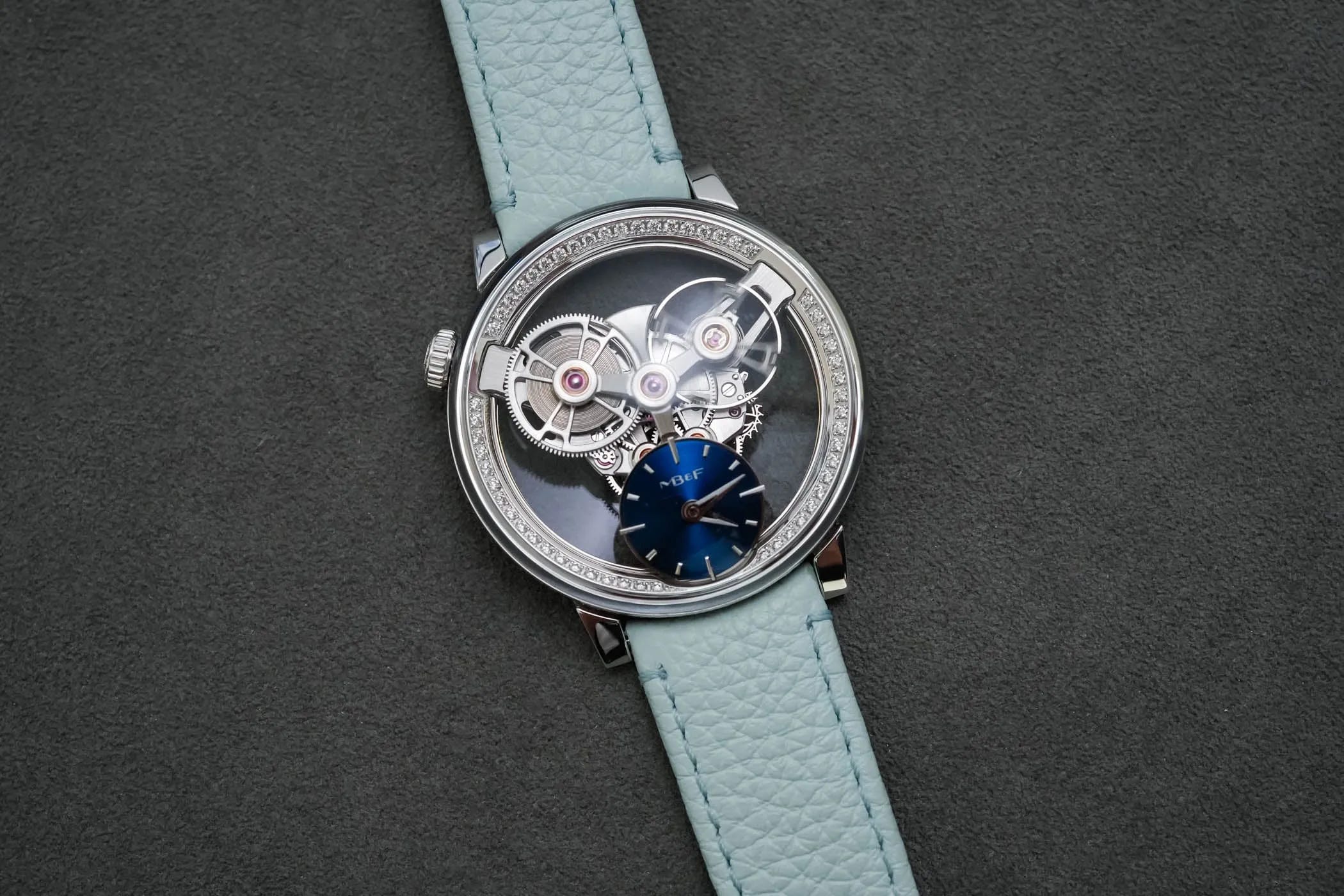
MB&F SP One Pavée: Floating Mechanics, Now Framed by Diamonds
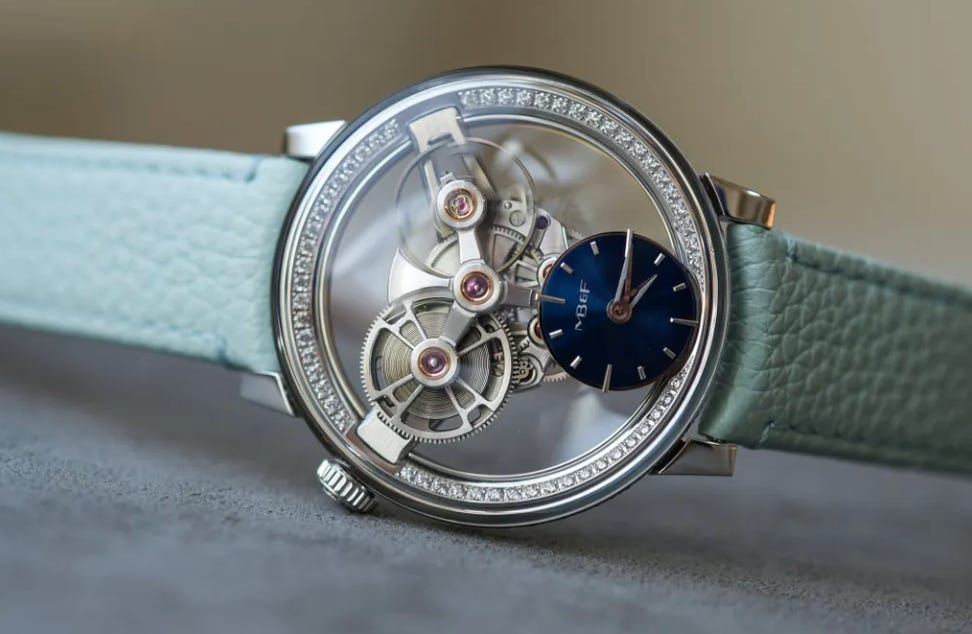
MB&F adds a diamond-set interpretation to its compact SP One, surrounding its unusual mechanical composition with a 38mm white-gold case. The arrangement presents the barrel, balance, and tilted time display as apparently floating elements beneath a dramatically domed sapphire crystal. A dark-blue background increases the sense of depth, while 255 diamonds add sparkle without replacing the movement as the watch’s central attraction. The manually wound construction retains the careful finishing and unconventional spatial arrangement that make the SP One distinctive, complemented here by a light-blue calfskin strap. Approximate converted price: US$95,600 before taxes, based on CHF78,000.
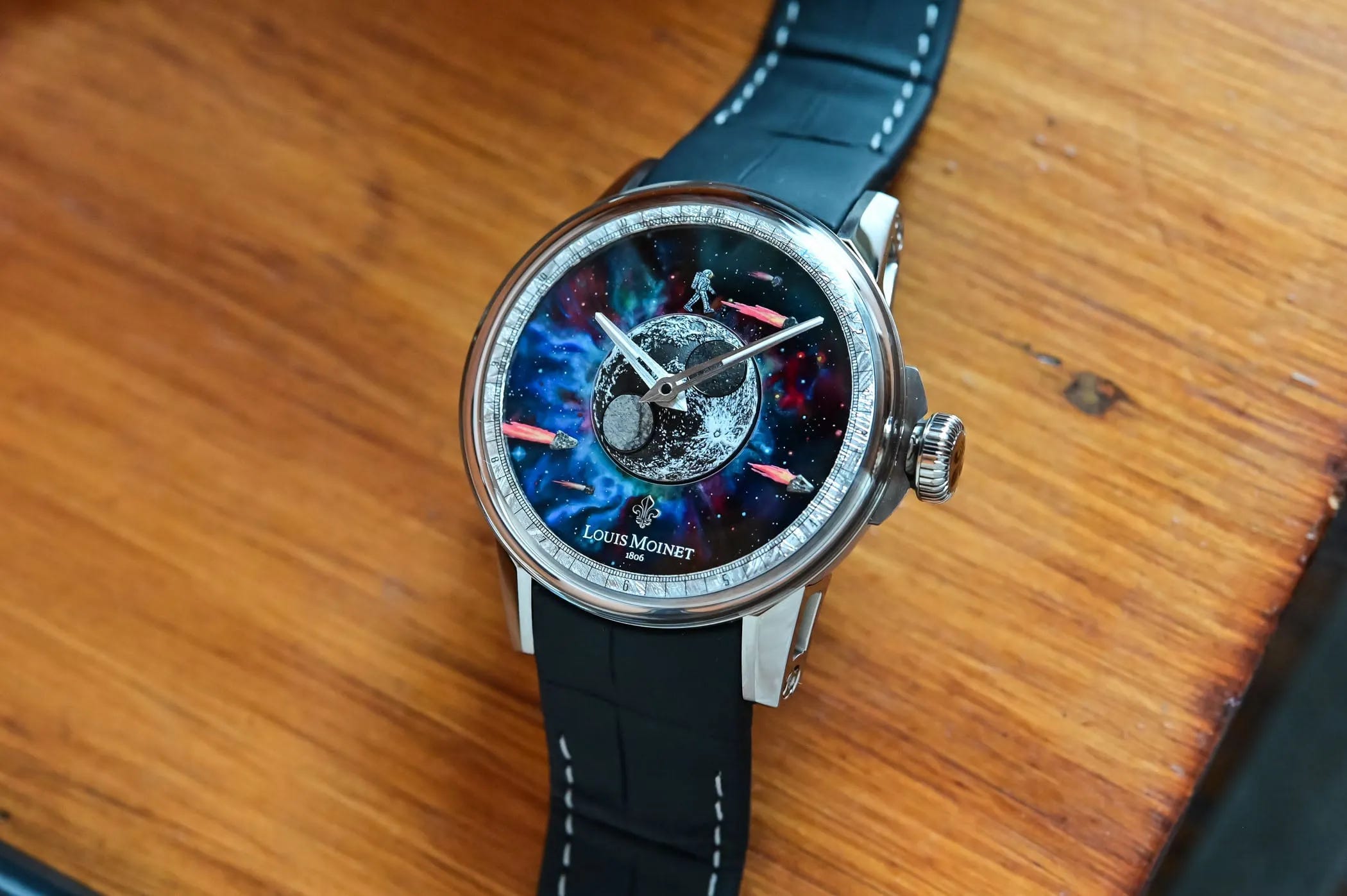
Louis Moinet Moon Meteor: A Small Celestial Landscape for the Wrist
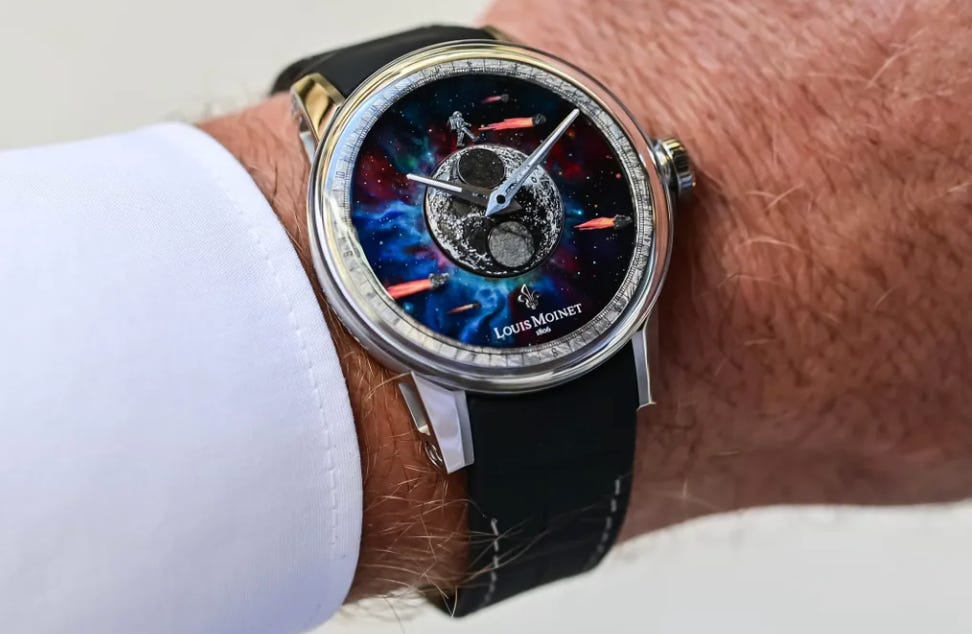
The Louis Moinet Moon Meteor combines a hand-painted celestial scene with meteorite material, including a lunar display made from lunar meteorites. Its 40.7mm grade-5 titanium case houses the automatic LM113 movement, which drives the time and a moon-phase indication calculated to deviate by one day in 122 years of uninterrupted operation. The composition treats the dial as a miniature astronomical artwork, with materials supplying a physical connection to the subject. Production is limited to twelve examples, each marked “One of Twelve” and supplied on an alligator strap. Approximate converted price: US$58,800, based on CHF48,000.
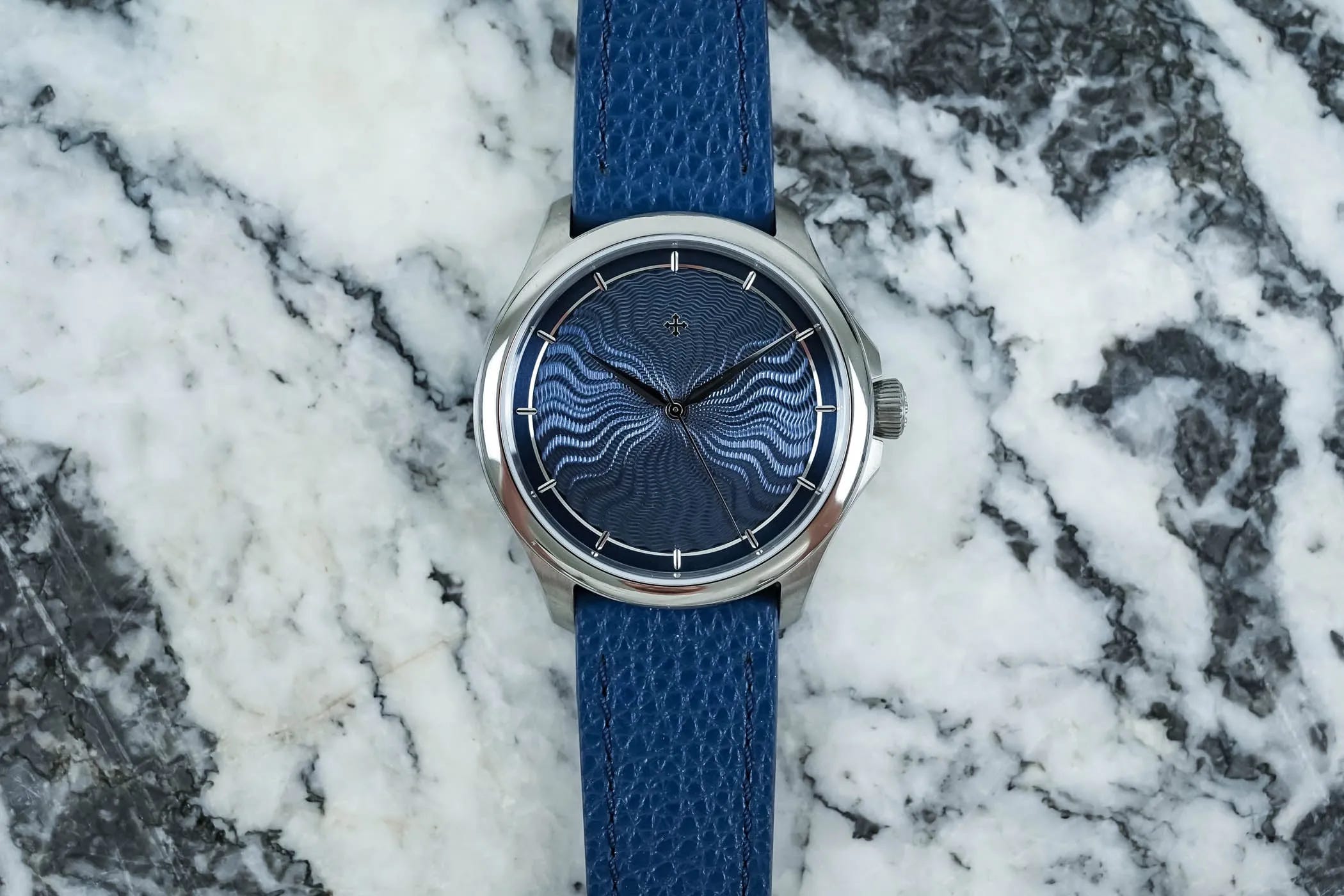
Venezianico Redentore Levius: Italian Ambition in a Lightweight Titanium Case
The Venezianico Redentore Levius combines a 38mm grade-5 titanium case with an elaborately patterned guilloché dial and a manually wound V5000 caliber. Weight is central to its character: the case weighs a reported 12.9 grams, with the complete watch and leather strap totaling approximately 48 grams. The movement offers a 60-hour power reserve and decorative finishing that includes striping and micro-perlage, giving owners a second surface to study through the back. A five-day preorder window began September 14, with deliveries planned in batches over the following months. Price: US$5,550.
REVIEWS
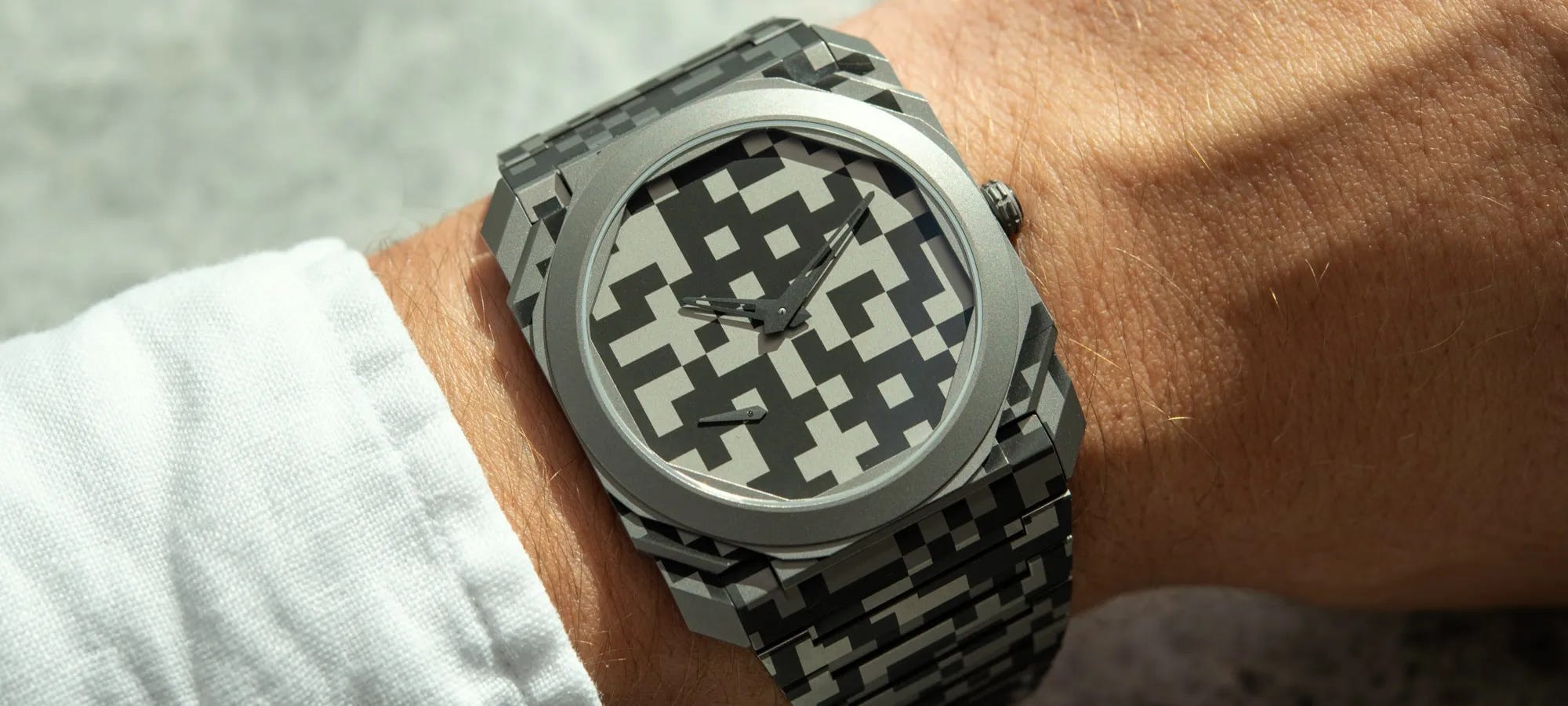
Bulgari Octo Finissimo Dazzle: When Extreme Thinness Meets Optical Interference
The Bulgari Octo Finissimo Dazzle turns the familiar geometry of the collection into a more disorienting visual experience. A laser-engraved checkerboard-style treatment extends across the titanium case and bracelet, interrupting surfaces that ordinarily help the eye understand the watch’s shape. Beneath that graphic activity is serious ultra-thin construction: a 40mm case measuring 5.15mm thick and the automatic BVL 138 movement with a 60-hour power reserve.
Limited to 80 pieces and priced at US$18,300, the Dazzle asks its owner to accept a trade-off between visual impact and immediate readability. That tension is part of the design’s purpose. The review considers whether Bulgari’s experiment creates a more compelling wearable object—and whether its mechanical refinement remains equally persuasive beneath the pattern.
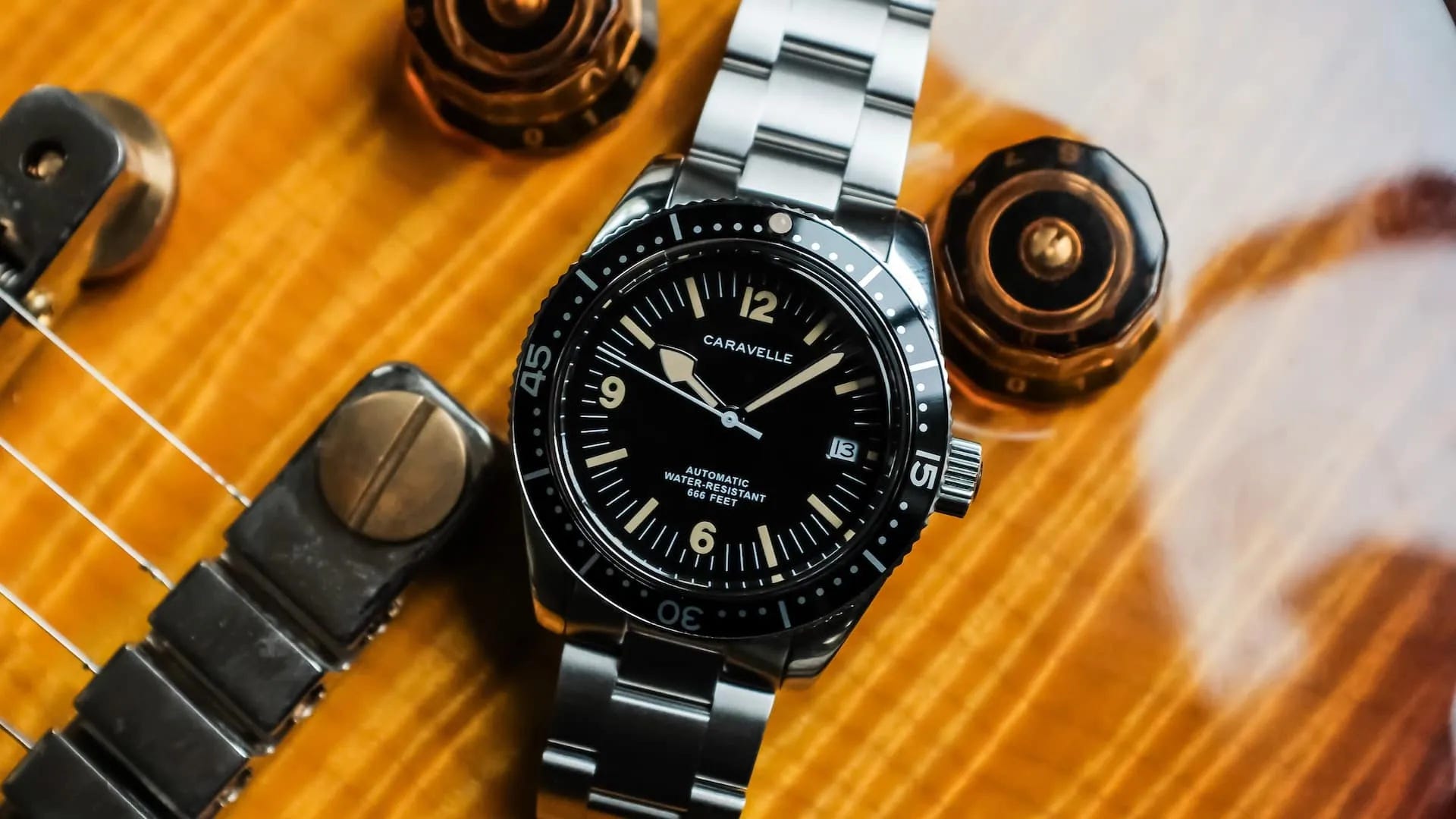
Caravelle Sea Hunter: A US$425 Diver With Real Competition
The Caravelle Sea Hunter reaches into Bulova’s affordable-watch history for a compact automatic diver with a 39mm case and 200 meters of water resistance. A Miyota 8215 movement, aluminum bezel insert, and domed mineral crystal establish its practical foundations, while the handset and vintage-inspired styling give it an identity beyond a generic budget diver.
The review finds plenty to appreciate in the overall construction and bracelet convenience, but also identifies familiar compromises: mineral rather than sapphire crystal, some bracelet noise, and brown-toned luminous material that will divide tastes. At US$425, the Sea Hunter enters territory where Seiko and Citizen have earned considerable loyalty. Its strongest case rests on whether its proportions and appearance suit the buyer better than those established alternatives.
MB&F SP One Pavée: A Closer Look at Mechanical Levitation
The hands-on perspective on MB&F’s SP One Pavée moves beyond the diamond count to examine the illusion at the center of the watch. Minimal supporting structures and carefully concealed connections allow the barrel, balance, and tilted dial to appear suspended within the case. The dark-blue background and domed sapphire amplify that depth, making the composition change as the watch moves.
At 38mm, the white-gold case also raises an interesting question about scale: how much mechanical drama can fit into an object that remains relatively compact? The review explores the relationship between its pebble-like exterior, traditional finishing, and unconventional architecture. The diamond setting becomes another layer in that experience rather than the whole explanation for the watch.
EDITORIAL

Warning Lights Flash for the Swiss Watch Industry
The Swiss watch industry faces a difficult combination of rising costs, demanding customers, and increasingly persuasive alternatives. This editorial argues that the pressure is particularly acute in the middle of the market, where buyers can compare a new Swiss watch with ambitious independents, capable Japanese models, and pre-owned watches from higher price categories.
The larger concern is whether established business models still match the way collectors shop. Origin and reputation remain meaningful, but customers increasingly want to understand the specific value behind a price increase. A strong currency and expensive production complicate the response, while discounting can introduce its own problems for positioning and existing owners. The article’s central challenge is clear: brands need a convincing product and pricing argument that survives contact with the alternatives.
EVENTS
Milano Watch Week Brings Contemporary Watchmaking to Palazzo Mezzanotte
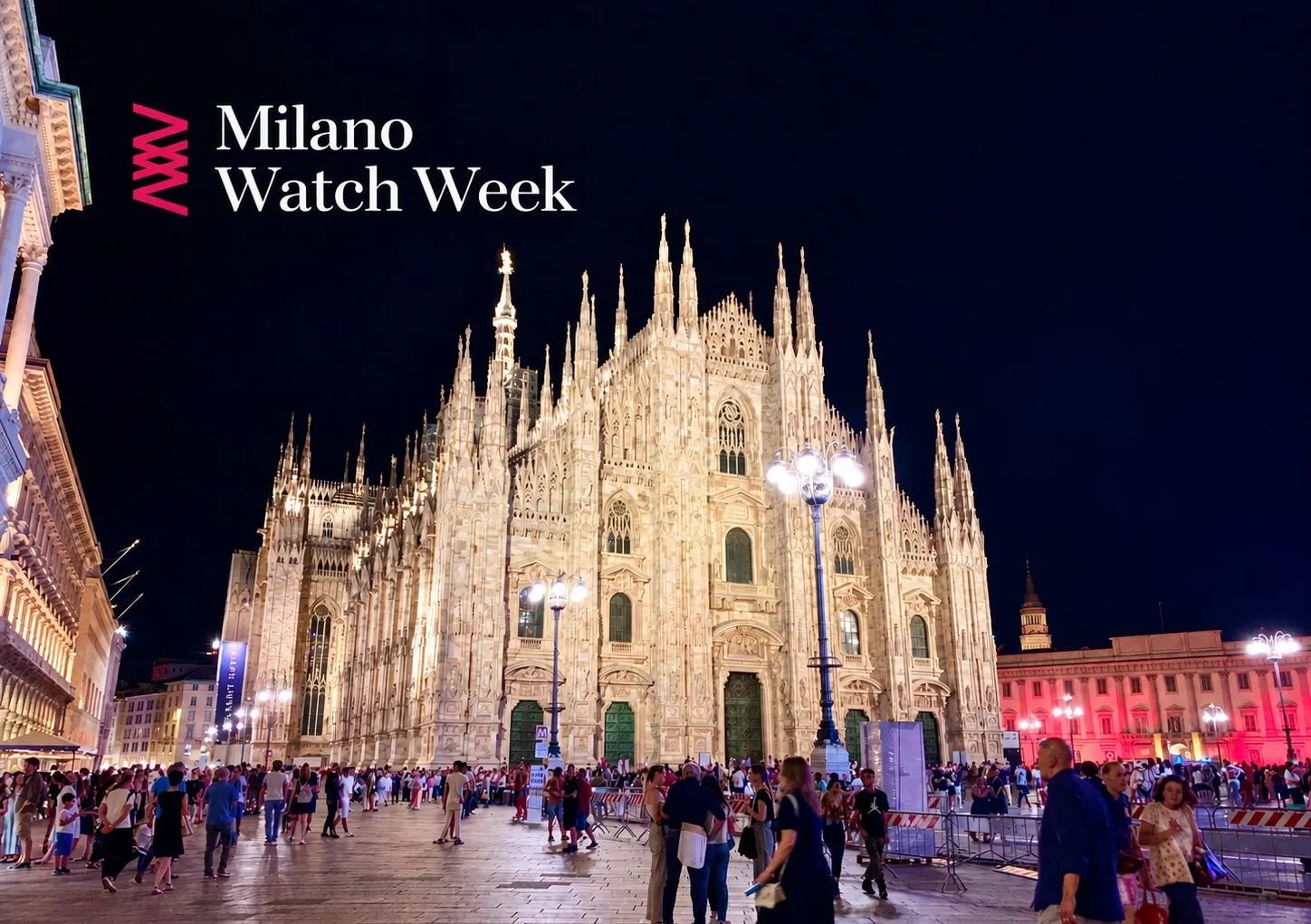
Milano Watch Week returns October 2–4, placing contemporary watchmaking inside the historic Palazzo Mezzanotte. The program brings established names, independent makers, and newer creative voices into the same setting, giving visitors a chance to see watches that rarely appear together in ordinary retail environments.
Beyond the displays, the After Time and Off the Clock programs aim to make conversation part of the attraction, with Dubai Watch Week contributing to the latter. For collectors, the opportunity extends beyond checking references off a list: meeting the people behind a watch can make unfamiliar design and mechanical choices easier to understand. Milan supplies a suitably rich setting for continuing those discussions after the exhibition floor closes.
PODCASTS
Scottish Watches #814: Why We Made the Fears Perpetual Calendar
Fears’ Brunswick 39 Perpetual Calendar marks a substantial move beyond the price territory many collectors associate with the brand. This episode examines the reasoning behind that decision, along with the watch’s 39mm case, restrained silver-mink dial, and four-subdial calendar arrangement. At 10.1mm thick, the design also makes a deliberate effort to preserve wearable proportions despite its additional complication.
The technical discussion covers the Sellita SW300 base, Dubois Depraz calendar module, and decorative work that includes an 18-karat gold rotor. The larger question is how Fears explains a £26,950 watch to an audience accustomed to much more accessible offerings. It is an opportunity to hear the product argument from the people making it.
The SJX Podcast: Michel Nydegger on Why Greubel Forsey Intends to Stay Small
Greubel Forsey CEO Michel Nydegger discusses a company with roughly 130 people producing approximately 200 watches annually—and why increasing that output is not the priority. The conversation connects production limits to movement architecture, handwork, and the difficulty of preserving the brand’s identity in smaller watches.
Other topics include Stephen Forsey’s departure from operations, the Qualité Musée finishing standard, and research pursued without an immediate product launch attached. An account of handmade hairsprings quietly entering regular watches for real-world testing offers a particularly revealing look at development behind the scenes. The episode gives collectors a more specific understanding of what the company means when it talks about craftsmanship.
VIDEOS

Seven Watches Nobody Expected to Become Hits
Some watches succeed precisely because they do not look like the obvious commercial choice. This video explores seven unexpected hits and considers how unusual design, timing, and collector enthusiasm can combine to give a seemingly narrow proposition a much larger audience. It is a useful prompt to reconsider how confidently anyone can predict what watch buyers will embrace.

My Watch Journey: Established Brands or Independent Watchmakers?
Choosing between an established manufacturer and an independent involves more than comparing specifications. My Watch Journey explores the differences in heritage, scale, creative freedom, and pricing that can shape the ownership experience. The discussion invites viewers to identify which qualities they actually value before allowing reputation or novelty to make the decision for them.

Why Does One Man Own 210 Watches?
A collection of 210 watches creates an obvious question about quantity, but the more interesting answers concern attachment. This conversation explores what keeps someone collecting, how individual pieces acquire personal significance, and why an accumulation of watches can become a record of interests and experiences. It also offers a chance to consider where enthusiasm, habit, and the pleasure of discovery intersect.

This Watch, That Watch: The Best Quartz Watches Across the Price Range
Quartz deserves consideration on its own terms, and this selection explores options across different budgets. The focus moves among design, functionality, and value, giving viewers a broader picture of what battery-powered watchmaking can offer. For anyone whose collection has become mechanically predictable, it supplies a useful reminder that an enjoyable watch need not come with a winding ritual.

Britt Pearce: The Blancpain Problem
Britt Pearce examines the distance that can exist between a brand’s horological credentials and its visibility among contemporary buyers. The provocative title opens a discussion about Blancpain’s identity, desirability, and ability to connect with newer audiences. Treat it as an argument about perception and positioning rather than a literal claim that nobody buys the watches.
Watchtrader & Co: The Hardest Rolex to Sell Right Now
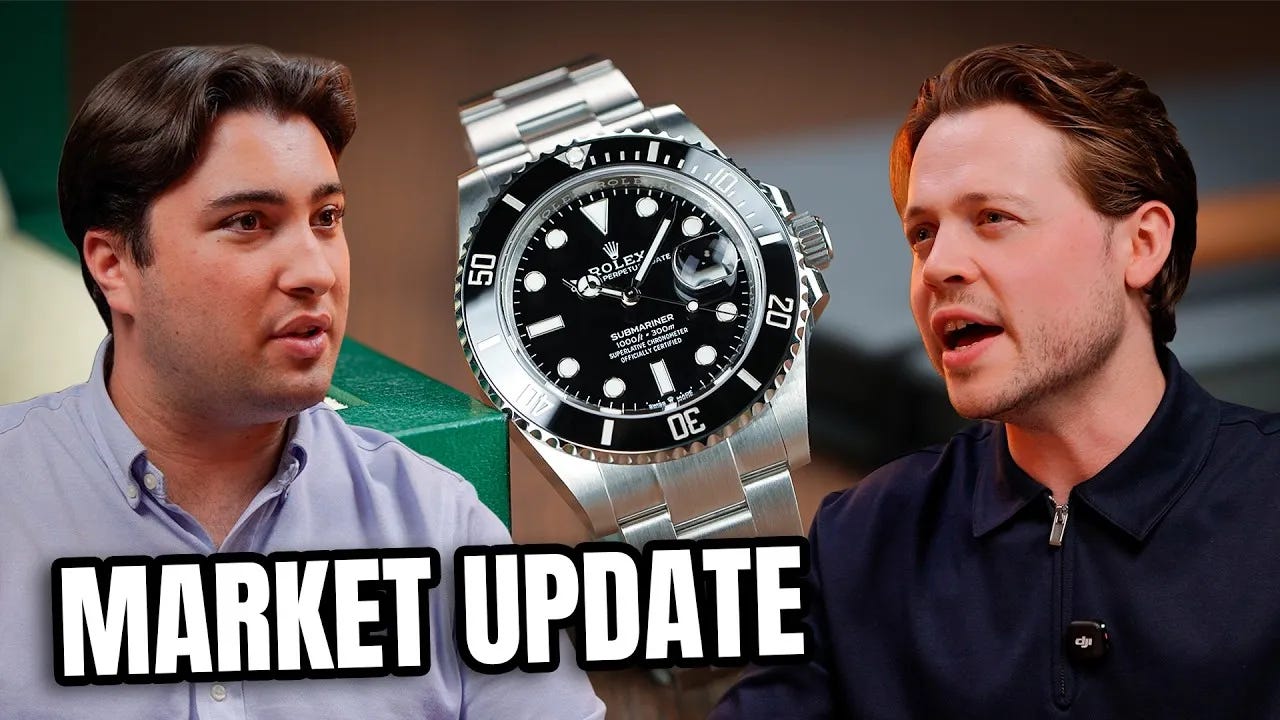
This September market update looks at Rolex through a dealer’s practical concern: which watches actually move. The discussion considers how demand, pricing, and buyer preferences can make certain references harder to place even when the brand remains highly recognizable. It is a reminder that a desirable name and an easy sale are separate propositions, particularly when the asking price leaves little room for persuasion.
Swiss Watch Gang: The French Graduates Making an Impression
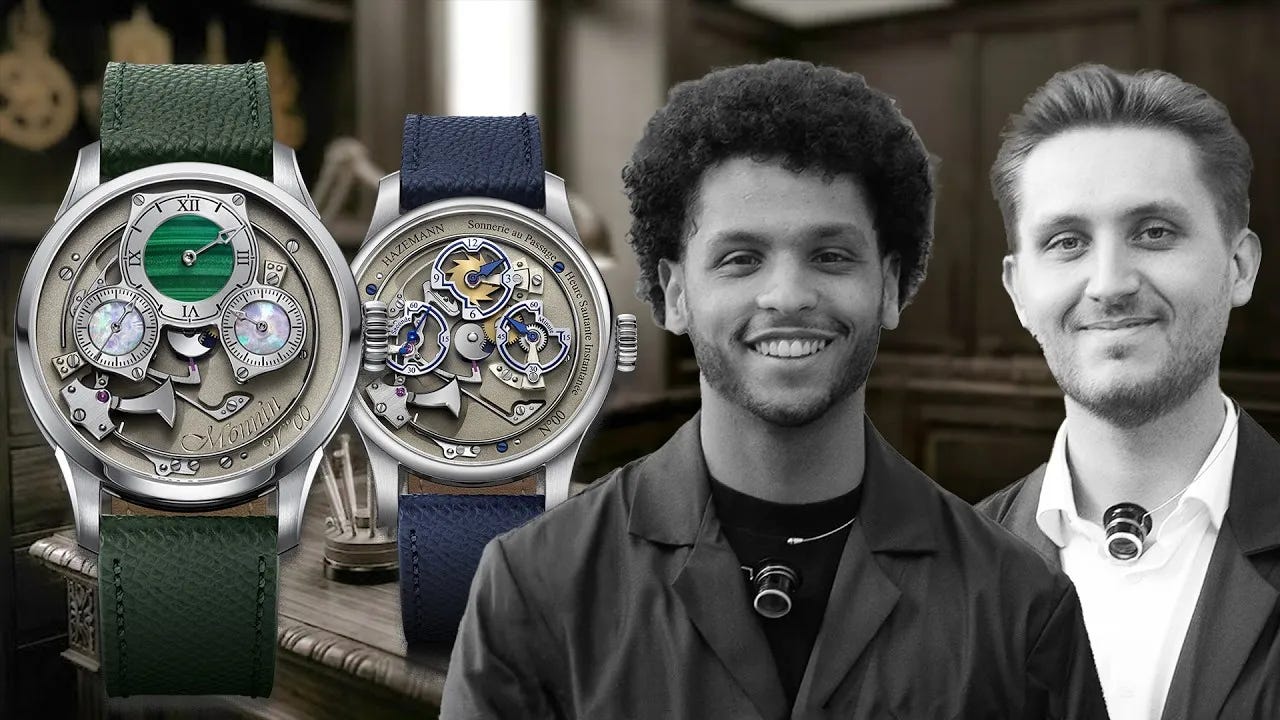
Swiss Watch Gang turns its attention to emerging French talent and the ideas that young makers bring to traditional watchmaking. The appeal lies in seeing a new generation engage with an established craft while developing its own visual and mechanical interests. For collectors who enjoy discovering people before their names become familiar, this is an introduction worth making.
AUCTION REPORT
Bovet Stops at $18,250; a Yellow-Gold Lange Brings Quiet Authority to the Block
Monday’s auction of the 2026 Bovet Aperto 1 Pininfarina, reference TPIN9.002, ended with a high bid of $18,250, below its reserve of $37,000.
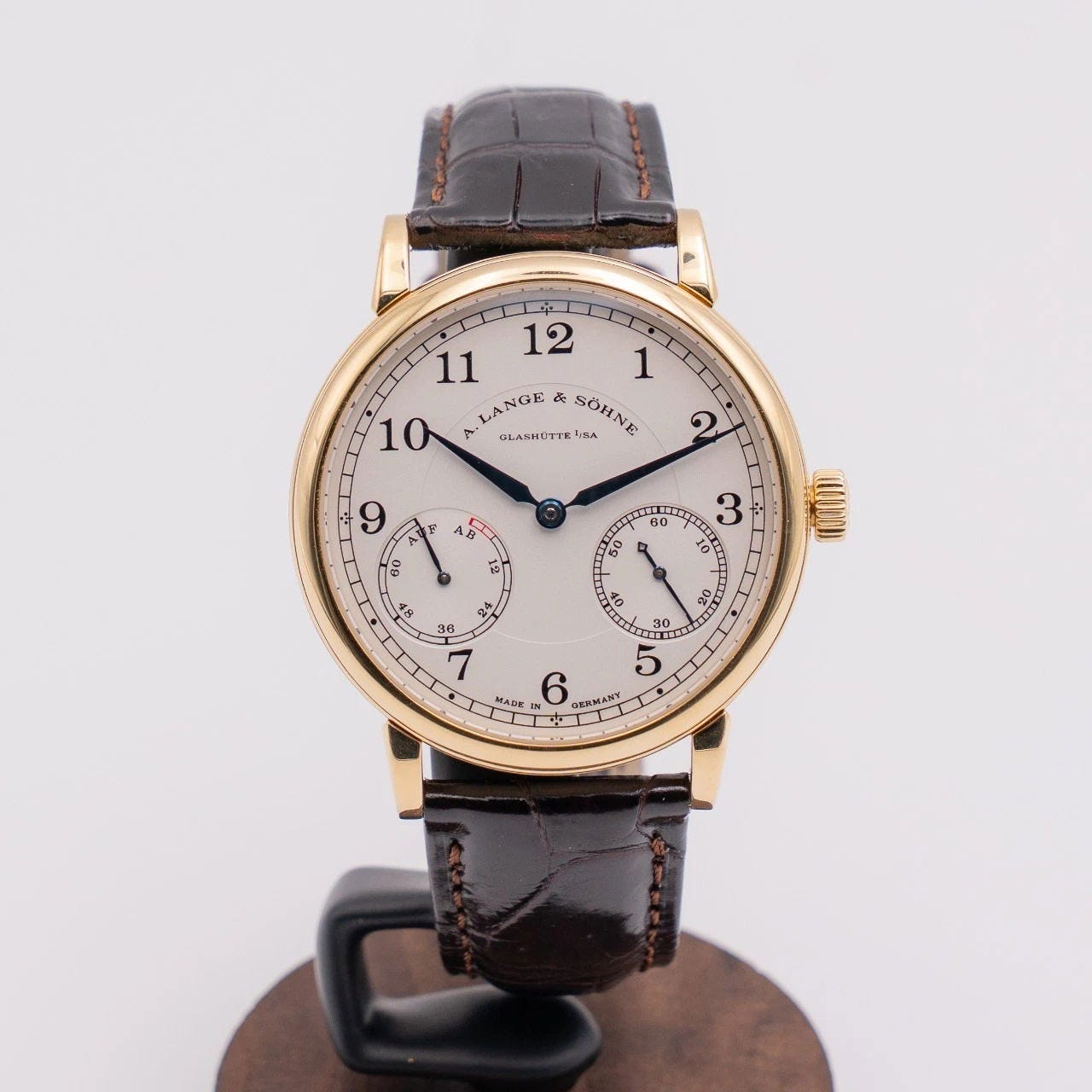
Today’s offering changes the mood considerably: a 2014 A. Lange & Söhne 1815 Up/Down in yellow gold, reference 234.021. Where the Bovet puts its mechanical personality on open display, the Lange presents a silver dial, Arabic numerals, blued hands, and two carefully balanced subsidiary displays. Its appeal develops through proportion and detail rather than an immediate visual spectacle.
Introduced in 2013, this generation of the 1815 Up/Down uses a 39mm case measuring just 8.7mm thick. The collection’s name honors Ferdinand Adolph Lange’s birth year, while the AUF/AB power-reserve display recalls a Lange tradition documented in an 1879 patent. The manually wound L051.2 movement provides 72 hours of running time and is visible through a sapphire back, with the finishing and construction that make turning over a Lange part of the ownership experience. The yellow-gold reference is no longer in the current collection.
For value, the available market evidence suggests a broad pre-owned benchmark in the low-to-mid US$20,000s, while a recent advertised full-set example carried a US$29,500 asking price. Those figures describe different things: a market estimate and a seller’s request, neither a guaranteed auction result. Today’s US-based example includes papers but no box, with an excellent dial and minor wear reported on the case, bezel, and strap or bracelet category. Its service history is unspecified, so mechanical condition, case preservation, and the completeness of its accessories should influence how bidders position it against better-documented examples.
The attraction is a recognizable expression of Lange watchmaking with a useful complication and restrained dimensions. The power-reserve indicator gives the daily winding ritual a practical purpose, while yellow gold brings warmth to an otherwise disciplined design. For a bidder who appreciates those qualities, the task is to price this particular watch on its condition and documentation, allowing for any buyer’s fees and future servicing. The auction ends at 5:45 p.m. EDT on Tuesday, September 15, 2026.
Current bid: $19,250
Losing Time


Today’s Big Losers at Auction on Grailzee
Four watches, four failed sales, and four reminders that the asking price is where the seller’s imagination gets to stretch its legs. The bidders, unfortunately, brought calculators.
Ulysse Nardin Freak X Aventurine: A $26,000 reality check
The 2023 Ulysse Nardin Freak X Aventurine carried a $40,000 asking price but attracted a final bid of just $14,000—a $26,000 shortfall, or 65% below ask. This was less a negotiation than two people having entirely different conversations. The aventurine dial may evoke the night sky, but the bidding stayed firmly earthbound. Limited-edition distinction clearly wasn’t enough to bridge that gap.
Blancpain Villeret Quantième Complet: Halfway to wishful thinking
The 2022 Blancpain Villeret Quantième Complet had a $22,500 asking price and a $11,500 high bid, leaving an $11,000 gap, or 48.9% below ask. A complete calendar, apparently, does not come with a complete recovery of the seller’s expectations. Complicated watchmaking and a prestigious name are lovely things to own. Getting someone else to pay your preferred price for them is another matter.
Tudor Black Bay Chrono “Bumblebee”: The buzz didn’t cover the premium
The 2026 Tudor Black Bay Chrono “Bumblebee” was offered at $9,300, with bidding stopping at $7,150—a $2,150 shortfall, or 23.1% below ask. That was the smallest percentage gap of the four, although “closest to selling” remains an awkward consolation prize for something that didn’t sell.
For flippers hoping this watch would net them easy money, the result was considerably less sweet than the nickname suggests. The yellow dial attracted interest, but the hoped-for premium didn’t materialize. This auction points to a so-so reception at the seller’s ambitious price, rather than the feeding frenzy a speculative flip needs. One auction doesn’t establish the entire market, and actual profits depend on acquisition cost and fees. Still, anyone counting their Bumblebee winnings before finding a buyer might want to put the calculator down.
Patek Philippe Calatrava Weekly Calendar: Prestige meets a budget
The 2023 Patek Philippe Calatrava Weekly Calendar came with a $34,000 asking price and finished at a $24,000 high bid—$10,000 short, or 29.4% below ask. Even the Patek name couldn’t persuade bidders to produce the missing ten grand. This calendar can tell you the week; it cannot tell the seller what they want to hear.
Together, the four sellers sought $105,800 and attracted final bids totaling $56,650. That’s a combined $49,150 shortfall—46.5% below the total asking prices.
These were failed auctions, so the bids aren’t completed-sale valuations. But the gap between seller expectations and bidder enthusiasm was hard to miss. The Freak and Blancpain faced the deepest disconnects. The Patek found the limits of its name. And the Tudor offered a useful reminder to would-be flippers: buzz is free; getting paid requires a buyer.
Closing Time
Thanks for spending part of your day with BuyingTime. Whether today’s temptation is a compact Citizen, a mechanically theatrical MB&F, or a quietly accomplished Lange, the most useful question remains personal: will you still enjoy it when the launch excitement has passed? Keep looking closely, buy with curiosity, and we’ll see you tomorrow.