

30 Second Read
When a Watch Has to Earn Its Price
Geneva Watch Days has reminded us that the industry is still capable of making wonderfully specific, deeply authored watches. But today’s stories also show a market asking harder questions: Is the design truly distinctive? Is the price credible? And will the watch matter after launch-week excitement fades?
From Girard-Perregaux’s preference for independence to Omega’s pricing reset, the strongest argument in watches right now is not scale or noise. It is conviction, followed by value. Tonight’s Harry Winston auction offers a useful real-world test of that equation.
Time Graphing Today’s Watch Universe
Freedom Is Expensive—But So Is Irrelevance
The most revealing word in today’s watch universe may be freedom. In Marc Michel-Amadry’s view of Girard-Perregaux, it means the freedom to build patiently: to develop calibres, make fewer watches, invest in boutiques rather than blanket advertising, and decline the industry’s increasingly compulsory event circuit. It is an attractive position, especially in a market crowded with brands trying to look bigger than they are. But independence is not a mood board. It has to be visible in the watches.
Geneva Watch Days provided plenty of evidence that genuine authorship still resonates. One writers’ three picks range from Daniel Roth’s dial work to Ferdinand Berthoud’s ceramicised titanium chronometry and L. Leroy’s extravagant minute repeater. Meanwhile, the broader Geneva Watch Days report captures both the excitement and the risk of scale. Seventy-one brands and almost 400 watches make for an impressive festival; they also make it harder for any individual release to stay in the memory once the tents come down.
That is why the best new watches today feel unusually deliberate. Nomos’s Twice Unique collection turns its dials into one-off artistic surfaces, then insists that each steel watch be paired with its gold sibling. Christiaan van der Klaauw’s Planetarium Skeleton makes its mechanics visible because the astronomical display is the point, not a decorative excuse. Louis Vuitton’s permanent Spin Time collection is a notable declaration that a once-novel complication has become central to the maison’s watchmaking identity. And Greubel Forsey’s compact GMT Balancier Convexe proves that even a six-figure object can improve its case for existence by becoming more wearable.
The tension arrives when a strong point of view meets a weak price proposition. Omega’s more sensible pricing is not a retreat from luxury; it is an acknowledgment that collectors can now compare more, research faster, and wait longer. At the other end of the market, videos about collapsing prices and increasingly convincing counterfeits underline the same point: trust is becoming part of the product. A watch can be technically excellent and still struggle if its price, distribution, or secondary-market behavior tells a less persuasive story than its advertising.
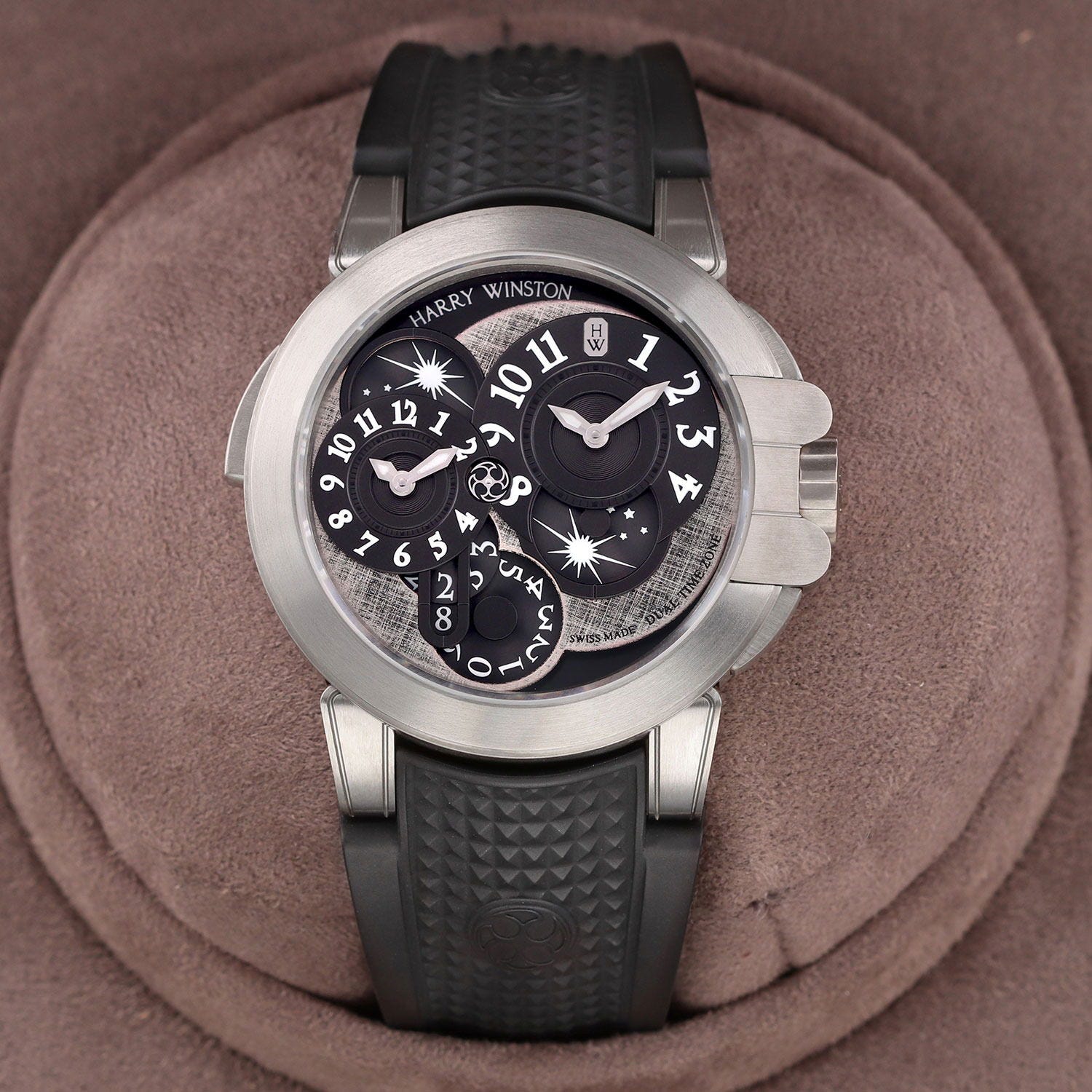
Tonight’s Harry Winston Ocean Dual Time belongs in that conversation. It is an undeniably unusual piece: a 44mm Zalium travel watch with two independent time displays, day/night indicators, a big date, and the unapologetic personality of the Max Büsser-era Ocean collection. But its auction outcome will ultimately be decided not by what it once cost, but by what a well-informed buyer believes that originality, condition, completeness, and rarity are worth today. That is the freedom collectors have earned—and it may be the most important market force of all.
-Michael Wolf
News
F.P. Journe and Rolex Create Unique Chronographs for Charity
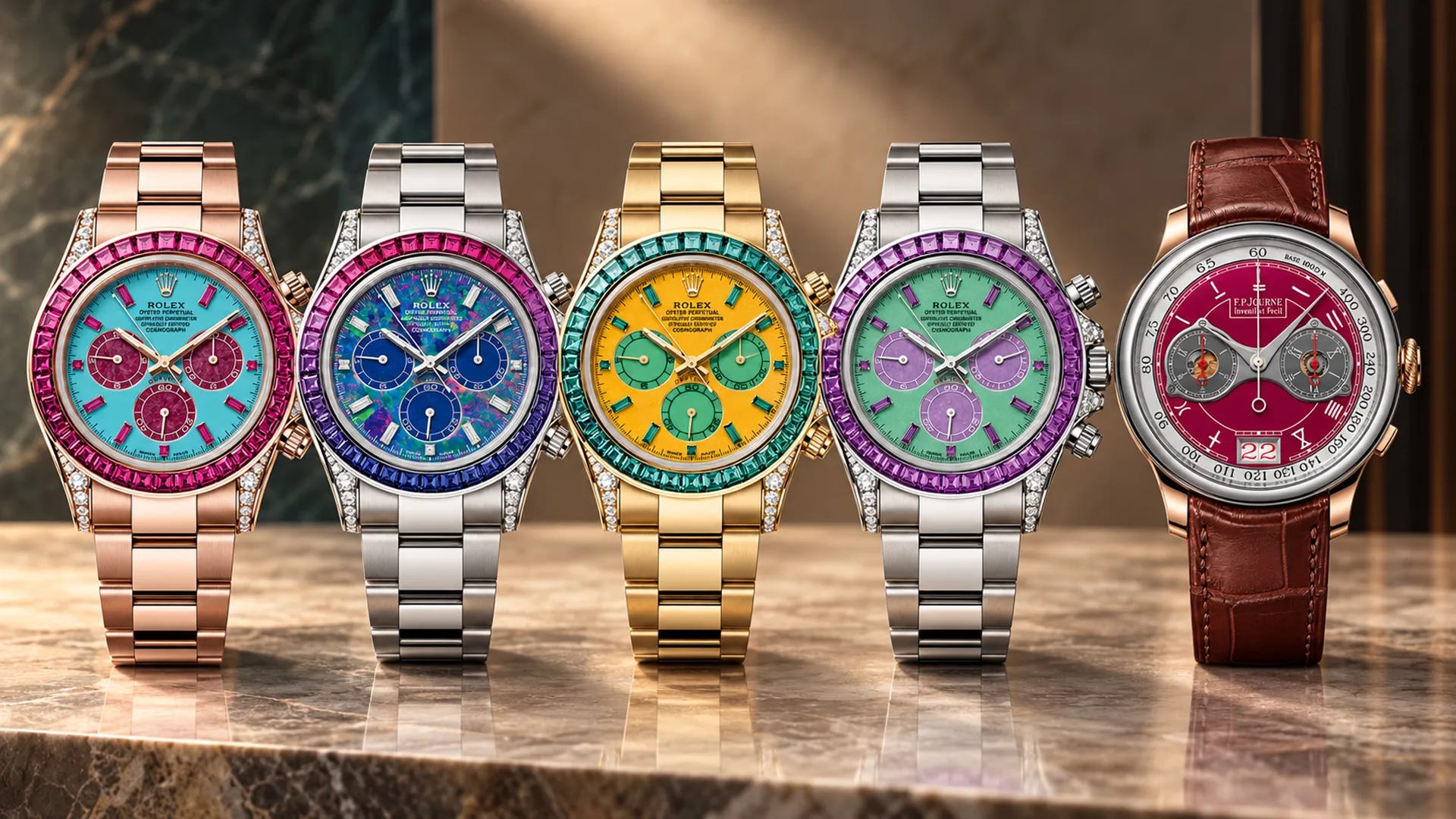
F.P. Journe and Rolex have created a one-off chronograph for the Prince Albert II of Monaco Foundation, to be sold by Phillips in Singapore this November. The 42mm piece combines 18k gold and platinum, a burgundy-lacquered chronograph dial, a tachymeter scale, and an inscription marking the foundation’s 20th anniversary.
Beyond the charity result, the watch is a reminder of the unusual collecting power created when serious independent watchmaking, one-off provenance, and a credible philanthropic cause meet in a single object.
Features
Girard-Perregaux’s Marc Michel-Amadry Cries Freedom
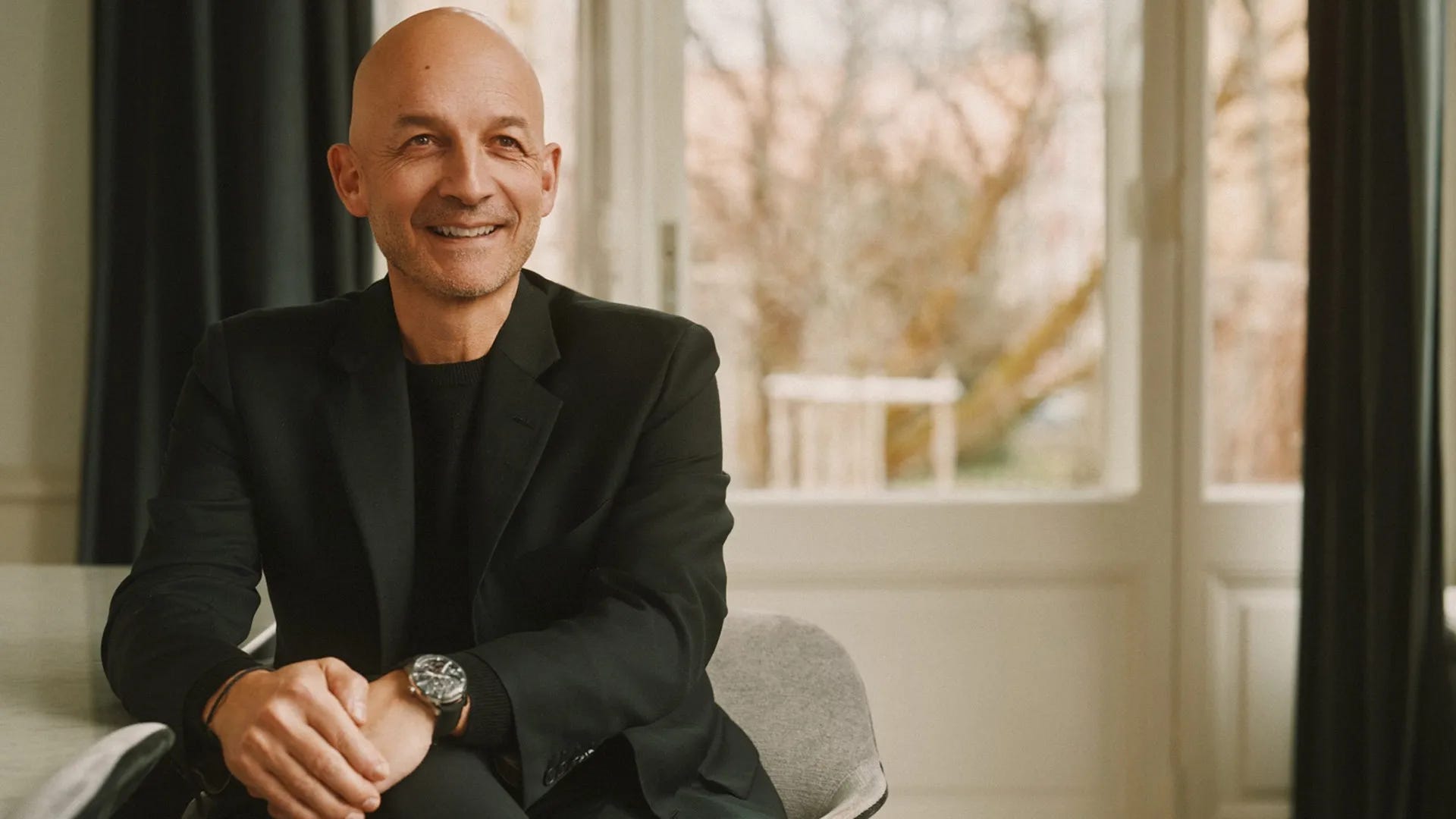
Girard-Perregaux is making a case for controlled independence. After introducing four new calibres in a year and refreshing the Laureato range, the manufacture is deliberately keeping production limited while directing resources toward its own boutiques, client relationships, and technically ambitious watches rather than mass-market visibility. The strategy rests on a simple conviction: serious customers will recognize substance when they see it.
The Laureato Fifty collection gives that argument a physical form, combining slim proportions with micro-rotor, tourbillon, and high-finishing executions. Whether the brand’s quieter route can cut through an increasingly crowded luxury market remains the question, but it is choosing to compete on character rather than volume.
GWD26: Armchair Pick: Chester’s Top 3 From the New Releases
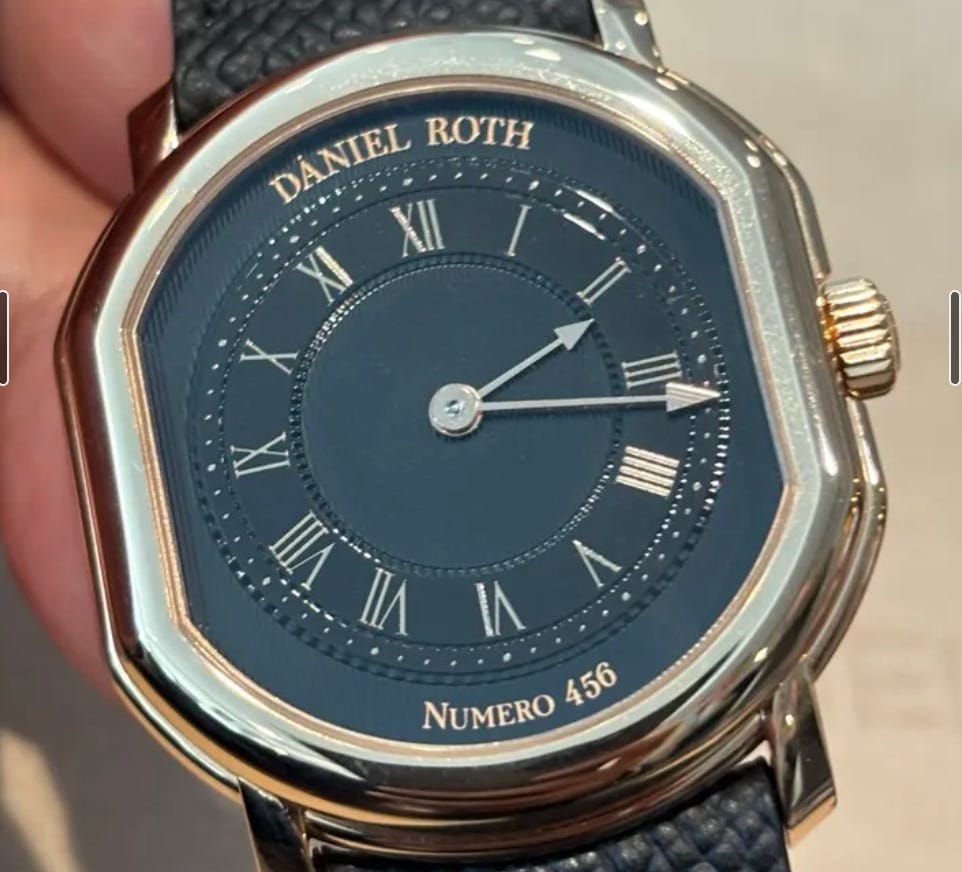
Three watches, three very different expressions of Geneva Watch Days. Daniel Roth’s Extra Plat Rose Gold Gilt puts the focus squarely on dial work, with an engraved gold base, black plating, and a color that shifts between inky black and dark blue. Ferdinand Berthoud’s FB 3SPC.4.1 updates one of contemporary chronometry’s most admired movements with a cool ceramicised-titanium case. L. Leroy’s Vox Temporis adds a flying tourbillon, guilloché work, and a minute repeater to a resolutely theatrical package.
The common thread is not a shared style but a confidence of purpose. These are watches that know exactly what they are trying to say.
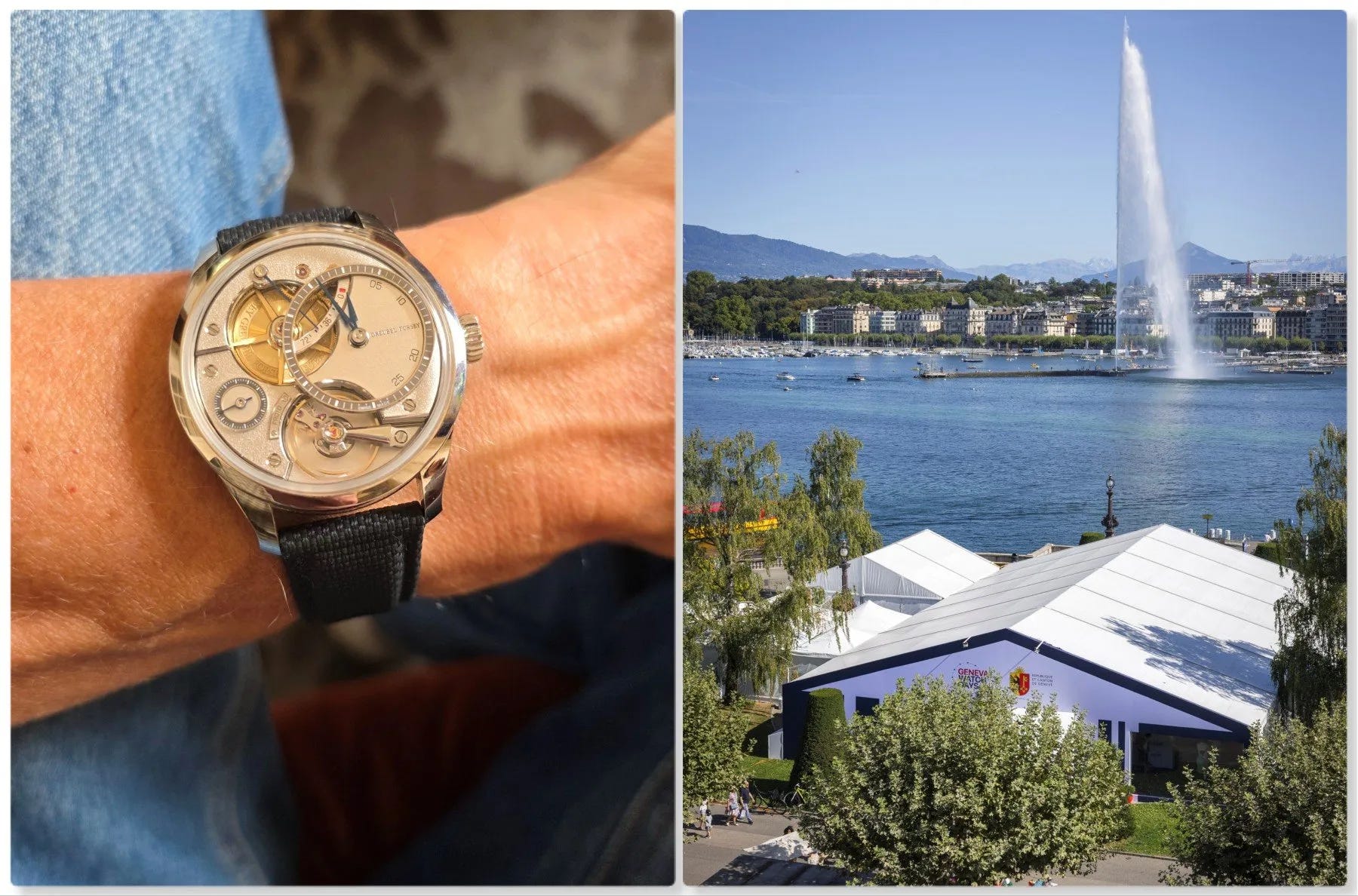
I Came To Be Dazzled, and Geneva Watch Days 2026 Delivered
Geneva Watch Days has become large enough to rival the intensity of the industry’s biggest fairs, drawing 71 brands, nearly 400 new watches, and more than 2,500 collectors, retailers, journalists, and enthusiasts. The appeal remains its unusual intimacy: watches are scattered across the city, brand representatives are accessible, and visitors can move from an independent maker to a major luxury house without losing the sense of discovery.
Yet its success poses a useful problem. As the roster grows, the show must preserve the direct conversations and unrushed encounters that made it distinctive in the first place. A smaller, more tightly curated fair may ultimately offer greater value than a larger one.
New Watches
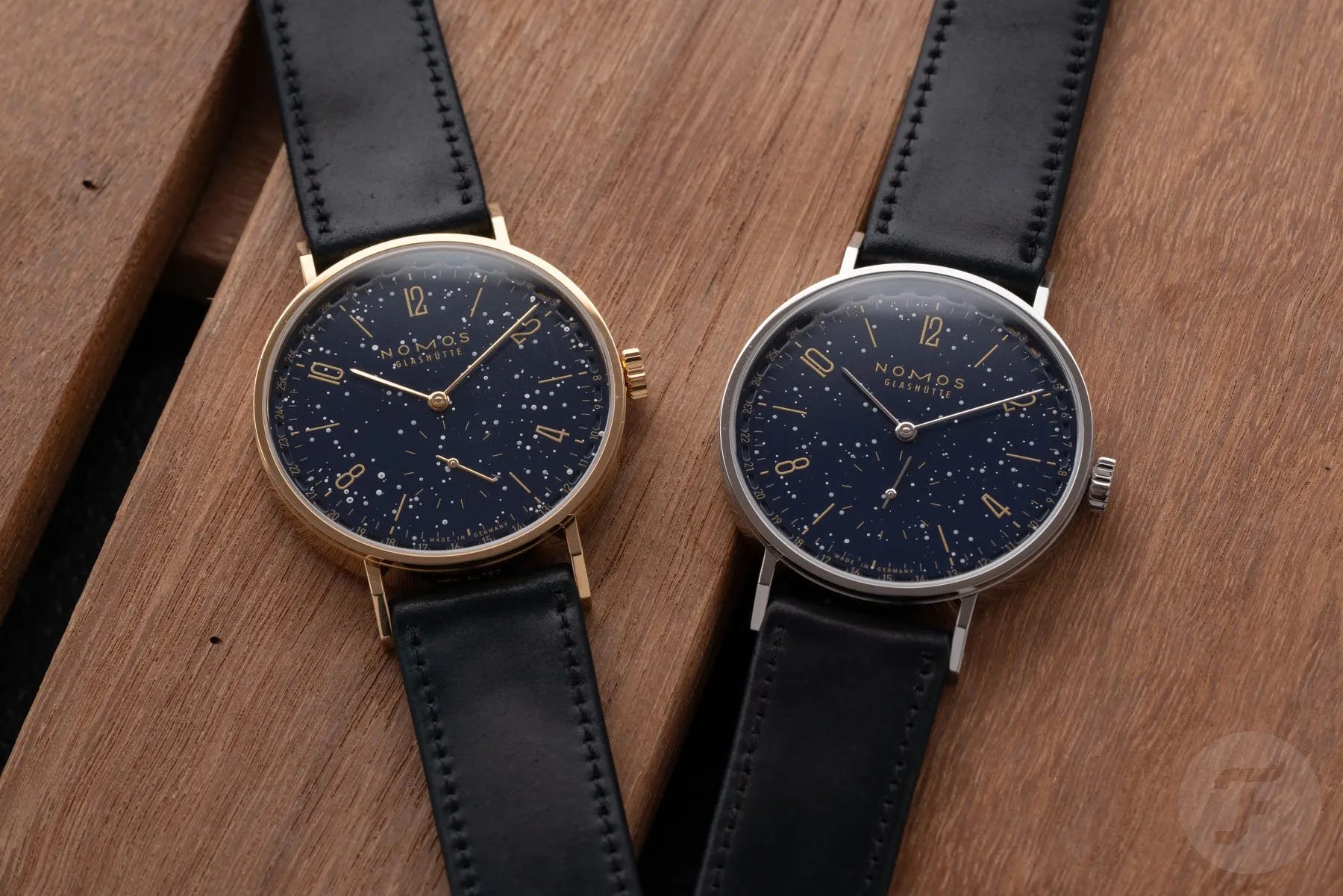
Nomos Twice Unique Collection
Nomos turns five of its familiar shapes—Tetra, Tangente 33, Tangente neomatik 38 Update, Ludwig, and Orion—into an experiment in dial art. Each design is offered only as a matched pair: one stainless-steel watch and one 18k-gold watch, with finishes ranging from hand-applied silver dots and gold leaf to wave patterns, mirrored surfaces, and hand-engraved details. No pair is sold separately.
The result pushes the brand’s Bauhaus discipline in a more expressive direction without abandoning its fundamentals. Orders are open only through the end of 2026. U.S. price: approximately $18,140–$25,230 per steel-and-gold pair.
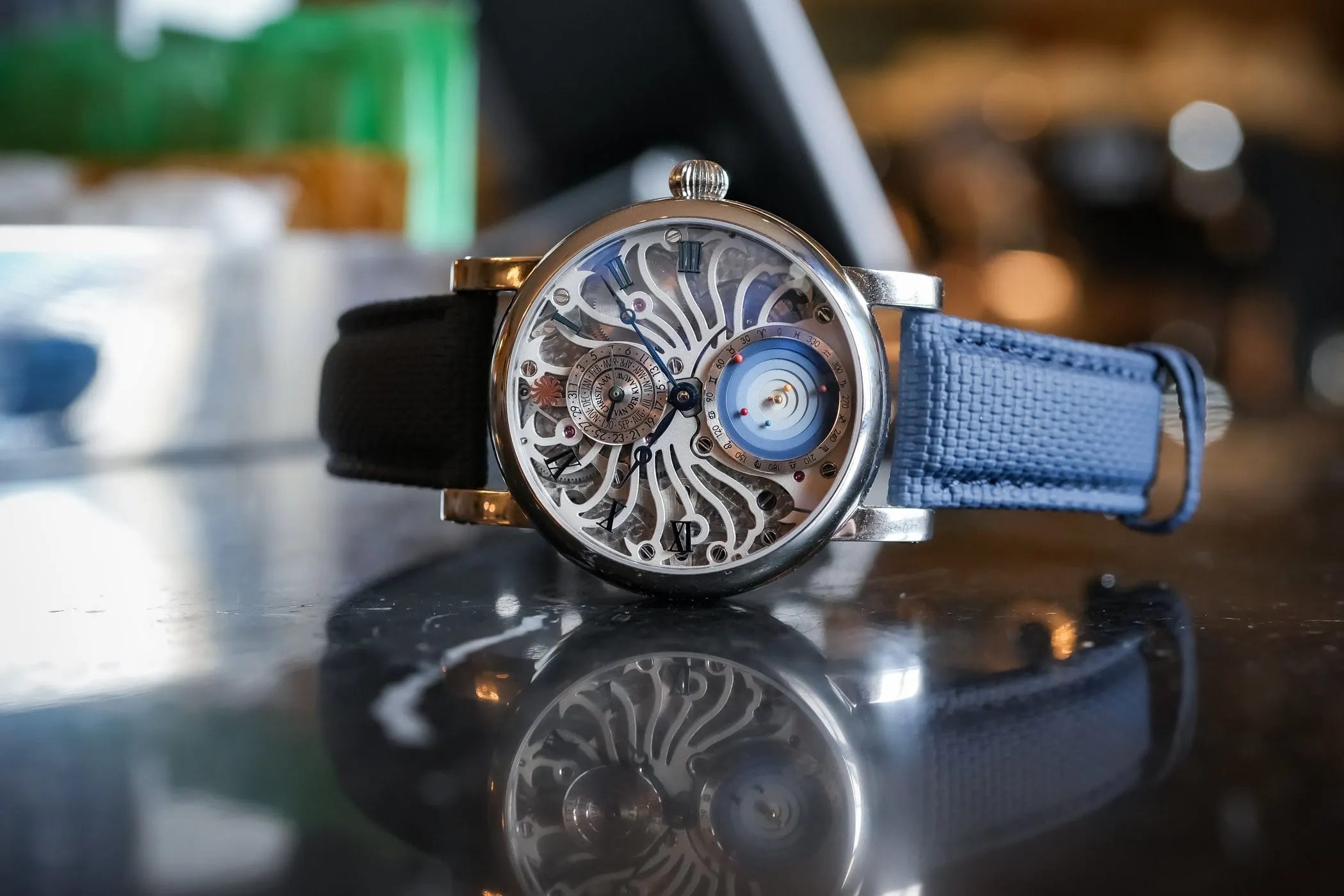
Christiaan van der Klaauw Planetarium Skeleton
Christiaan van der Klaauw opens up its signature astronomical complication in a six-piece platinum edition. The 40mm Planetarium Skeleton uses the CKM-01 movement and displays the real-time orbit of Mercury, Venus, Earth, Mars, Jupiter, and Saturn around a central Sun. Rhodium-plated bridges, a skeletonized rose-gold rotor, perlage, and star-shaped architecture make the movement as much the subject as the display.
It is a rare proposition even within rarefied watchmaking: a mechanically serious planetarium with a genuinely transparent execution rather than a merely open-worked dial. U.S. price: approximately $100,000, excluding VAT.
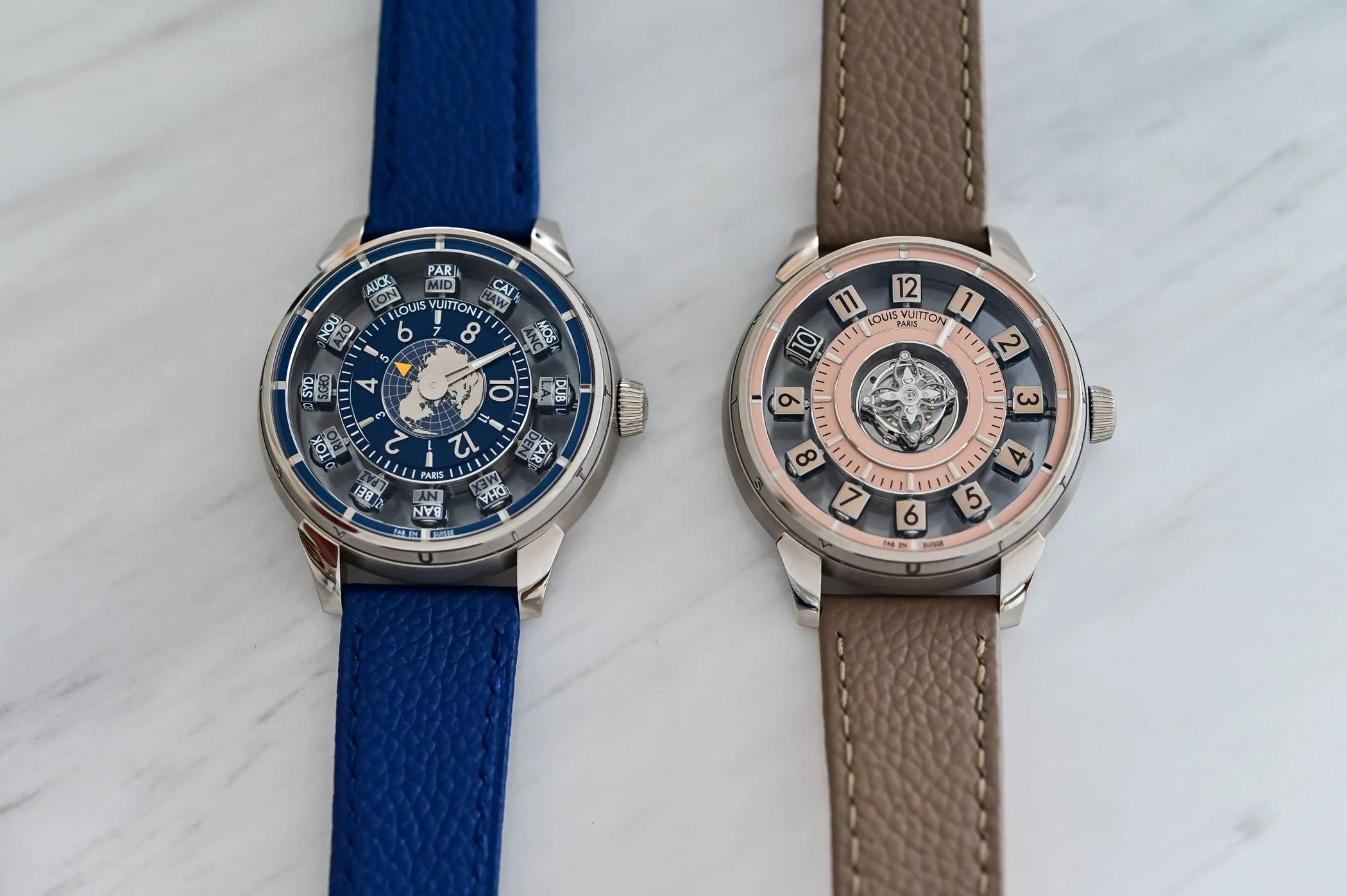
Louis Vuitton Tambour Spin Time Collection
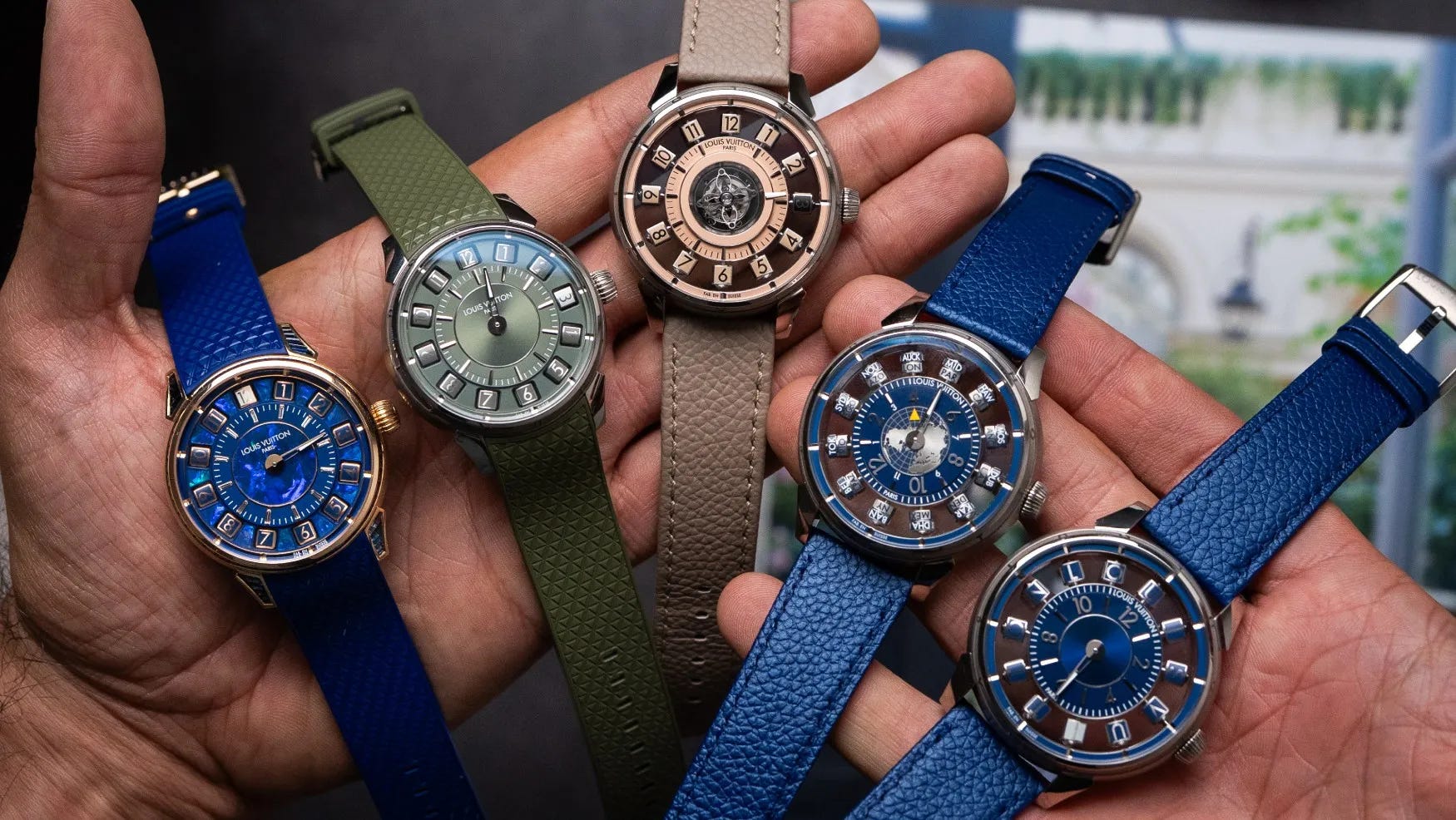
Louis Vuitton’s Spin Time is no longer a novelty at the edge of the Tambour range. It returns as a permanent collection with five references built around the twelve rotating cubes that transform the hour display into a small piece of kinetic theater. The new family includes a green white-gold model, a rose-gold Australia’s Opal edition, three Air versions, an Antipode world-time model, and a platinum flying tourbillon.
The watches range from 39.5mm to 42.5mm and use in-house movements, sapphire backs, and water resistance from 50 to 100 meters. The Spin Time remains unusual because its theatrics are inseparable from its function. U.S. price: approximately $100,000–$232,520, excluding taxes.
Greubel Forsey GMT Balancier Convexe
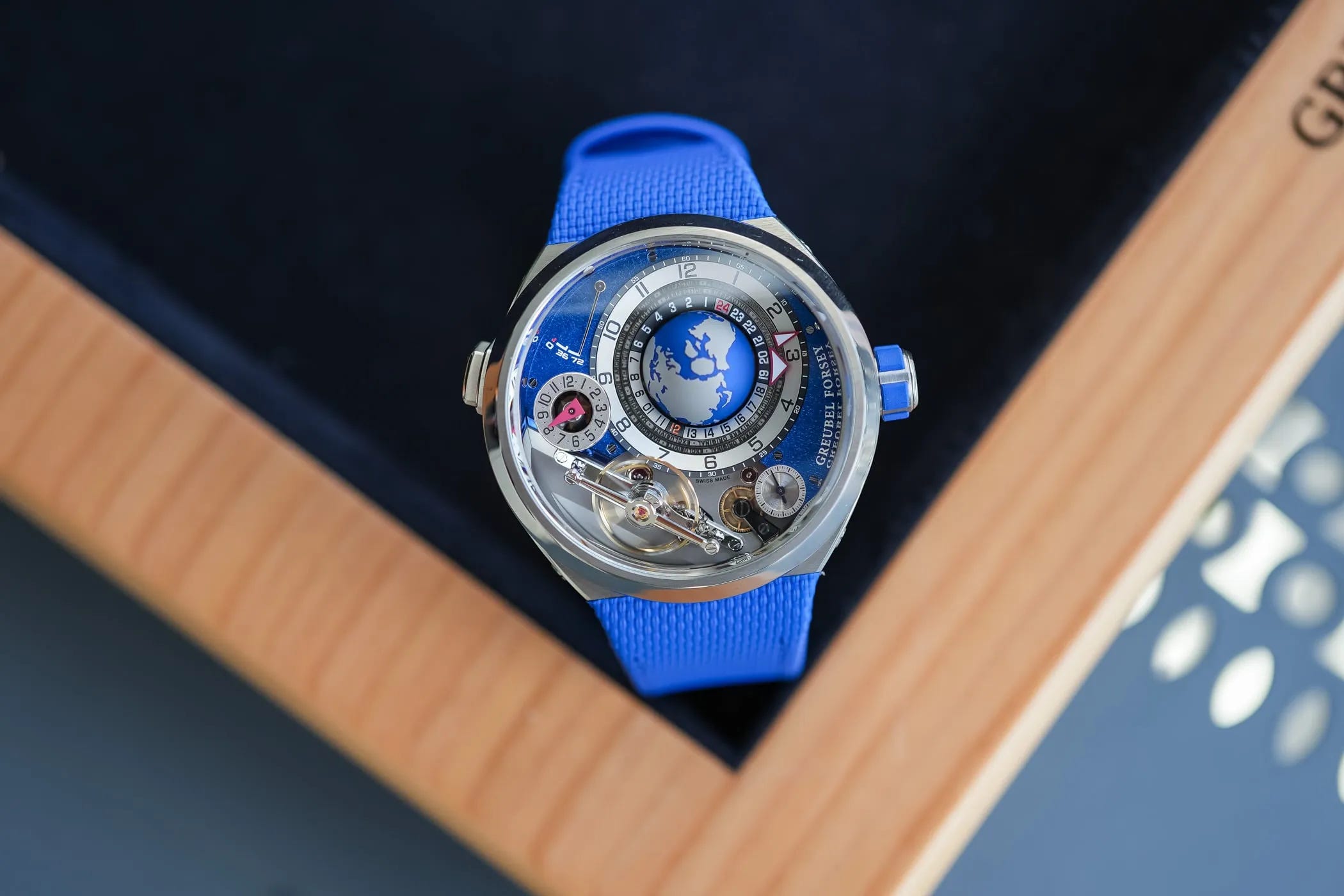
Greubel Forsey has made its globe-equipped GMT more compact without making it feel any less Greubel Forsey. The titanium GMT Balancier Convexe measures 42.9mm and retains its rotating globe, 30-degree inclined balance, 24-city world-time display, power reserve, second time zone, and day/night indication. Its manual-wind movement contains 496 parts and delivers 72 hours of reserve.
Limited to 22 pieces, it remains a formidable object—both technically and financially—but the reduced dimensions make a material difference to wearability. U.S. price: approximately $469,870, before taxes.
Seiko Prospex 1965 Heritage Diver’s Watch HBC011
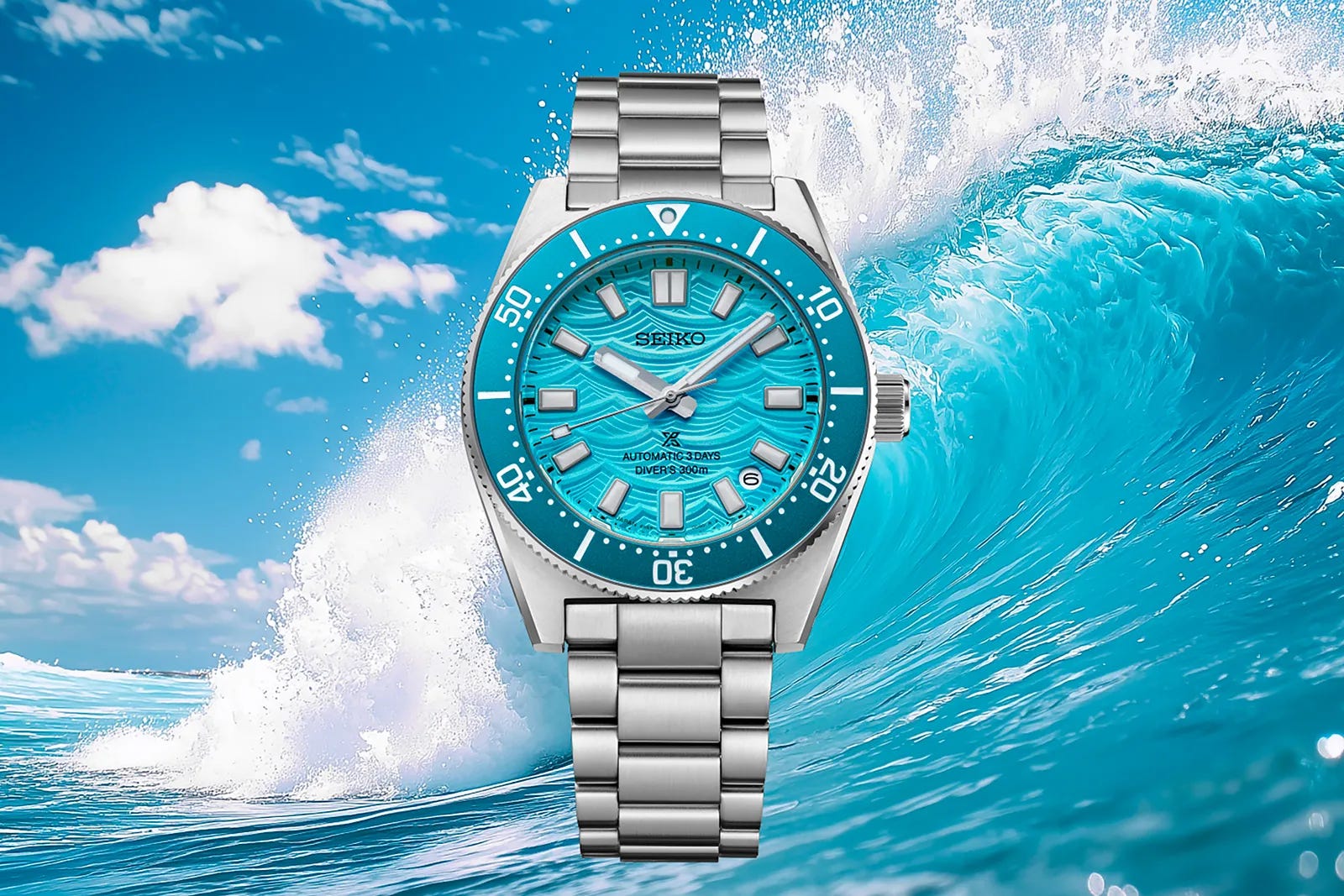
Seiko asked its enthusiasts to choose a dial color, and the result is the vivid Daytime Blue HBC011, a 4,500-piece limited edition built on the brand’s beloved 62MAS-inspired diver profile. The 300-meter-rated case receives Seiko’s super-hard Dia-Shield coating, while a sapphire crystal and new quick-adjust bracelet make this a more practical modern daily watch than a simple vintage homage.
The automatic Calibre 6R55 supplies a 72-hour power reserve, and the watch arrives in October. U.S. price: approximately $1,400.
Titoni Luxe Tourbillon
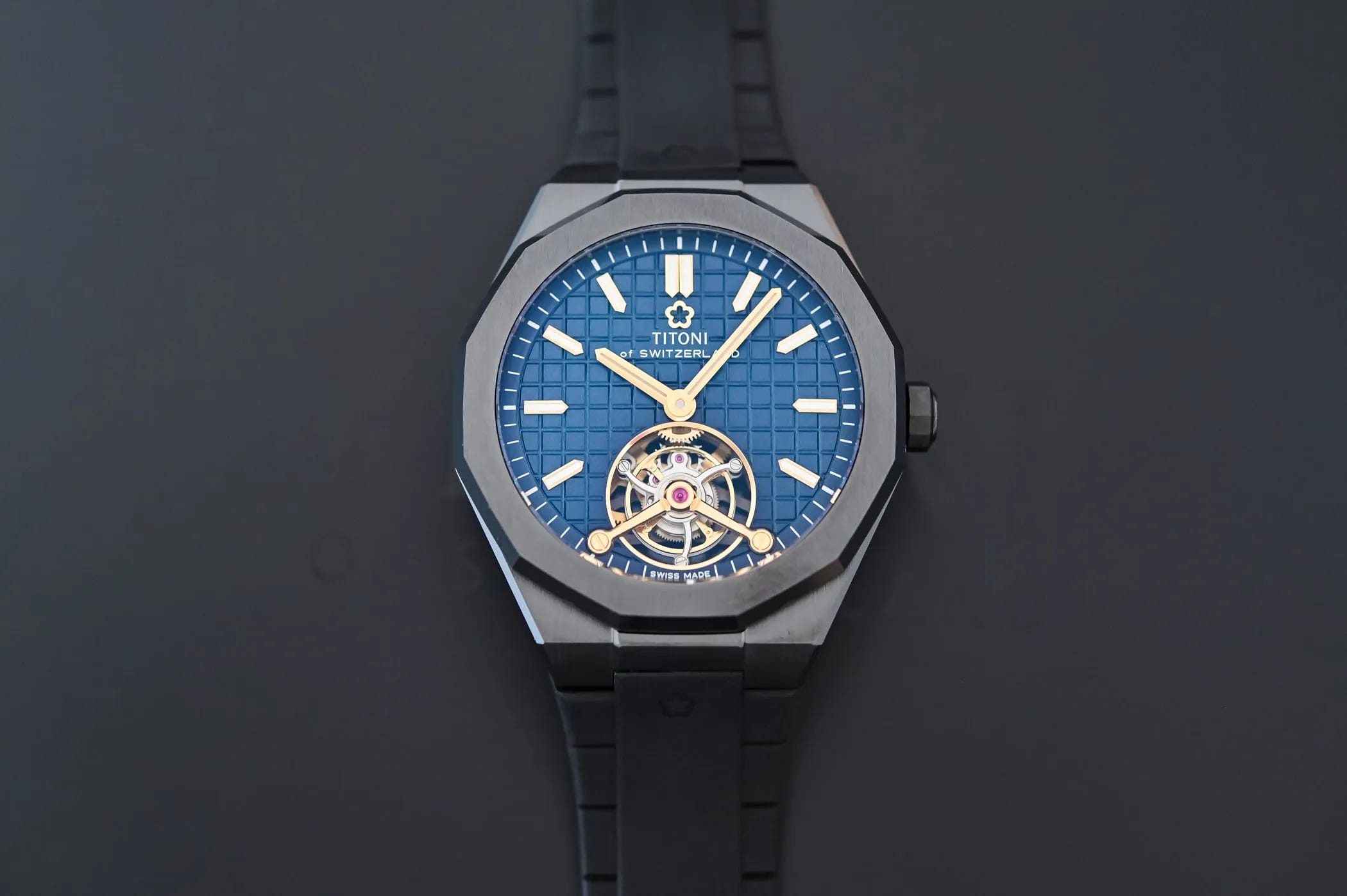
Titoni moves upmarket with a fully ceramic, 41mm sports watch centered on a visible tourbillon. The black high-tech ceramic case has a faceted, polygonal bezel and mixes vertical brushing with polished accents. Black, deep blue, and burgundy dial options feature a quadro pattern and rose-gold-colored hardware, while the hand-wound T1000 movement offers more than 100 hours of power reserve.
The combination of ceramic construction, extended reserve, and a prominent tourbillon gives this model a surprisingly serious specification for its price bracket. U.S. price: approximately $14,710, excluding VAT.
Comparisons
We Reviewed 7 Small Watches With Serious Water Resistance That Still Wear Well
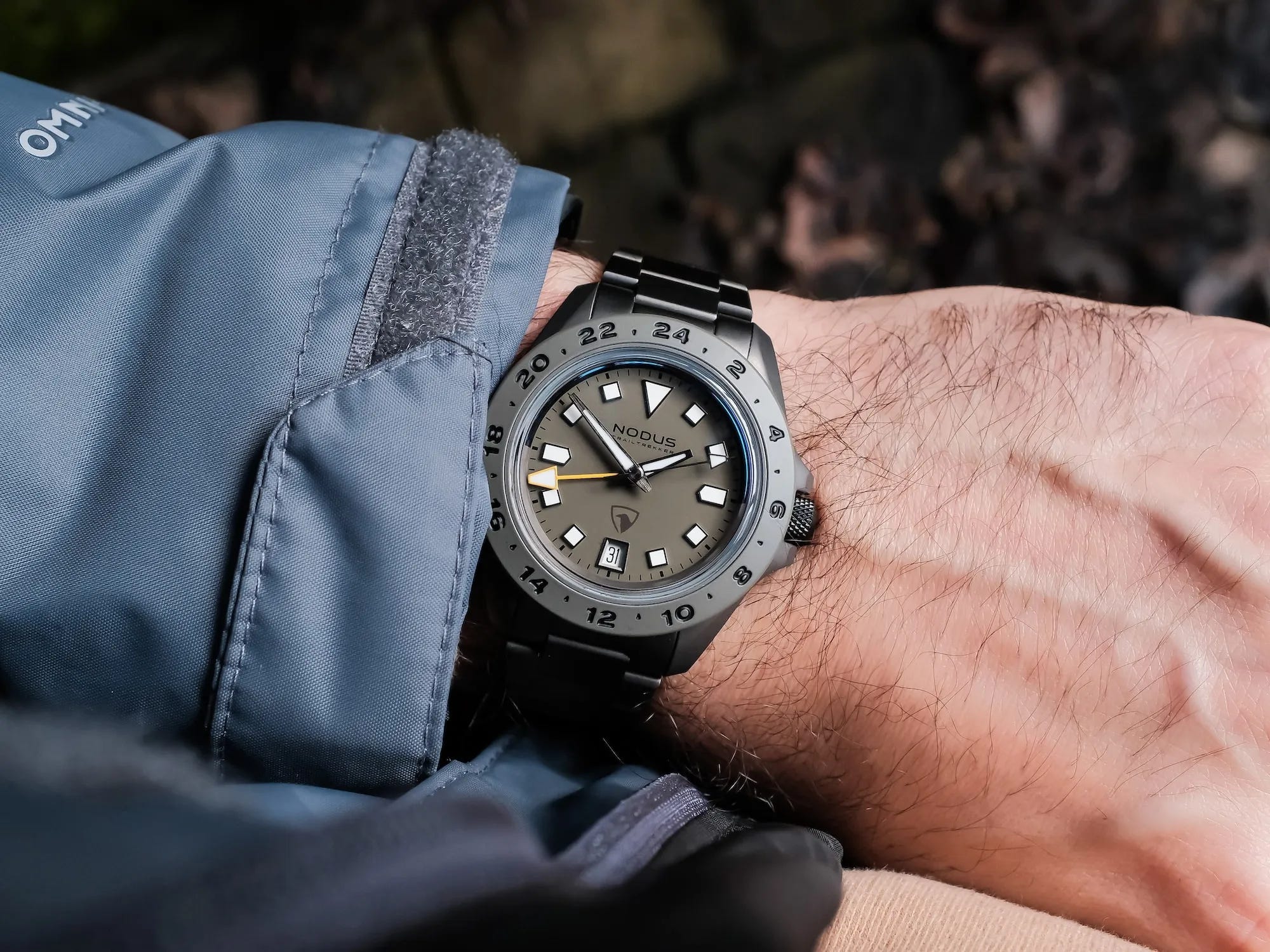
Small dive-capable watches remain one of the most useful categories in collecting, provided the compact case does not sacrifice legibility, comfort, or genuine durability. This comparison examines seven models ranging from the affordable Invicta Pro Diver and capable San Martin SN004 to the refined Baltic Aquascaphe, flyer-GMT Nodus x Raven TrailTrekker, and Glashütte Original SeaQ.
The point is not that every compact watch must be a professional diver. It is that serious water resistance, practical bracelets, and sensible dimensions can coexist—and make for much better everyday watches.
Reviews
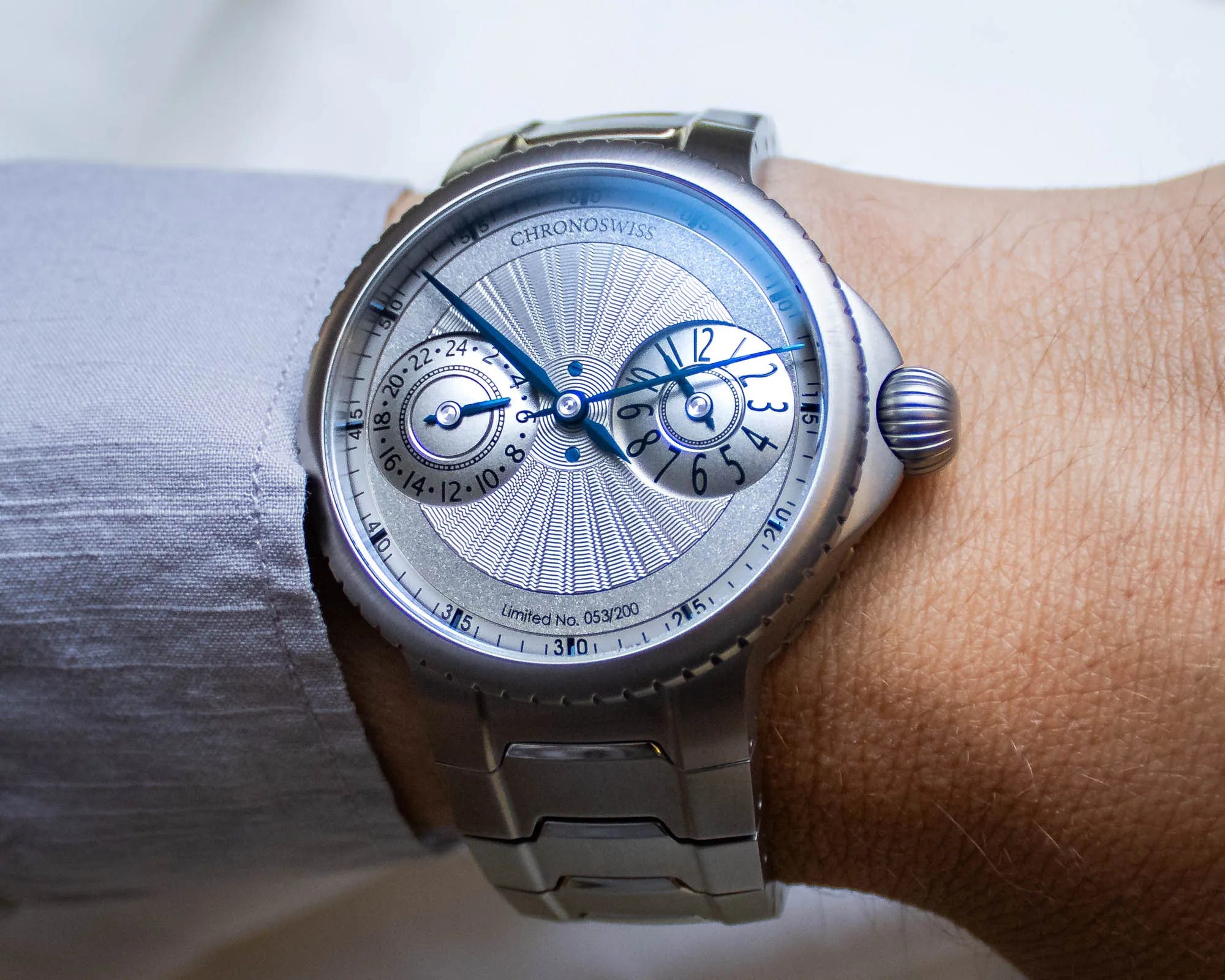
Chronoswiss PULSE GMT Silver Guilloché Offers a Fresh Take on the Travel Watch
Chronoswiss gives the integrated-bracelet GMT a sharper, more architectural personality. The 41mm Grade 5 titanium PULSE GMT uses two independently readable time zones: local time on a conventional 12-hour display and home time on a 24-hour hand. The silver guilloché dial, blue indexes, and blued hands provide a welcome contrast to the case’s contemporary lines.
Powered by the in-house C.6002 automatic movement, the watch has 100 meters of water resistance and a 55-hour power reserve. Limited to 200 pieces, it is the most accessible of the three PULSE GMT executions. U.S. price: $20,300.
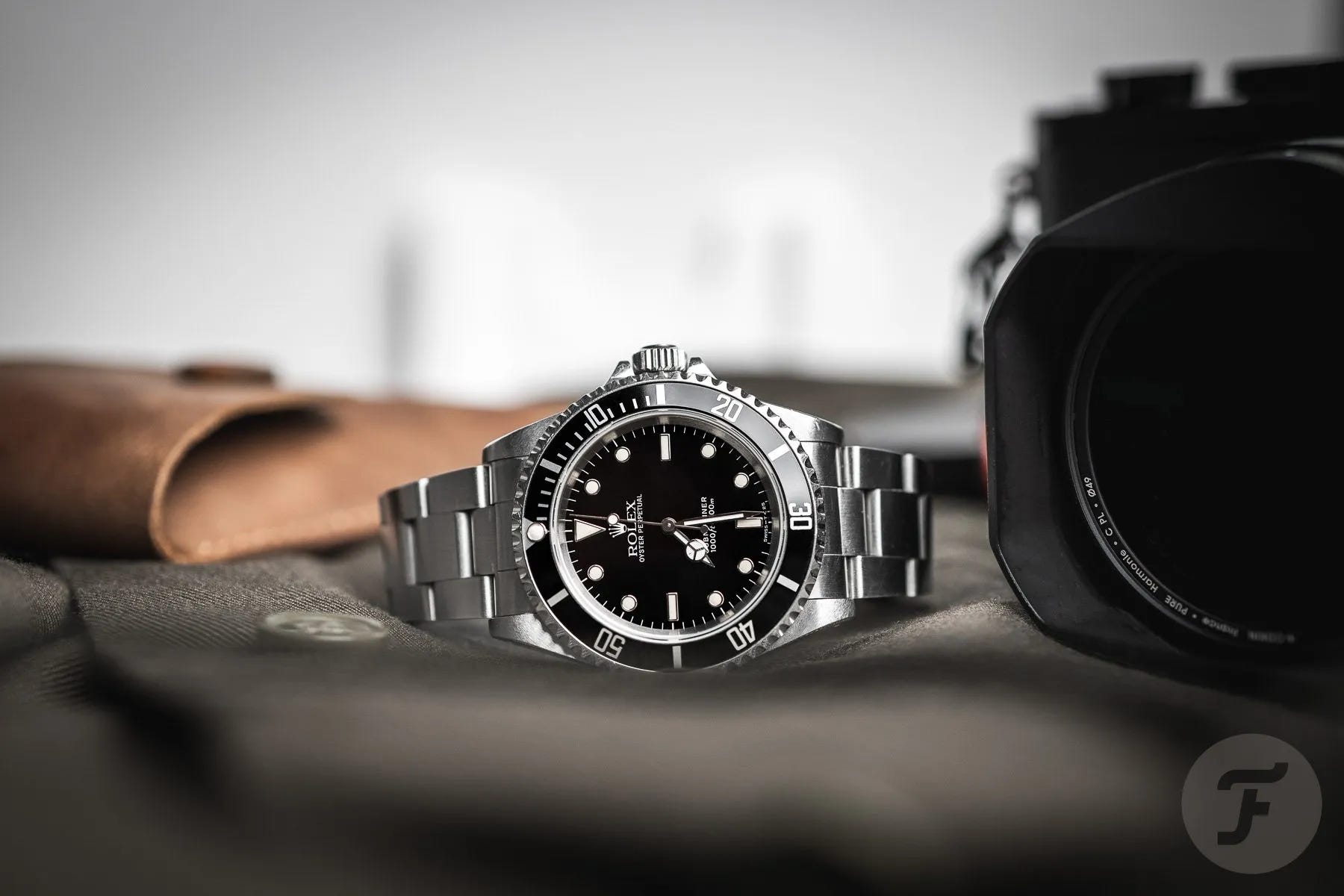
The Curious Case of the Boring Rolex Submariner Ref. 14060
The Rolex Submariner ref. 14060 is technically one of the most useful versions of the model: sapphire crystal, robust automatic movement, higher beat rate, solid everyday water resistance, and a clean no-date dial. Yet that very restraint is the source of the criticism. For some collectors, the smaller indexes and familiar black bezel make it less visually exciting than a Maxi-dial 5513, Kermit, or later Submariner.
That debate is exactly why the 14060 remains compelling. It is the Submariner for collectors who value quiet competence—or for those who want a five-digit Rolex that leaves room for a little imagination.
Editorial
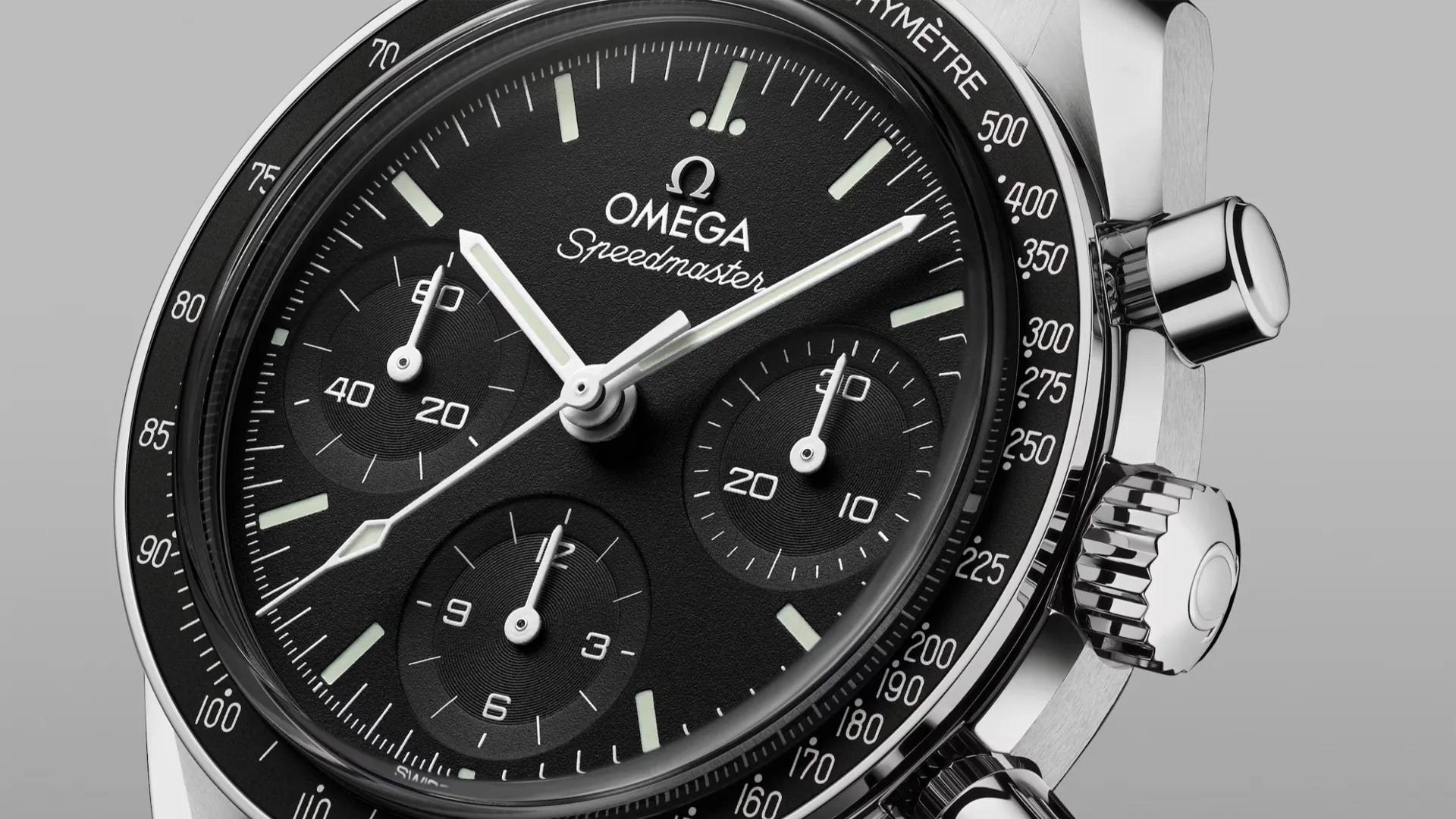
Omega Has Come to Its Senses on Price
Omega’s $6,500 38mm Speedmaster is more than another product launch. It suggests a more practical understanding of where the market is today. As luxury brands continue to face softer demand and consumers become more selective, a price that feels considered can be more powerful than a dramatic list-price increase designed to signal prestige.
The contrast with Zenith’s more aggressive move upmarket is revealing. Premium positioning can work when demand is deep and the secondary market supports it; when those conditions weaken, a brand risks selling fewer watches at a price few buyers feel compelled to defend. Omega’s approach may be less romantic, but it may also be more sustainable.
Podcast
aBlogtoWatch Weekly Podcast #237: Rolex Resale Roulette, Formex Upgrades, and a Thousand-Year Watch
The hosts test the idea of the least fashionable Rolex possible and consider what its resale performance says about desirability, hype, and personal taste. The conversation also covers the Perrelet Turbine Casino, Formex’s latest Essence 39, Bulova’s Shelby Racer Chronograph, and Urwerk’s hand-engraved UR-1001 Amadeus.
SJX Podcast: Geneva Watch Days Recap
Geneva Watch Days is now large enough to function as a broad industry barometer. This recap looks at the show’s 70-plus brands, roughly 400 launches, the growing influence of content creators, and the difference between a visually loud watch and one with lasting substance.
Talking Watches: With Pusha T—On Rolex, Rap, and the Luxury of Time
Pusha T joins Ben Clymer to discuss the watches behind the lyrics, including Submariners, Day-Dates, Daytonas, factory diamonds, stolen watches, and the patience required to secure the right Rolex. It is a thoughtful conversation about collecting standards, authenticity, and why waiting can be part of a watch’s story.
Video
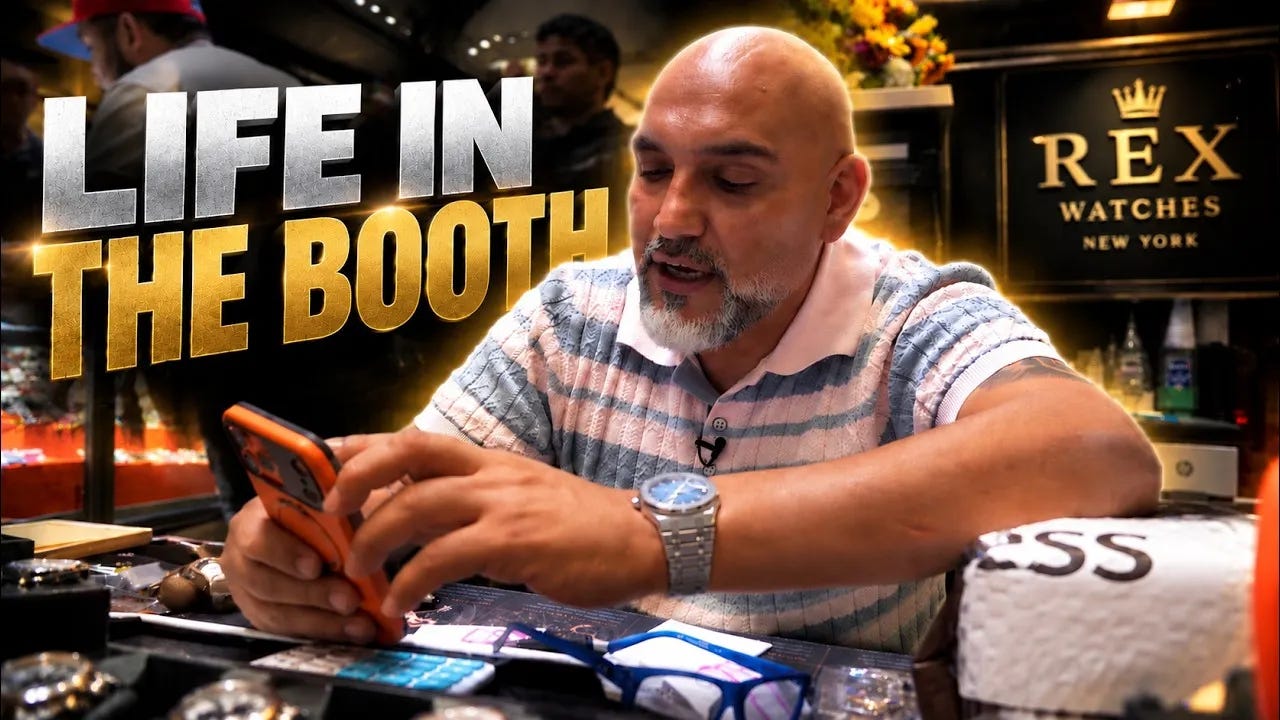
A Day Inside the Best Booth in NYC — The Rex Watches NYC
A look inside one of New York’s most distinctive watch-selling spaces, with attention to its design, display choices, and the collector atmosphere that turns a booth into a destination.

Are Fake Watches Now Too Good? — A Podcast About Watches
A discussion of how increasingly sophisticated counterfeits are changing the buying process, raising the importance of authentication, documentation, and seller trust across the luxury-watch market.
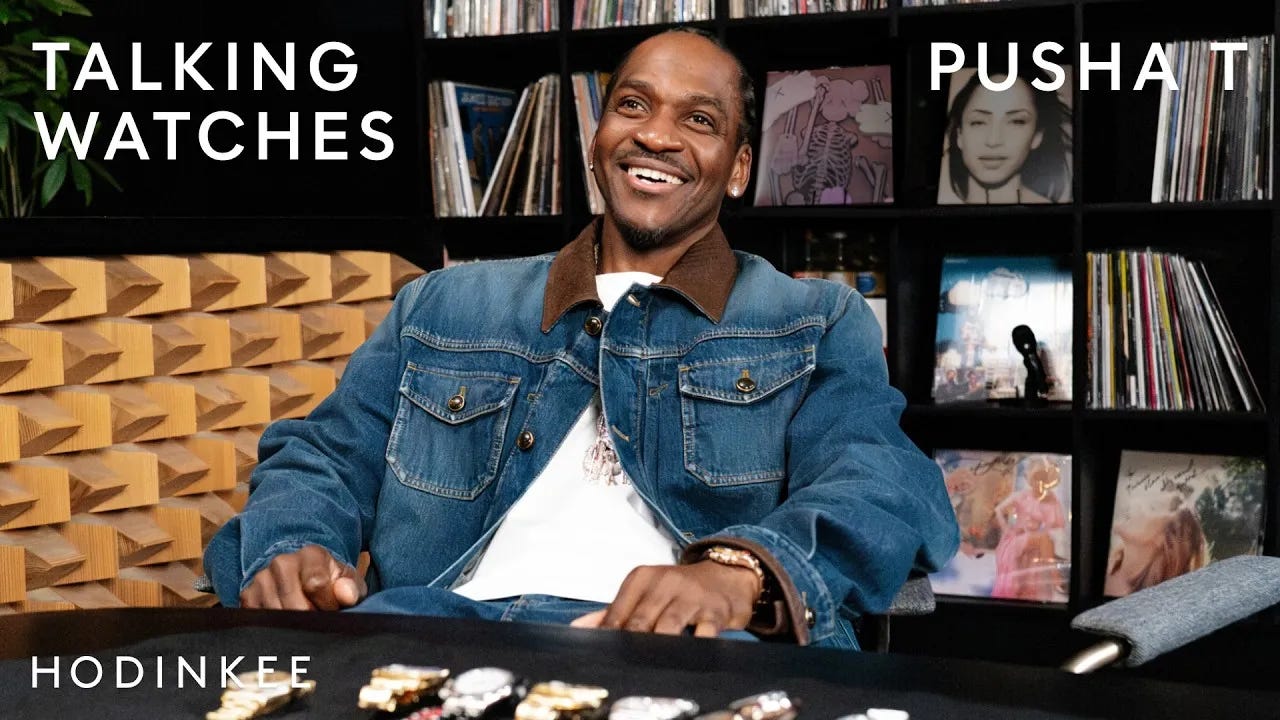
Talking Watches: Pusha T on Why Rolex Is Worth the Wait — Hodinkee
Pusha T explains the watches that matter to him, why he favors factory-set examples and authorized-dealer relationships, and how patience became part of his collecting philosophy.
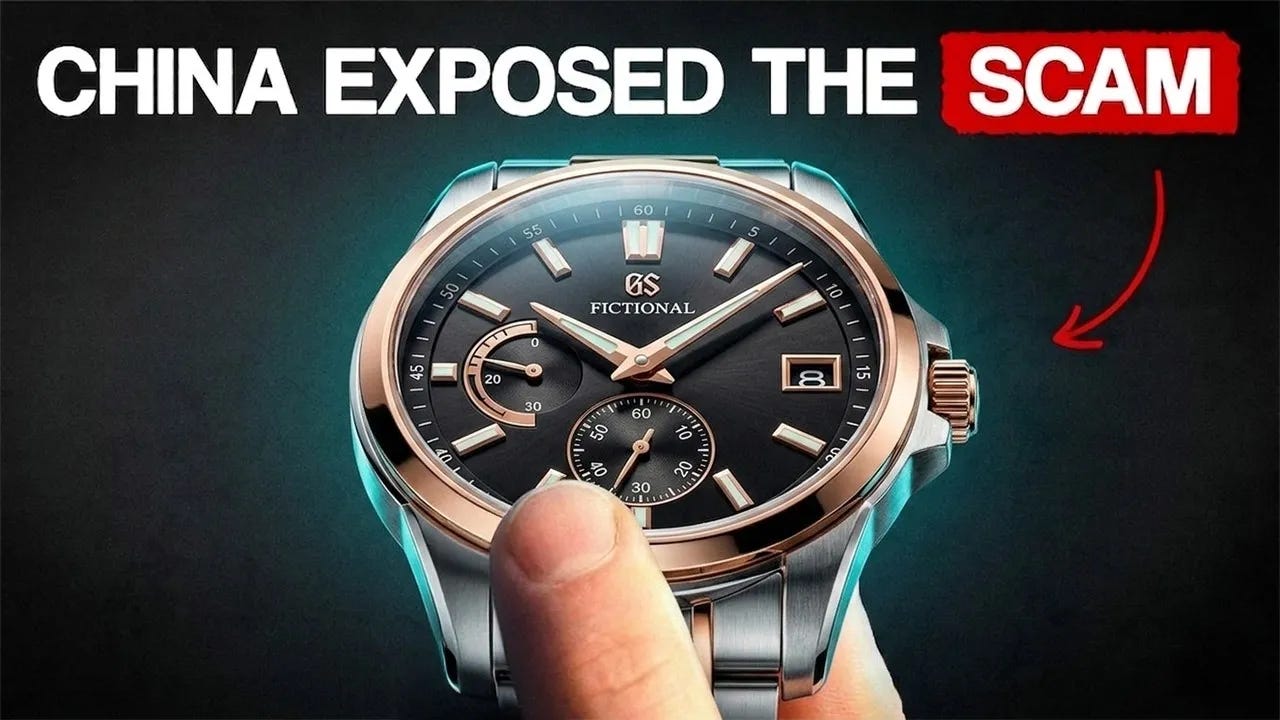
The Overdue Collapse of Overpriced Watches — Luxury Secret
An argument for looking beyond hype and prestige when assessing a watch’s worth, especially as a softer market puts ambitious retail and secondary-market prices under pressure.
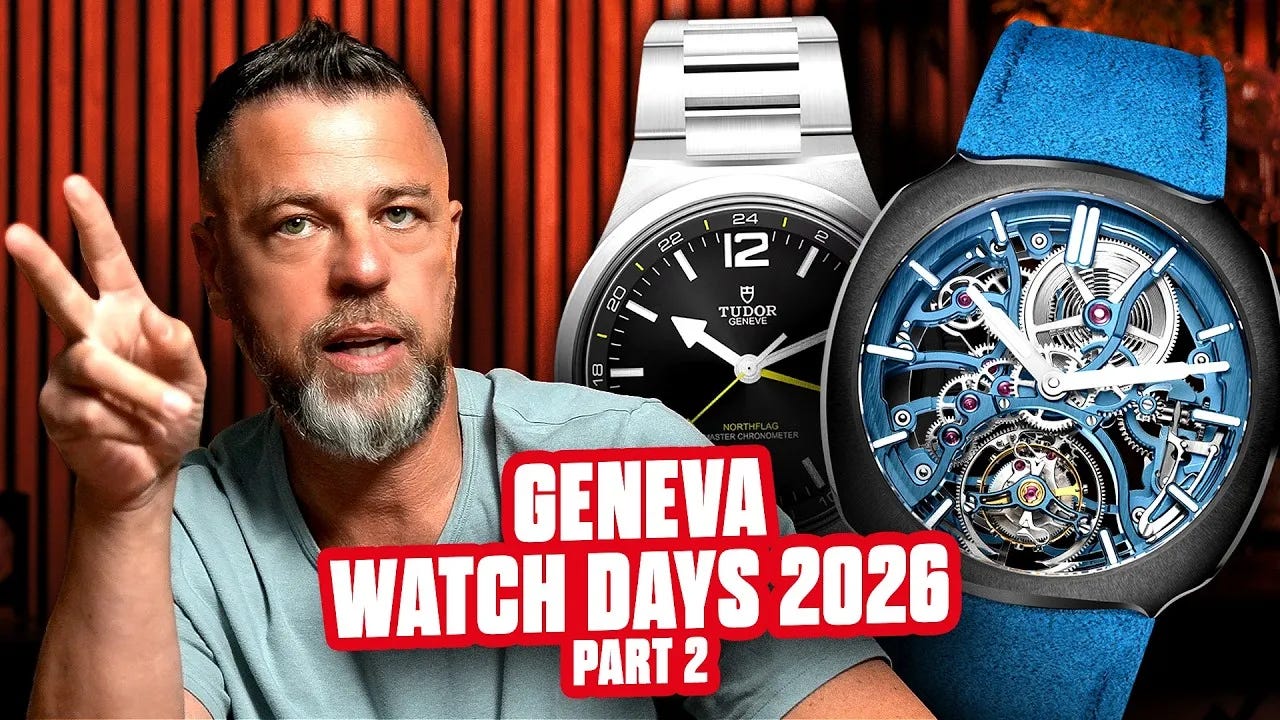
Tudor Brings Back the Northflag! New Watches From Geneva Watch Days 2026, Part 2 — Roman Sharf
Roman Sharf examines Tudor’s return to the Northflag concept and considers what the launch says about the brand’s current design and technical ambitions.
Watch Brands You’ve Never Heard Of…But Should — Nico Leonard
A fast-moving introduction to underappreciated brands, their signatures, and the appeal of looking beyond the familiar names when building a more individual collection.
Auction Results
2022 A. Lange & Söhne Lange 1 Time Zone, Pink Gold / Silver, Ref. 136.032
Yesterday’s auction watch was bid to $51,000 but did not meet its $53,495 reserve. It was close enough to confirm that the market recognizes the appeal of a modern pink-gold Lange 1 Time Zone, yet not quite enough to bridge the seller’s expectation. That narrow gap is a useful reminder: even desirable, complete, modern Lange watches need a price that acknowledges the current secondary market.
Today’s Auction
A Modern Harry Winston With an Old-School Point of View
The 2023 Harry Winston Ocean Dual Time Monochrome, reference OCEATZ44ZZ008, comes from a lineage that still feels unusually individual in modern luxury watchmaking. Its 44mm Zalium case, gray-and-black multi-level dial, dual time displays, day/night indicators, big date, and exposed mechanical character make it unmistakably a product of the Ocean collection’s most imaginative era. Limited to 250 pieces, it is not a watch designed to disappear under a cuff or quietly imitate a more familiar sports-watch formula.
The automatic HW1001 movement is based on Girard-Perregaux’s reliable GP3300 architecture and uses a Harry Winston module to manage the model’s two time zones, date, and power-reserve display. The result is practical despite its exuberant appearance. Each time zone receives its own day/night indication, while the large vertical date and four-bladed seconds indicator give the dial a distinctly technical rhythm. It is a more interesting travel watch than its relative lack of mainstream recognition might suggest.
Value, however, is where the story becomes more complicated. The model originally retailed around $40,500, but the secondary market has placed clean, complete examples substantially lower. Recent dealer offerings for examples with box and papers have generally clustered from the low teens into the mid-teens, with stronger unworn examples sometimes asking more. That makes condition, the original accessories, and the remaining life of the factory rubber strap especially important. This 2023 example has its box and papers, an excellent dial, and only minor wear to the case and strap, which are meaningful advantages.
For a collector who wants a genuinely different high-end GMT, the Ocean Dual Time is worth considering at a disciplined number. Its limited production, unusual Zalium construction, technically engaging dial, and association with Harry Winston’s more adventurous watchmaking period give it a stronger case than a simple price chart would imply. A result in roughly the $12,500 to $16,000 range before any buyer’s premium would look sensible for a pre-owned full set in this condition; beyond that, buyers should compare the cost of available dealer inventory. The auction closes at 6:20 p.m. EDT tonight, Wednesday, September 9, 2026.
Current bid: $5,200
Losing Time
Today’s Big Losers at Auction on Grailzee
Four lots, four reminders that asking prices are aspirations—not binding agreements.
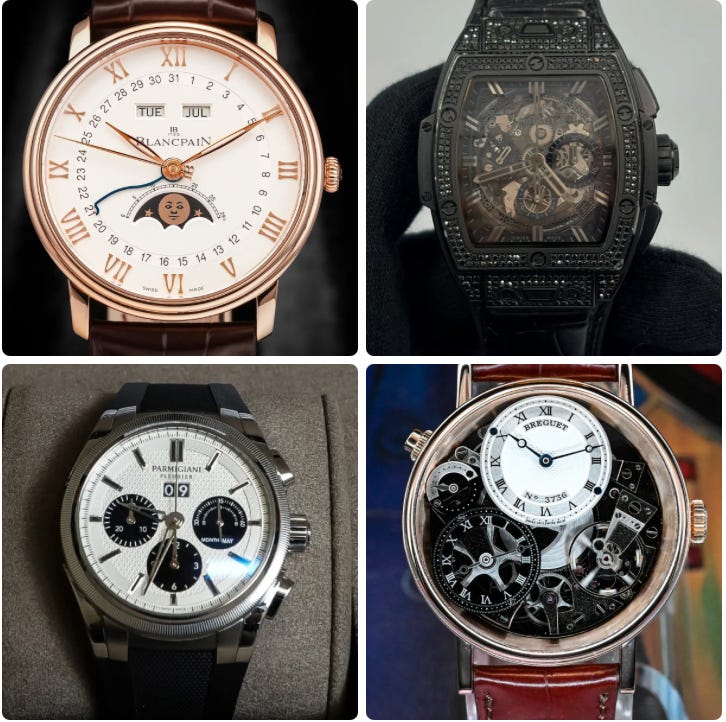
2024 Blancpain Villeret Quantième Complet — Asked $22,500; bidding stopped at $9,200, a $13,300 shortfall. That is 59.1% below ask. A complicated Blancpain at less than half of retail-style expectations: elegant, technically impressive, and apparently not invited to the bidding party.
Hublot Spirit of Big Bang Skeleton — Asked $23,000; high bid was $3,100, a stunning $19,900 gap, or 86.5% below ask. The bid reached just 13.5% of the ask. That is less a negotiation than a politely worded market intervention.
2025 Parmigiani Fleurier Tonda — Asked $14,500; bid $7,000, a $7,500 gap, or 51.7% below ask. Parmigiani’s watchmaking remains extremely good; unfortunately, the auction audience seems to have priced in the pleasure of explaining it to the next buyer.
2017 Breguet Tradition — Asked $29,500; high bid $15,651, a $13,849 gap, or 46.9% below ask. The best relative result of the group, though “only missed by nearly half” is not usually the wording sellers hope for.
The broad takeaway is that these are all watches where quality, complexity, or prestige did not translate cleanly into immediate auction liquidity. The Hublot is the headline: an 86.5% miss is so extreme that the $3,100 bid should be treated cautiously as a single-auction datapoint, not an exact valuation. Still, it is directionally consistent with the broader secondary-market challenge for many Hublot models: their original pricing can be ambitious, while buyer demand tends to be narrow and highly model-dependent. Outside the most collectible limited editions and genuinely scarce references, the secondary market often rewards Hublot buyers far more than Hublot sellers.
In short: the Blancpain, Parmigiani, and Breguet results suggest a soft market for sophisticated niche watches. The Hublot result suggests the market briefly removed its gloves.
Closing Time
Thank you for spending part of your day with BuyingTime.
The watch world is full of big claims, complicated mechanisms, and increasingly ambitious prices. The watches that endure are usually the ones that make the strongest argument on the wrist—and still make sense once the excitement has passed.
See you tomorrow.