

30 Seconds
July’s market was notably calm, but the interesting activity was not evenly distributed: Patek moved higher, Rolex softened, Cartier Roadster momentum accelerated, and Glashütte Original quietly led the month. Today’s issue follows that same divide between broad stability and individual conviction—through independent makers, distinctive materials, and watches with enough personality to stand apart.
Time Graphing Today’s Watch Universe
The most useful market signal this week is not a sweeping surge or collapse—it is selectivity. WatchCharts’ August market update shows an overall market that was essentially flat in July, with Patek Philippe edging up, Rolex slipping, and Glashütte Original gaining behind its Pano collection. That sort of tight spread can look uneventful from a distance, but it has a practical message for collectors: the market is currently rewarding individual stories more readily than it is rewarding a logo alone.
Look at the watches gathering attention today. Cartier’s Roadster has been revived by a relaunch and a growing appreciation for a design that once sat outside the mainstream. H. Moser & Cie. is the subject of today’s auction not because it offers the familiar, but because a 20-piece Ahmed Seddiqi edition turns a rare retrograde-seconds complication into something distinctly regional and collectible. In the broader market, the conversation around the “Genius Lock” premium for independent watchmakers says much the same thing: scarcity matters most when it is tied to a maker’s point of view, not manufactured merely for a press release.
The product stories reinforce the theme. Furlan Marri makes a hinged hunter caseback feel relevant again; MeisterSinger turns the single hand into a study in enamel and restraint; Kiwame Tokyo draws a watch case from the quiet geometry of temple roofs. Even the week’s blue-dial conversation—from light-blue watches across the price spectrum to the Patrouille de France Bell & Ross—suggests that collectors are seeking nuance rather than default choices. The opportunity in a steady market is not to chase every headline. It is to recognize the watches with a clear reason to exist, then give them the time their stories deserve.
-Michael Wolf
News
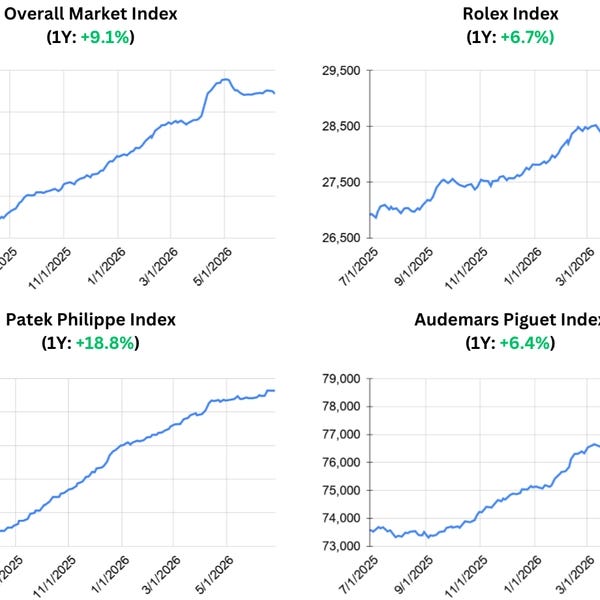
August 2026 Watch Market Update
July brought a remarkably steady secondary market, with the overall index unchanged. Patek Philippe rose 1.2%, supported by the Nautilus and Aquanaut, while Audemars Piguet was slightly positive and Rolex slipped 0.6%; Glashütte Original led the group with a 1.4% increase, aided by a strong Pano collection. The narrow monthly range—from Breitling’s 1.0% decline to Glashütte Original’s gain—was the smallest spread of the year, a sign that the market is trading on individual stories rather than a single broad trend.
Cartier’s Roadster was the notable outlier. Following its Watches and Wonders relaunch, the Roadster index rose 5.3% and reached an early-August high, while the collection’s one-year performance outpaced Cartier overall. Most older Roadsters remain accessible below $5,000, but the new collection’s $9,300-to-$57,000 pricing has added fresh attention and renewed demand across the line.
Features

A. Lange & Söhne’s Wilhelm Schmid and His Personal Relationship with Time and Watches
A. Lange & Söhne CEO Wilhelm Schmid reflects on the watches and ideas that have shaped his life, from the impact of the first modern Lange watches to the enduring pull of the Lange 1. He makes a compelling case for legibility and emotional connection, favors chronographs for their immediate usefulness, and argues that oversized watches can obscure the essential intimacy of wearing a timepiece.
Schmid also discusses the practical challenges of maintaining Lange’s discreet mystique while reaching a worldwide audience, bridging Glashütte’s manufacturing culture with its customers, and speaking to newer generations of collectors. His central buying philosophy is refreshingly direct: buy the watch you genuinely want, not the one someone else has decided you should want.

Christiaan van der Klaauw’s Pim Koeslag and His Personal Relationship with Time and Watches
Pim Koeslag describes a relationship with horology that moves easily between science, art, and the romance of celestial mechanics. At Christiaan van der Klaauw, the Planetarium was a defining revelation: a demonstration that a watch could make astronomical information feel poetic, not merely technical. His enthusiasm for the Grand Planetarium Eccentric and for chiming complications reveals a preference for mechanisms that invite curiosity.
The conversation ranges from the quartz crisis and shifting retail models to the influence of Gérald Genta and Koeslag’s appreciation for watches that hold personal memories. His advice to collectors is an especially worthwhile reminder: seek out what feels unique and compelling to you, rather than allowing trends to make the decision.
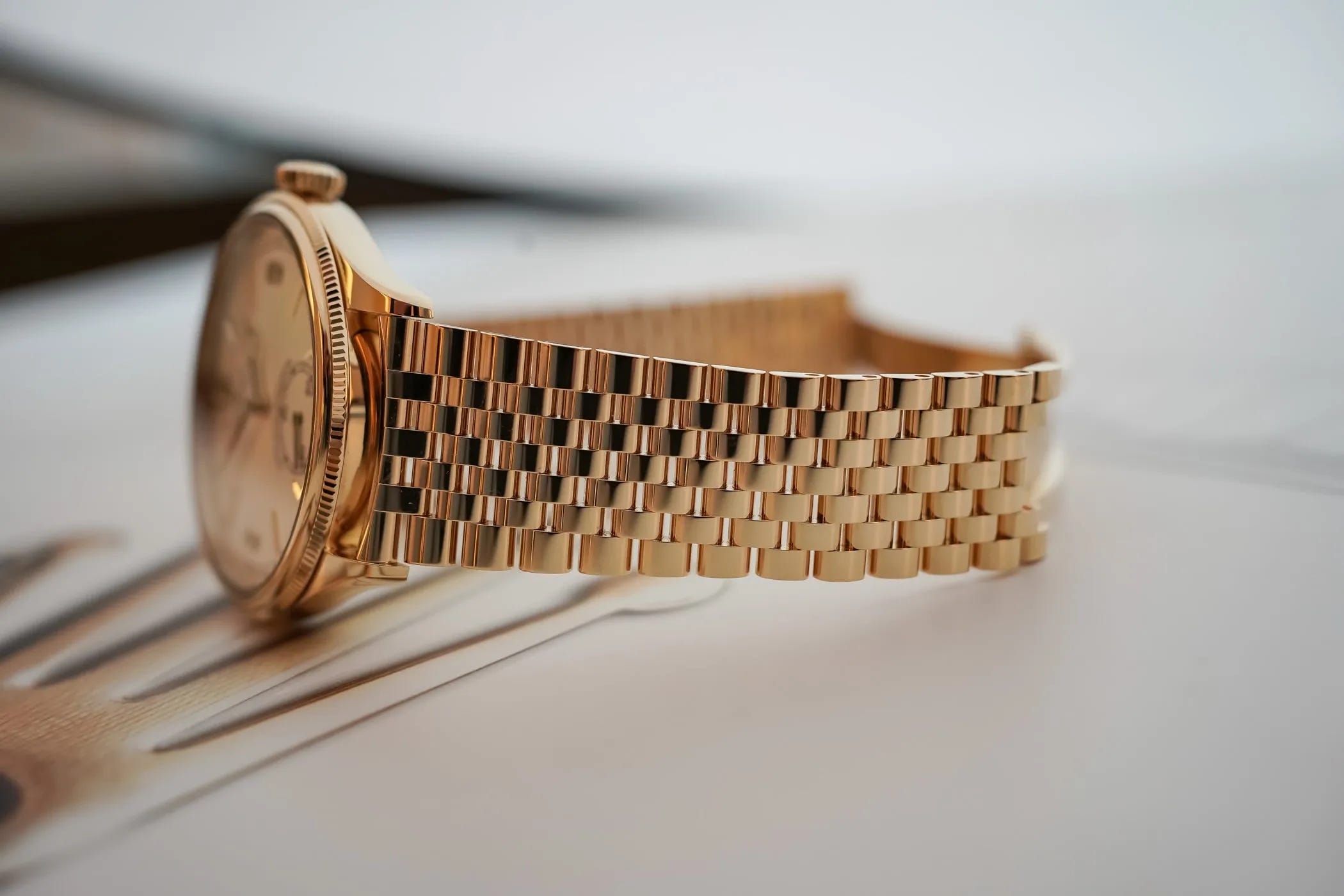
The History of Metal Bracelets for Wristwatches
The metal bracelet is easy to treat as an accessory, but its history reveals it to be one of watchmaking’s most demanding components. Although precious-metal bracelet watches appeared earlier, the wristwatch bracelet truly found its footing in the 1920s, with designs such as the Bonklip ladder bracelet eventually winning favor for their adjustability and durability. Gay Frères became the defining specialist, creating important bracelet forms for Rolex, Patek Philippe, and Vacheron Constantin.
The integrated-bracelet revolution of the 1970s, led by Gérald Genta’s Royal Oak and Nautilus, changed the relationship between watch and bracelet altogether. Today’s quick-adjust systems, modern Milanese meshes, and advanced titanium constructions continue that story, proving that the bracelet often carries as much engineering, comfort, and design identity as the watch head itself.
New Watches
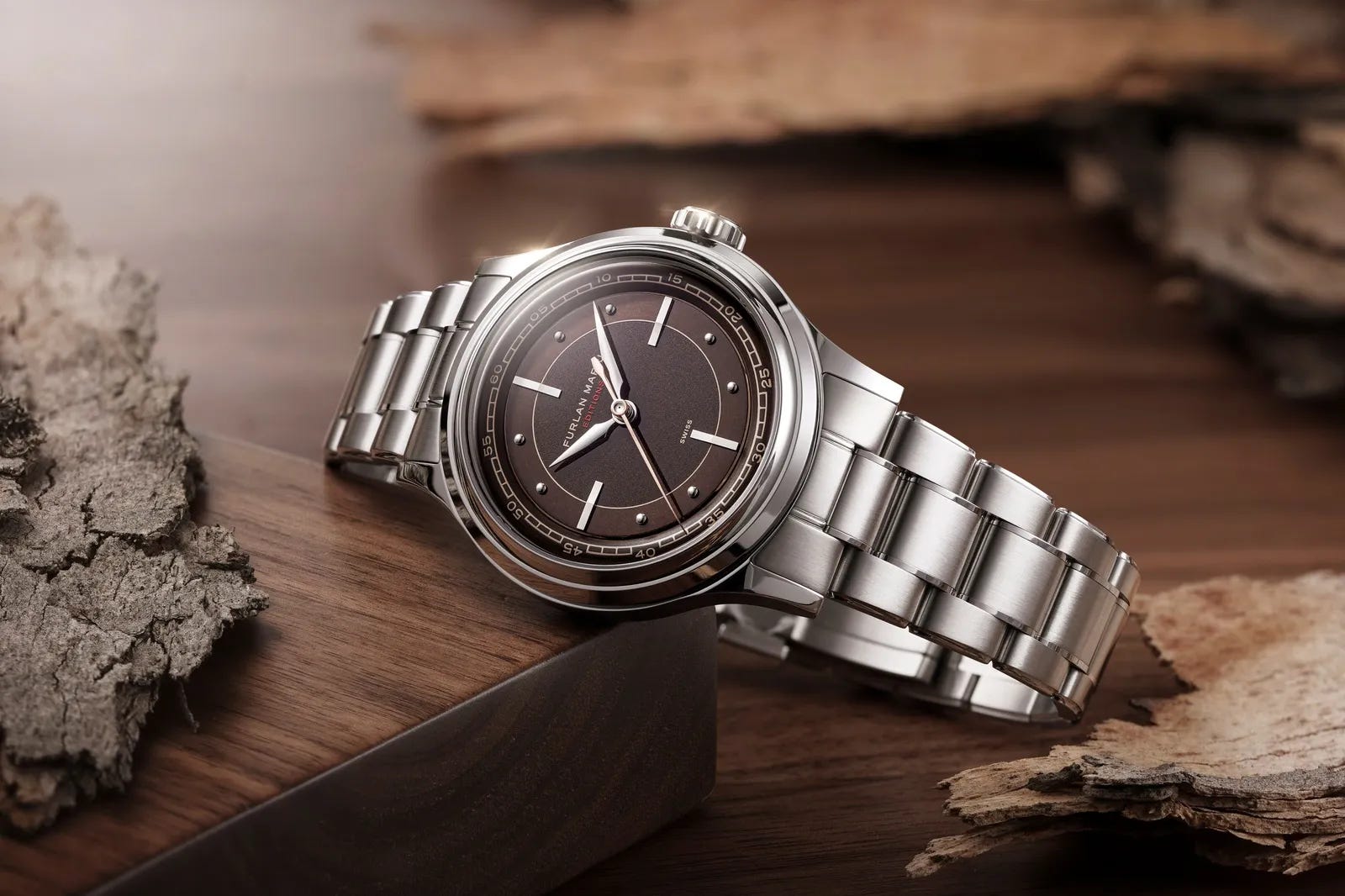
Furlan Marri Outback Songlines Brings the Hunter Caseback to 39mm
Furlan Marri’s Outback Songlines brings the hinged hunter caseback from the brand’s 2025 Red Hunter into a larger, 39mm steel format. Its grained lacquer dial combines deep brown with rose-gold tones, while the La Joux-Perret G100 movement delivers a 68-hour reserve behind the decorative caseback. A steel bracelet and brown calf strap, both with quick-release fittings, make the watch unusually adaptable.
The Australian Songlines inspiration gives the edition a thoughtful visual direction, rather than treating the hunter back as a novelty. Priced at about £1,700, the Time+Tide retailer edition launches September 19, initially through a 48-hour online window before boutique availability.
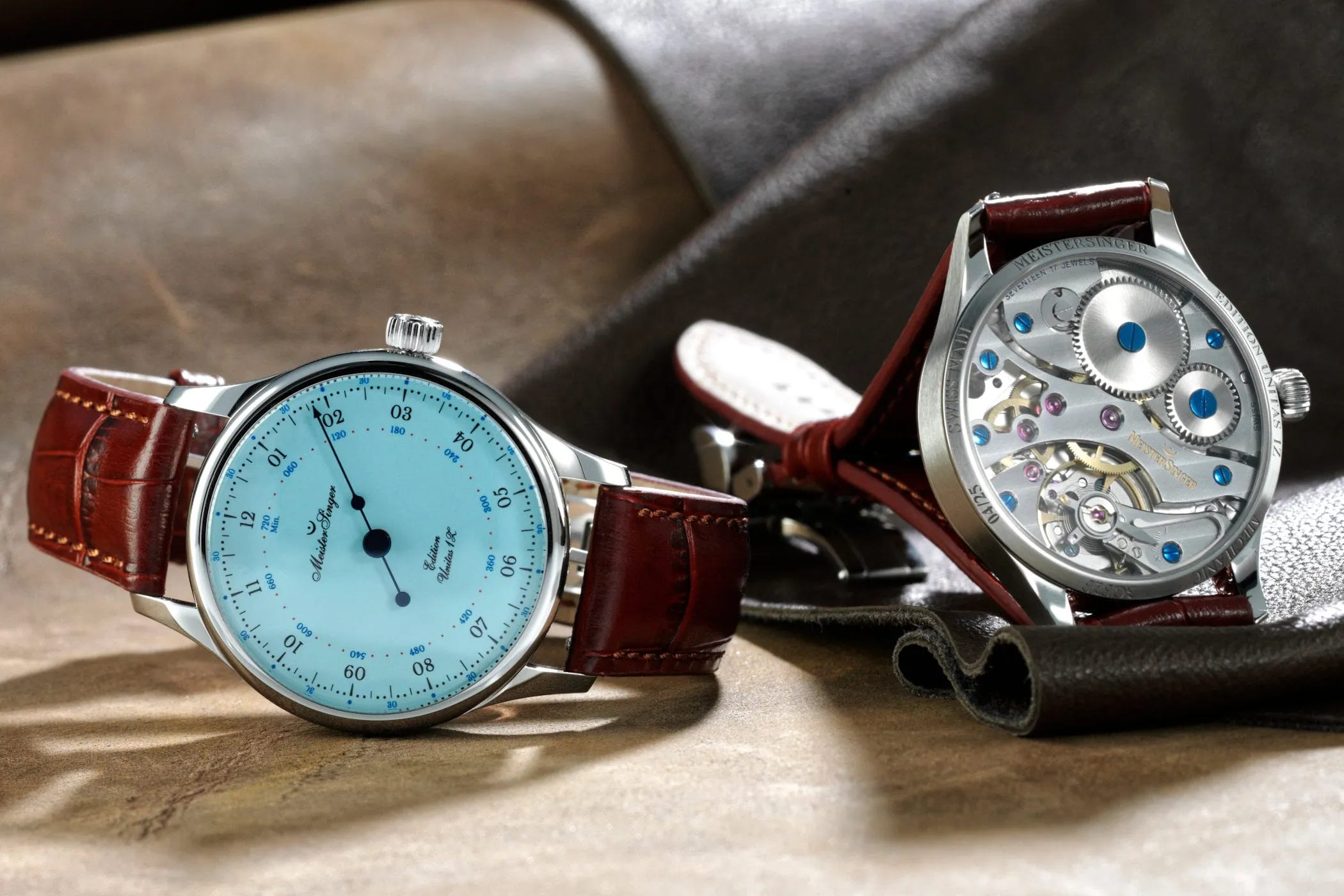
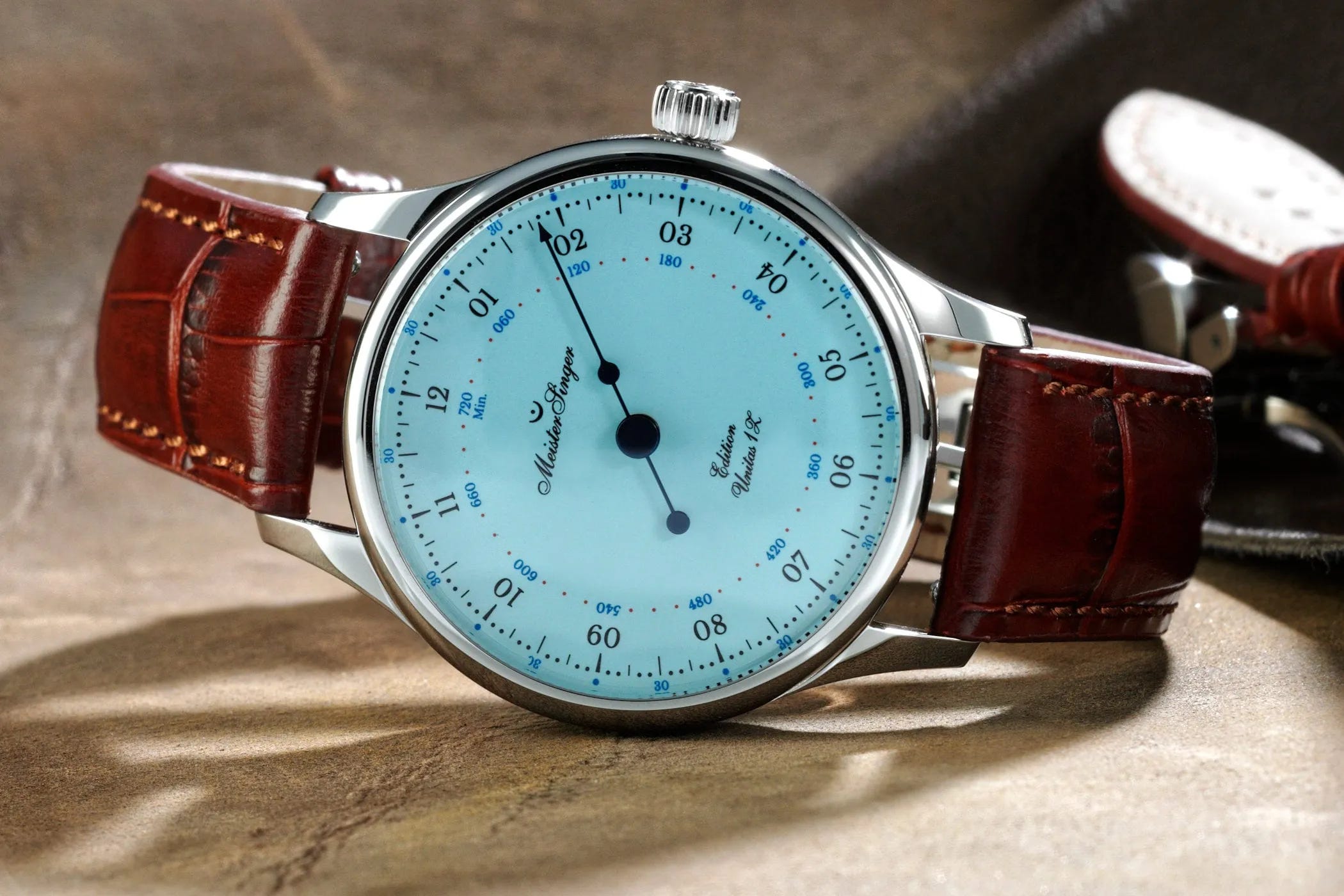
The MeisterSinger Edition Unitas 1Z Blue
MeisterSinger returns to its original 2004 Edition 1Z with a pale-blue grand-feu enamel dial, the first colored enamel execution for the brand’s distinctive single-hand format. The 40mm steel case, mahogany calfskin strap, fluted crown, heat-blued hand, and manually wound ETA/Unitas 6497 movement give it an intentional, almost pocket-watch-like character.
Only 25 pieces will be made, each asking the wearer to read time in five-minute intervals rather than chasing every passing minute. At €6,990, it is a thoughtful expression of the brand’s core idea: a mechanical watch can make time feel less hectic, not more.
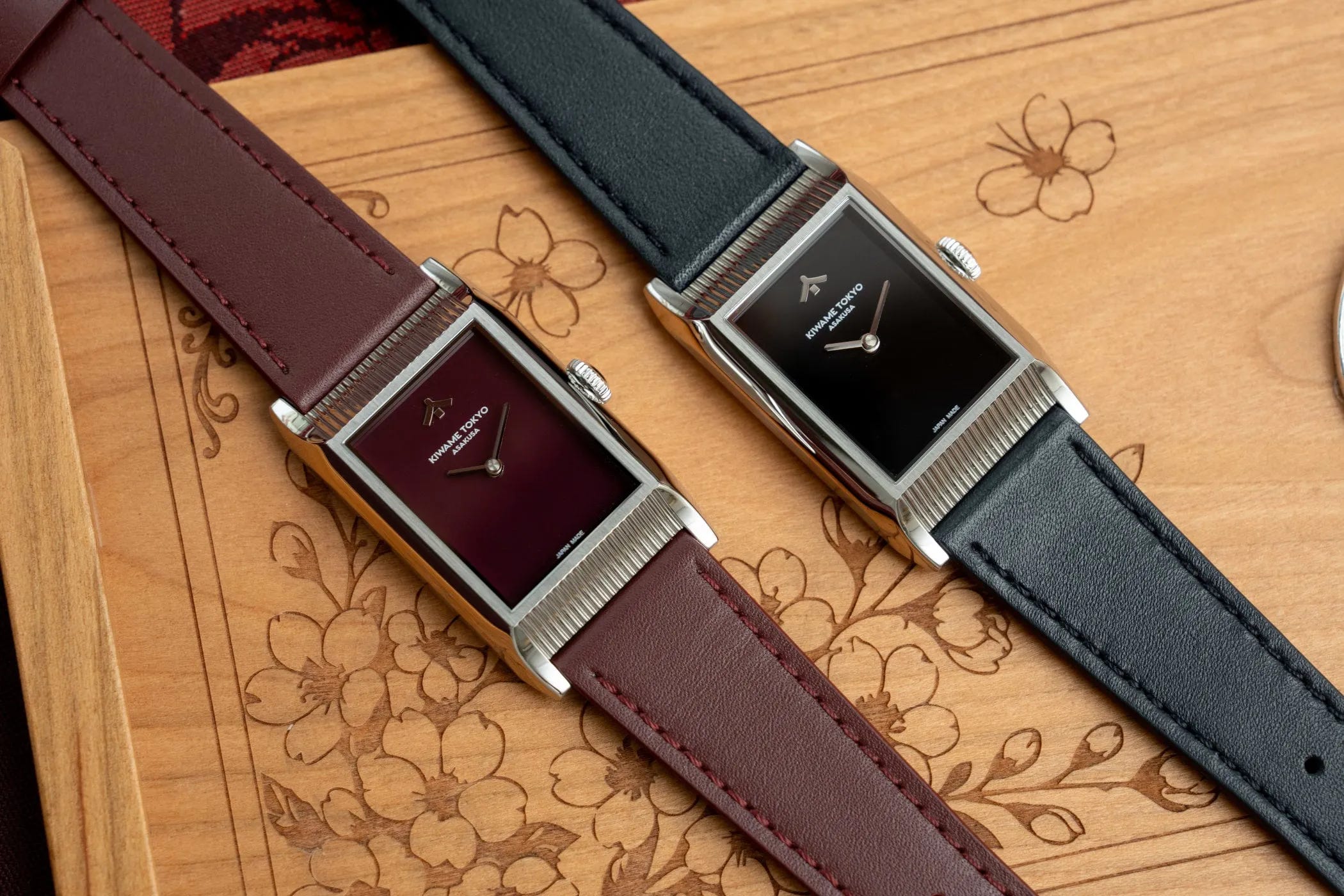
The New Kiwame Tokyo Yane
Kiwame Tokyo’s Yane is shaped by Japanese temple architecture, translating roof-tile geometry into a narrow rectangular case with concave details and engraved grooves. The 44mm-long, 26.5mm-wide steel case is only 9.7mm thick, while the restrained dial uses a single roof-ridge-inspired marker in place of a conventional index layout.
Available with brown or black lacquer dials, the Yane runs on a compact Miyota 6T27 automatic movement with a 40-hour reserve. The first 400 watches—200 in each color—open for preorder August 19 at $730, with deliveries expected by the end of the year.
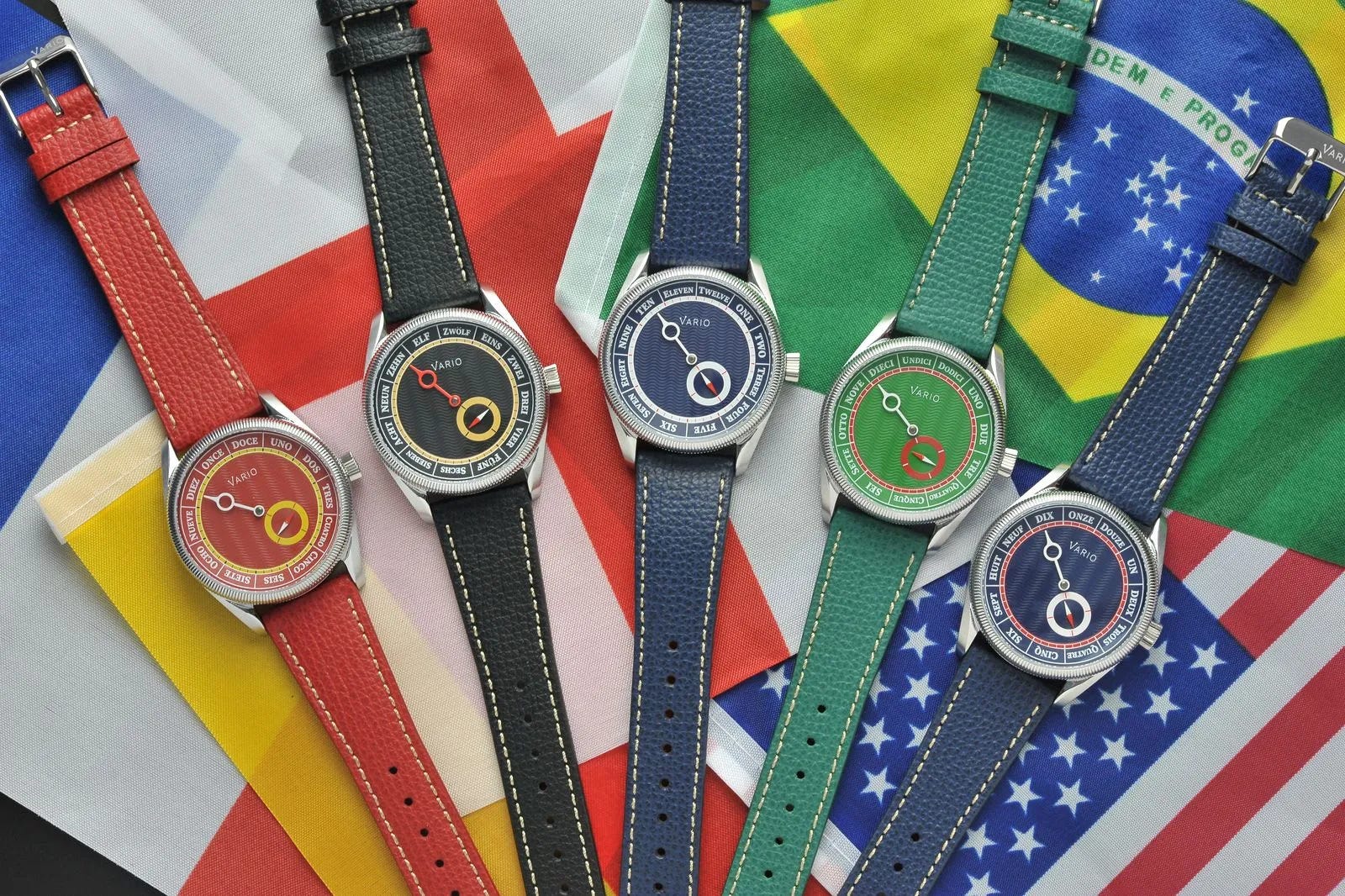
Vario Launches NAVI Voyage Chapter One: Europe With Five Language Variants
Vario’s NAVI Voyage Chapter One celebrates Singapore’s trading links with England, Germany, France, Spain, and Italy. Each dial takes colors from its respective flag and presents the 12-hour scale in the local language, while the unusual layout uses an hour display, compass-like seconds hand, and a 15-minute inner scale instead of a traditional minute hand.
The 38mm steel watch has a coin-edge bezel, wave-pattern dial, 100m water resistance, and a Miyota 82S5 automatic movement. At $428 and limited to 600 examples worldwide, it is a playful, well-priced take on travel-watch design that has a clear concept behind its visual details.
Comparisons
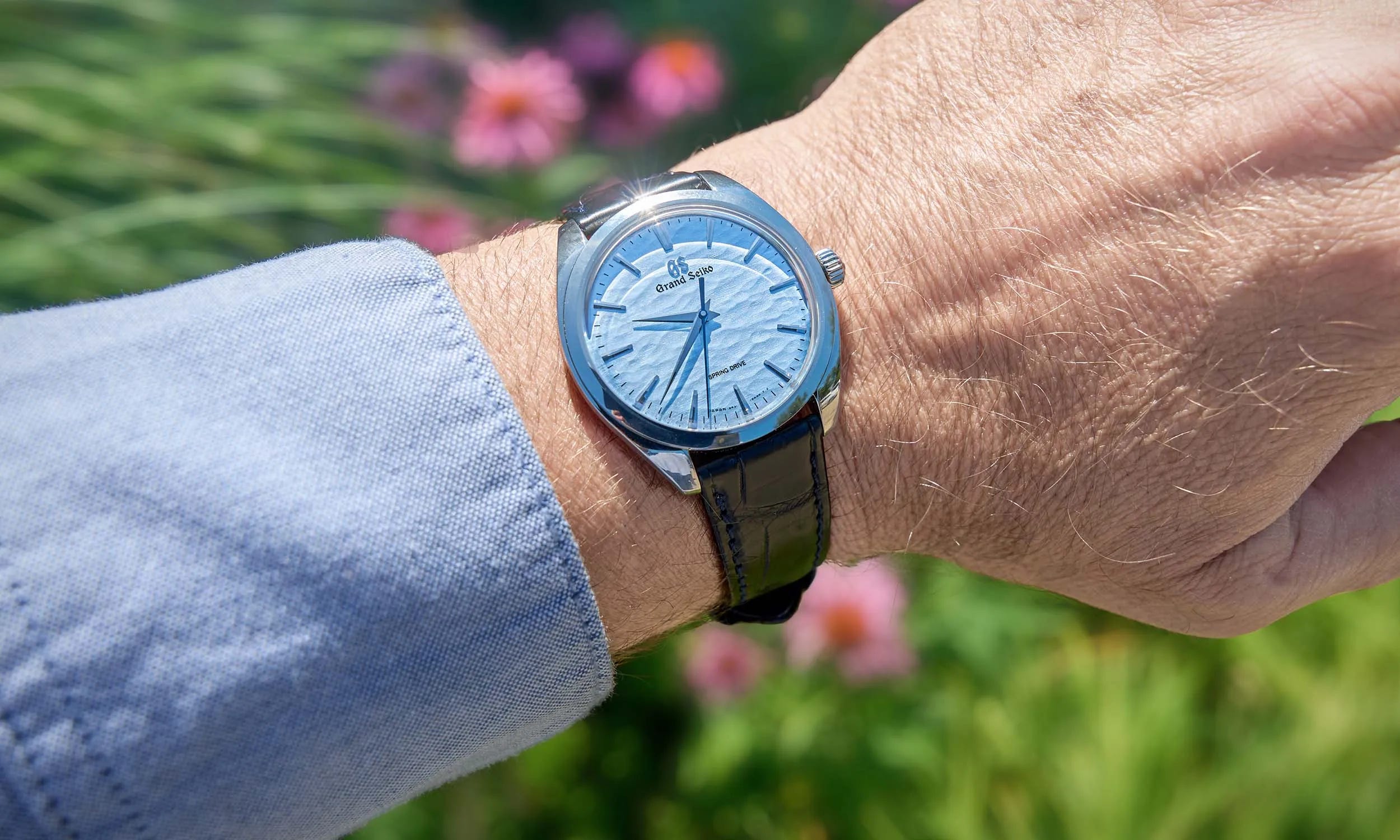
17 of the Best Light Blue Watches From Entry-Level to Luxury
Light blue has expanded far beyond a passing summer trend, becoming a genuinely versatile dial color across nearly every price tier. The guide moves from accessible choices such as the Citizen Tsuyosa Automatic Ice Blue, Bulova Racer Chronograph, and Tissot PRX Glacier to high-end watches including the IWC Ingenieur Pool Blue, Chopard L.U.C Quattro Mark IV, and Rolex Oyster Perpetual Land-Dweller.
The breadth of the category is the point. Light blue can read sporty, elegant, nostalgic, or distinctly contemporary depending on the watch around it, making it one of the rare colors that works equally well in an entry-level daily wearer and an ambitious collector piece.
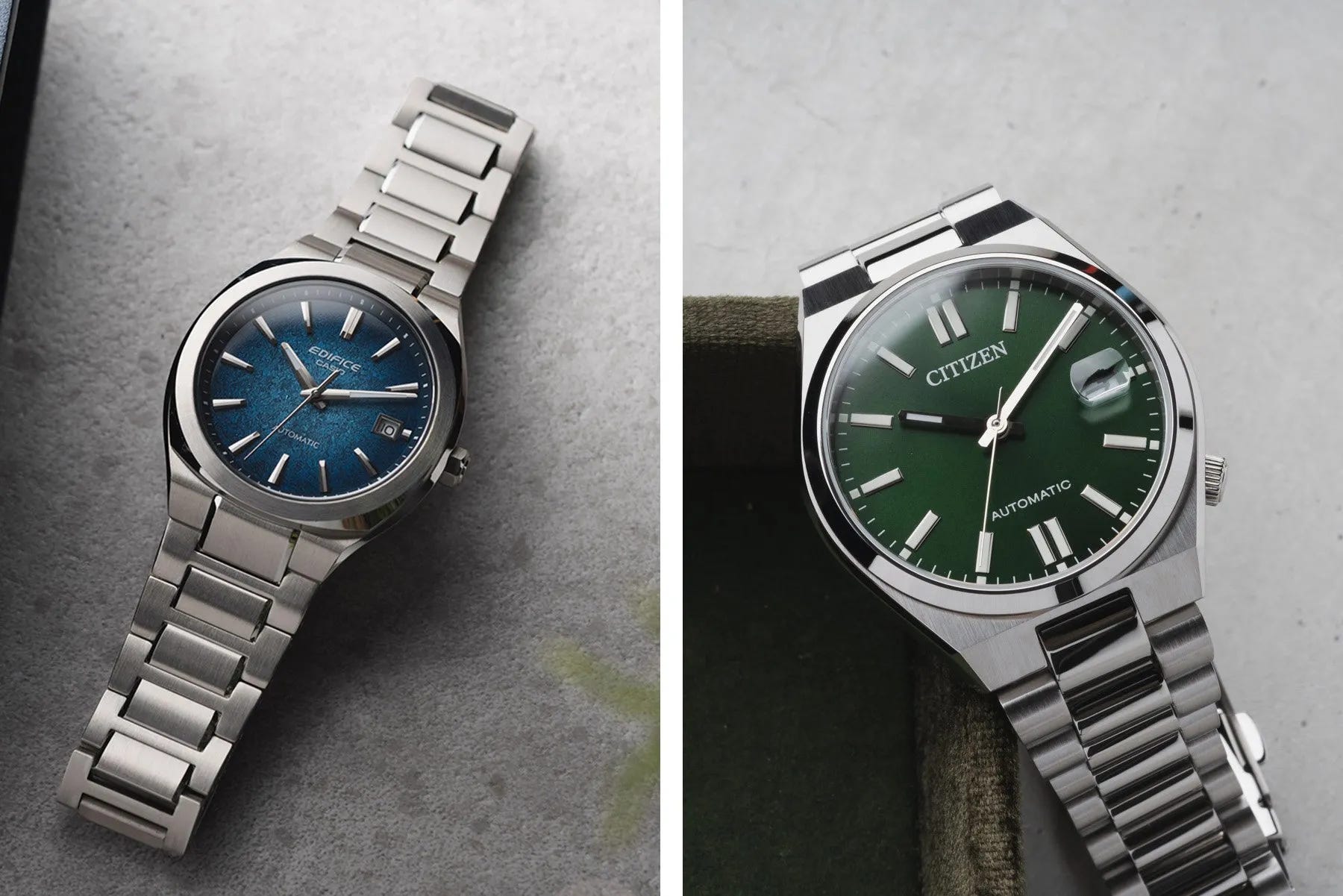
Citizen Tsuyosa 37 vs. Casio Edifice EFK-200
This affordable matchup puts two roughly €300 integrated-bracelet watches head-to-head. The Citizen Tsuyosa 37 brings a compact case, comfortable bracelet, and familiar classic-sports-watch appeal, while the Casio Edifice EFK-200 counters with a new 38mm cushion-shaped case, more expressive bezel design, and improved proportions.
Both watches rely on Miyota 8215-derived movements with the same 40-hour reserve, so the choice comes down to how they sit on the wrist and whether a collector prefers the Citizen’s established formula or the Casio’s more distinctive case work. The Tsuyosa has won previous showdowns, but this is a closer contest than the scorecard alone might suggest.
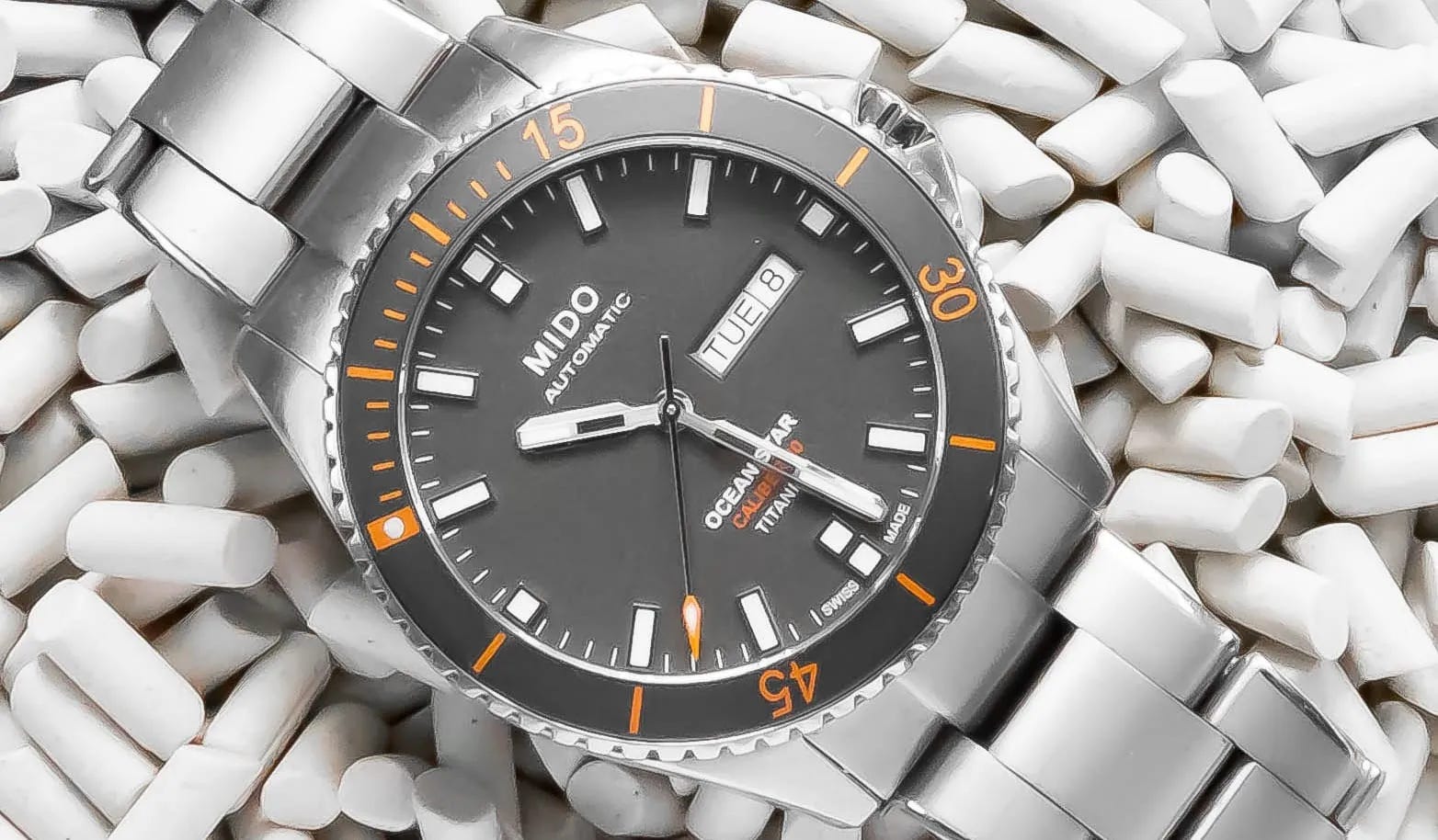
Does Every Collection Need a Dive Watch? What These Reviewed Picks Reveal
A dive watch is often treated as a compulsory category, but the better question is whether a collection actually needs the role a diver serves. Water resistance, durability, clear dials, and carefree wear can come from field watches, robust digital models, and other sports watches without adding another rotating bezel to the box.
The review considers options from the Casio Duro and Orient Kamasu through the Nodus Sector Deep, making the case that a diver earns its place only when it fills a real gap. If you already own a watch that can handle rain, travel, and an active weekend, another diver may be enjoyable—but it may not be essential.
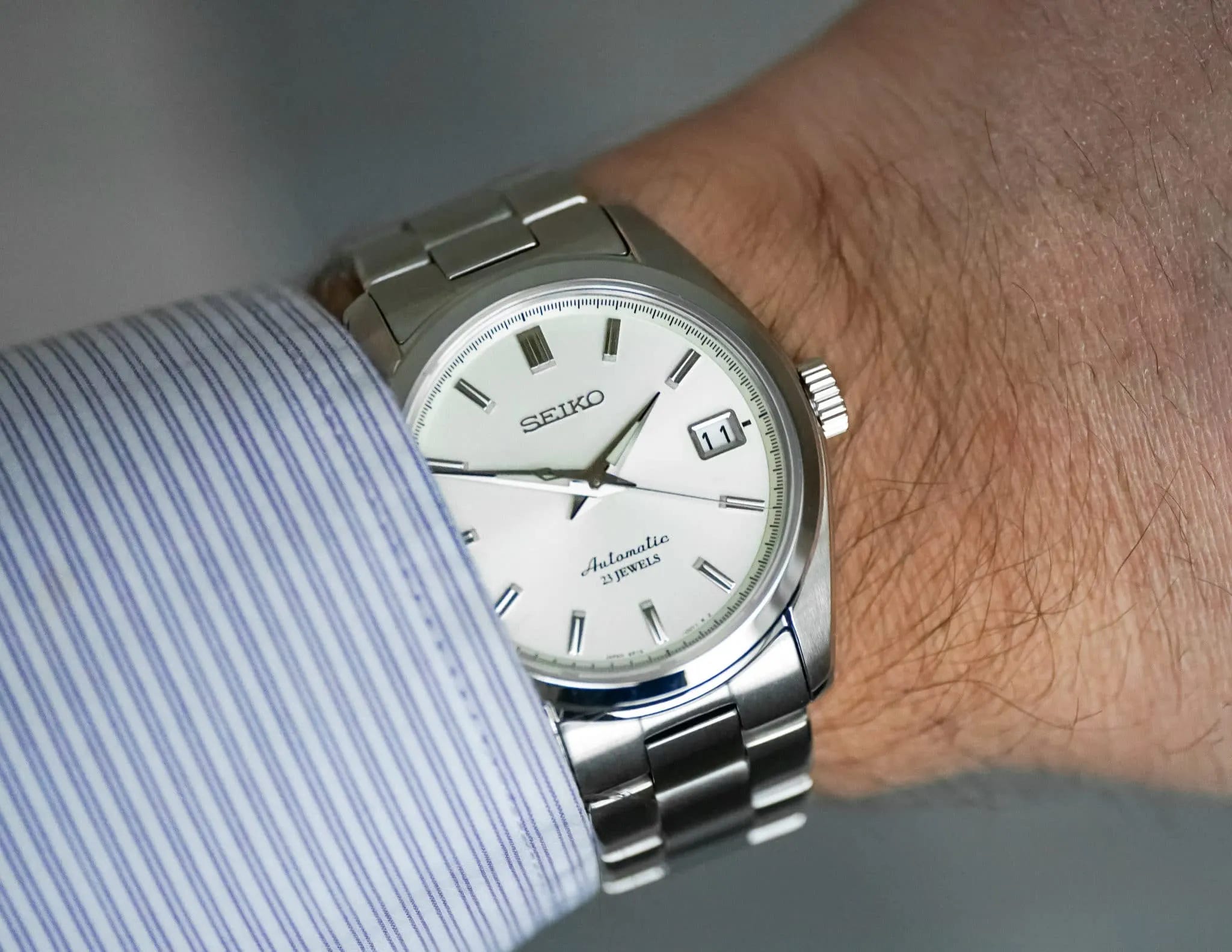
Hands-On Reviewed Watches That Pair Well With a T-Shirt and a Button-Down
The elusive all-purpose watch is less about a single genre than it is about proportion, comfort, and restraint. This hands-on guide focuses on watches that can move from a T-shirt to a button-down without looking misplaced, weighing details such as lug span, cuff clearance, water resistance, strap options, and real-world bracelet comfort.
The field ranges from affordable Timex options and Seiko SARBs to the Baltic Hermétique Tourer, Sinn 104, Christopher Ward The Twelve, Rolex Explorer, and Omega Railmaster. Each has a slightly different interpretation of versatility, but the practical conclusion is the same: a daily watch needs to work with your life, not just with a particular dress code.
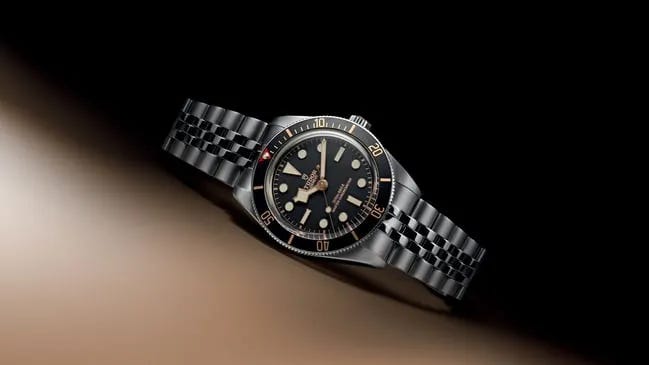
Rolex Submariner Alternatives: The Best Diving Watches
The Submariner remains the reference point, but it is hardly the only answer for a capable, recognizable luxury diver. This guide considers seven alternatives that cover different priorities, from the Omega Seamaster Diver 300M and Tudor Black Bay 58 to the TAG Heuer Aquaracer, Longines HydroConquest, Breitling Superocean Heritage, Tissot Seastar 1000, and Glashütte Original SeaQ Panorama Date.
What unites the group is an ability to provide real dive-watch utility while offering a different design language, price point, or brand story. For collectors who like the category but want something less expected than the default icon, it is an excellent place to begin.
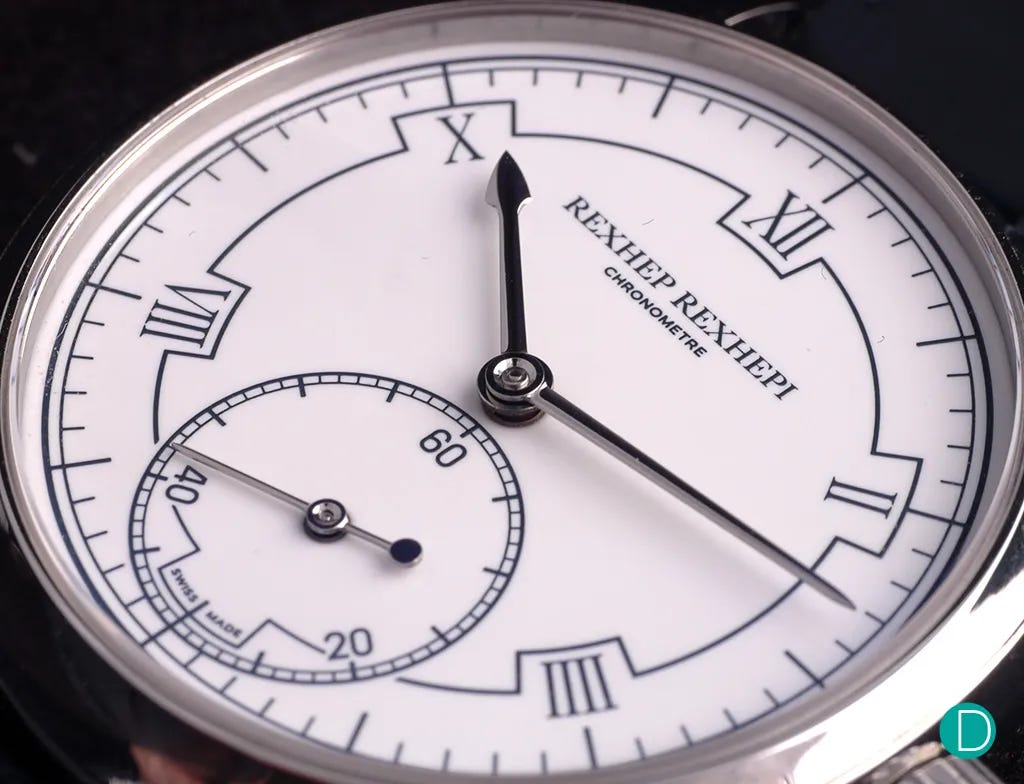
Six Understated and Excellent Timepieces to Add Into Your Watch Collection
Quiet luxury is often harder to achieve than loud luxury. This selection includes the Chopard Alpine Eagle, Vacheron Constantin Traditionnelle Manual-Winding, A. Lange & Söhne Lange 1, Credor Eichi II, H. Moser & Cie. Endeavour Perpetual Calendar, and Rexhep Rexhepi Chronomètre Contemporain—watches whose depth appears in their finishing, construction, or proportion rather than in a conspicuous logo.
The common thread is confidence. Whether an integrated bracelet, a hand-finished enamel dial, or a deceptively simple perpetual calendar, each rewards close attention and makes a case for building a collection around watches that reveal more over time.
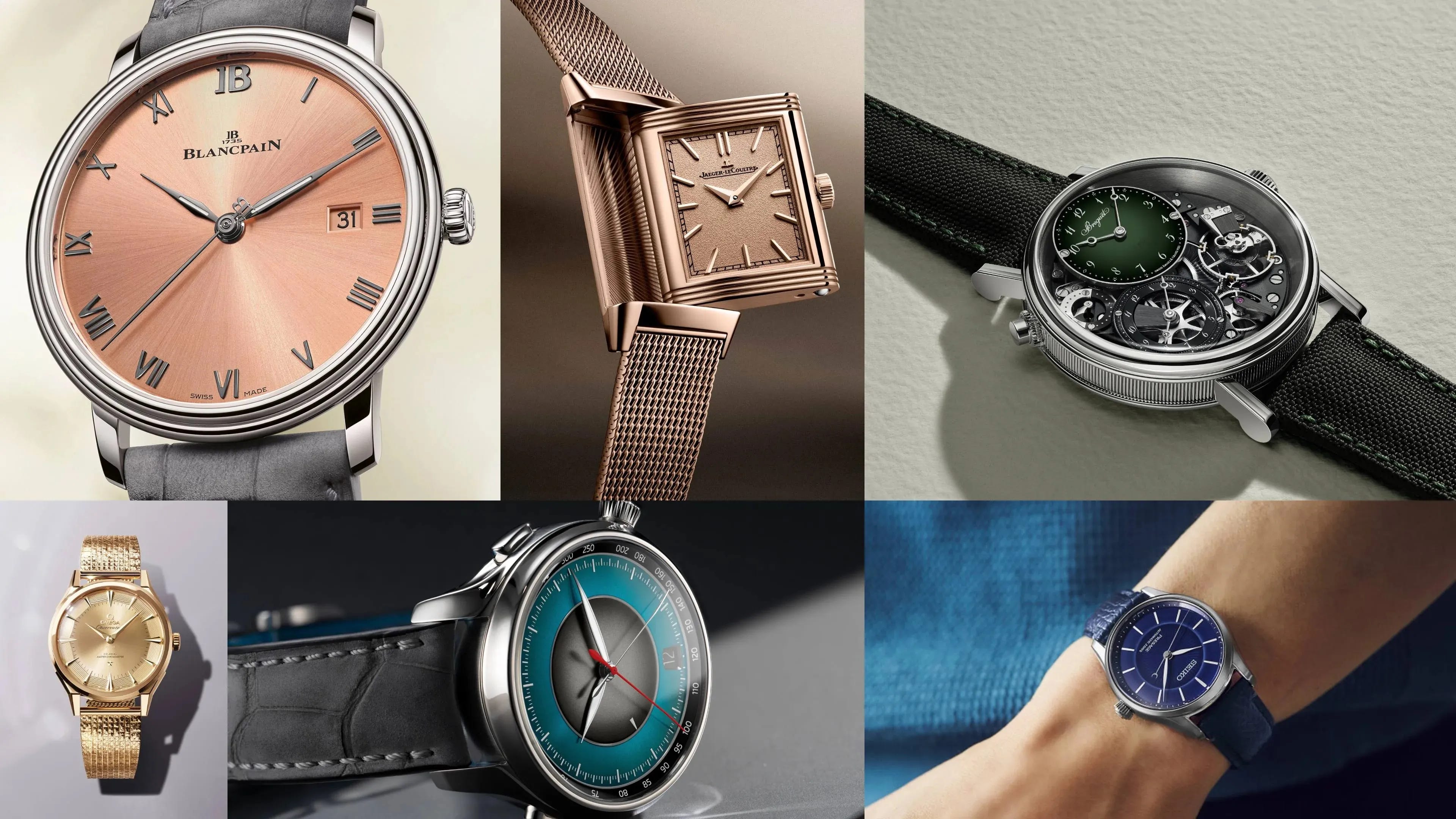
The 16 Best New Dress Watches of 2026: Seiko, Omega, Breguet and More
This survey of 2026’s dress watches underscores just how broad the category has become. It includes traditional high-watchmaking pieces such as the Blancpain Villeret Ultraplate, Breguet Tradition Seconde Retrograde, and H. Moser Endeavour Flyback Chronograph Dual Time Date, but also more approachable choices from Timex and Seiko.
The price range—from a $149 Timex to an $83,000 Breguet—illustrates the enduring appeal of a watch that puts proportion and refinement first. The best dress watches have enough personality to avoid feeling anonymous, while remaining disciplined enough to work when the occasion asks for understatement.
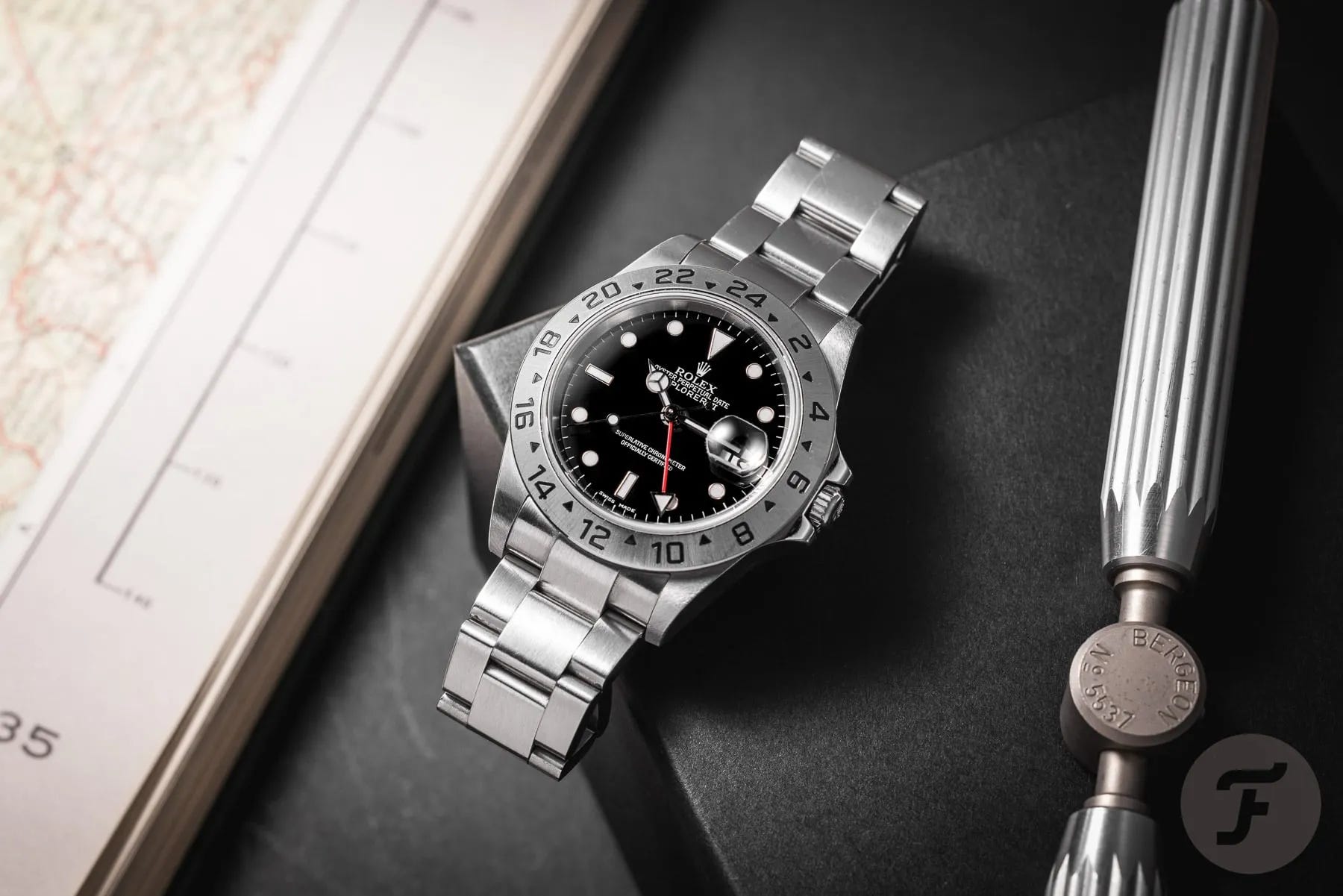
The Top 5 Rolex Models From the 1990s
The 1990s were a particularly rich period for Rolex: the Sea-Dweller 16600, Day-Date 18238, Explorer II 16570, Explorer 14270, and GMT-Master II 16710 all combined classic sizing with modernized movements and useful technical updates. These references are now compelling not only as vintage-adjacent watches, but also as practical daily wearers with long production histories and deep collector followings.
Each one offers a different route into the decade, from the 16600’s hard-use diving credentials to the Explorer 14270’s pared-back versatility and the GMT-Master II’s famous bezel configurations. For a buyer looking beyond current catalog scarcity, the 1990s remain a highly fertile place to search.
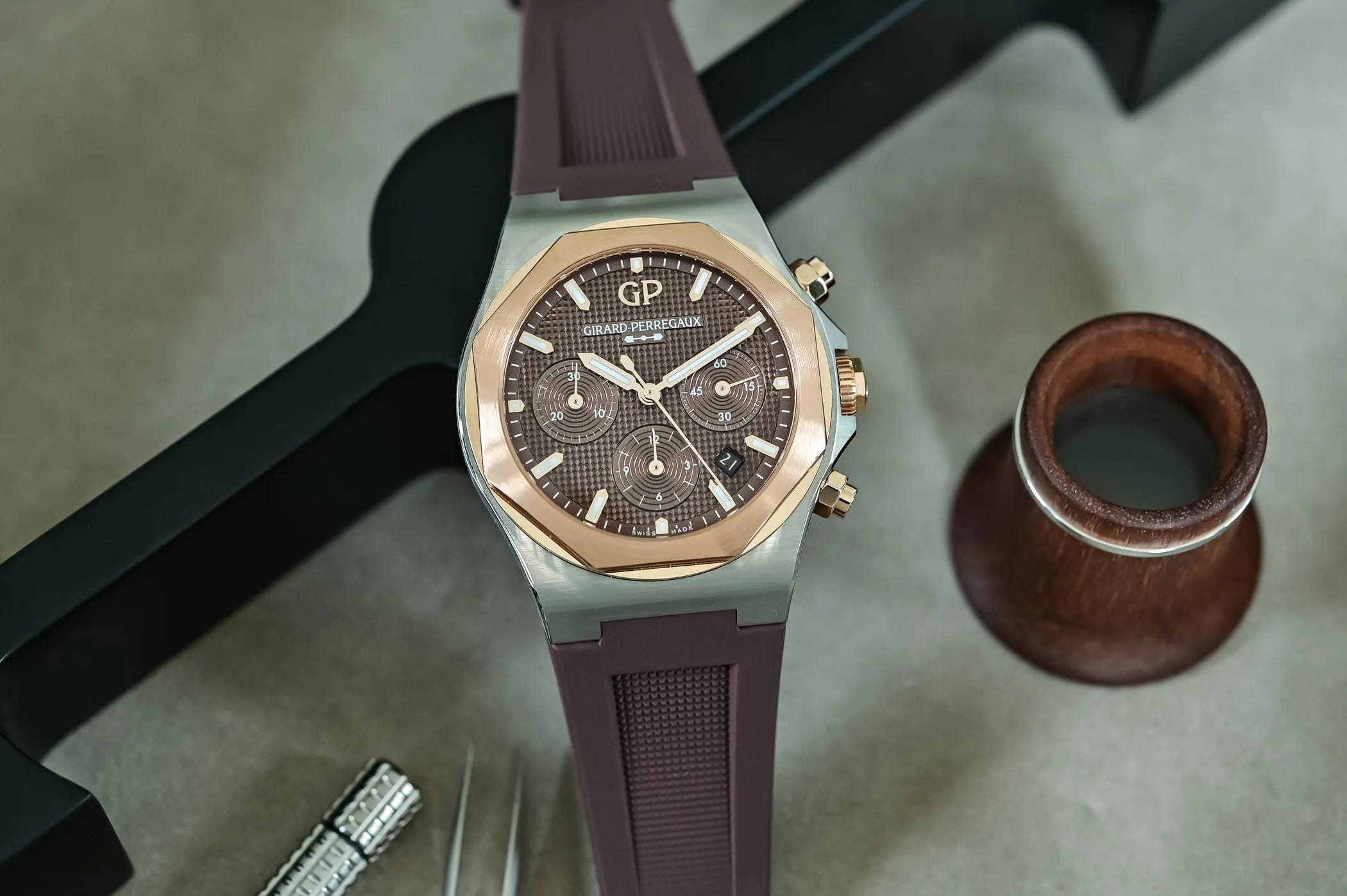
Two-Tone Charm With Five Effortlessly Cool Steel-and-Gold Watches
Steel and gold can be one of watchmaking’s most expressive combinations when it is handled with confidence. The five selections here include the Girard-Perregaux Laureato Chronograph, Rolex Oyster Perpetual anniversary edition, Rado Captain Cook High-Tech Ceramic Chronograph, Minerva Unveiled Crownless, and Zenith Chronomaster Sport.
The category now reaches well beyond the traditional two-tone formula. Ceramic, rose-gold PVD, textured dials, and more architectural cases have made the contrast of warm and cool materials feel current again, while retaining the slightly rebellious charm that has always made two-tone memorable.
Reviews
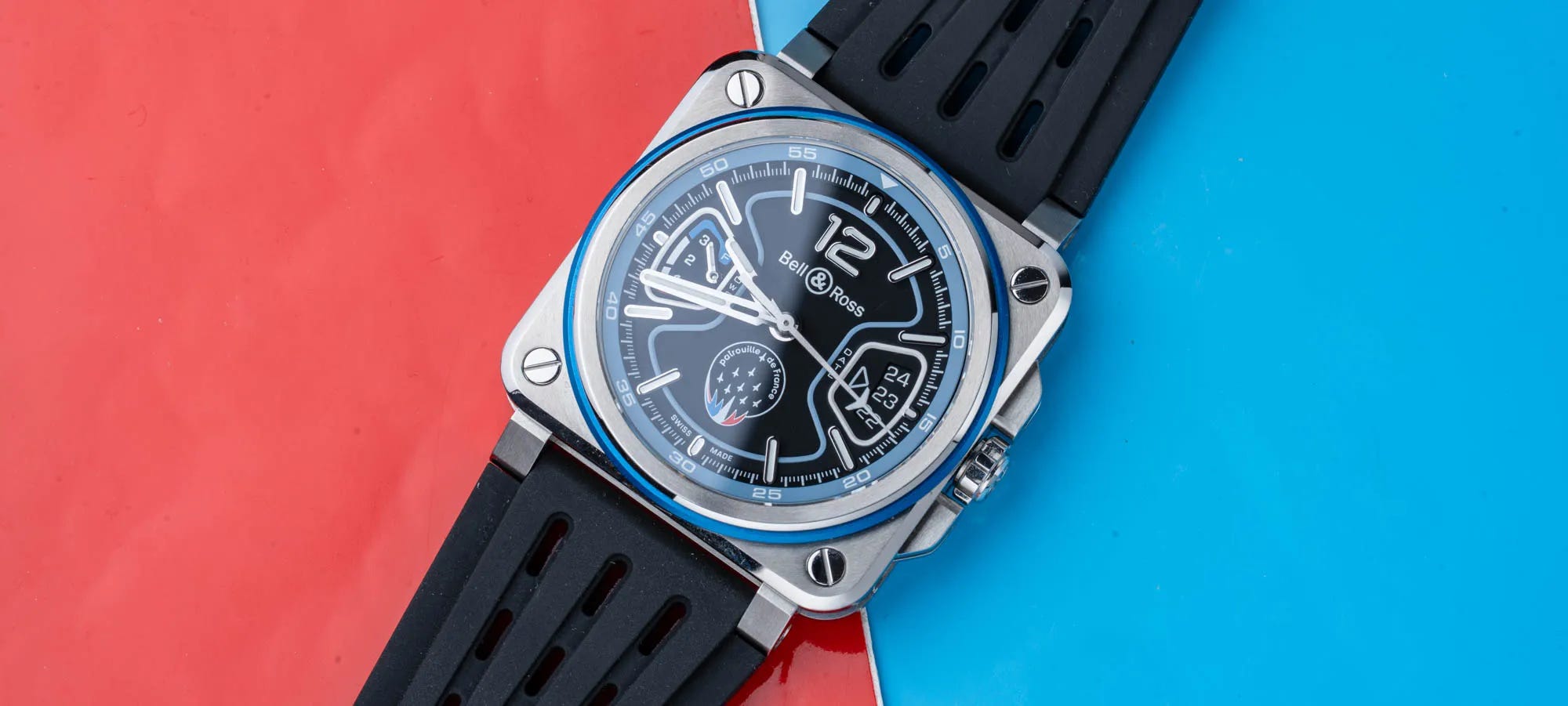
(Almost) Flying High With the Bell & Ross BR-X3 Patrouille de France
Bell & Ross applies the colors and insignia of France’s Patrouille de France aerobatic team to its angular BR-X3 platform. The 41mm watch uses light blue accents, a jet-shaped seconds-hand tip, and a retrograde power-reserve display that resembles a fuel gauge, while the COSC-certified Kenissi movement offers a 70-hour reserve and 100m of water resistance.
Limited to 250 pieces and priced at $8,100, it is a coherent aviation collaboration because the military-flight references serve the existing design rather than being pasted onto an unrelated watch. The result should appeal to fans of Bell & Ross’s instrument-panel aesthetic as well as aviation collectors.
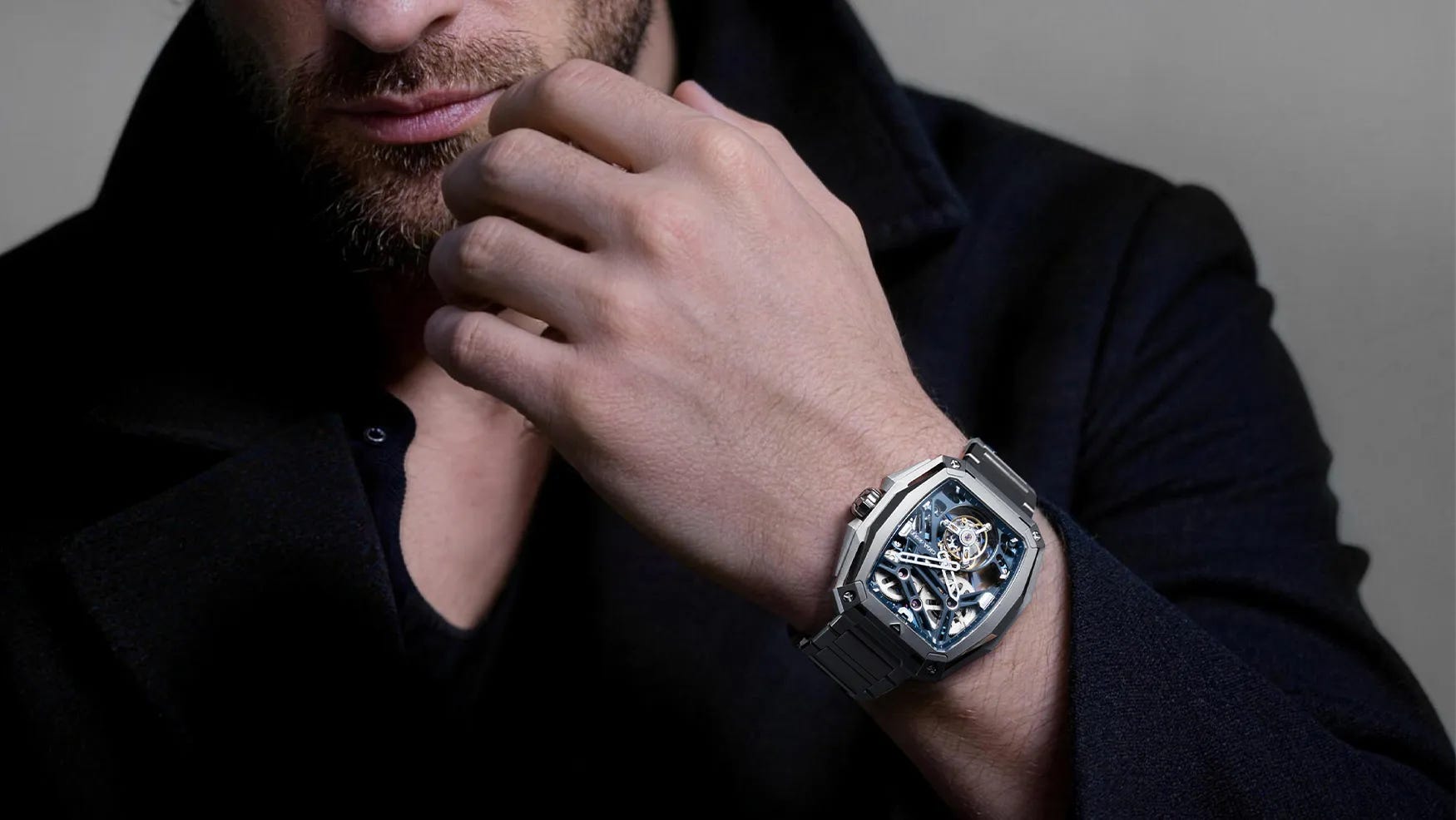
CIGA Design’s EDGE Collection Puts Exposed Mechanics Front and Centre
CIGA Design’s EDGE Collection embraces the idea that a movement should be a visual event. Across the Hunter, Falcon, and Vector families, the brand uses open-worked construction, curved sapphire crystals, and exposed mechanics in titanium, steel, and carbon-fibre cases, with prices ranging from $499 to $1,099.
The lineup includes a hand-wound Hunter Tourbillon with a 72-hour reserve, automatic Hunter models, the more approachable Falcon, and the racing-inspired Vector. It is an accessible, unapologetically industrial answer for collectors who want their watches to show how they work.
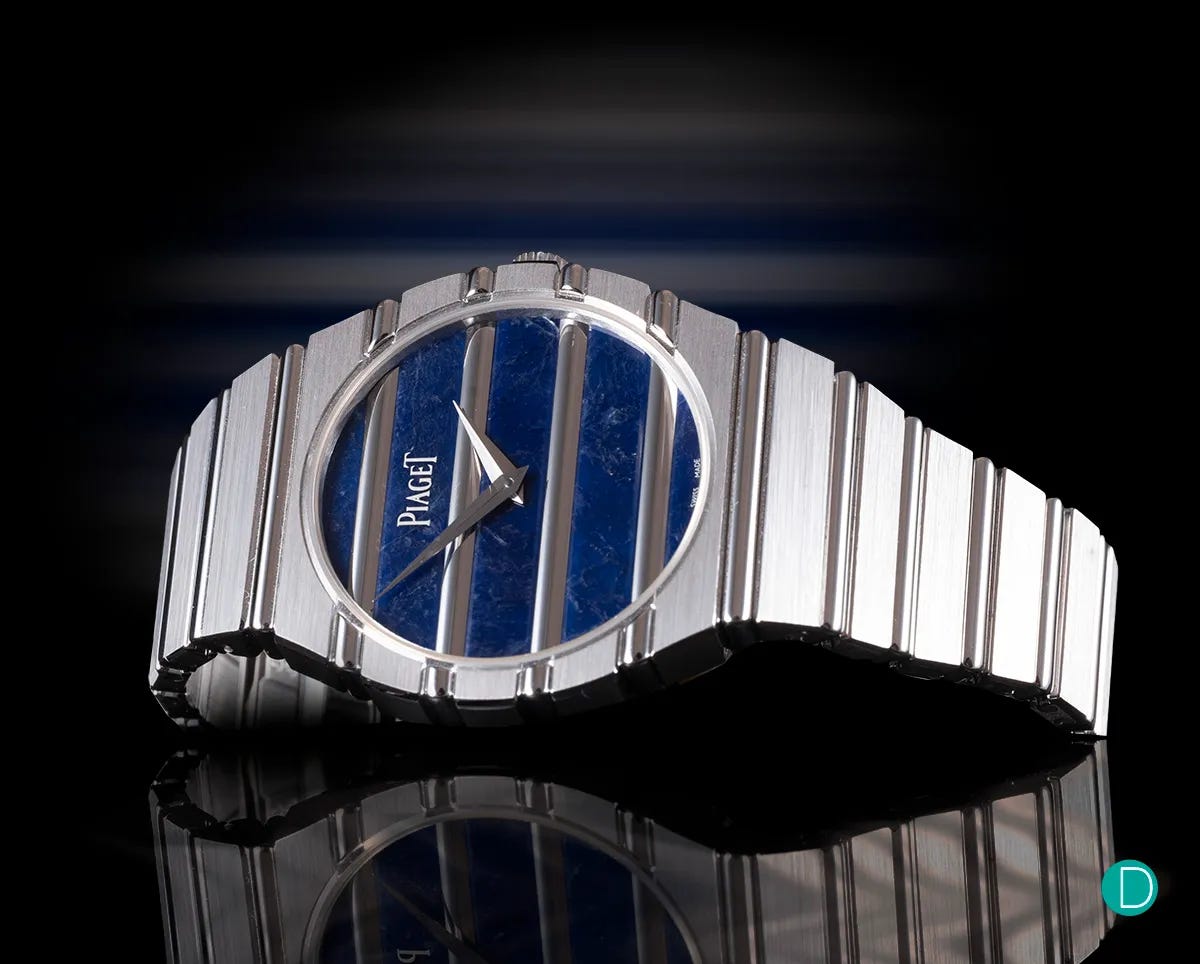
Falling in Love With the 2026 Piaget Polo 79 With the Beautiful Sodalite Dial
Piaget’s latest Polo 79 pairs the line’s white-gold case and integrated bracelet with a five-section sodalite dial, allowing the natural blue stone and its pale calcite veins to become the focal point. At 38mm, the watch keeps the elegant, seamless case-to-bracelet architecture that defines the modern Polo 79, while the ultra-thin 1200P1 movement maintains the collection’s refinement.
At CHF 84,500, it competes in a highly rarefied field of stone-dial integrated sports watches. Its strength is not novelty alone, but the way the blue sodalite softens and deepens the all-white-gold design without disturbing the original Polo’s distinct character.
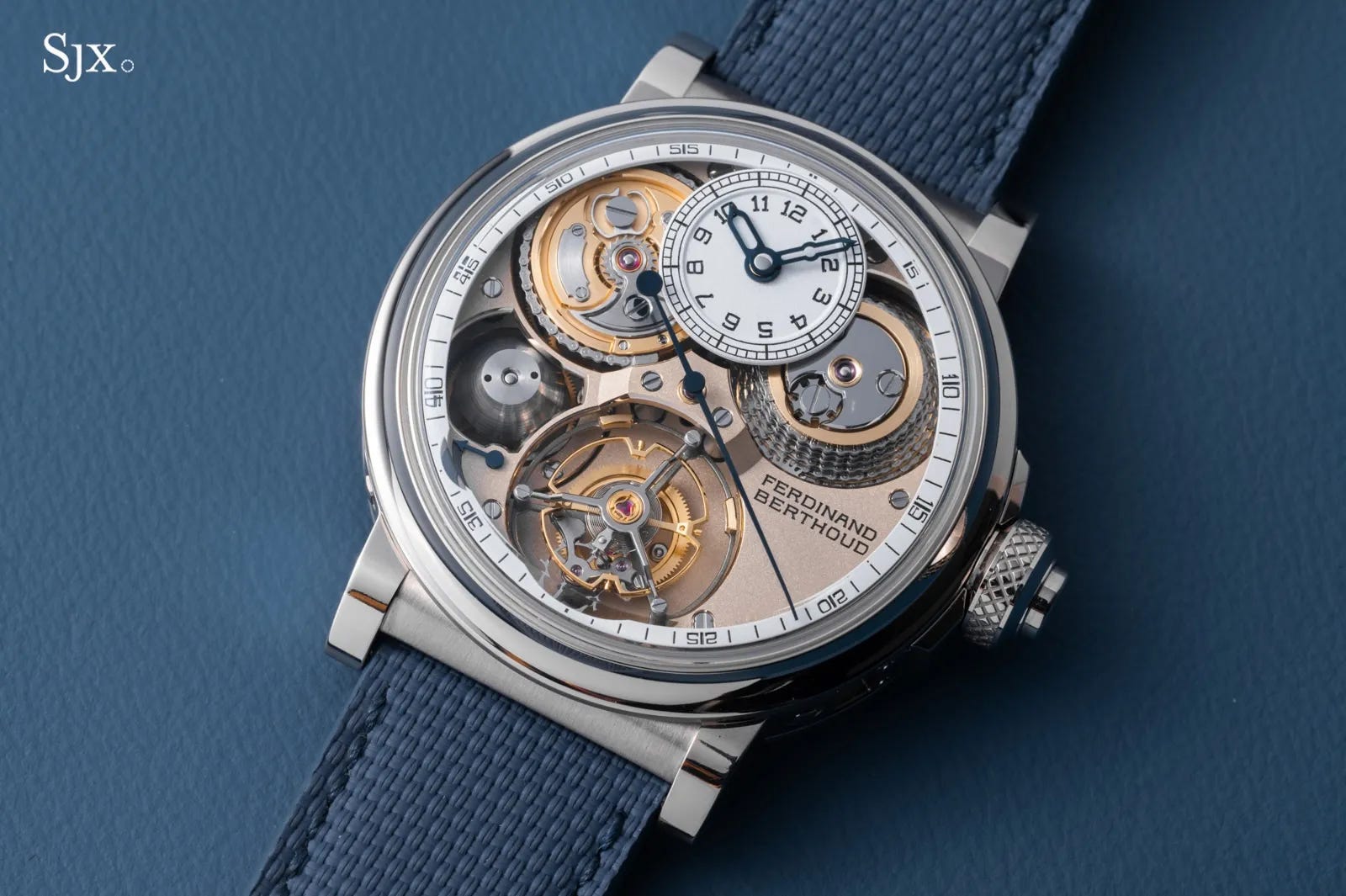
Ferdinand Berthoud Chronomètre FB 2TV
The FB 2TV launches Ferdinand Berthoud’s Mesure du Temps 1787 collection with an inverted movement that presents its chain-and-fusee mechanism, flying tourbillon, and zero-reset seconds from the dial side. More than 300 hours of decoration go into each piece, while the proprietary differential maintaining-power system reduces the number of crown turns needed for a full wind.
The 44mm white-gold case is substantial at 15.46mm thick, and the €382,000 price puts it squarely in top-tier independent horology. But this is not a watch trying to be conventionally elegant: it is a wearable mechanical landscape for collectors who want engineering and finishing to be the visual language.
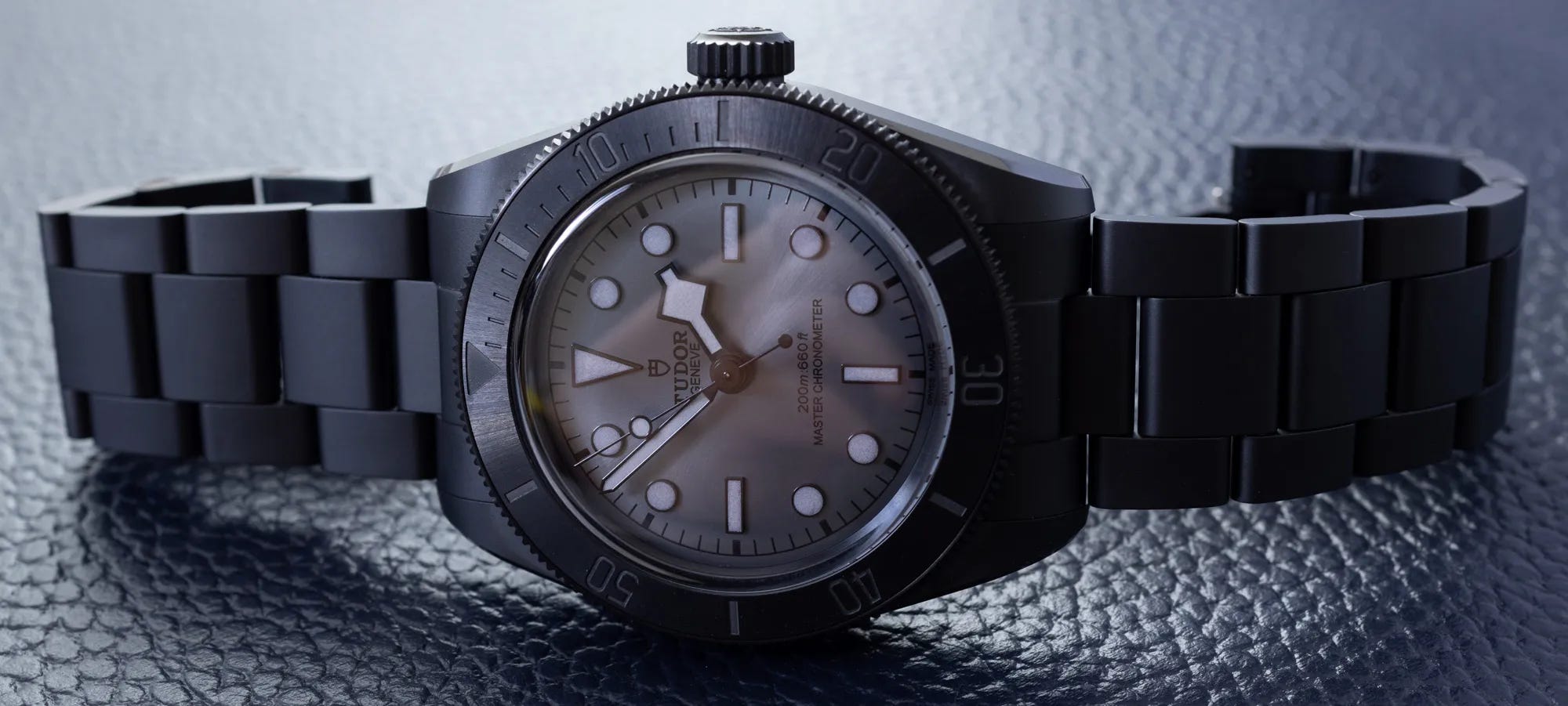
How Good Is the All-Black Ceramic Tudor Black Bay With Matching Bracelet?
Tudor’s 2026 Black Bay Ceramic Full-Bracelet pairs its 41mm ceramic case with a fully ceramic three-link bracelet, creating an unusually complete monochrome execution. The watch keeps the familiar Black Bay technical foundation—200m of water resistance and the Master Chronometer-certified MT5602-U movement—while the ceramic surfaces provide a varied blend of matte and polished finishes.
At $7,725, it carries a meaningful premium over the steel version, but the bracelet is the real point of difference. It adds a coherent, modern presence and a welcome lightness, even if the lack of a micro-adjustment system remains a practical compromise.
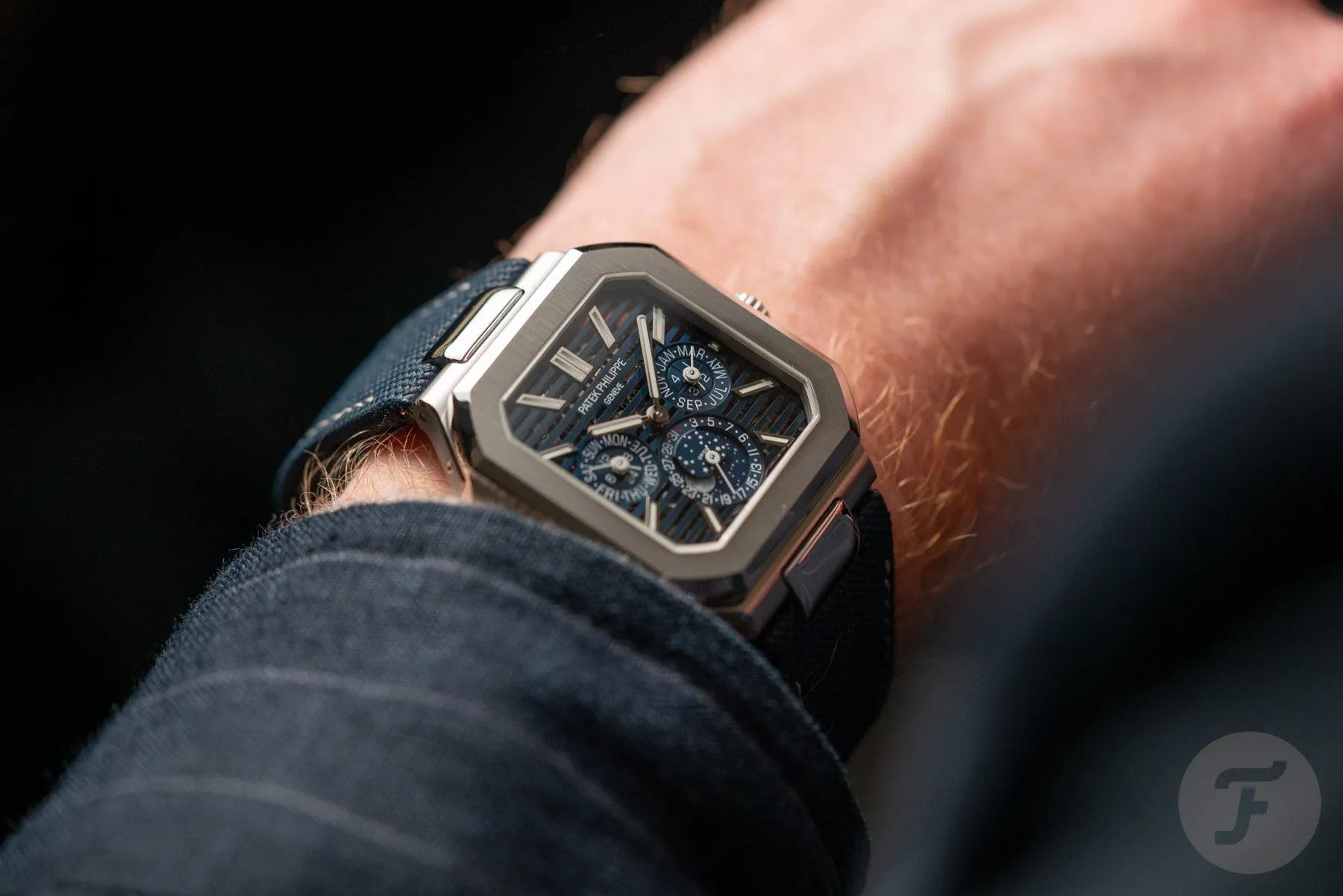
Looking Through the Blinds: A Peek at the Patek Philippe Cubitus Perpetual Calendar Skeleton Ref. 5840P-001
Patek Philippe pushes the Cubitus further into grand-complication territory with a skeletonized perpetual calendar powered by the 28-28 Q SQU movement. Its 45mm platinum case measures only 10mm thick, while the laser-cut blue-PVD dial strips create a layered “blinds” effect over the exposed calibre.
With 313 components, a perpetual calendar, and a single moon-phase disc, it brings considerable mechanical weight to a collection still establishing its visual identity. At €176,700, the 5840P-001 is a deliberate statement that the Cubitus is intended as more than a Nautilus substitute.
Maen Manhattan 37 Ultra-Thin Golden Swan Review
Maen’s first stone-dial collection puts Golden Swan obsidian, Snowflake Obsidian, and Onyx into the Manhattan 37 Ultra-Thin case. The Golden Swan model is the standout, using naturally varied burnt-orange veining alongside a 316L steel case, 100m of water resistance, a three-link bracelet, and the hand-wound La Joux-Perret D101 movement.
Limited to 100 watches across all three stone versions and priced at approximately €1,359 before VAT, the collection is an accessible way into a material category that has recently become far more expensive. The key is that Maen has let the stone lead the design, rather than treating it as a decorative afterthought.
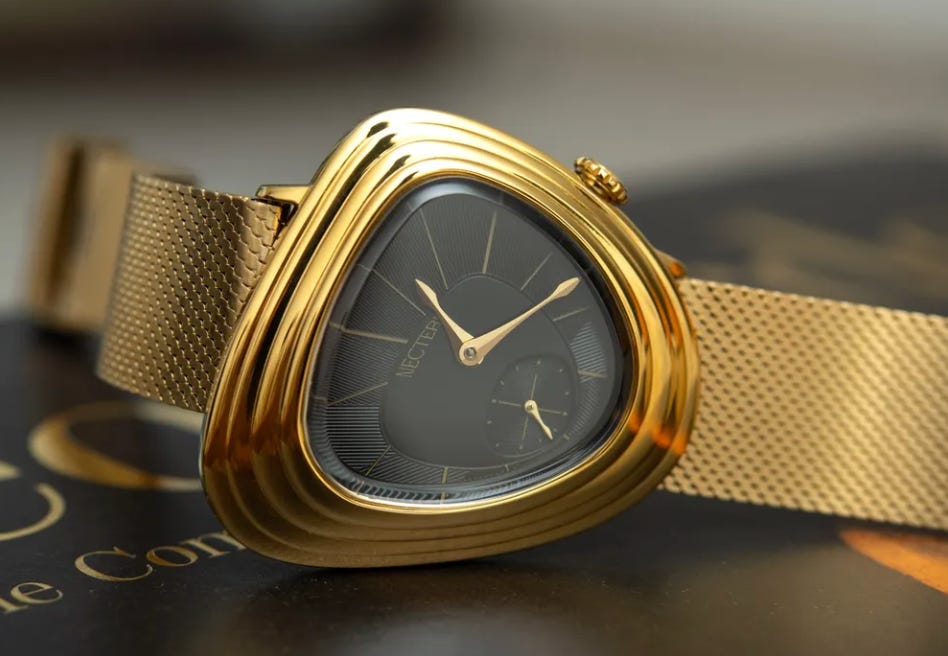
Nectere Eclipse Packs an “Ultra-Thin” Seagull Manual Movement
The Nectere Eclipse puts a 3.2mm Seagull ST-17 manual movement in an 8.5mm-thick, 38mm gold-coated steel case. Its black dial, triangular opening, stepped bezel, and display back use the solar-eclipse concept without making it feel overly literal.
At $880 and limited to 100 pieces, it is a handsome proposition for a collector interested in slim, hand-wound mechanics on a budget. Its 39-hour reserve and low 3Hz beat rate are tradeoffs, but the watch’s unusual proportions and visual identity make it more than a specification exercise.
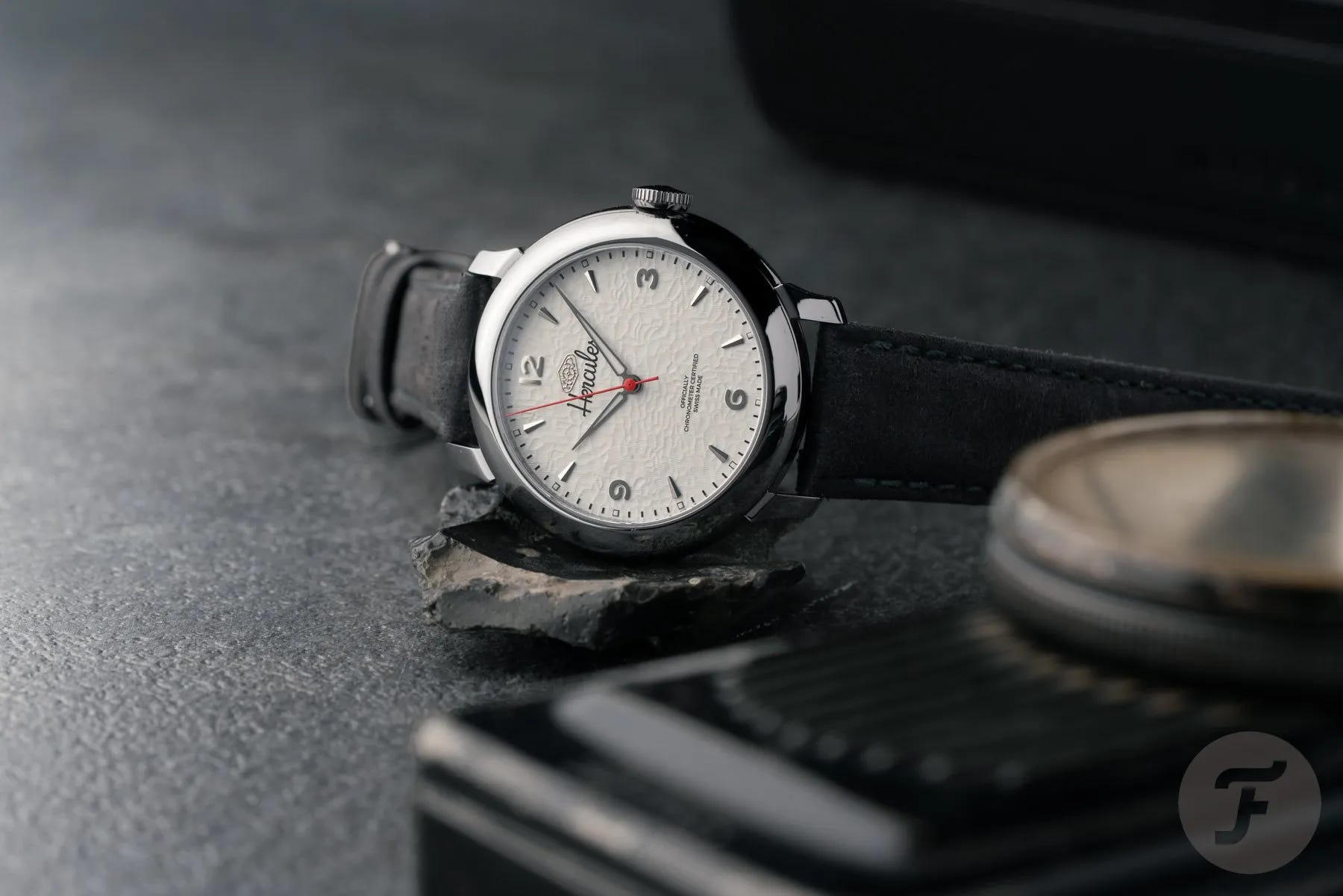
Reaching the Top With the Heavyweight HP Hercules in Polished Tantalum
The HP Hercules uses polished tantalum to give a 40mm, 9.4mm-thick watch surprising visual depth and physical heft. Its hand-wound double-barrel movement provides a 120-hour reserve, chronometer certification, and lumed bridges visible through the display back, while the case offers 100m of water resistance.
Priced at €14,995, the Hercules brings an unusual material and serious movement credentials to a relatively accessible independent-watch price band. Its design is intentionally restrained, which may limit its initial drama, but it will appeal to collectors who value tantalum’s uncommon color and density.
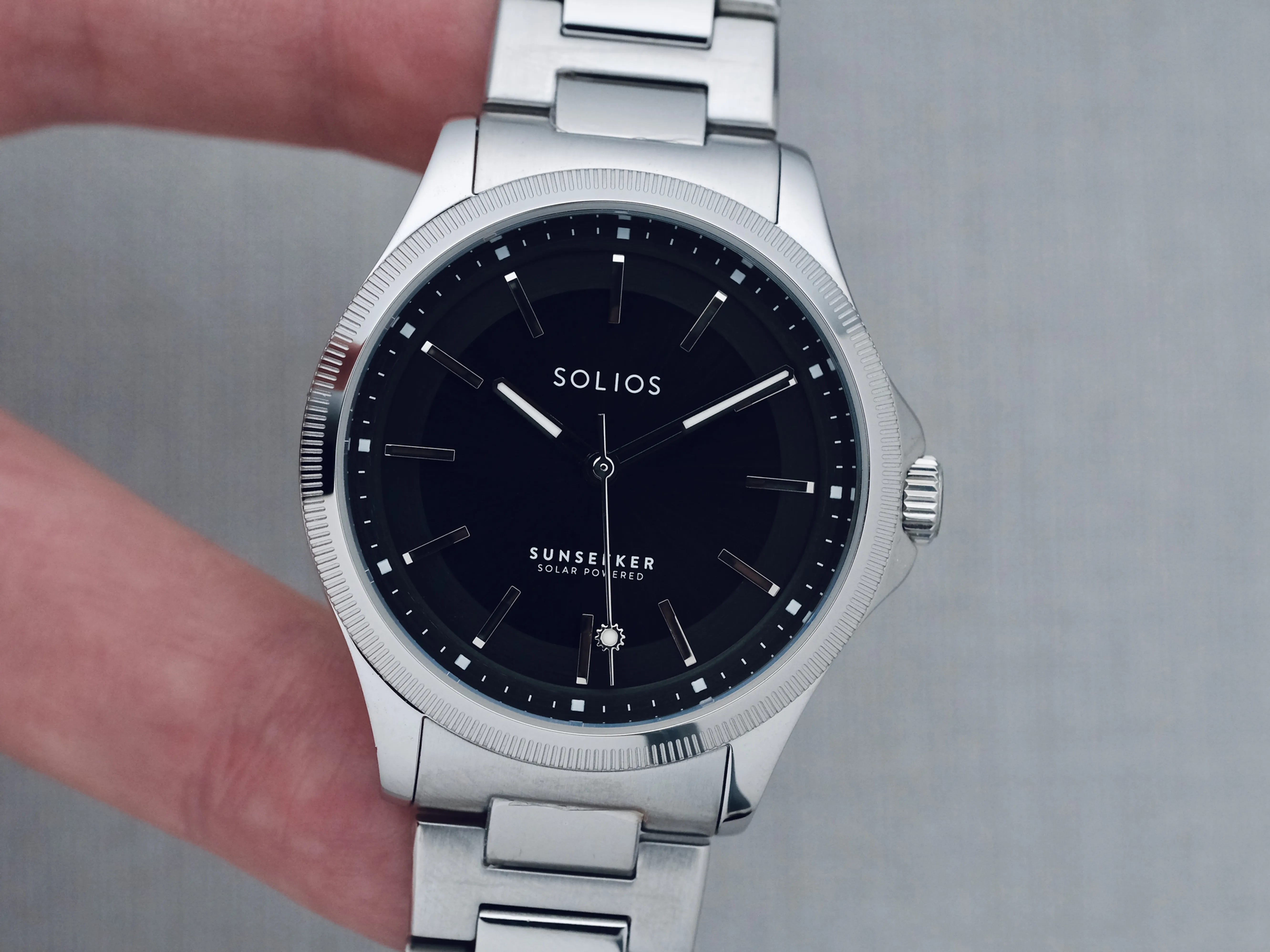
Solios Sunseeker Black Review
The Solios Sunseeker Black is a solar-powered quartz sports watch built around recycled steel, a 40mm case, sapphire crystal, 100m of water resistance, and a Seiko-Epson VS37A movement. A fully charged watch can run for a year, while the black sunburst dial uses BGW9 lume and a sun-shaped seconds hand to give a practical layout some personality.
Available on a bracelet, vegan leather, or natural rubber for $475 to $505, it makes a strong argument that sustainability and everyday-watch value do not need to feel austere. The brand’s B-Corp certification, recyclable packaging, and low-impact workshop are meaningful parts of the proposition, not mere footnotes.
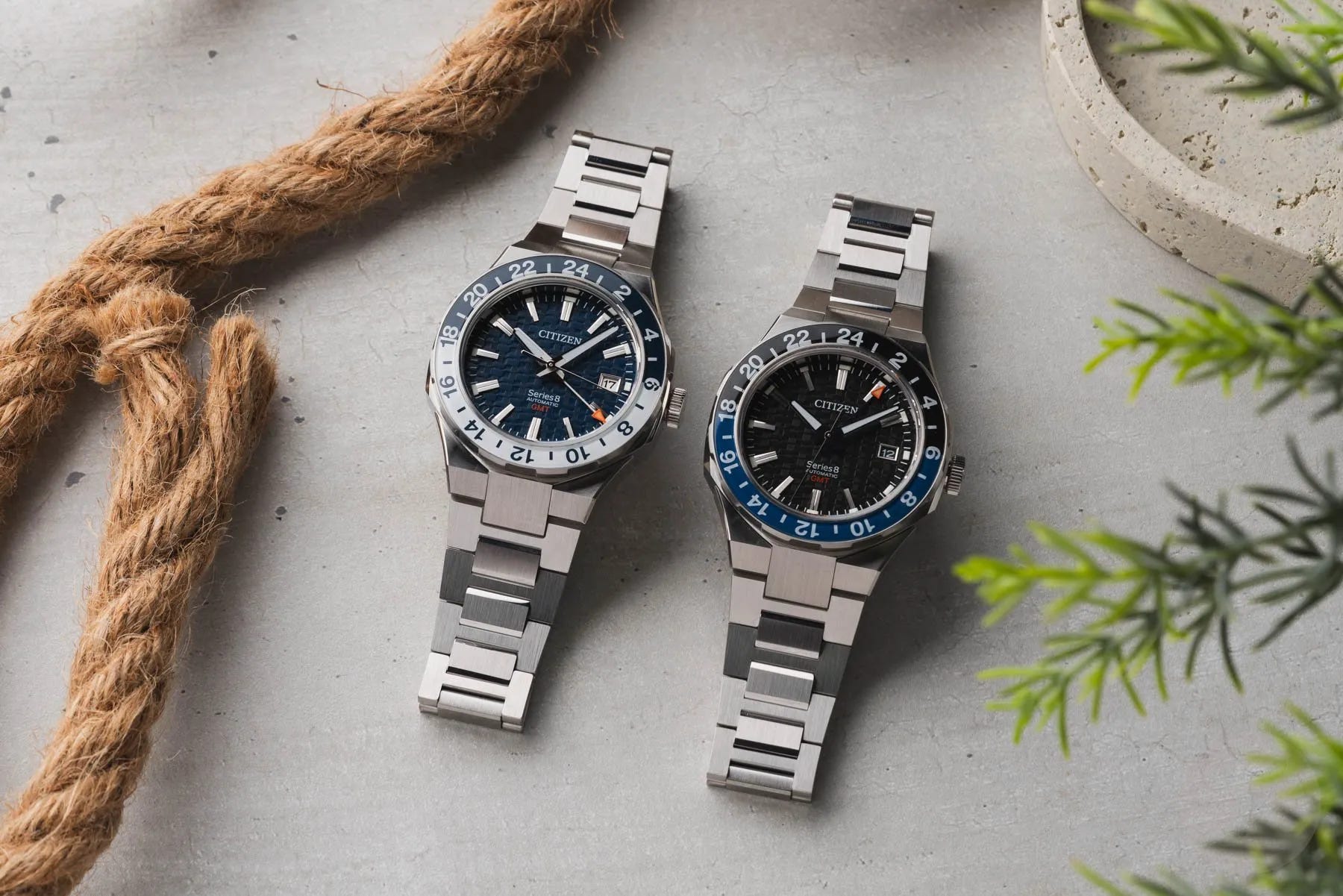
The Citizen Series 8 880 GMT Turns You Into a Local, Twice Over
Citizen’s Series 8 880 GMT brings a strong, angular Tokyo-inspired design to a practical travel complication. The 41mm steel cases use either gold-toned or blue-and-black dial treatments, while the in-house calibre 9054 offers a 50-hour reserve and a prominent orange-tipped GMT hand.
At €1,225, the 880 GMT is priced to compete with smaller brands using similar movements, but its visual identity and factory-scale finishing are its chief advantages. It is a substantial watch at 13.54mm thick and 183g, yet one with enough presence to make the extra wrist real estate feel intentional.
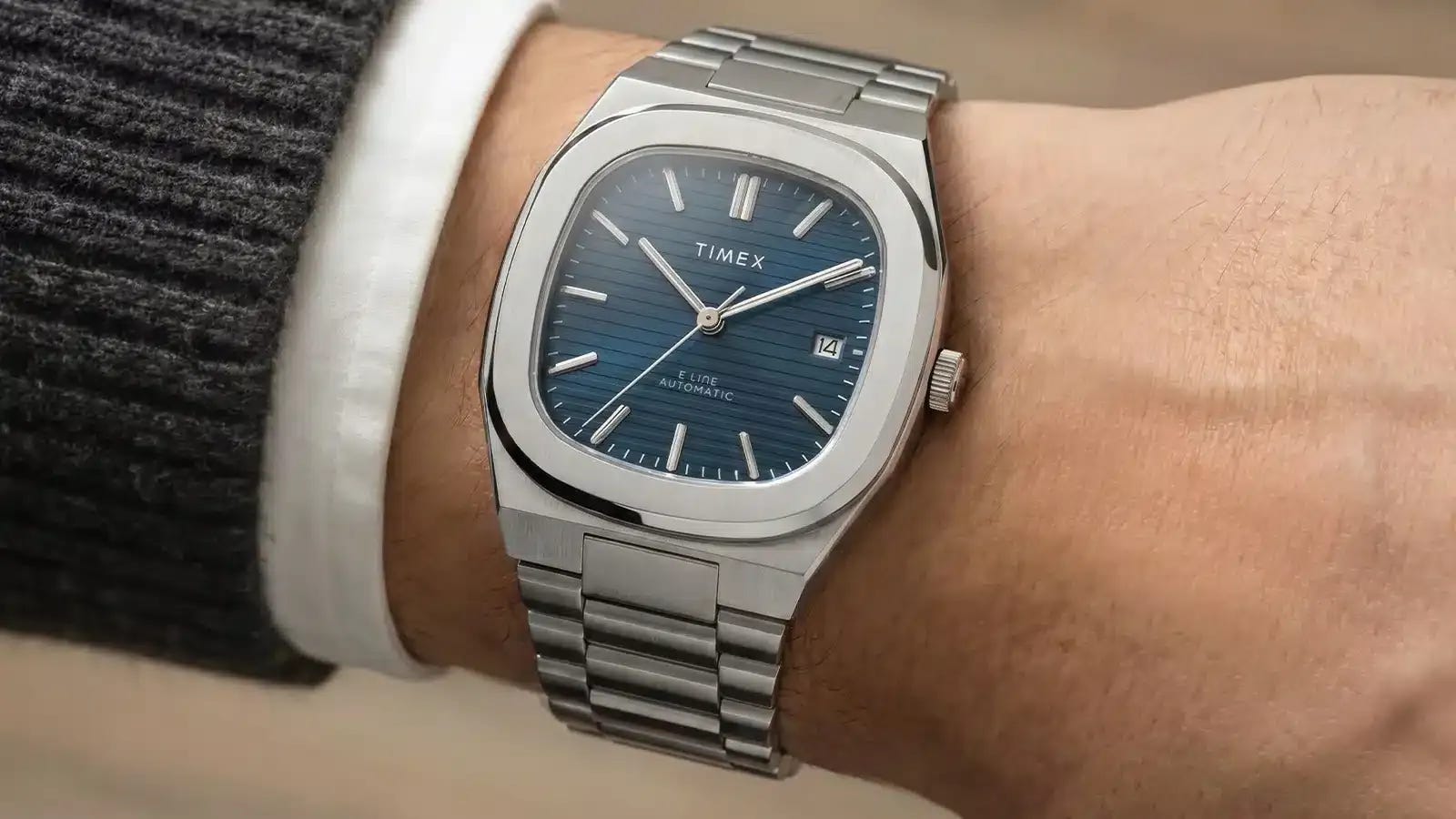
The New 38mm Timex E Line Has One Spec We Wish Timex Had Changed
The new Timex Automatic E Line expands the brand’s 1983 TV-dial integrated-bracelet concept to 38mm. It has a horizontally textured dial, steel bracelet, exhibition back, Miyota 8215 movement, and a $379 price, delivering a lot of visual appeal for the money.
The disappointment is the mineral crystal. At this price, sapphire would have made the watch feel materially more complete, especially since the E Line’s integrated-bracelet styling is otherwise well resolved. Even so, it is a likable bridge between Timex nostalgia and the current appetite for compact sports watches.
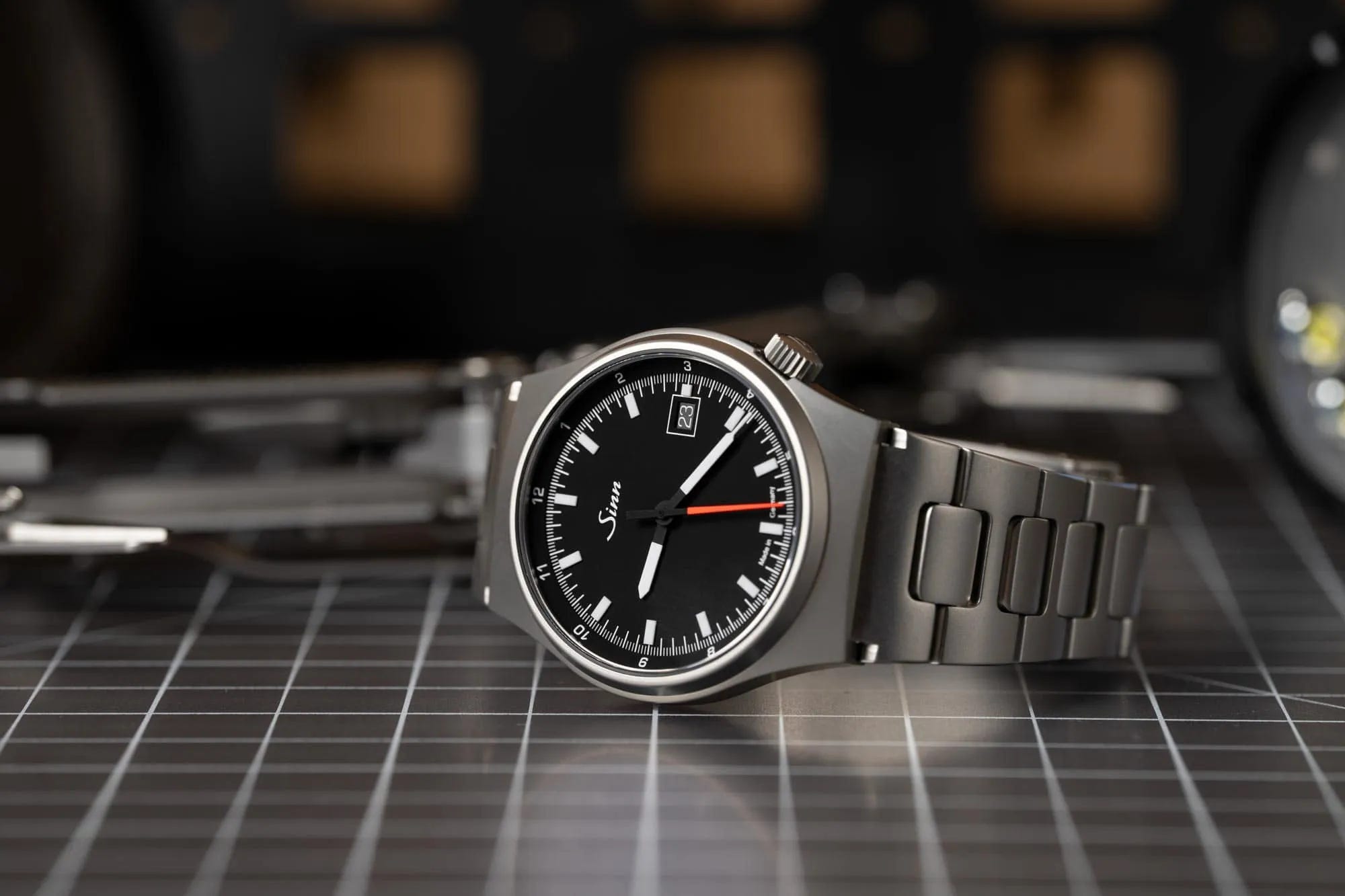
The Sinn 544, a Tool Watch for Minimalists
Sinn’s 544 distills the tool-watch formula into a 38.5mm bead-blasted steel case, a simple black dial, 200m of water resistance, a four-o’clock crown, and a Sellita SW200-2 movement with a 65-hour reserve. Ceramic lume blocks and, on the RS version, a red-orange seconds hand add just enough color to keep its disciplined design from becoming anonymous.
With prices from $1,740 to $2,170, it sits above the entry-level Sinn 556 but below the brand’s more specialized offerings. The optional H-link bracelet with micro-adjustment is particularly appealing, making this a serious everyday watch for someone who values utility without visual clutter.
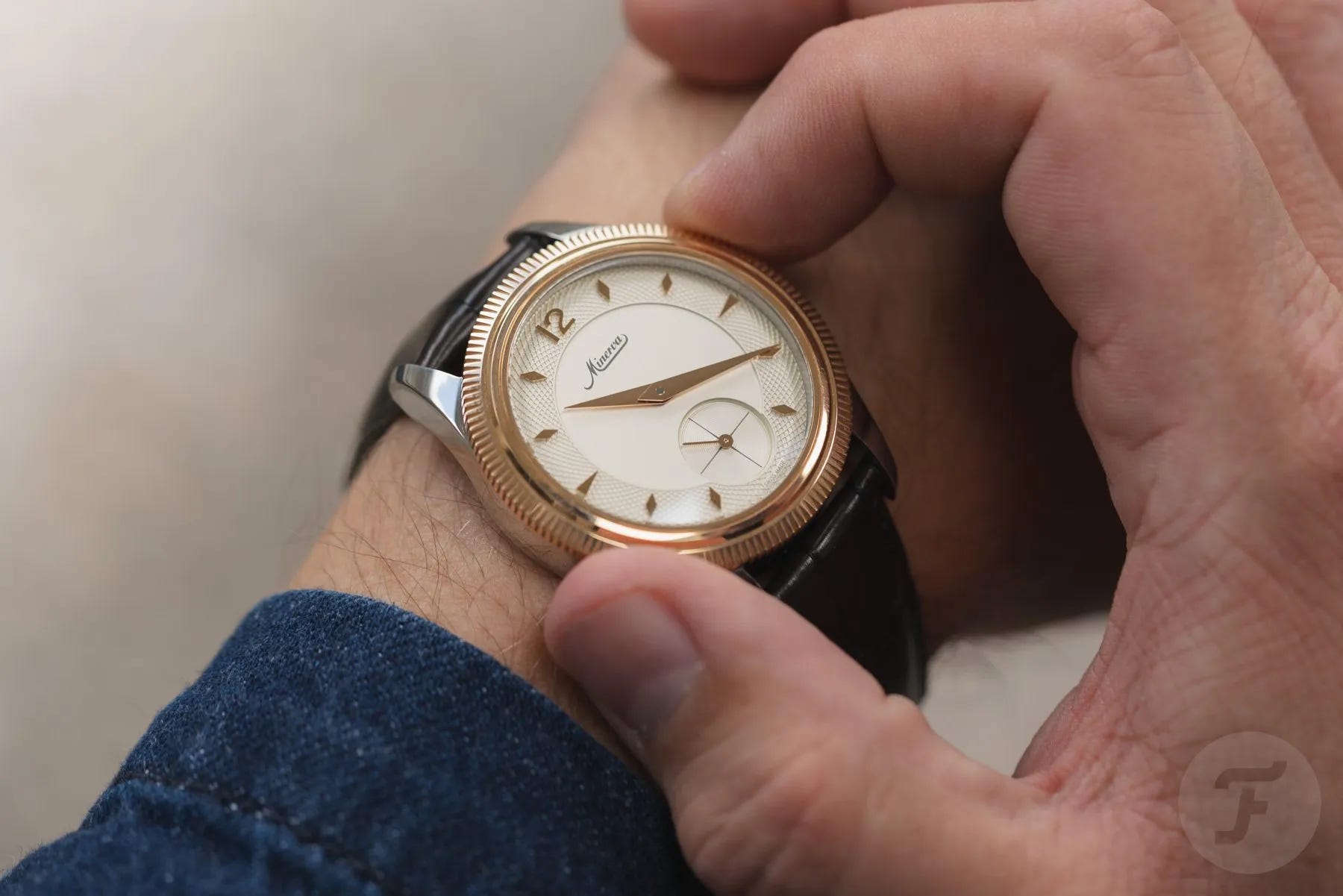
This Bezel Does It All: Introducing the Minerva The Unveiled Crownless
Minerva’s Unveiled Crownless removes the traditional crown and transfers winding and setting functions to a bidirectional rose-gold fluted bezel. A concealed lever on the back determines whether the bezel winds the movement or sets the time, turning a familiar watchmaking control into an unusually tactile part of the experience.
The 41.5mm steel watch contains the hand-wound M15.08 calibre, derived from historic Minerva movements and offering an 80-hour reserve at 18,000vph. At €39,000, it asks the buyer to embrace an unconventional interaction, but its genuine mechanical inventiveness makes that proposition feel earned.
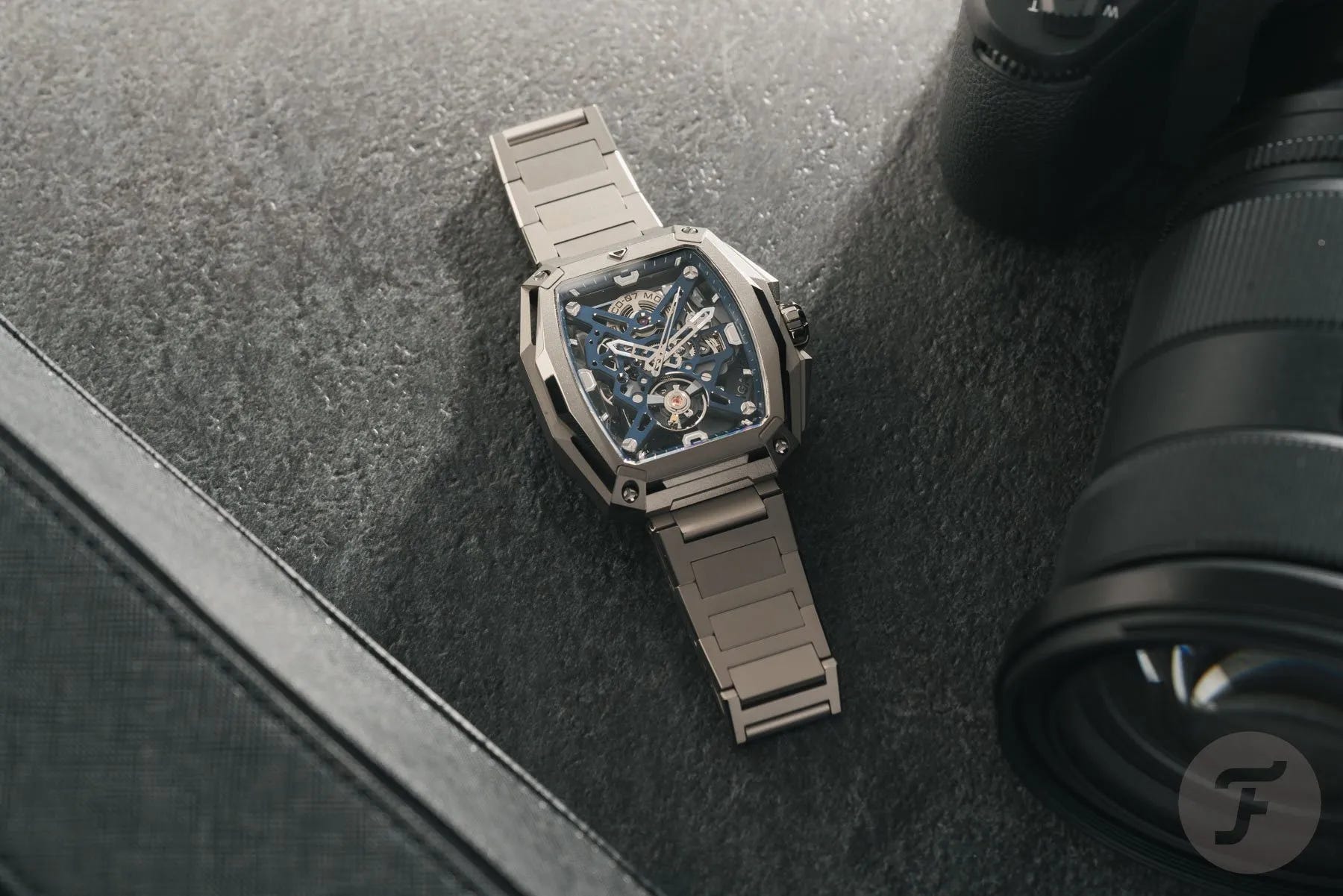
Tried and Tested: The CIGA Design Hunter Titanium Skeleton Automatic
The CIGA Design Hunter Titanium uses a Grade 5 titanium case, a curved sapphire crystal, and an in-house CD-07 automatic movement to make a lightweight skeleton watch with real wrist presence. Despite measuring 47.5mm by 41.5mm, its lug-less form and 92g weight help it sit comfortably, while lumed hands and indices preserve daily usability.
At €999, it occupies a sensible middle ground in the Hunter range, beneath the tourbillon and above the entry-level versions. It is an unusual watch that resists easy genre labels—and that is precisely why it may appeal to collectors looking for something outside the expected rotation.
Editorial
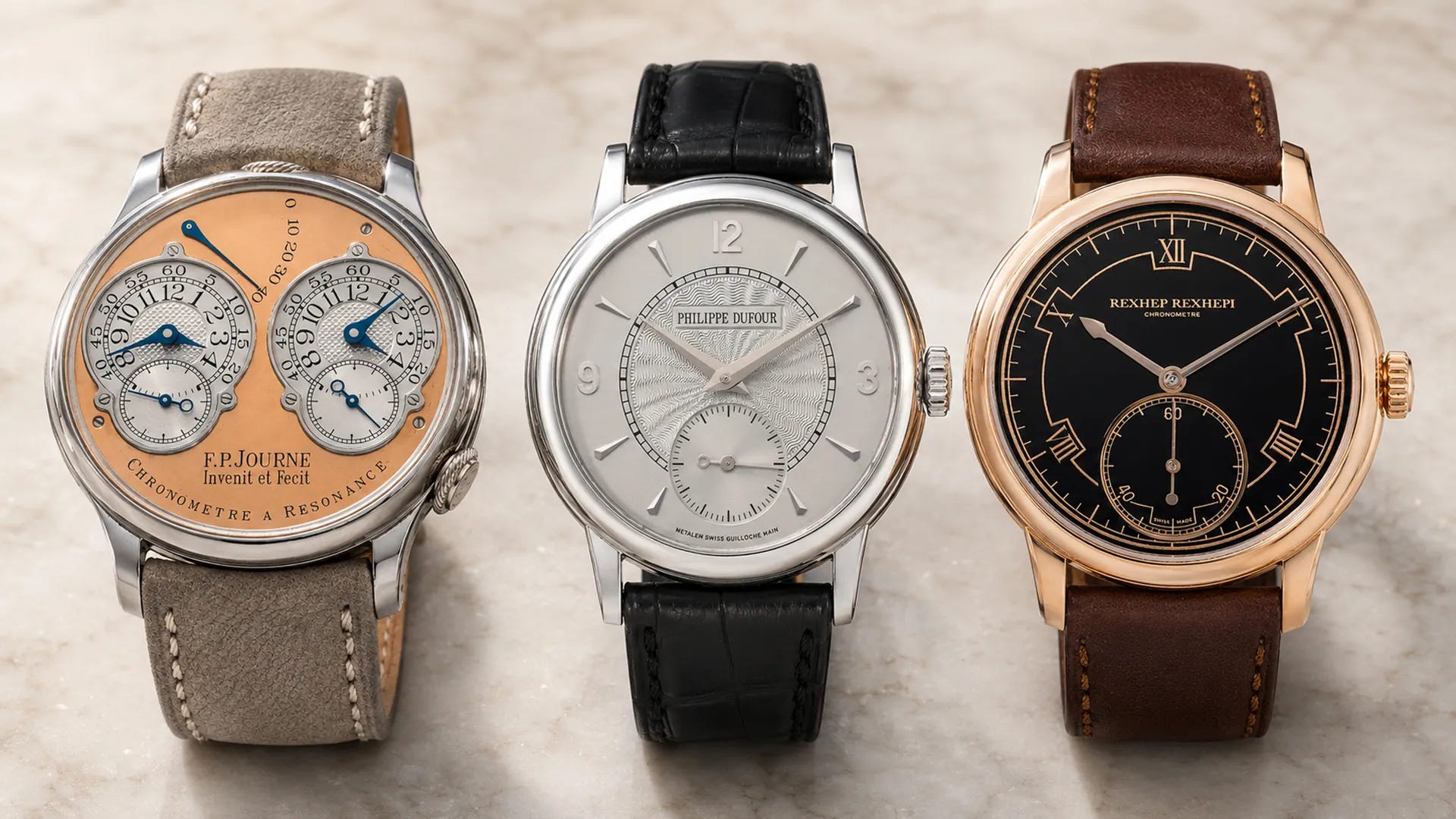
Independent Watchmakers Are Earning a “Genius Lock” Premium
Independent watchmakers are increasingly priced around a form of scarcity that cannot be scaled: the finite output and reputation of the individual maker. The “Genius Lock” premium describes the way collectors value watches by F.P. Journe, Rexhep Rexhepi, Philippe Dufour, and others not simply as products, but as work tied to an active creative life and a limited production horizon.
The opportunity is real, but so are the risks. The market remains relationship-driven and illiquid, and broader validation will depend on more makers sustaining meaningful auction results. Still, the article makes a persuasive case that independence, when paired with genuine skill and strict output, has become one of the luxury watch market’s most potent forms of value.
Events
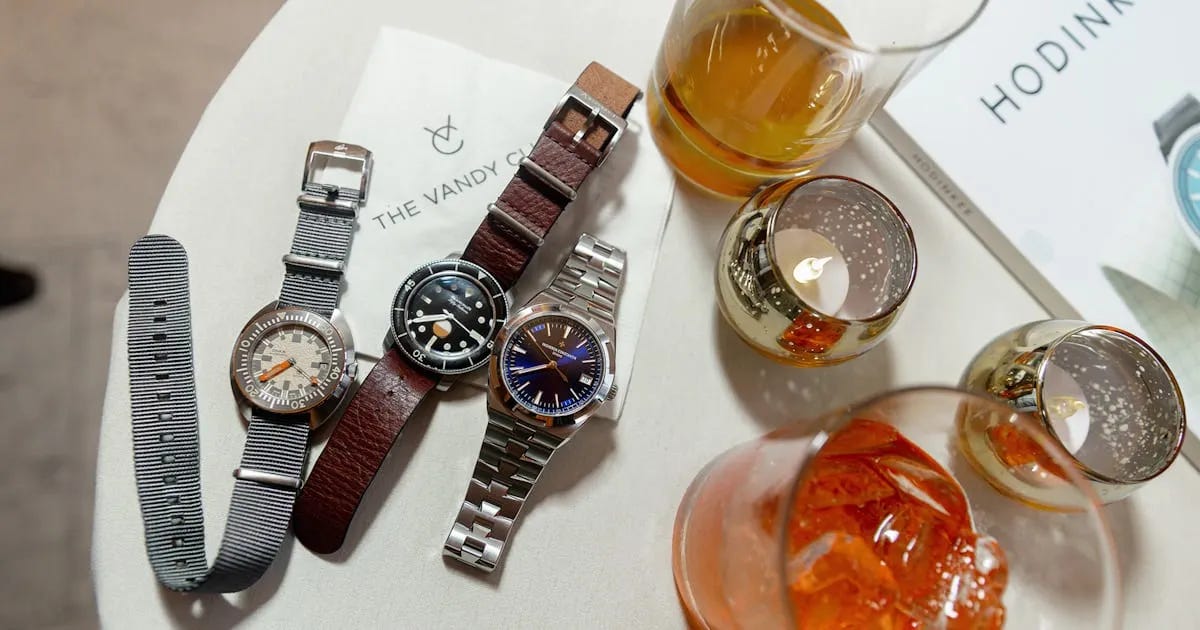
Photo Report: Watch Spotting at the Hodinkee Happy Hour at One Vanderbilt
Hodinkee’s Happy Hour at One Vanderbilt brought collectors together first at the Watches of Switzerland showroom, then upstairs for an evening of conversation, drinks, and exceptionally varied wrist checks. The watches on view covered serious vintage, modern sports pieces, and high complications in equal measure.
Highlights included an Omega Seamaster Professional Chrono Diver, a Zenith Chronometer Open 1969 Boutique Edition, a Tudor Pelagos FXD MN21, a Rolex Oyster Precision 6426, a Tiffany-stamped 1980 Rolex Datejust, a Mido Ocean Star Decompression Worldtimer, and an A. Lange & Söhne Saxonia Triple Split. The report is an enjoyable reminder that the most interesting watch gatherings are rarely about a single brand or price tier.
Video
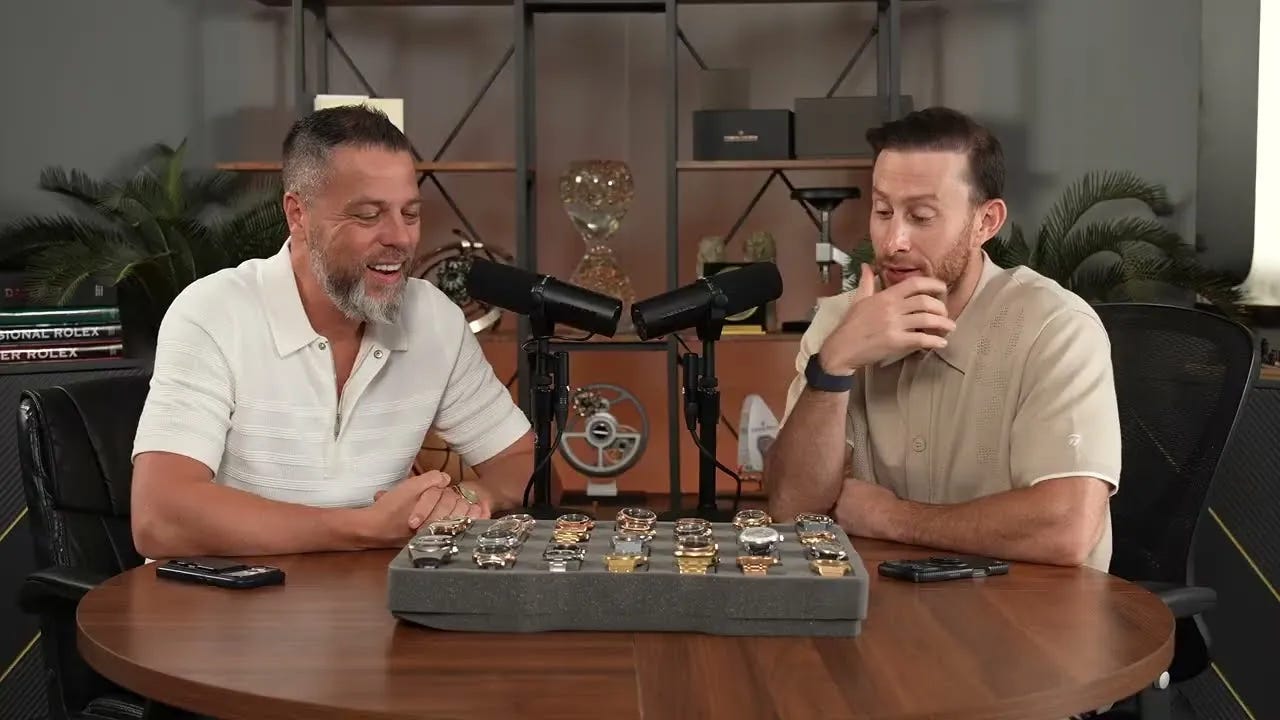
$6 Million in Watches Just In! | Dual Time #13 — Roman Sharf
A look at an extraordinary incoming collection valued at roughly $6 million, and at the cultural and financial gravity rare watches can carry when assembled at this scale. It is part market theater, part reminder of just how deep the top end of collecting has become.

Can a Case Back Make or Break a Watch? — Fratello
Fratello turns attention to the often-overlooked caseback, examining its role in movement protection, water resistance, visual appeal, and long-term reliability. A useful prompt to look beyond the dial when judging a watch’s design and construction.
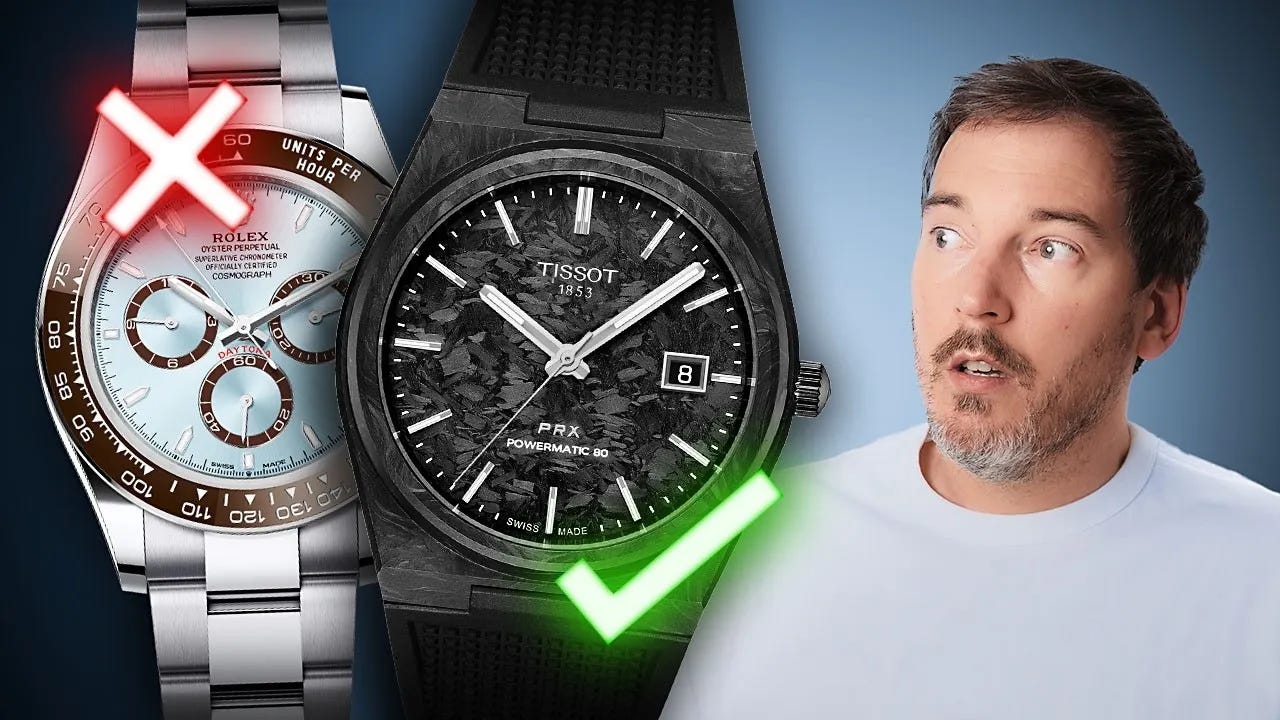
Every Watch Case Material Ranked (Some Are Overpriced) — Andrew Morgan Watches
A practical ranking of the materials that shape modern watches, from familiar metals to ceramic and composites. It focuses on the real tradeoffs between durability, looks, wearability, and price—especially useful for buyers deciding whether a material upgrade is worth the premium.
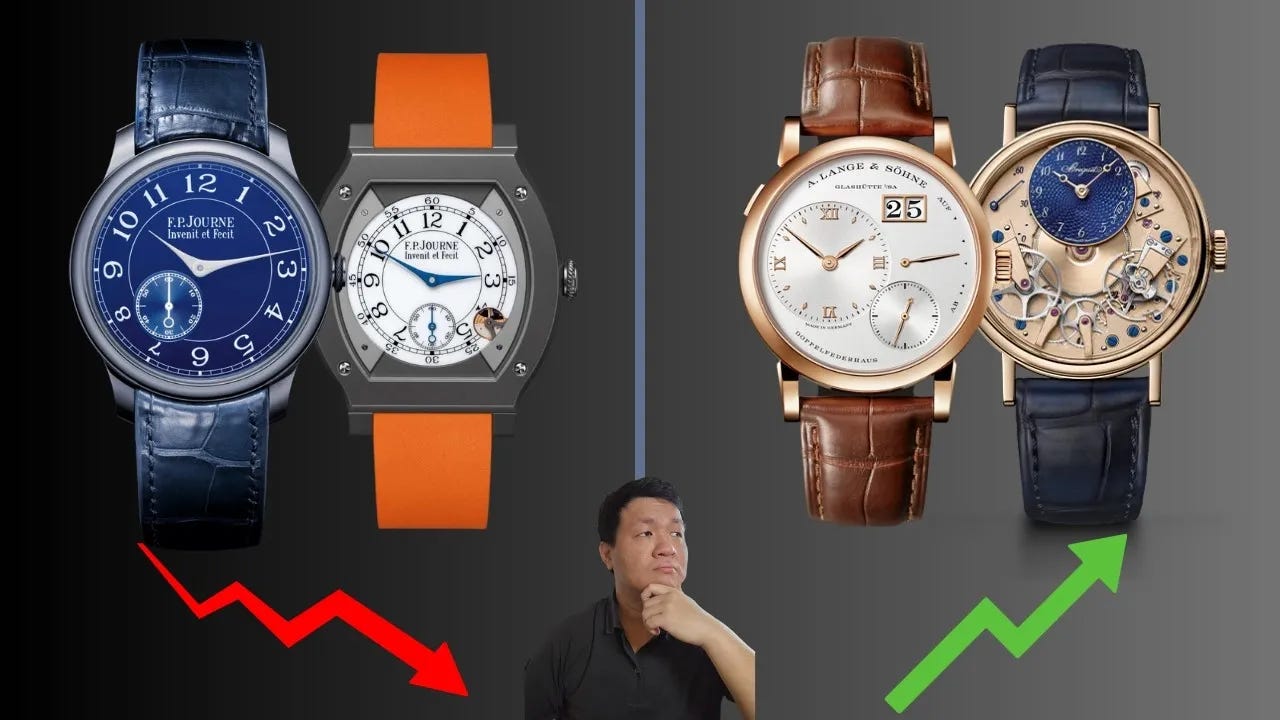
F.P. Journe Market Corrects/Lange and Breguet Rise — Watches in Singapore
This market update tracks a correction in F.P. Journe values alongside increased attention to A. Lange & Söhne and Breguet. It is a useful companion to today’s broader market discussion: collector money is moving, but it is moving selectively.
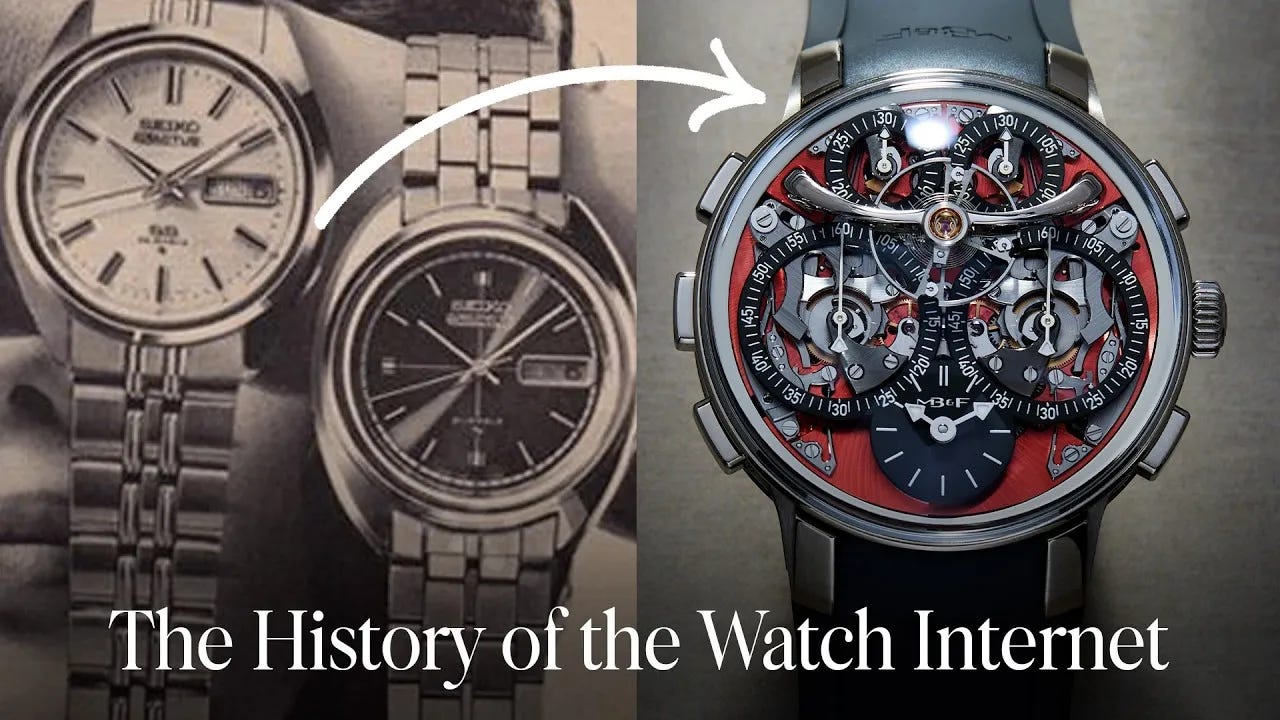
How the Internet Changed Watch Collecting: A History With Jack Forster — The 1916 Company
Jack Forster discusses the transformation of collecting in the internet era, from the global reach of online marketplaces to the communities, knowledge sharing, and accelerated pricing those tools created. A thoughtful look at how the hobby became both more accessible and more immediate.

Moonwatch or Snoopy? Omega Speedmaster Head-to-Head — Time+Tide Watches
A comparison of two of the most emotionally resonant Speedmaster choices: the foundational Moonwatch and the playful, highly collectible Snoopy edition. Heritage, design details, rarity, and market appeal all enter the calculation.

The Best Movement Is in a $500 Watch. So Why Is the $6,000 Watch Better? — This Watch, That Watch
A useful value question: if a comparatively inexpensive watch can have a very capable movement, what exactly justifies the jump to a $6,000 watch? The answer explores finishing, materials, design, brand history, and the less measurable parts of perceived quality.

The Swiss Watch Lie Nobody’s Talking About — Scott Adam Lancaster
An examination of the narratives that shape Swiss-watch pricing and desirability, including the role branding, scarcity, and consumer perception play in the gap between production cost and retail value. It is deliberately provocative—and worth watching with a critical eye.
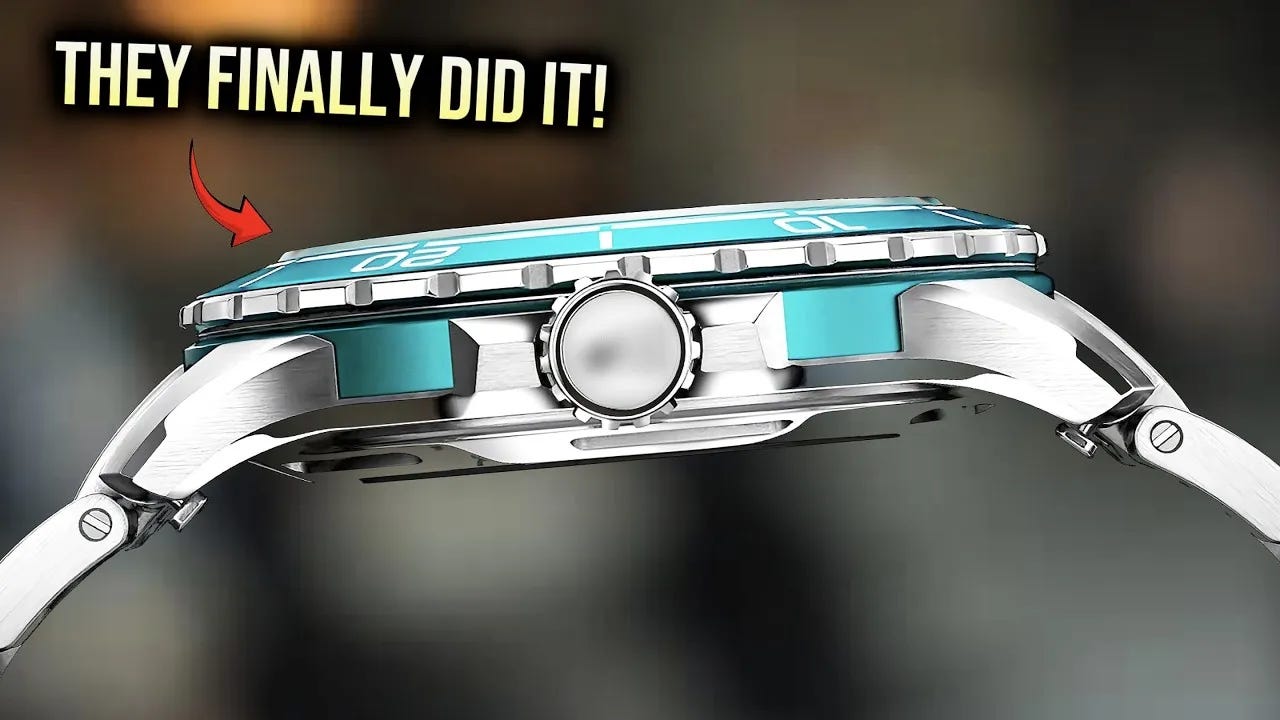
These 10 Hottest Watches Just Dropped! — ONE Watches
A fast-moving roundup of the latest watch releases and the design, material, and movement trends shaping the current new-watch conversation. Good viewing for collectors who want a quick read on what is landing now.

Watches Everyone Hates That We Secretly Love
An affectionate look at the watches that polarize collectors, and at the way a design once dismissed can become appealing through context, individuality, or sheer repeated exposure. Taste is rarely as fixed as a comment section suggests.
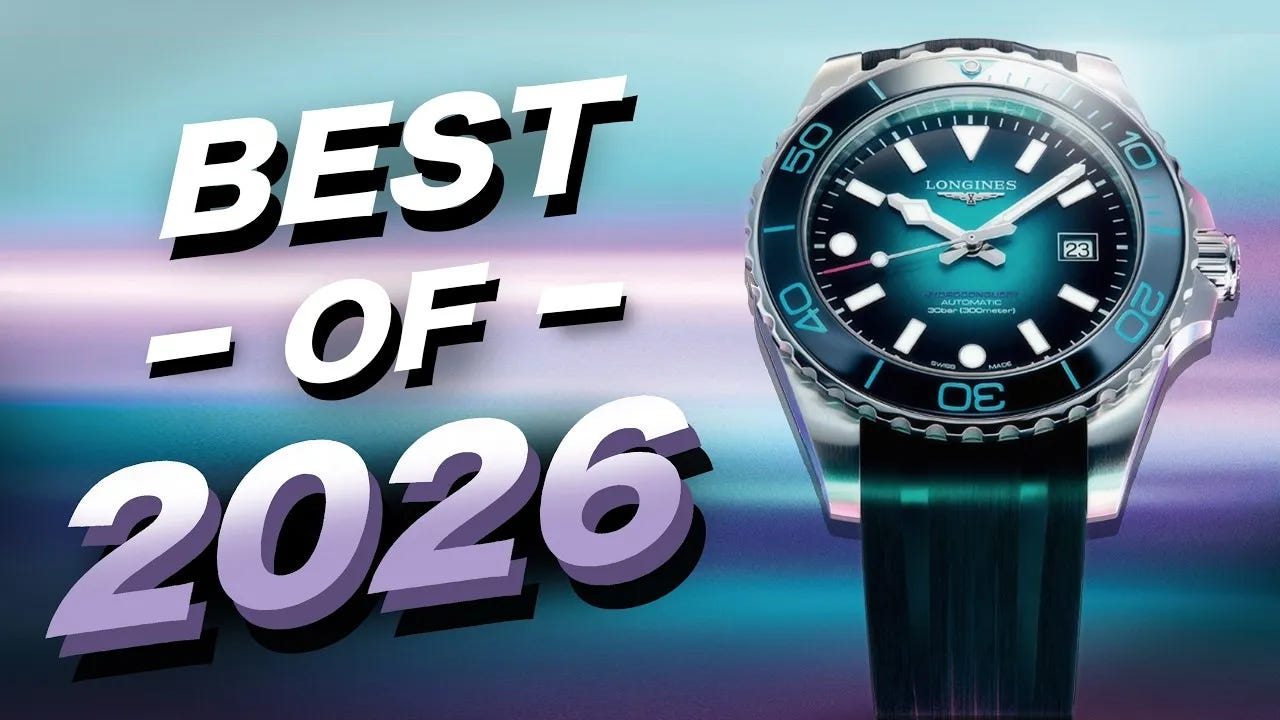
What Are the Best Watch Releases of Q1 & Q2 2026? (40+ Watches) — IDGuy
An expansive overview of more than 40 releases from the first half of 2026. It offers a useful wide-angle view of the year’s major introductions, from heritage revivals to new materials and technically ambitious complications.

You Were Never on the Rolex Waitlist — My Watch Journey
A frank discussion of Rolex availability, waitlist mythology, and the psychology of scarcity. For anyone who has wondered how much of the waitlist experience is process and how much is perception, this one is likely to strike a nerve.
Auctions
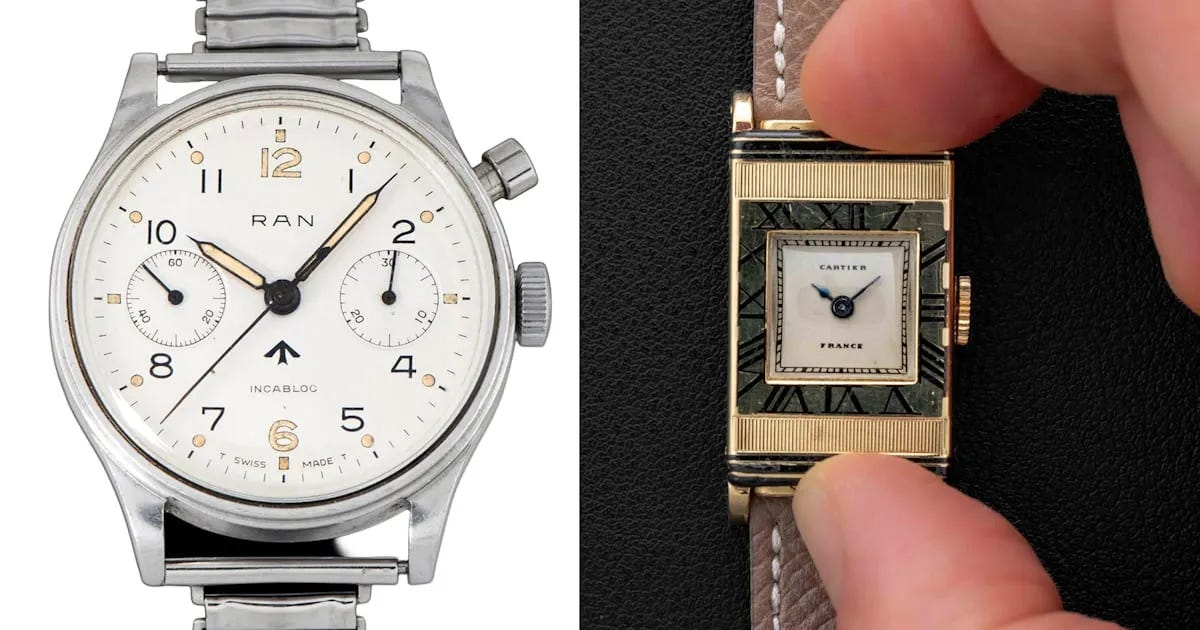
An Alpina-Gruen Techni-Quadron, a Universal Genève “Eric Clapton,” a Cartier “Bébé Guillotine,” and More
Hodinkee’s latest “What’s Selling Where” survey ranges from an Alpina-Gruen Techni-Quadron to an exceptional Cartier “Bébé Guillotine,” with a Universal Genève “Eric Clapton” and recent auction results adding further depth. It is a lively reminder that the best vintage market stories often live in the details: condition, provenance, unusual case shapes, and the odd watch that turns up where nobody expects it.
Auction Report
Friday’s BuyingTime auction result, the 2024 Vacheron Constantin Overseas Moon Phase Retrograde Date 41 in steel with a blue dial, sold for $46,000 after bidding reached that figure. That is toward the high end of current market value for the reference, making it a strong result and a notably rare sale within the BuyingTime auction offering.
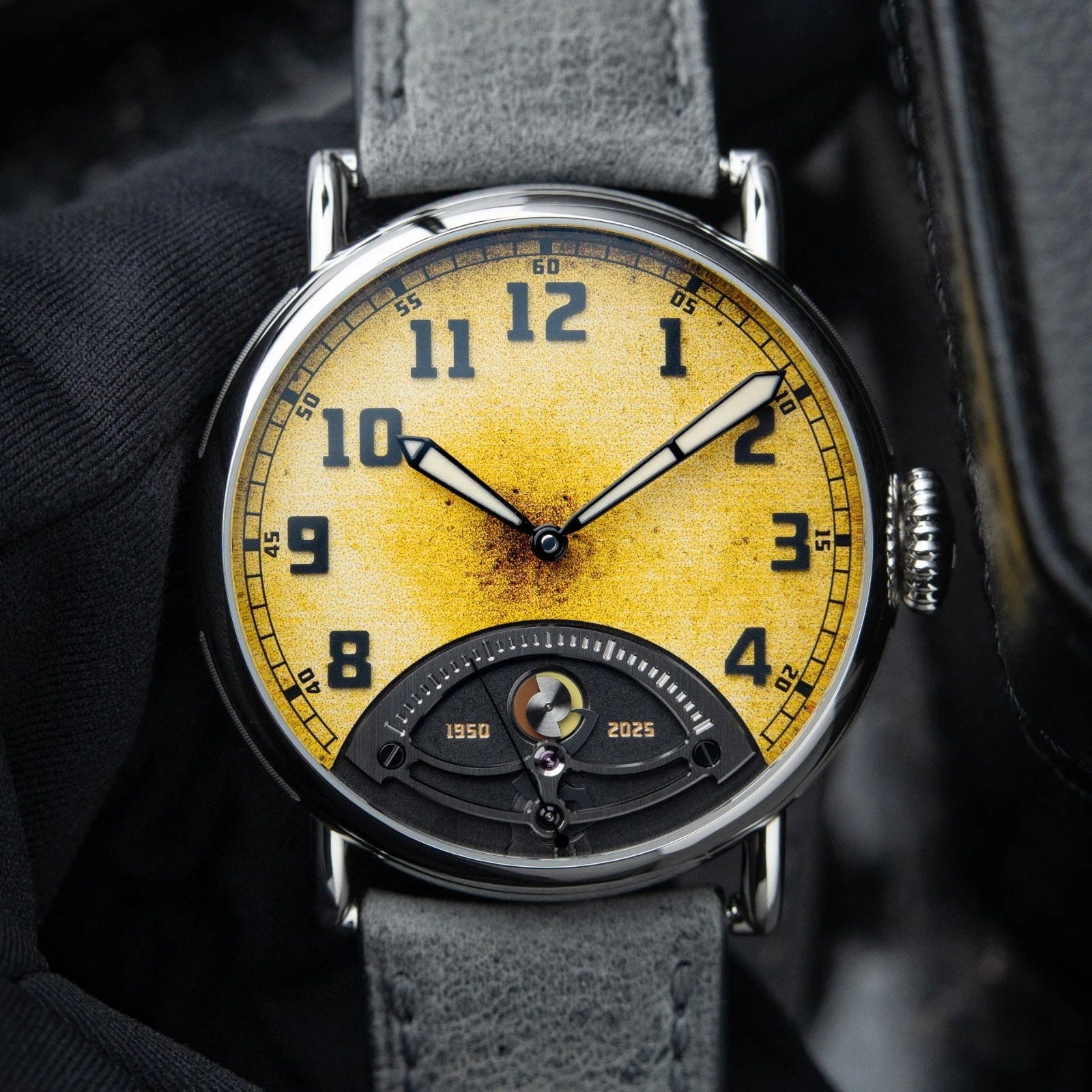
A Sand-Fumé Moser With a 30-Second Moment
Today’s auction brings a very different kind of collectibility: the 2025 H. Moser & Cie. Heritage Retrograde Seconds Ahmed Seddiqi 75th Anniversary, reference 8250-1200. Limited to 20 pieces, this unworn, full-set example combines a 42mm steel Heritage case with a yellow sand-fumé dial, Arabic numerals, grey kudu strap, and Moser’s HMC 250 automatic calibre. Its signature complication is a retrograde seconds display that resets every 30 seconds, a kinetic detail developed with Agenhor that gives the otherwise restrained watch an unexpectedly theatrical pulse.
The value case rests on rarity, condition, and specificity. The standard Moser Pioneer Retrograde Seconds has established a market around the mid-$20,000 range, but this is a distinctly rarer, regionally meaningful 20-piece edition with a different case, dial, and collector story; public transaction history for the anniversary model is still too limited to claim a settled market. With box, papers, hangtags, and extra straps, the auction offers a credible chance to acquire an almost never-seen Moser collaboration before its profile has had time to mature. Bidding ends today, Monday, August 17, at 12:25 p.m. EDT.
Current bid: $35,500
Auction reference and value context were checked against the official Ahmed Seddiqi edition details and current Pioneer Retrograde Seconds market listings.
Losing Time


Today’s Big Losers at Auction on Grailzee
Two failed sales, two very firm market responses: nice try.
The 2022 F.P. Journe Octa Chronomètre Optimum was offered at $386,000 and reached just $175,000—a $211,000 shortfall, or 54.7% below ask. In other words, the market showed up with a bid, then declined to participate in the seller’s alternate reality. For a Journe, that is a particularly loud miss: the bid was only 45.3% of the asking price.
There may be some smoke here. Recent watch-market videos have suggested that parts of the F.P. Journe market are retreating, and this result certainly does not argue the other side. That said, one unsold modern example is not a whole-market index—especially as top-tier Journe auction results remain strong—so the cleaner conclusion is that buyers are becoming much more selective about model, configuration, and price. Phillips’ recent market view supports the idea that the broader brand market is more nuanced than a single result.
The 2025 Parmigiani Fleurier Tonda PF Xiali Chinese Calendar fared even less charitably. Against a $60,348 ask, its $21,000 high bid missed by $39,348, or 65.2% below ask. The listed delta of -$39,348. Beautiful, unusual, and apparently still not enough to persuade bidders that “Imperial” should apply to the price.
The takeaway: both reserves were set as aspirations rather than market-clearing numbers. The Journe result is the more meaningful warning sign because it tests an exceptionally hot independent brand; the Parmigiani result is a reminder that rarity and complication do not automatically produce liquidity. In this room, buyers were willing to admire both watches—just not to finance the seller’s optimism.
Until tomorrow: The best collections are not built by reacting to every market move. They are built by noticing the watches that keep getting more interesting after the first look.