

The 30 Second Read
Today’s issue is about the difference between recognition and real substance. Seiko’s remarkable sales growth shows what happens when a company backs a clear global strategy with products collectors actually want. At the other end of the market, the great independent makers continue proving that scarcity alone is not enough; lasting value comes from authorship, craft and a point of view that cannot be scaled on command. That tension runs through nearly every story today, from certifications and awards that can clarify—or confuse—a watch’s merits, to customized Fordite dials, a Brazilian-made integrated bracelet watch, and a modestly priced Timex taking on one of the most influential designs in the business. The market is getting more discerning. The brands that will matter are the ones with something genuine to show for it.
Time Graphing: Today’s Watch Universe
Watchmaking has always had ways of telling us what deserves attention. A Geneva Seal on a movement, a chronometer certificate on a dial, a prize in Geneva, a record at auction, a waiting list at a boutique—each is a kind of signal. The trouble is that signals are not the same thing as substance.
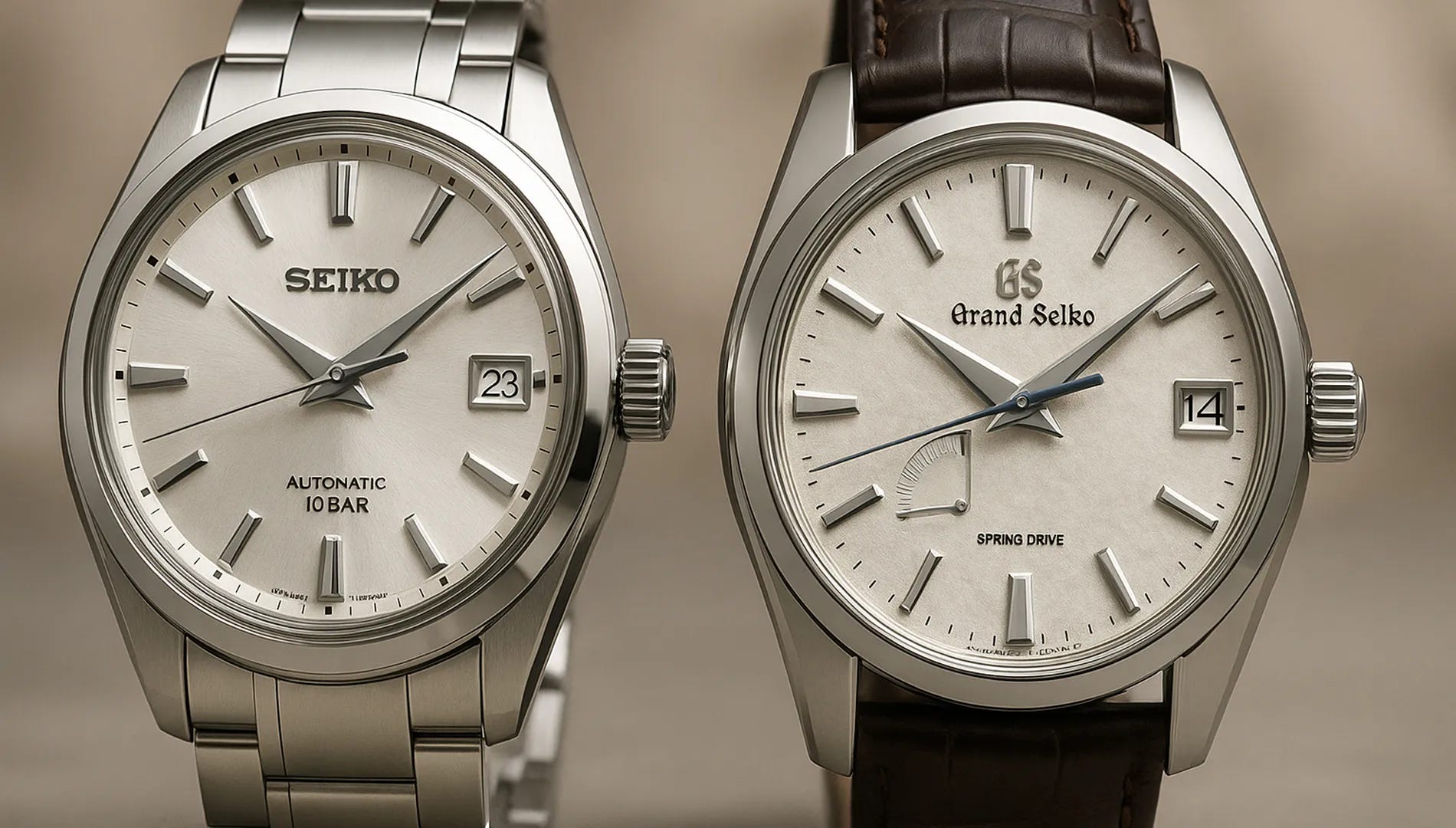
That distinction feels especially timely today. Seiko’s powerful financial performance is not the result of one clever badge or one viral release. It reflects years of sharpening a broad portfolio: Grand Seiko pushing further into luxury, Prospex keeping technical watchmaking accessible, Presage building design-led appeal, and Seiko 5 remaining a gateway for new enthusiasts. The company’s success is a reminder that scale does not automatically mean sameness. When a brand has a coherent point of view and delivers it at multiple price levels, growth can be a measure of real cultural relevance.
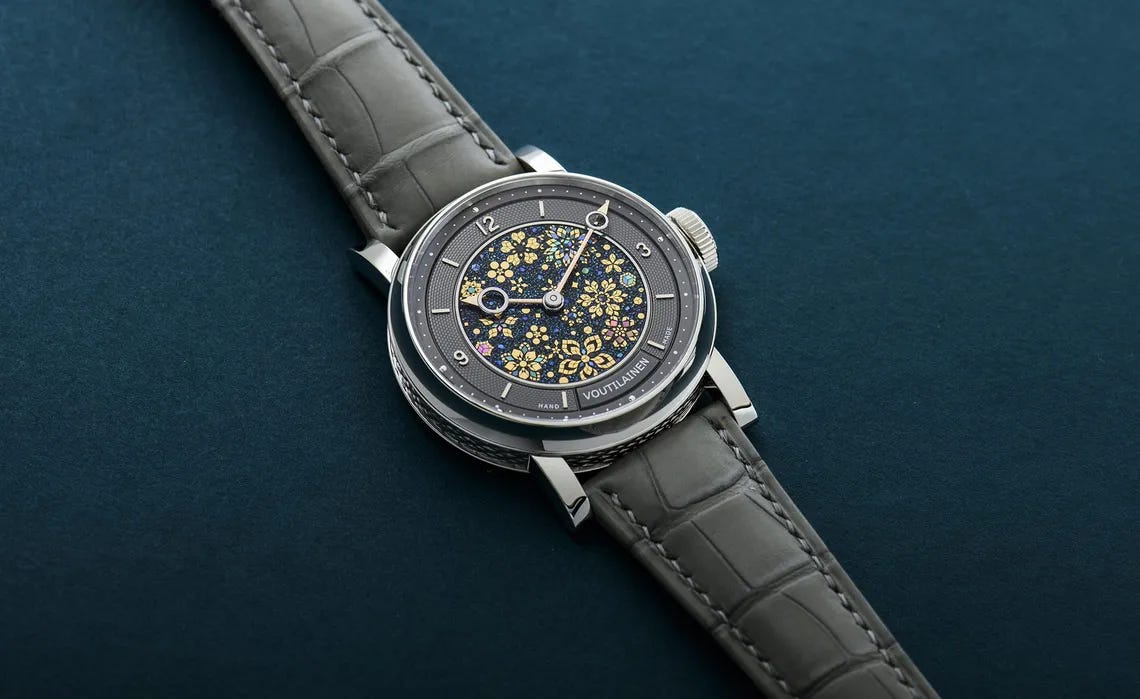
The independent side of the business offers the inverse lesson. Our look at the five pillars of independent watchmakingis ultimately about why the best independents matter beyond their scarcity. Philippe Dufour, François-Paul Journe, Kari Voutilainen, Roger W. Smith and Rexhep Rexhepi are not simply making fewer watches than the great maisons. Their work carries an identifiable human signature. The collectors pursuing them are buying a philosophy made physical: decisions about finishing, proportion, mechanics and beauty that come from a named maker rather than a committee.
That is why the conversation around external validations matters. A genuinely rigorous standard can be useful. It can communicate real performance and give a buyer a clearer sense of what is being tested. But too many seals, awards and endorsements can turn into decorative shorthand—something to display when a brand cannot explain the actual achievement on its own terms. In a market crowded with claims, the best test remains surprisingly simple: does the watch reveal a thoughtful reason for existing once the logo, prize and marketing language are stripped away?
Several of today’s releases answer that question in different ways. Arcanaut’s Fordite 2.0 turns an industrial byproduct into a personal object, while Ceon’s GR-01 makes the case for slow, proudly local production from Brazil. Even the Q Timex Marbella says something useful about the moment: great design language will always travel, but buyers are increasingly alert to the difference between inspiration and invention.
The same applies to the culture surrounding watches. A new gathering such as Time to Drive can succeed if it creates a real community rather than another branded showroom. A dial artist can turn a production watch into something memorable because the work of the hand remains visible. And a complicated Christophe Claret at auction can be both technically extraordinary and a reminder that the market does not always price originality neatly.
The next phase of watch collecting may be less about what the crowd has validated and more about what holds up under closer inspection. That is good news for makers with real ideas, and for collectors willing to look past the loudest signals.
-Michael Wolf
News Time
Seiko Share Price Quadruples as Watch Sales Continue to Soar
Seiko’s watch business continues to reward its long-term premiumisation strategy. Quarterly revenue rose 16% to ¥63 billion, while Grand Seiko, Prospex, Presage and Seiko 5 Sports all helped drive strong global demand. With shares up sharply over the past year, the company is showing that broad-based growth and serious watchmaking can coexist.
Swatch Group UK Sales Return to Growth
Swatch Group’s UK operation has returned to growth despite a more difficult global backdrop. Strong local turnover and improving operating profit suggest that the group’s brands still have meaningful pull in Britain, even as high pricing, grey-market inventory and an overbuilt boutique network continue to pressure the wider luxury business.
Feature Time
Beyond the Holy Trinity: The Five Pillars of Independent Watchmaking
The traditional hierarchy of Patek Philippe, Audemars Piguet and Vacheron Constantin remains powerful, but the most compelling energy in high horology is increasingly coming from independent makers. Dufour, Journe, Voutilainen, Smith and Rexhepi represent five distinct visions of what watchmaking can be when production is measured in dozens rather than thousands.

Grinding Gears: Watch Brands on Thin Ice When Chasing External Validations
Certifications can offer valuable proof of precision and durability, but the modern watch world has accumulated a confusing collection of seals, prizes and badges. This examination separates standards with meaningful rigor, including METAS testing, from the marketing exercises that can leave buyers paying for recognition without understanding what it actually signifies.
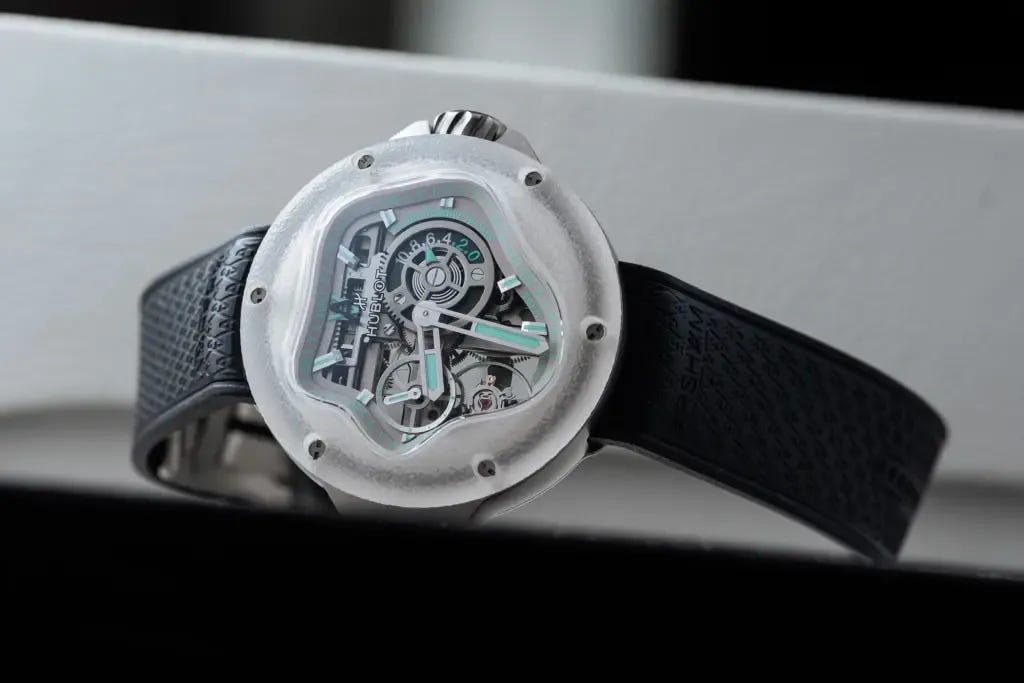
Hublot: High-Tech Haute Horlogerie With a Side Dish of Glitz and Glamour
Behind Hublot’s unmistakable visual bravado is a serious investment in movement development, unusual materials and case construction. From Unico chronographs to sapphire cases, the brand’s “Art of Fusion” philosophy has become far more technically substantial than its loudest critics sometimes acknowledge.
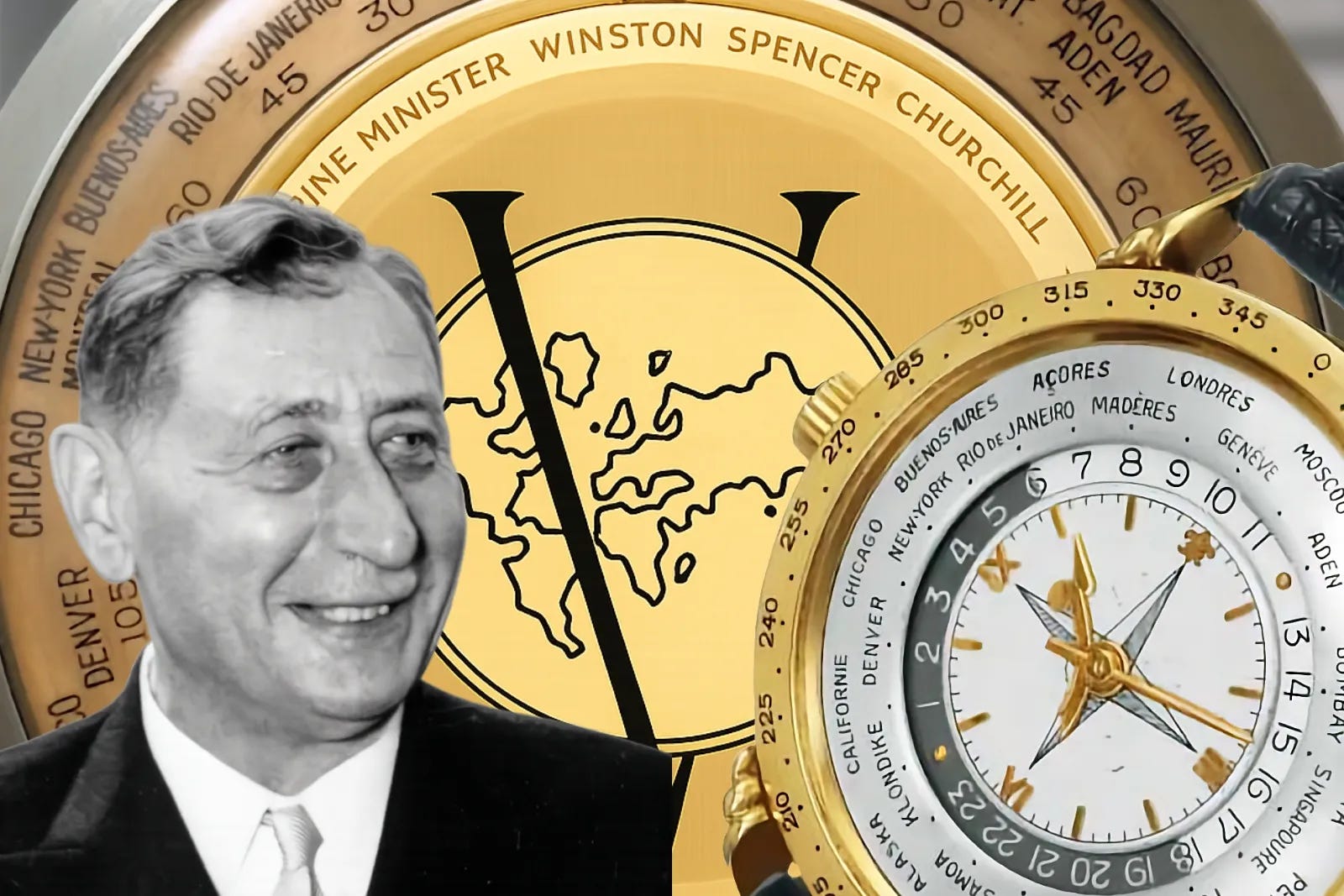
Louis Cottier’s Legacy
The world-time watch remains one of horology’s most useful and poetic complications, and Louis Cottier was its defining architect. His remarkable career stretched beyond the famous city-ring mechanism to experimental clocks, jumping-hour displays and a lifelong commitment to preserving the history of his hometown, Carouge.
New Watches
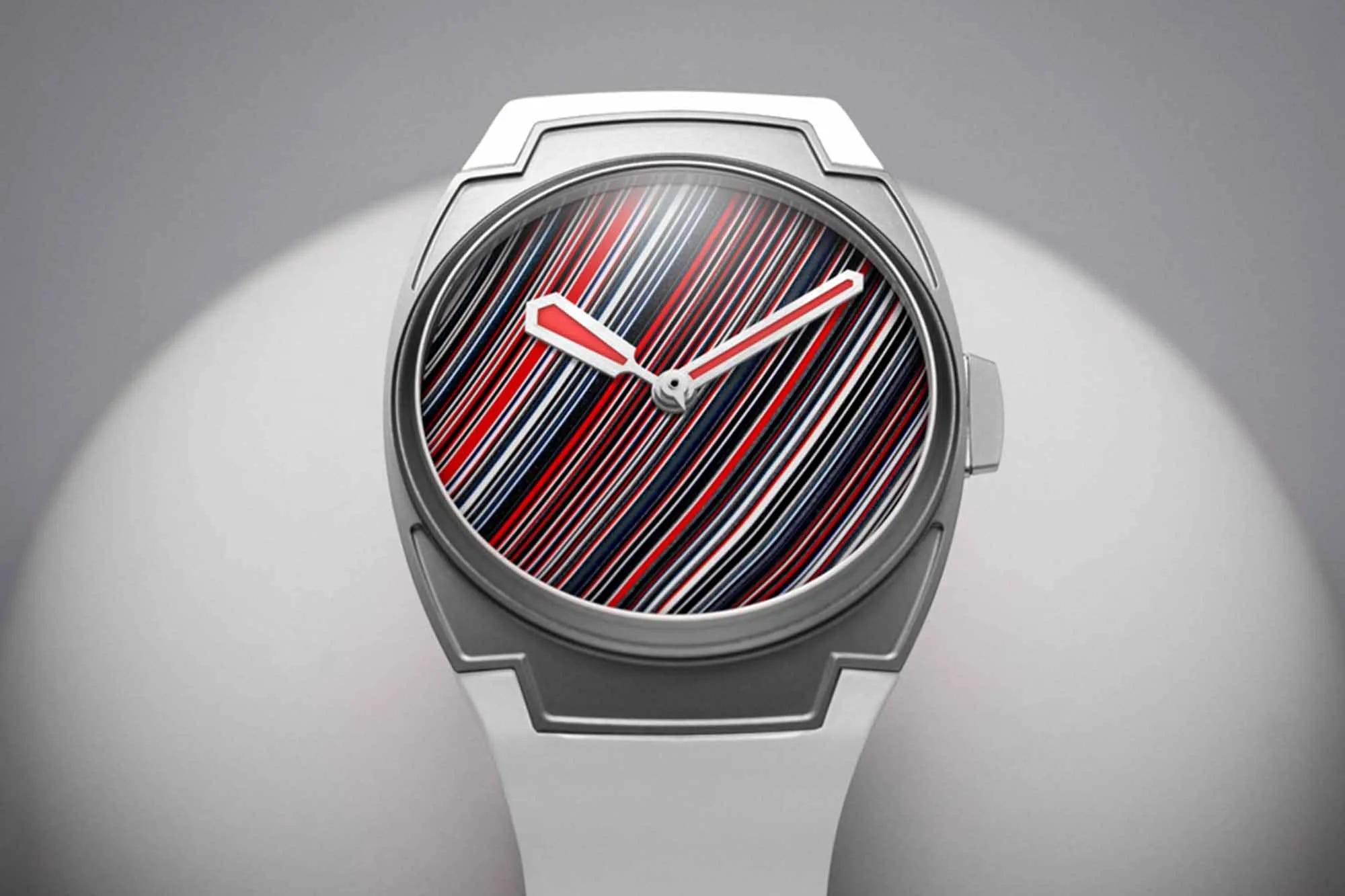
Arcanaut Introduces Fordite 2.0, Now Fully Customizable
Arcanaut has opened its distinctive automotive-paint Fordite concept to genuine personalization. Buyers can choose between case sizes, dial styles, lume colors, hands, straps and more, creating thousands of possible configurations while retaining the brand’s unmistakable material-first character.
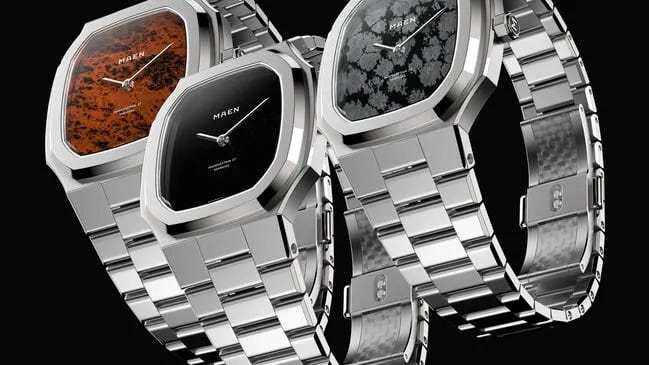
Maen Adds Three Stone Dials to the Manhattan 37 Ultra-Thin
Onyx, Golden Swan and Snowflake Obsidian bring natural variation to Maen’s slim, hand-wound Manhattan 37. Each dial is limited to 100 pieces, and the absence of conventional indices puts the focus squarely on the stone itself.
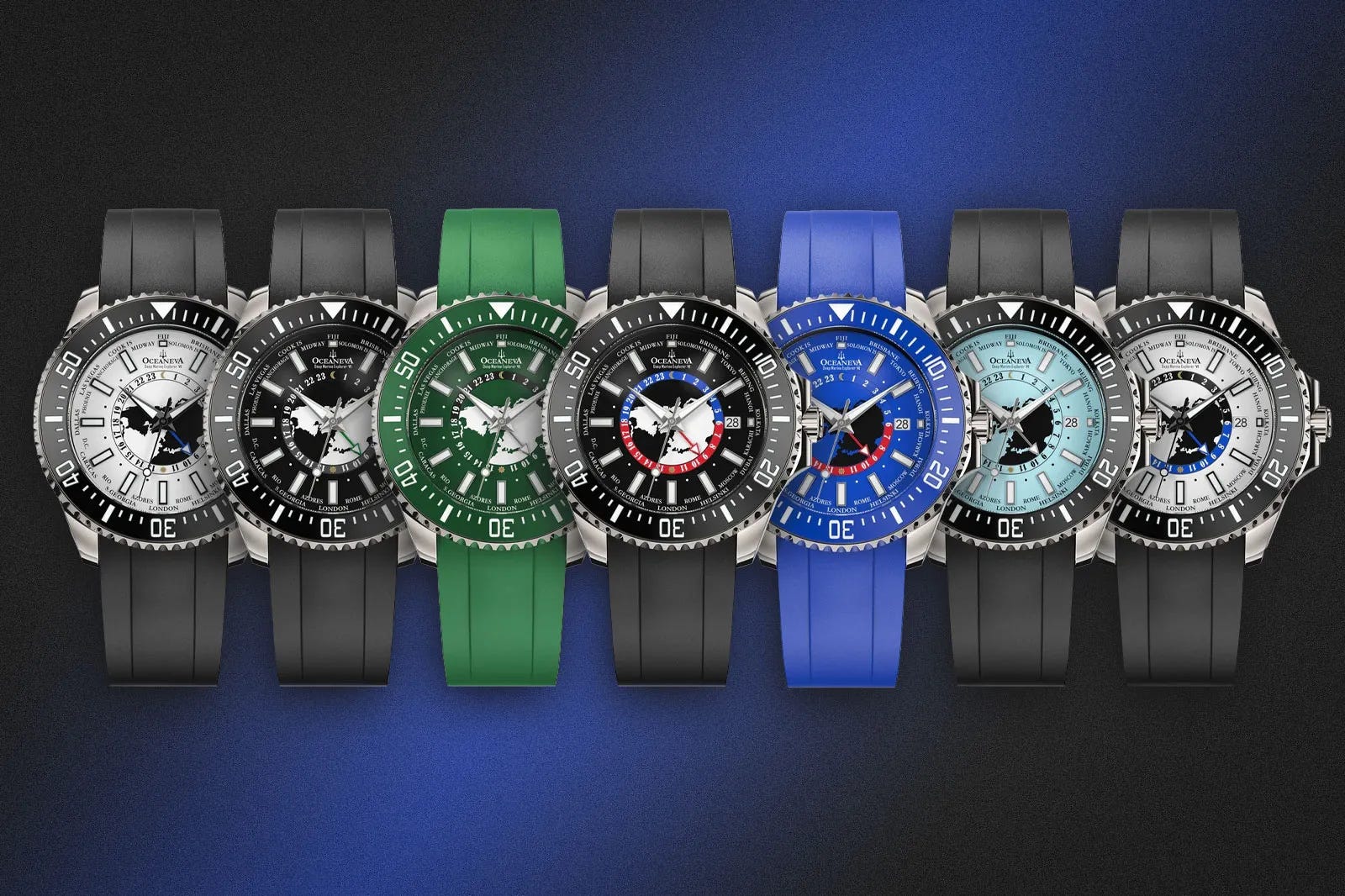
Oceaneva Launches the World’s First 6000m World Timer
Oceaneva combines two ideas that rarely meet: extreme dive-watch capability and a practical world-time display. The Grade 5 titanium Deep Marine Explorer VI offers a 6,000-meter rating, a Miyota 9075 GMT movement and ten limited colorways at a price intended to remain within reach of adventurous collectors.
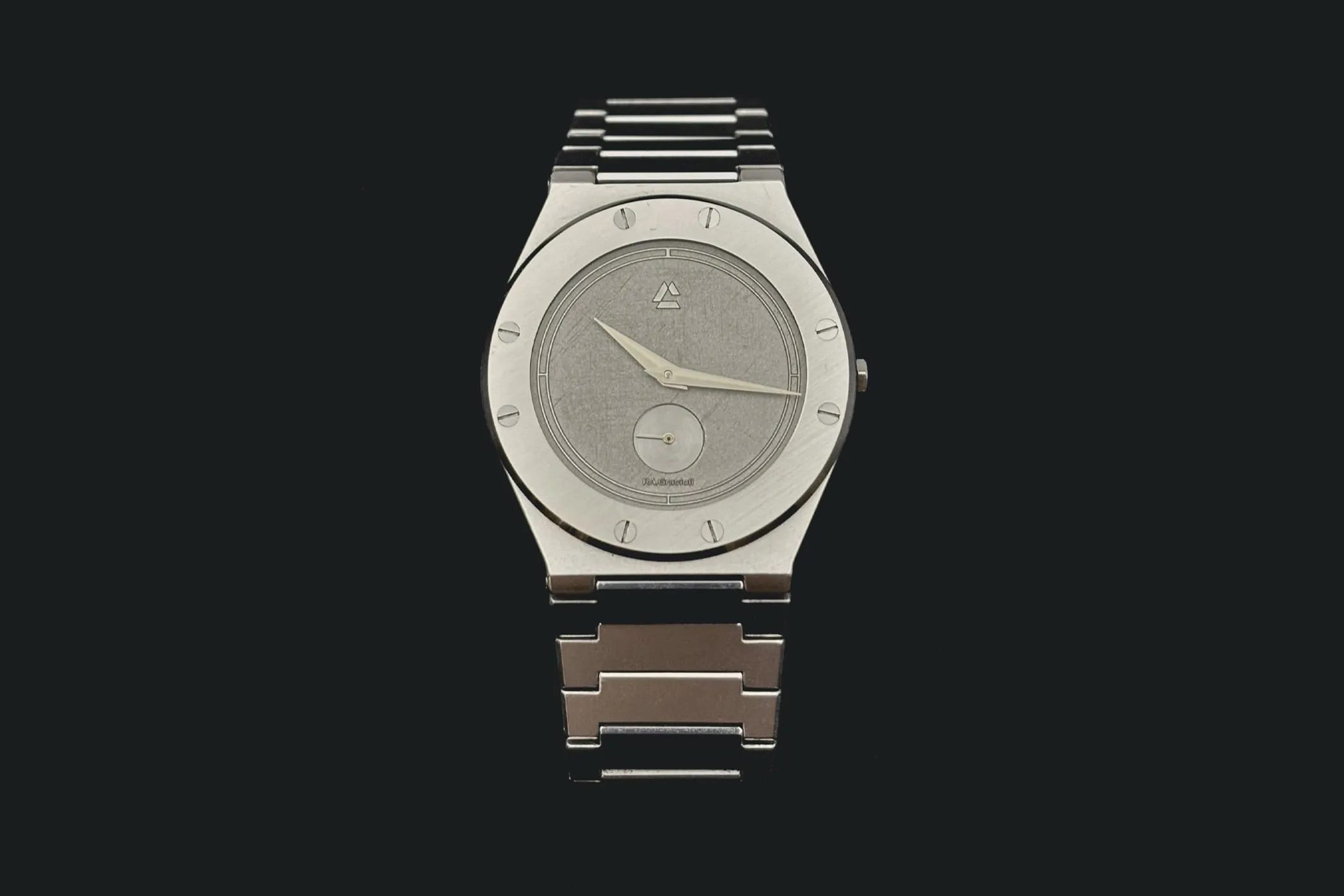
The Ceon GR-01, an Indie Watch Designed and Built in Brazil
Ceon Watch Co.’s GR-01 is a striking expression of independent Brazilian watchmaking. Its six-millimeter steel case, hand-finished integrated bracelet, magnetic clasp and hand-wound Peseux 7001 movement make it as much an exercise in industrial design as a traditional mechanical watch.
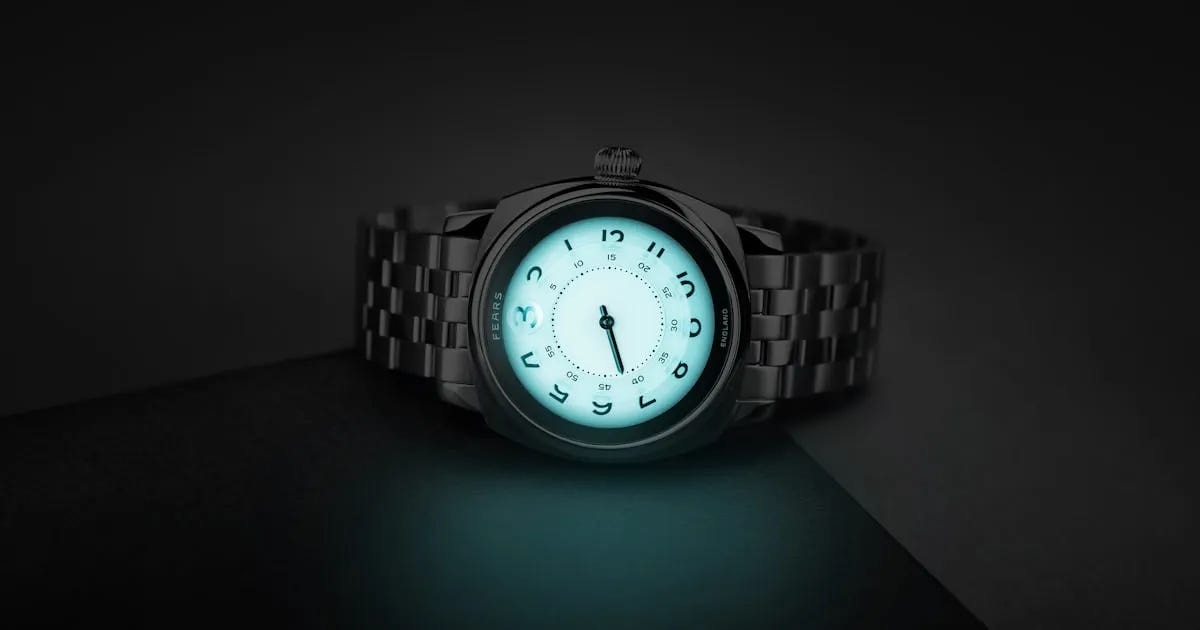
The Fears Brunswick 40.5 Jump Hour ‘Ultimus’
The final Fears and Andrew Morgan Watches Jump Hour collaboration pushes the design in its most graphic direction yet. A luminous black-and-white dial, exposed hour disc and layered ceramic elements give the “Ultimus” a theatrical look that suits the jumping-hour complication perfectly.
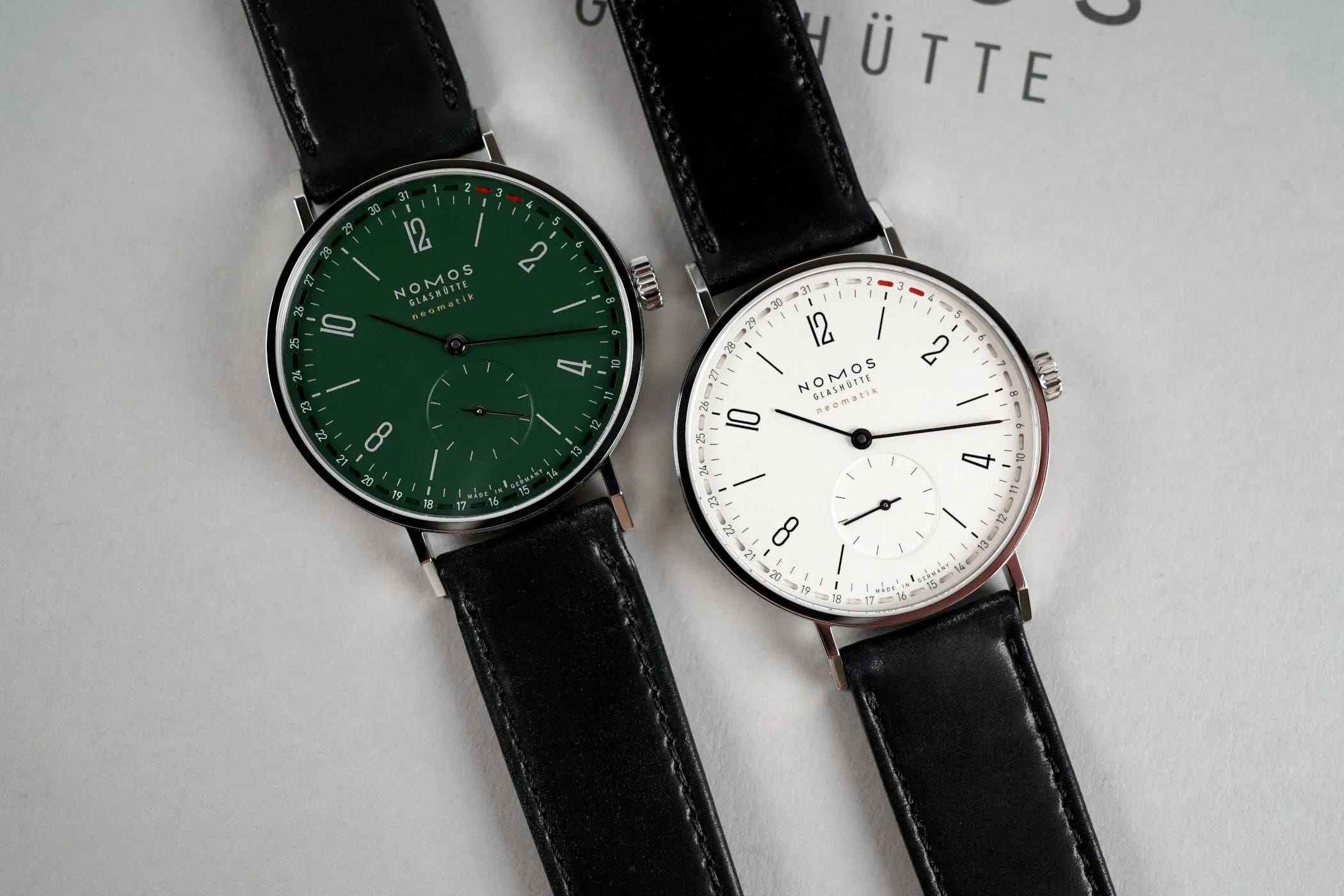
The Nomos Tangente Neomatik 38 Update
Nomos refines one of its most recognizable designs with a 38.5mm case and the brand’s clever peripheral date display. The silver and forest-green versions preserve the Tangente’s calm Bauhaus character while giving the ultra-thin DUW 6101 movement a particularly elegant setting.
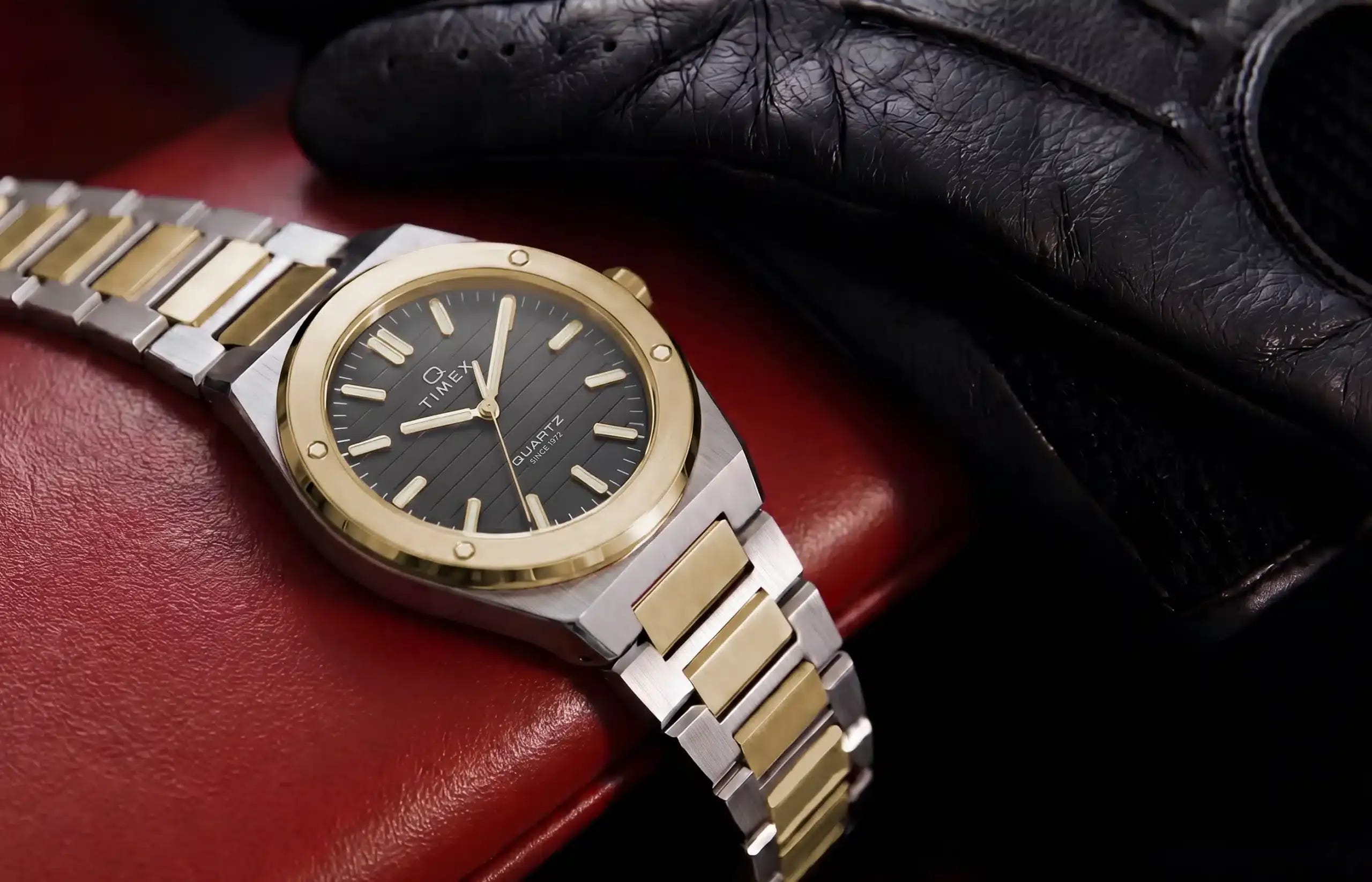
This Affordable Timex Takes on One of the Most Iconic Watch Designs Ever
The Q Timex Marbella borrows freely from the integrated-sports-watch grammar made famous by Gérald Genta’s IWC Ingenieur. At $219, it offers a quartz-powered, accessible way into the look—while also raising the perennial question of where tribute ends and imitation begins.
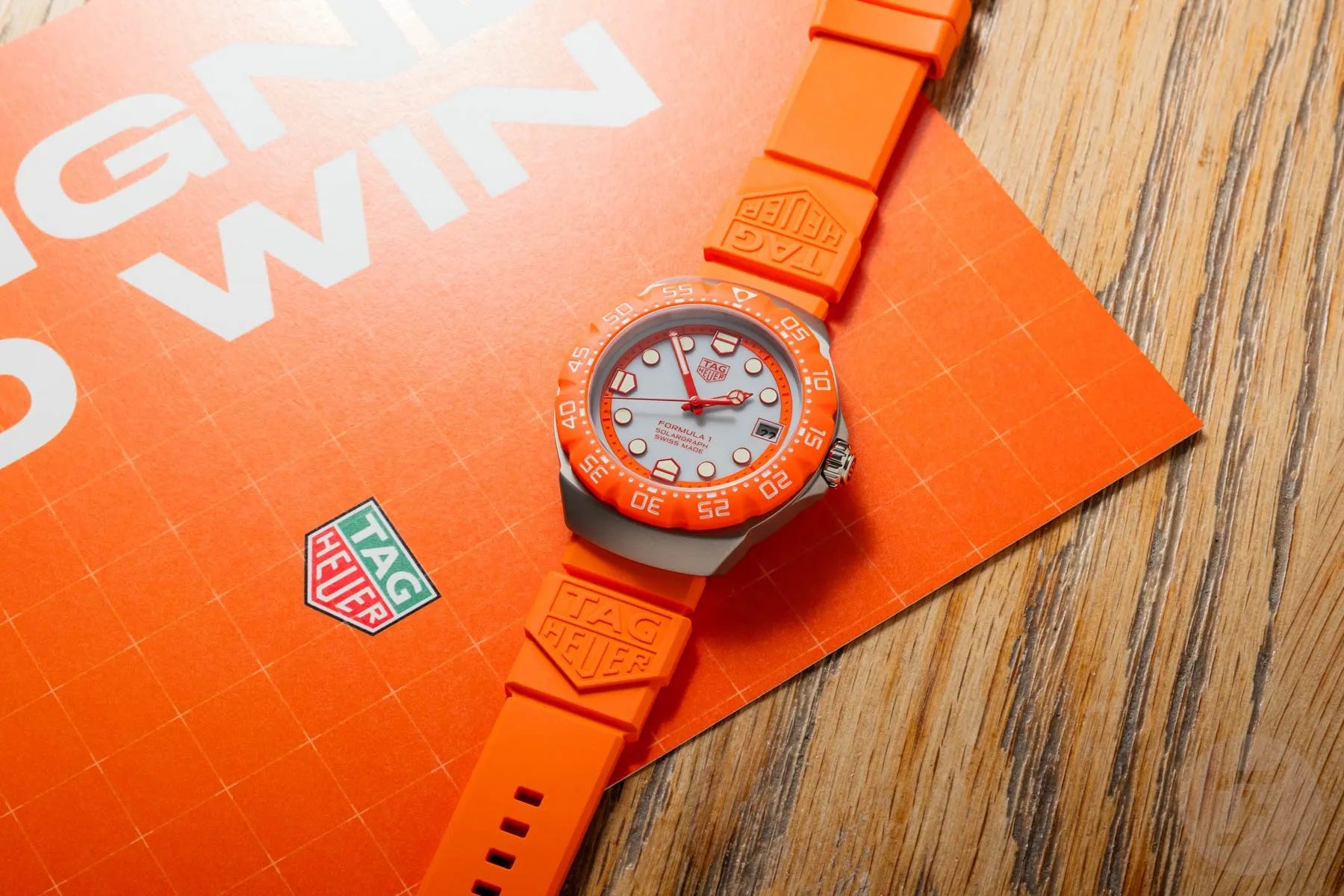
TAG Heuer Formula 1 Solargraph Zandvoort Limited Edition
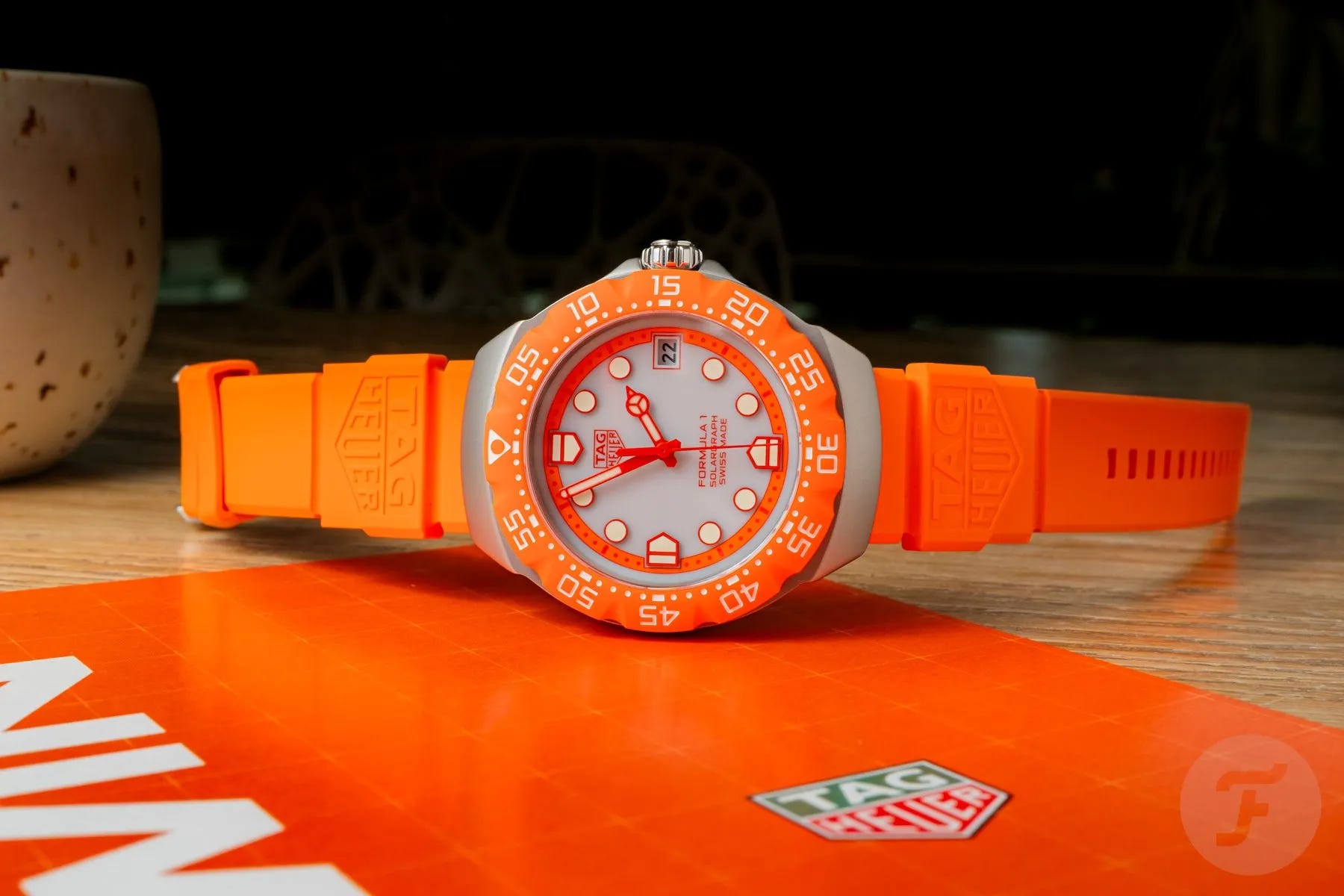
TAG Heuer marks the final Dutch Grand Prix at Zandvoort with a bright orange Formula 1 Solargraph. The solar-powered quartz movement, 38mm case and limited production make this a lively, practical tribute to one of Formula 1’s most passionate modern crowds.
Time Reviewed
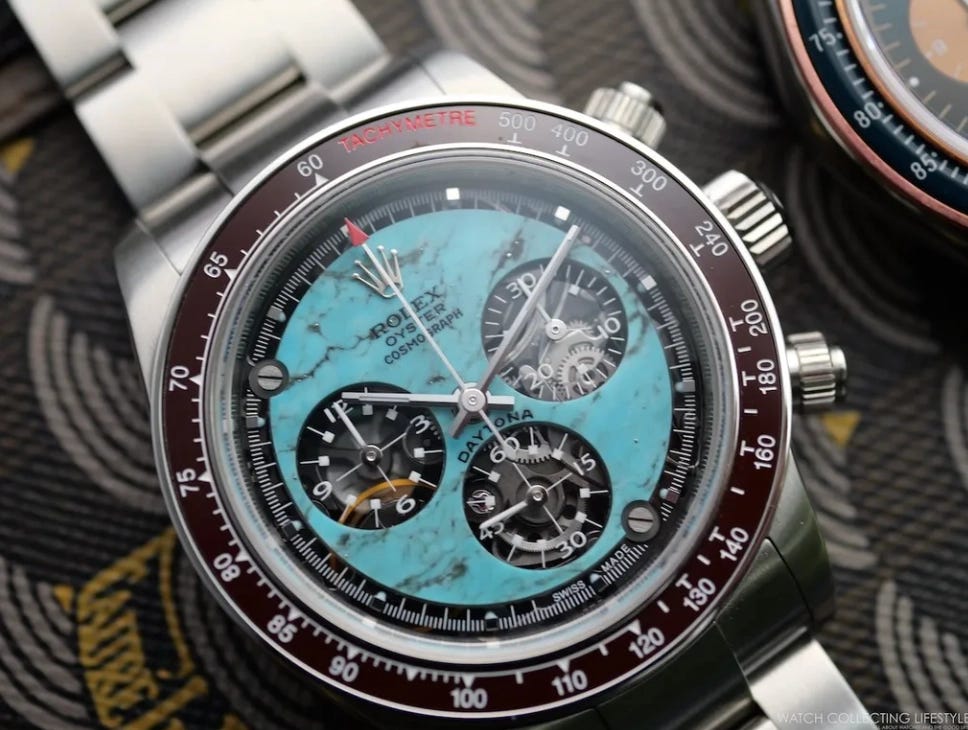
Artisans de Genève Spider Daytona—A Rolex Rebuilt Around Four Kilos of Arizona Turquoise
Artisans de Genève has transformed a Rolex Daytona into a one-off object centered on a wafer-thin slice of Arizona spiderweb turquoise. The result is unapologetically extravagant, but the sapphire-backed stone dial and skeletonized calibre create a compelling conversation between natural material and mechanical architecture.
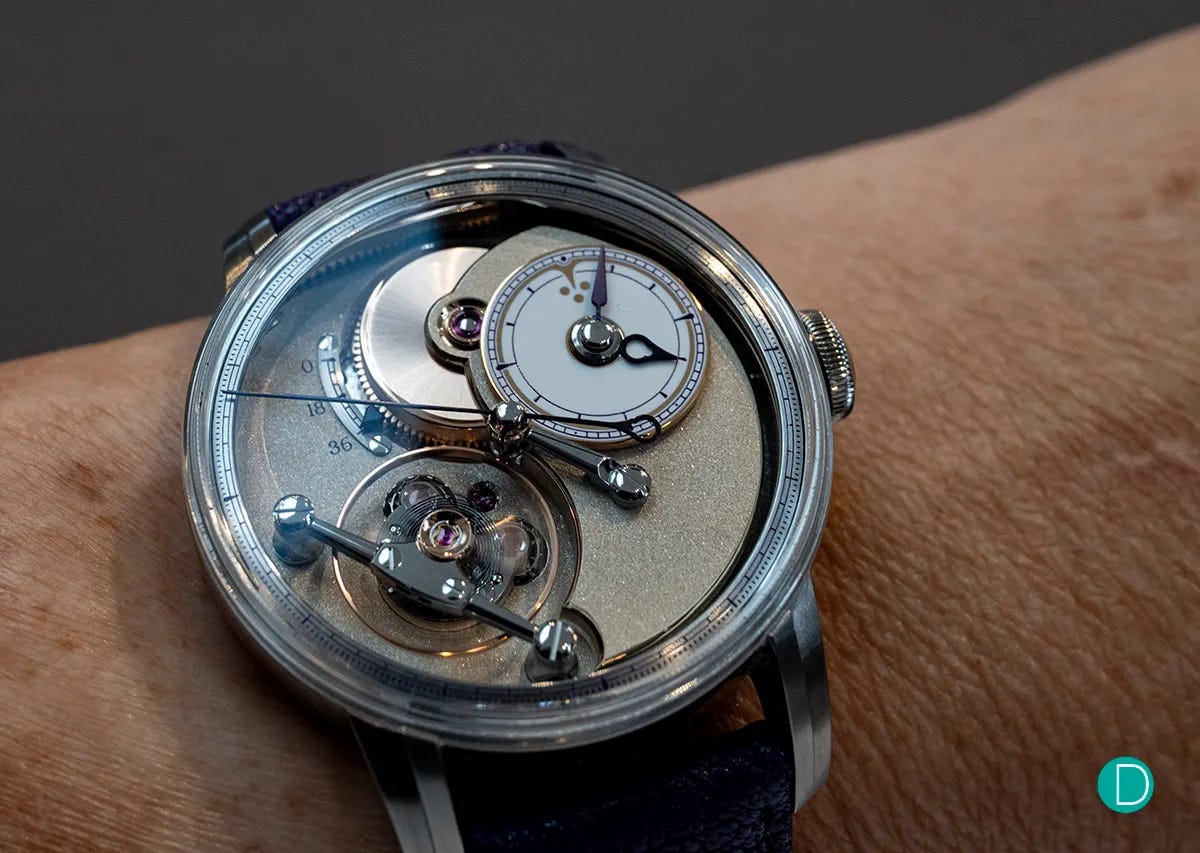
Cleguer Horology Inspiration One, a Technical Masterpiece
After nine years of development, Mathieu Cleguer’s Inspiration One introduces a self-starting dual-wheel natural escapement with exceptional finishing to match. It is a bold attempt to solve one of watchmaking’s classic technical puzzles, and a serious contender in the current wave of high-end independent horology.
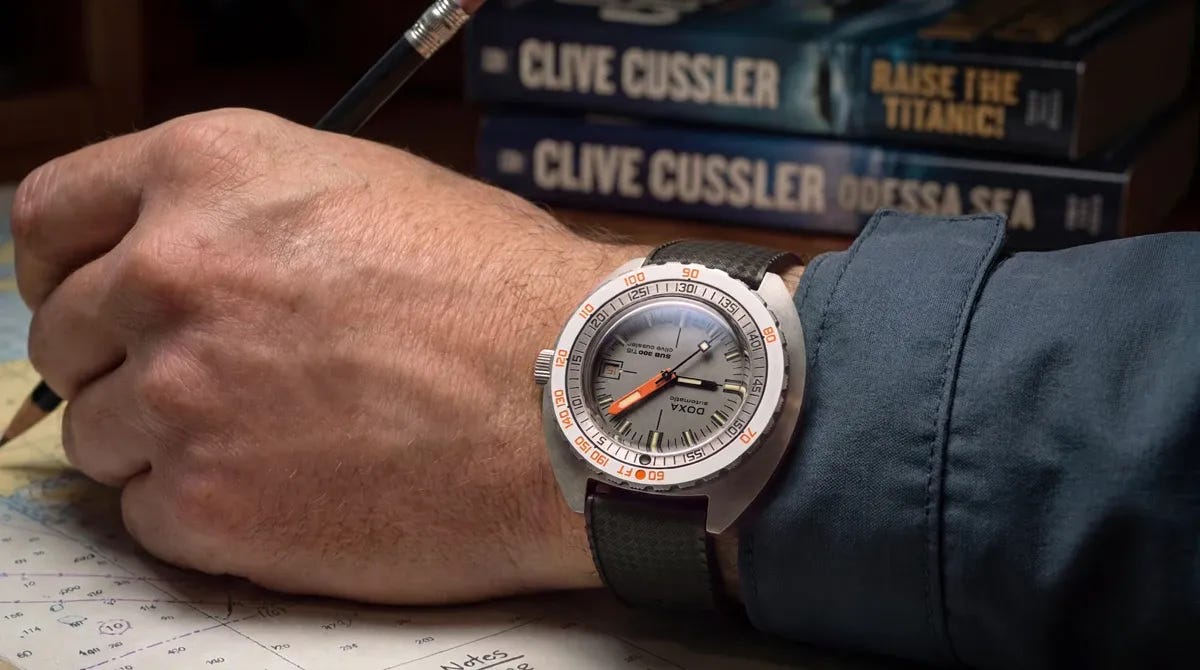
DOXA SUB 300 Ti5 Clive Cussler
DOXA honors the writer who helped turn its orange-dialled diver into an icon. Limited to 300 pieces, the titanium SUB 300 Ti5 Clive Cussler pairs the familiar silhouette with a modern sandwich dial and a contribution to maritime preservation.
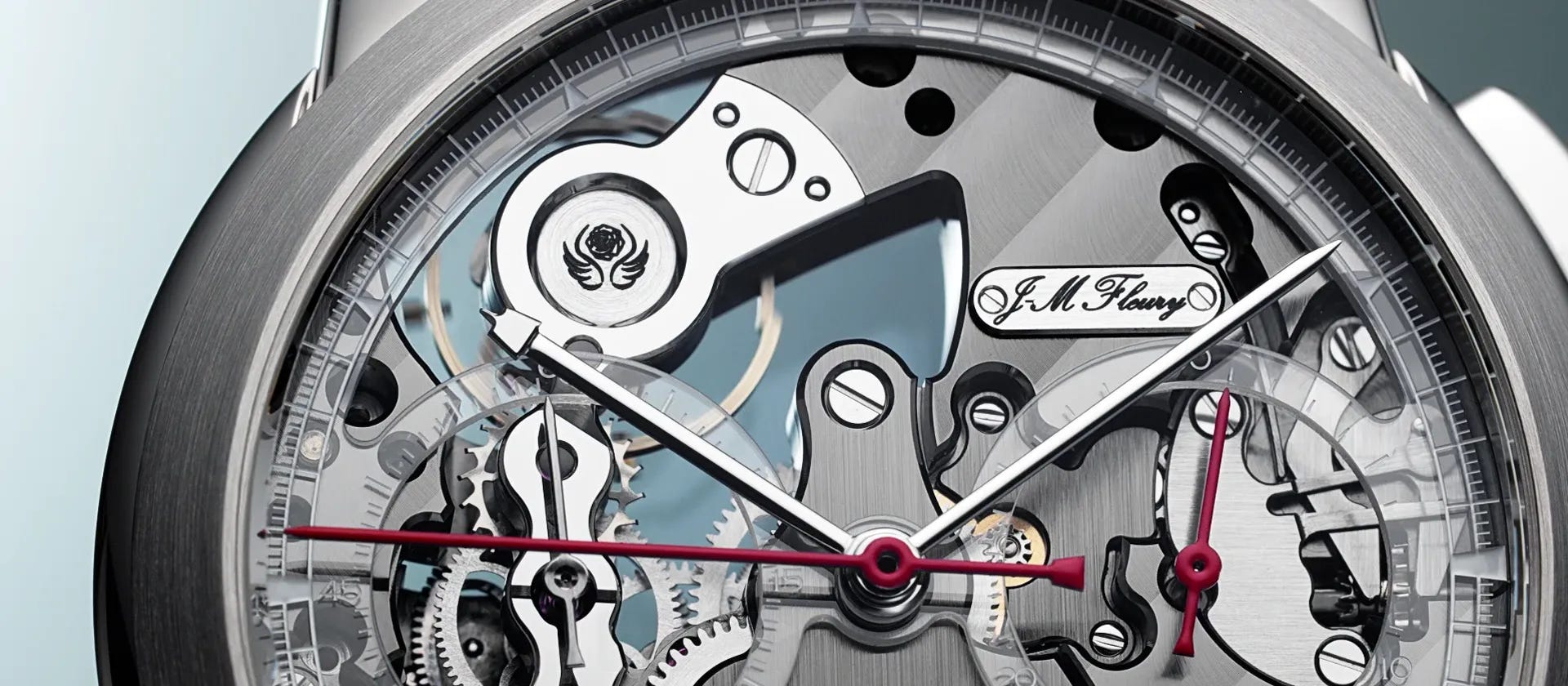
Fleury Manufacture FXR-4 Openwork
Fleury Manufacture’s openworked chronograph takes the Lemania 2310 in an ambitious new direction. The enlarged, re-engineered movement gains a 60-hour power reserve while preserving the visual pleasure of a column wheel and horizontal clutch beneath its skeletal sapphire dial.
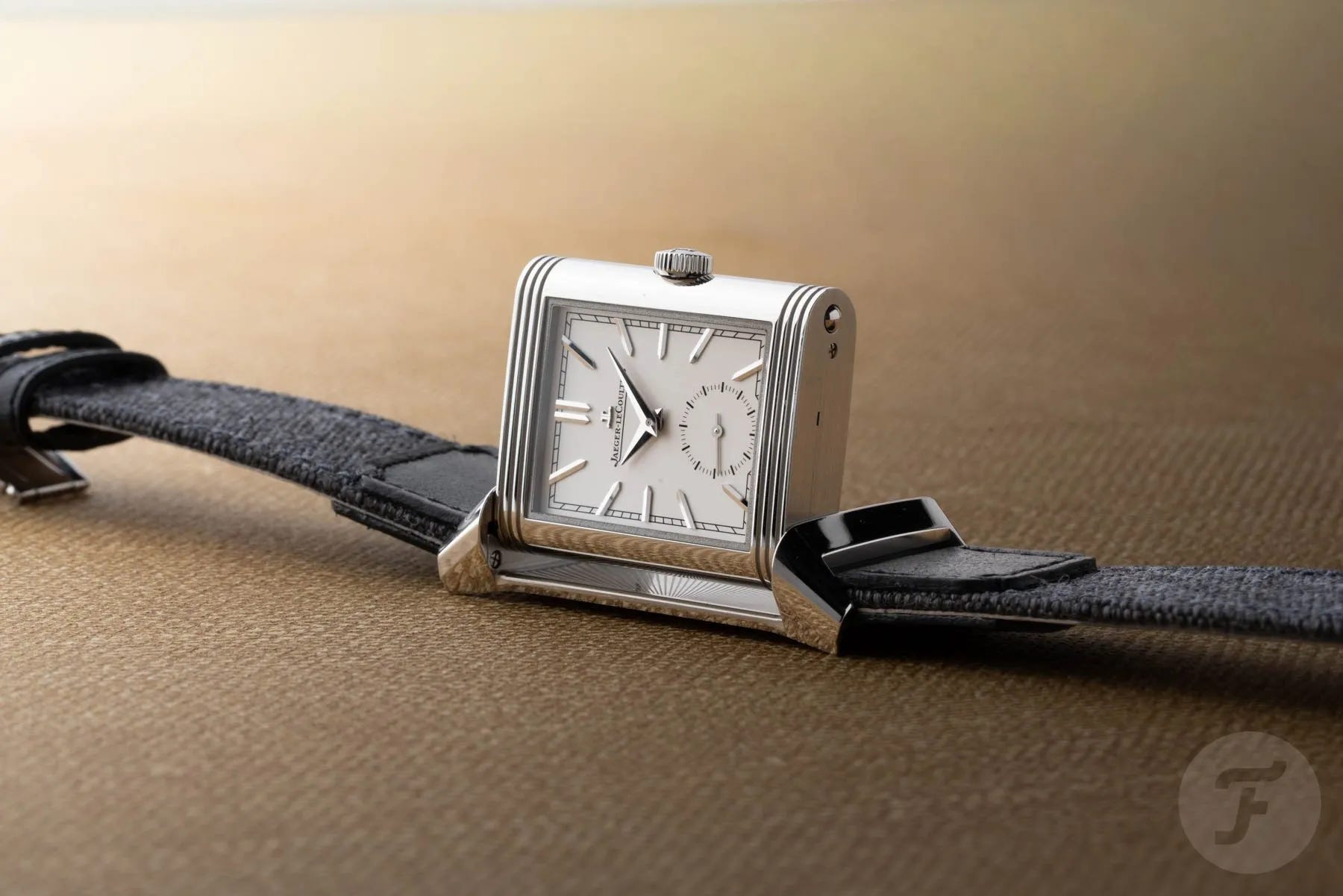
The Best Entry-Level Jaeger-LeCoultre Reverso Is the Downsized Tribute Duoface Small Seconds
The compact Reverso Tribute Duoface Small Seconds gives one of watchmaking’s great designs a more broadly wearable footprint. Its reversible case, two distinct dials and practical second-time-zone display make it a convincing entry point into Jaeger-LeCoultre’s most enduring collection.
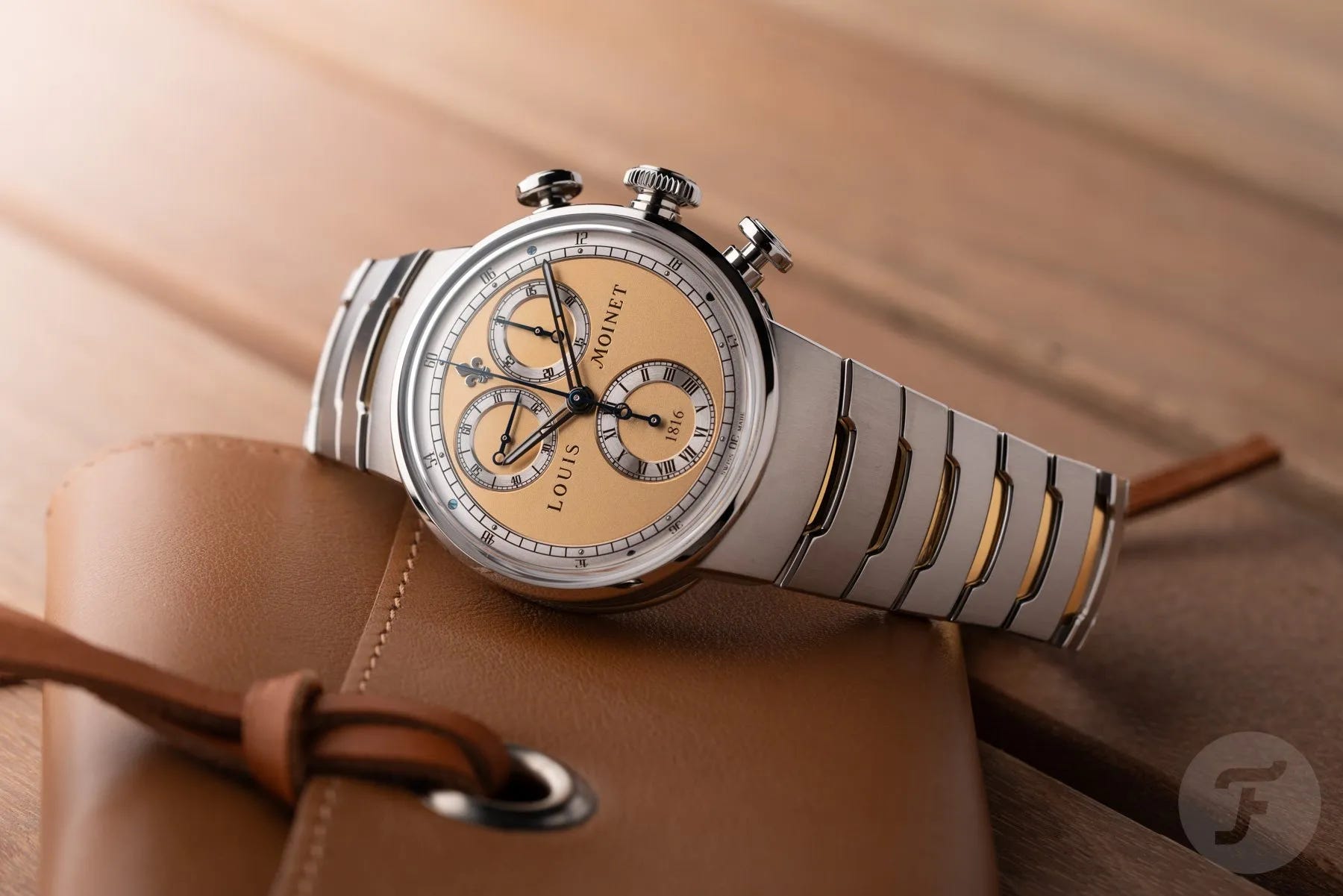
Uncorking the Louis Moinet 1816 Chronograph Champagne
Louis Moinet’s 1816 Chronograph Champagne pairs a nuanced, layered champagne dial with a traditionally satisfying hand-wound column-wheel chronograph. More than a commemorative edition, it is a thoughtful continuation of the brand’s connection to the earliest history of the chronograph.
Events Time

Time to Drive Is About to Change the Watch Event as We Know It
Miami’s inaugural Time to Drive Car & Watch Festival aims to bring together the communities that already share an obsession with engineering, design and collecting. With track activity, major watch brands, vintage cars and a strong roster of speakers, it could become one of the more interesting new additions to the American watch-event calendar.
Podcast Time
Scottish Watches Podcast #804: Artistically Bringing a Smile to the Dial
Chris Alexander, better known as The Dial Artist, discusses the intense craft behind his Christopher Ward Xander collaboration, including the hand-painting of roughly 1,300 components in just 50 days. It is an engaging look at the work, experimentation and endurance behind contemporary dial artistry.
Listen Now: Scottish Watches Podcast #804
Watching Time
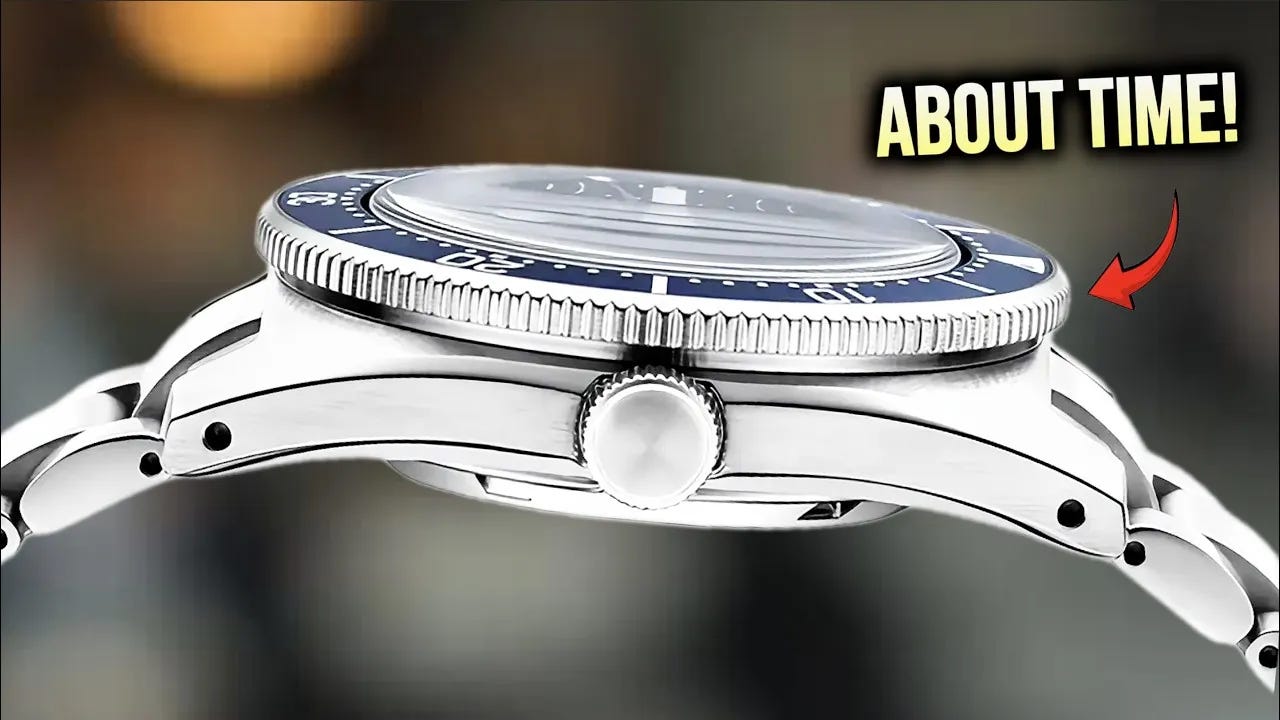
10 Watches That Are Changing the Game!
ONE Watches rounds up ten models that aim to move the category forward through fresh materials, unusual design and new technical thinking. It is a useful survey of where modern watchmaking is trying to find its next breakthrough.
Watch Now: 10 Watches That Are Changing the Game!
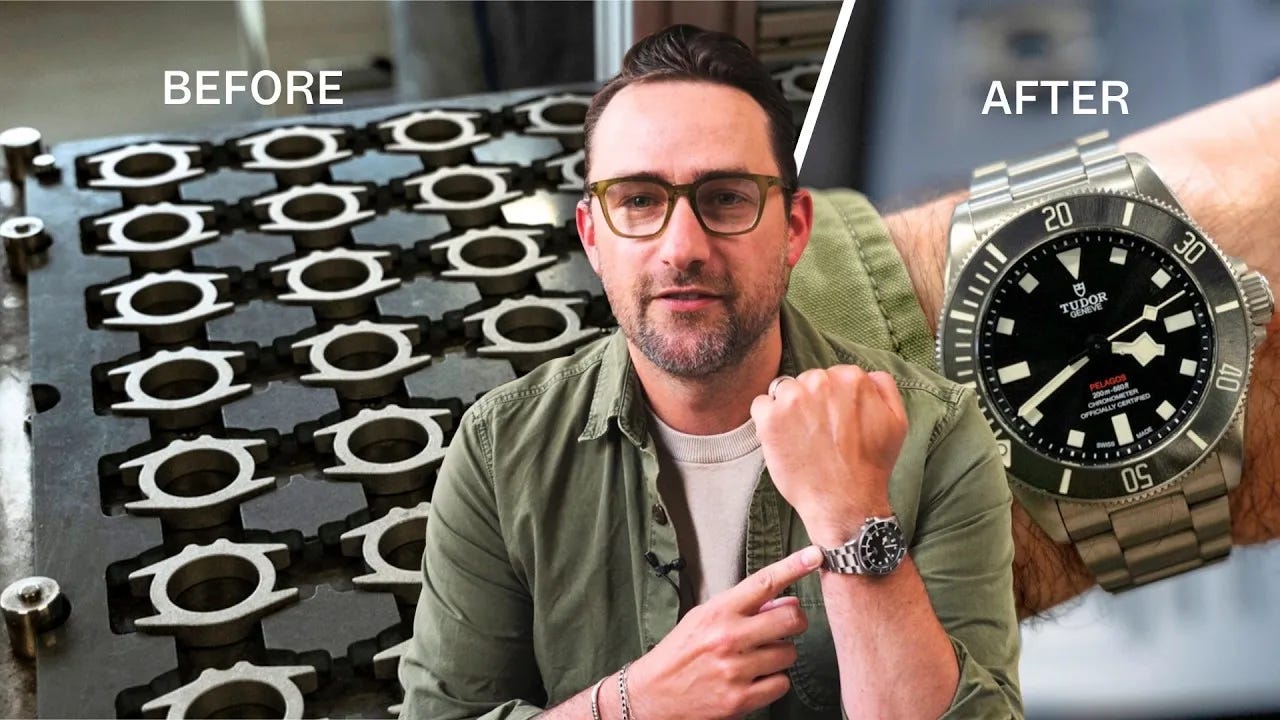
From Raw Metal to Tudor Watch: See How It’s Made
Hodinkee follows the path from raw material to finished Tudor, revealing the blend of automated precision and human finishing that goes into a modern Swiss production watch. For anyone who wants to understand the physical work behind the familiar shield, this is a satisfying behind-the-scenes view.
Watch Now: From Raw Metal to Tudor Watch: See How It’s Made
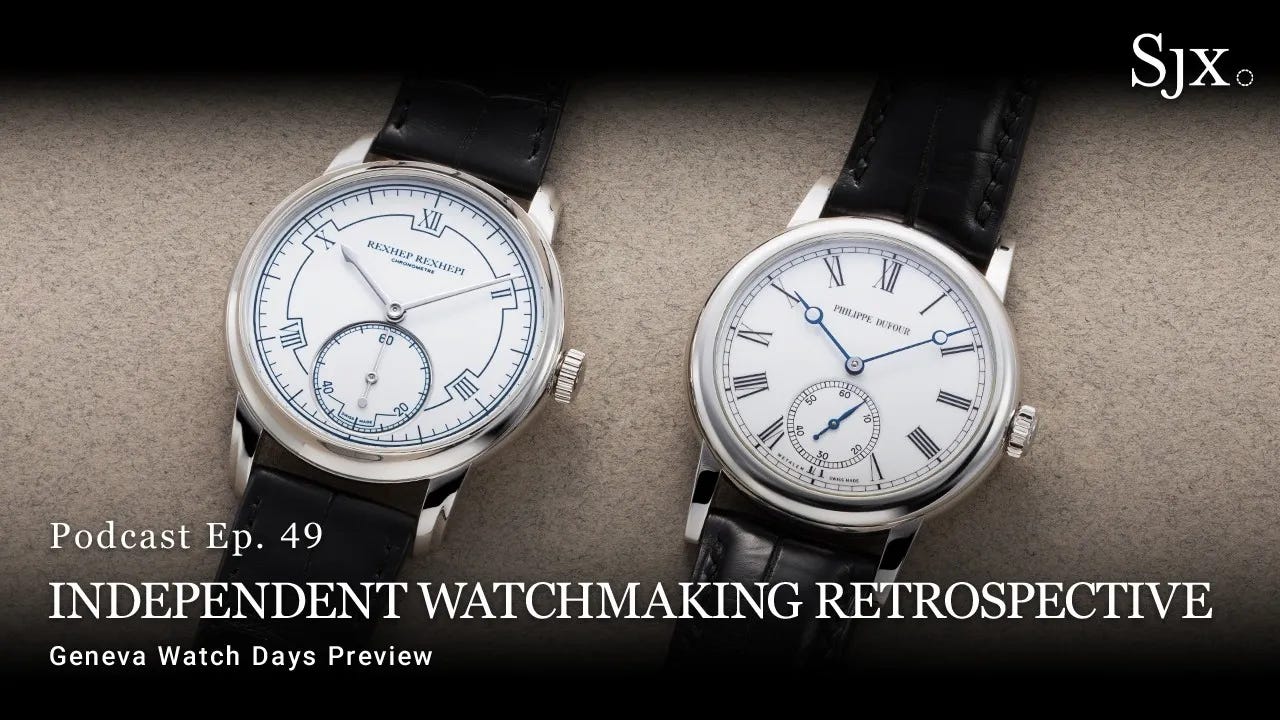
SJX Podcast: Independent Watchmaking Retrospective
SJX looks back at the evolution of independent watchmaking and the people who made it one of the most dynamic corners of modern horology. It is especially well timed alongside today’s feature on the makers reshaping the collector landscape.
Watch Now: SJX Podcast: Independent Watchmaking Retrospective

The Quiet Luxury Trend Is the Last Trend That Needs to Stop
ConstanTime takes aim at the idea that a logo-free aesthetic automatically makes a watch more meaningful. The video offers a spirited argument for separating genuine restraint from status signaling disguised as good taste.
Watch Now: The Quiet Luxury Trend Is the Last Trend That Needs to Stop
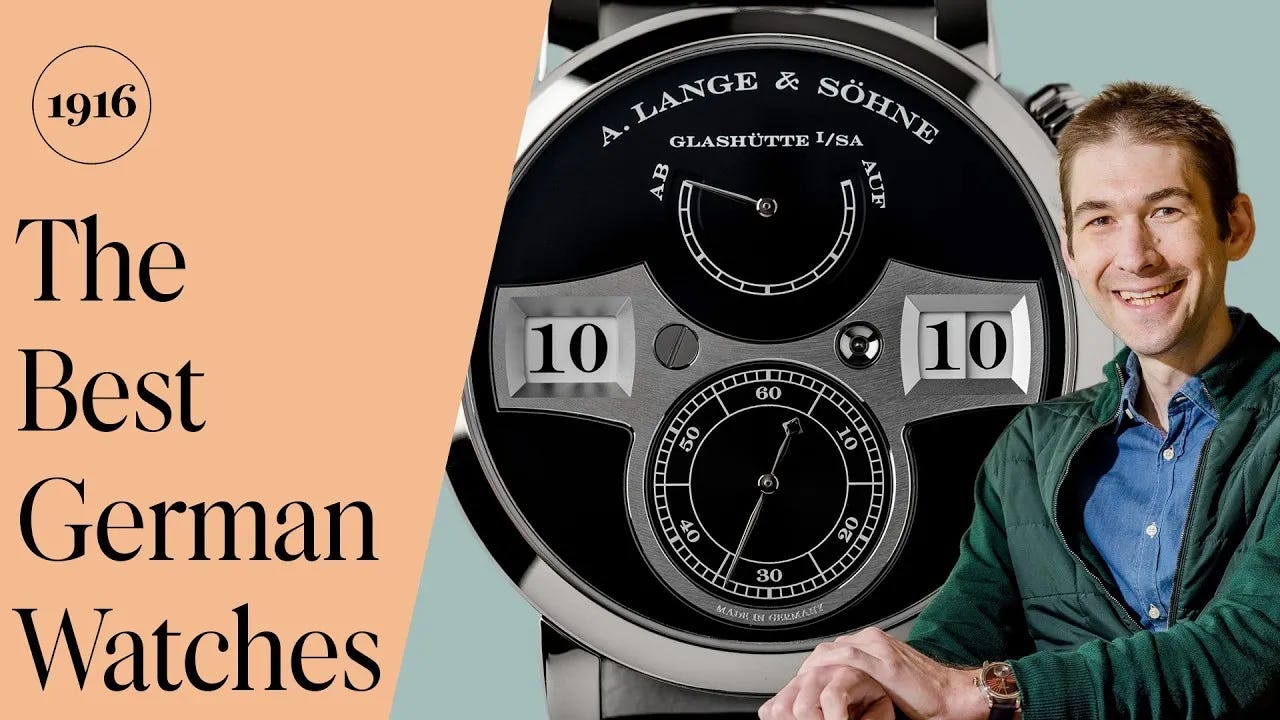
Tim Mosso Picks the Best German Watches
Tim Mosso surveys German watchmaking’s strengths, from purposeful engineering to disciplined design and high-end finishing. It is a handy starting point for collectors looking beyond the usual Swiss names.
Watch Now: Tim Mosso Picks the Best German Watches
What Happened to Rolex?
Britt Pearce examines the current conversation around Rolex, changing consumer expectations and the pressures facing even the world’s best-known watch brand. Whether one agrees with every conclusion or not, it is a useful prompt to think beyond resale prices and hype.
Watch Now: What Happened to Rolex?
BuyingTime at Auction
Yesterday’s Arnold & Son Chronometry Ultrathin Tourbillon in platinum, with its green cosmic-grené dial and mother-of-pearl display, was bid to $41,500 but did not meet reserve. It is a result that speaks to the difficult market for high-concept precious-metal tourbillons from smaller prestige brands: collectors admire the mechanics and finishing, but demand is thin when the name does not carry the immediate recognition of the biggest maisons. Arnold & Son remains an unusually inventive brand with a deep chronometry narrative, and the bidding shows there is real interest; it also shows that rarity and a platinum case alone do not establish a liquid market.
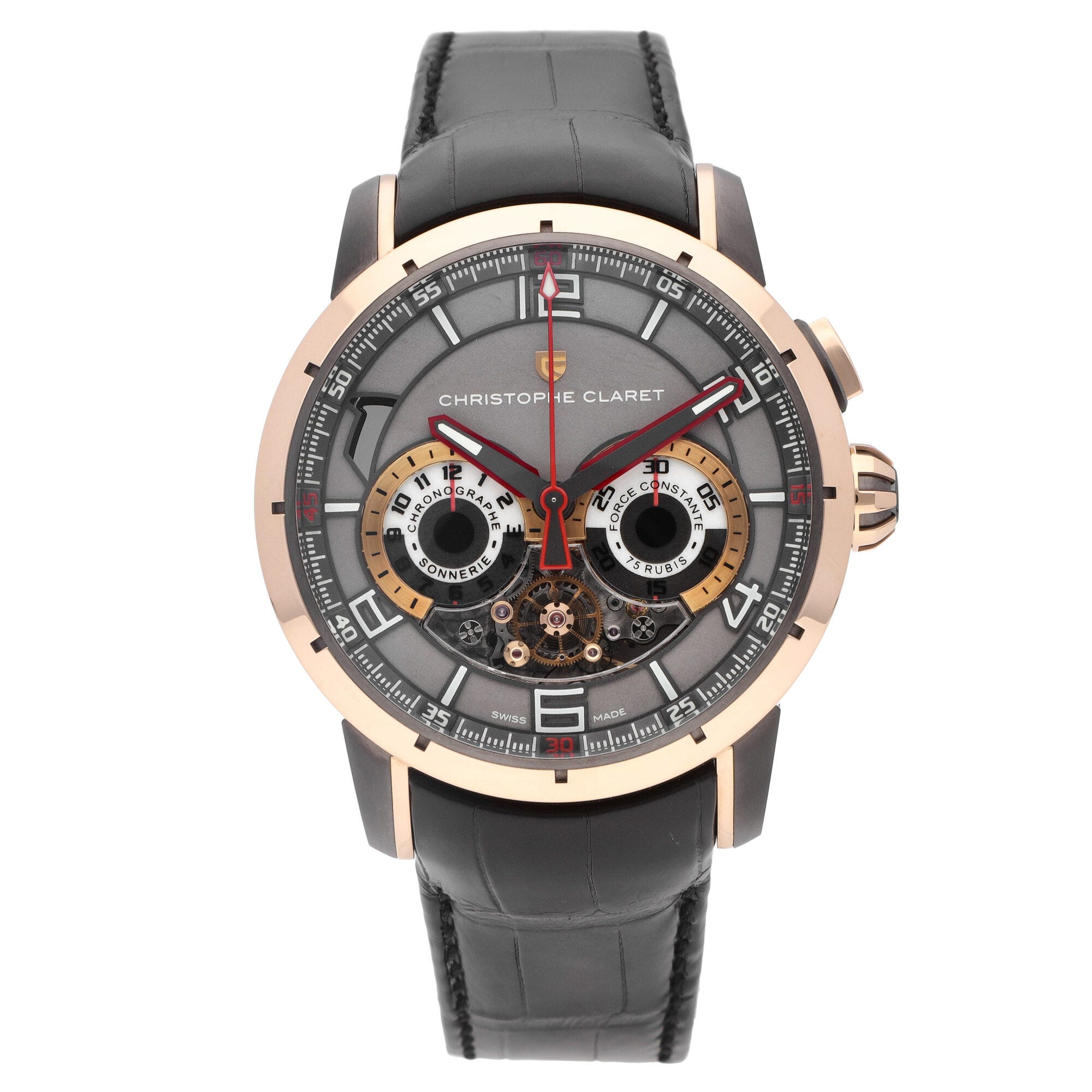
The Christophe Claret Kantharos: A Rare Chance to Buy a Chiming Chronograph for Less Than Its Story Deserves
Today’s Christophe Claret Kantharos is even more unusual. Introduced in 2013, the 45mm rose-gold and titanium monopusher chronograph is powered by Claret’s self-winding MBA13 calibre, a 558-component movement with 75 jewels, a constant-force mechanism and a 48-hour power reserve. Its defining trick is also a genuinely useful piece of mechanical theater: a cathedral gong sounds every time the chronograph is started, stopped or reset. Christophe Claret spent decades making complex movements for other major maisons before putting his own name on the dial, and the Kantharos captures exactly what makes that history meaningful—a technically ambitious, in-house creation that few larger brands would risk producing.
Original pricing for comparable Kantharos models sat well into six figures, while recent dealer offerings for complete examples have clustered around the mid-$40,000s to just under $50,000. This watch’s box, papers and excellent dial, hands and crystal make it a strong candidate for a result in that territory, although the limited pool of buyers for a large, highly technical independent watch could keep the hammer lower. For the collector who values uncommon mechanics over familiar branding, it represents one of the more compelling opportunities in today’s market. The auction closes at 8:10 PM EDT tonight.
Current bid: $7,700
Losing Time


Today’s Big Losers at Auction on Grailzee
The Ulysse Nardin Freak market delivered two fairly emphatic “thanks, but no thanks” moments.
The 2019 Freak Cruiser (left) was offered at $43,500 but topped out at $23,000—a $20,500 shortfall, or 47.1% below ask. Nearly half off, which is less a negotiation and more the market gently relocating the decimal point.
The 2026 Freak X Gumball 3000 Edition 2 (right) was even further from home: a $32,000 ask attracted a $14,700 high bid, leaving a $17,300 gap, or 54.1% below ask. The bidder effectively suggested the watch was worth a little under half its proposed price—and then went about their day.
Conclusion: both reserves appear detached from current buyer appetite, with the Gumball edition facing the steeper reality check. Even limited-edition Freaks need pricing that reflects actual demand; rarity alone does not make a reserve persuasive.
Until Tomorrow…
Thank you for spending part of your day with BuyingTime Daily.
The best part of collecting is not keeping pace with every release or every market move. It is learning to recognize the things that reward a second look: a movement with a surprising solution, a dial with a story, a brand taking a chance on an idea that could not have come from anyone else.
Today’s issue is full of those reminders. Whether you are considering a new release, following an auction, or simply enjoying the watch already on your wrist, I hope you find a little time to look more closely.
– Michael Wolf