

Time Graphing today’s watch universe
April 28, 2026 feels like one of those days where the watch world quietly rearranges its pecking order while everyone is still arguing about dial colors. The headline story is hard to ignore: Japanese watchmakers are running laps around their Swiss counterparts in the stock market, with names like Seiko and Citizen delivering eye-watering gains over the past five years while Swatch Group stumbles in the opposite direction. It’s a reminder that selling fewer watches at higher prices may look elegant in a Geneva boardroom, but volume, accessibility, and a broad customer funnel still matter in the real world. Meanwhile, Richemont continues to lean on jewelry to keep the lights on, which tells you everything you need to know about where the pressure points are in Swiss watchmaking right now.
If the public markets are sending one message, the auction world is sending another, and it’s spelled Cartier. A 1987 London Crash just detonated expectations with a $2 million result, confirming that scarcity plus strong design DNA still equals fireworks. Add in supporting cast records from asymmetrics and skeletonized oddities, and you get a market that is less about brand hierarchy and more about finding the rarest, most interesting thing in the room. Even heavy hitters like A. Lange & Söhne and independent legend Daniel Roth showed up strong, reinforcing that top-tier collecting has become a game of precision targeting rather than broad accumulation.
On the new release front, there’s a healthy mix of restraint and experimentation. Bulova leans into its space-age heritage with the Lunar Pilot “Black Hole,” shrinking things down to a more wearable 41mm while doubling down on stealth aesthetics and that signature high-frequency quartz sweep. Cartier, not content with auction dominance, refines the Santos Chronograph into something far more wearable and practical, a move that feels less like reinvention and more like course correction. Venezianico continues its quiet campaign to democratize complications with the Arsenale Calendario, packing a surprising amount of mechanical theater into a slim, accessible package, while Wren proves that even microbrands can deliver serious tool-watch credibility with a titanium diver that doesn’t take itself too seriously.
The feature reads bring a bit more texture to the day, with Fears offering a spring lineup that balances vintage cues with modern mechanics, and a deep dive into an obscure Jaeger-LeCoultre “Baby Midas” reminding collectors that the best finds are often the ones no one is talking about. It’s a subtle but important theme: the market may be chasing trophy pieces, but the real joy is still buried in the margins.
Reviews continue to stretch the spectrum from experimental to indestructible. Dominique Renaud’s Pulse 60 is a mechanical outlier in every sense, slowing time down to a hypnotic 1 Hz just to prove that different can still be compelling. At the other end, G-Shock doubles down on brute functionality with the Mudmaster, a watch that seems less concerned with aesthetics and more with surviving whatever you throw at it. In between, Roger Dubuis, Tudor, and Yema each make their case for why modern watchmaking still has room for personality, whether that comes in the form of retrograde theatrics, anniversary-driven reinvention, or lume that practically glows from orbit.
Comparisons today highlight an increasingly nuanced buyer: one who is weighing finishing against function, heritage against usability. The Monta versus Jack Mason GMT matchup reads like a referendum on value versus refinement, while the platinum face-off between Patek Philippe and Vacheron Constantin quietly underscores how even at the highest level, technical details like power reserve can tip the scales.
Zooming out, Watches & Wonders 2026 continues to echo through everything, with Rolex, Cartier, and Patek Philippe anchoring a show that managed to balance spectacle with substance. The lingering question around “fair pricing” hangs in the air, and the answer, unsurprisingly, is that fairness is increasingly defined by what collectors are willing to accept rather than any objective metric.
On the ground, the Miami Beach Antique Show reinforces the idea that the market is fragmenting into highly specialized niches, where collectors are less interested in checking boxes and more focused on chasing very specific targets. It’s less about owning a “great watch” and more about owning the right watch.
If you need a reality check, the videos today deliver it. There’s plenty of hand-wringing about big brands losing ground to independents, along with the usual Watches & Wonders recaps separating hype from substance. The secondary market gets its own unfiltered spotlight, and even the humble Rolex Daytona gets the “what’s it really like to live with?” treatment after the honeymoon phase fades.
The podcast circuit continues that theme, pulling back the curtain on how the independent scene operates beyond the main stage, reminding everyone that the real action often happens in hotel suites and side events rather than the official halls.
And then there’s the auction desk, where reality bites. Yesterday’s Zenith tourbillon drew solid bidding but failed to meet reserve, a polite way of saying the market knows exactly what it wants—and what it doesn’t. Meanwhile, the Cartier Ballon Bleu “Sea Turtle” inches toward its close, sitting at $26,000 with just enough intrigue to suggest that the final minutes could get interesting. As always, the question isn’t whether it’s good, it’s whether the right buyer decides it’s necessary.
All told, today feels less like a single narrative and more like a series of signals. The public markets favor scale, the auction world rewards rarity, and the enthusiast space continues to fragment into ever more specific tastes. Somewhere in the middle, the industry keeps moving—sometimes forward, sometimes sideways, but never quietly.
-Michael Wolf
News Time
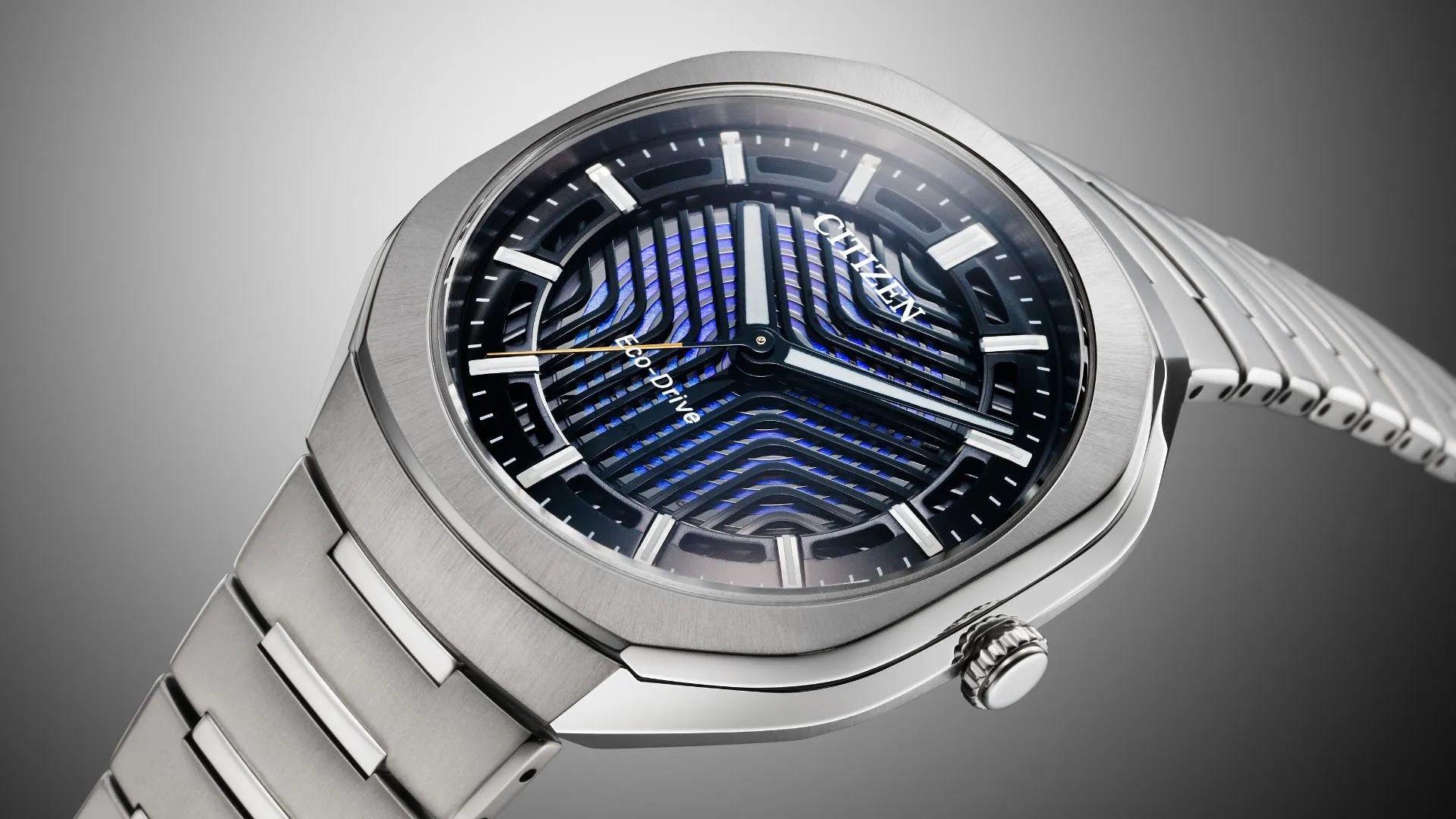
Japanese watchmakers’ shares rise 500% while Swiss rivals have flatlined
Japanese watchmakers have significantly outperformed Swiss rivals over the last five years, with Seiko up 512% and Citizen up 388%, while Swatch has declined 35%. The Swiss industry has increasingly depended on selling fewer watches at higher prices through luxury positioning and direct retail, but overall profitability has weakened—highlighted by Swatch Group’s steep profit drop since 2021. Meanwhile, Japanese brands like Citizen, Seiko, and Casio continue to dominate volume sales with affordable models that appeal broadly and help move buyers up into higher-priced lines. Even where Swiss groups like Richemont have been buoyed by jewelry performance, many Swiss watch retail operations face margin pressure and losses.

Cartier London Crash sells for world record $2 million
A rare 1987 Cartier London Crash sold at Sotheby’s Hong Kong for $1.99 million, massively exceeding its pre-sale estimate and setting a world record for the model. One of only three made that year, it drew intense bidding and ultimately went to a Japanese collector, underscoring the strength of demand for scarce vintage Cartier. The same auction produced multiple additional record results, including a Cartier London Asymmetric at $850,000 and a 1973 Cartier Paris oval-form skeletonized wristwatch at $948,000. Other standout sales—such as a Lange Tourbillon Pour le Mérite at $1.32 million and a Daniel Roth Tourbillon Skeleton at $866,000—reinforced the market’s appetite for exceptional, low-supply vintage pieces.
Feature Time
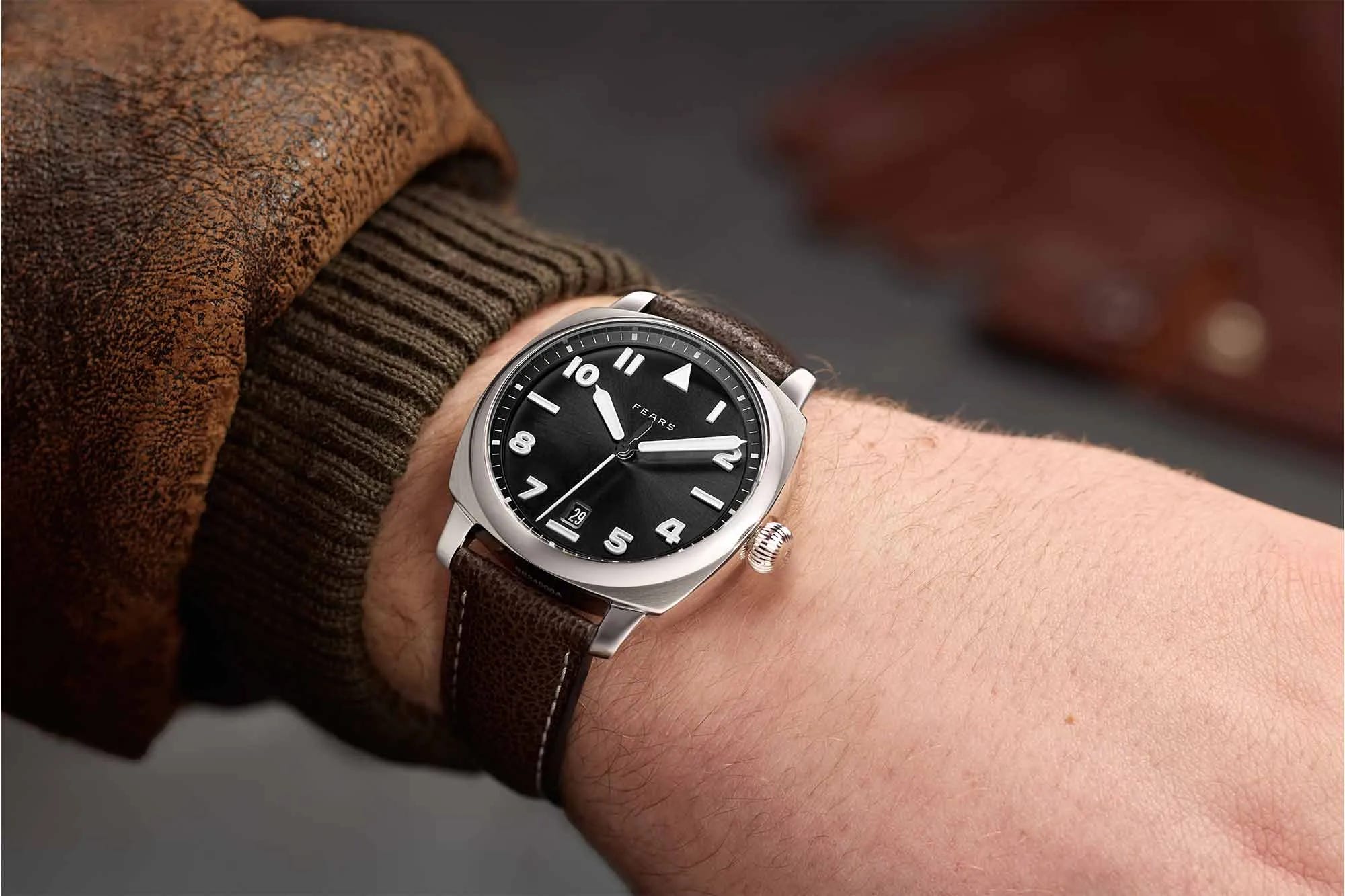
The New Spring Novelties from Fears
Fears’ spring releases combine vintage cues with modern mechanics across three distinct watches. The Filton pilot-style model updates the Brunswick 40 line with a date window, brighter dial options, and a La Joux‑Perret G100 movement on a buffalo leather strap. The Redcliff 39.5 Pastel Collection leans into seasonal color with three lacquer pastel dials, a La Joux‑Perret G101 caliber, and easy strap-swapping for versatility. Rounding out the lineup, the Brunswick 40.5 Jump Hour “China Blue” adds a minimalist jump-hour display via a Christopher Ward module, paired with an eye-catching blue disc and multiple strap/bracelet options.
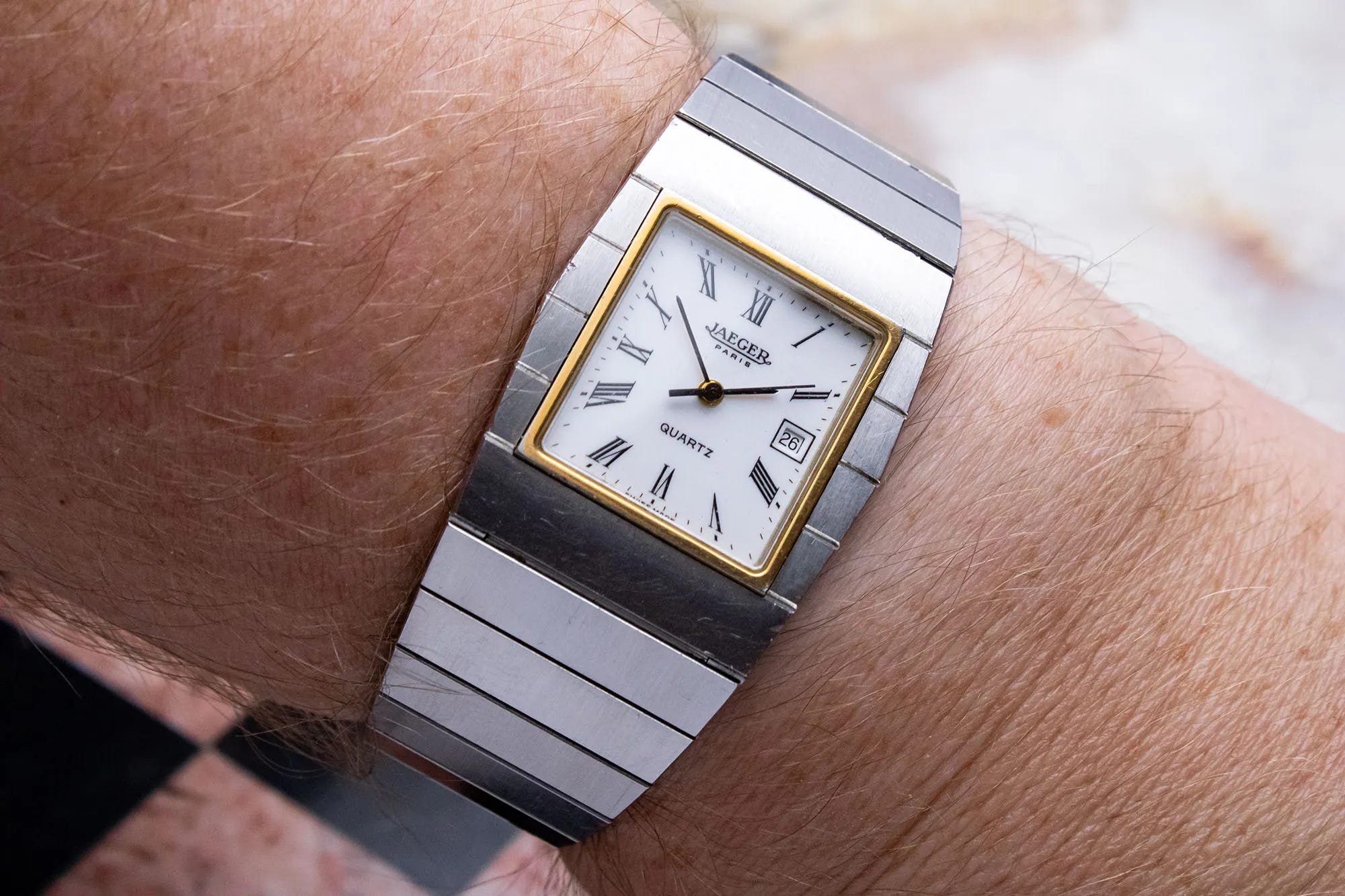
Diving Into The Unknown With The 1981 Jaeger-LeCoultre 114.100.54 ‘Baby Midas’ Watch
This feature spotlights an obscure early-1980s Jaeger‑LeCoultre “Baby Midas” (ref. 114.100.54), produced in small numbers through the Jaeger Paris branch in collaboration with Cyma. The watch stands out for its ultra-slim integrated-bracelet design, hexagonal case architecture, and distinctive gold-plated bezel, giving it a sharply modernist look for the era. Inside is a quartz ETA movement that reflects the post-crisis embrace of quartz technology, while the dial keeps classic touches like Roman numerals and a date window. The story frames the model as a reminder that lesser-known references can be some of the most rewarding finds in vintage collecting.
The Latest Time
Bulova
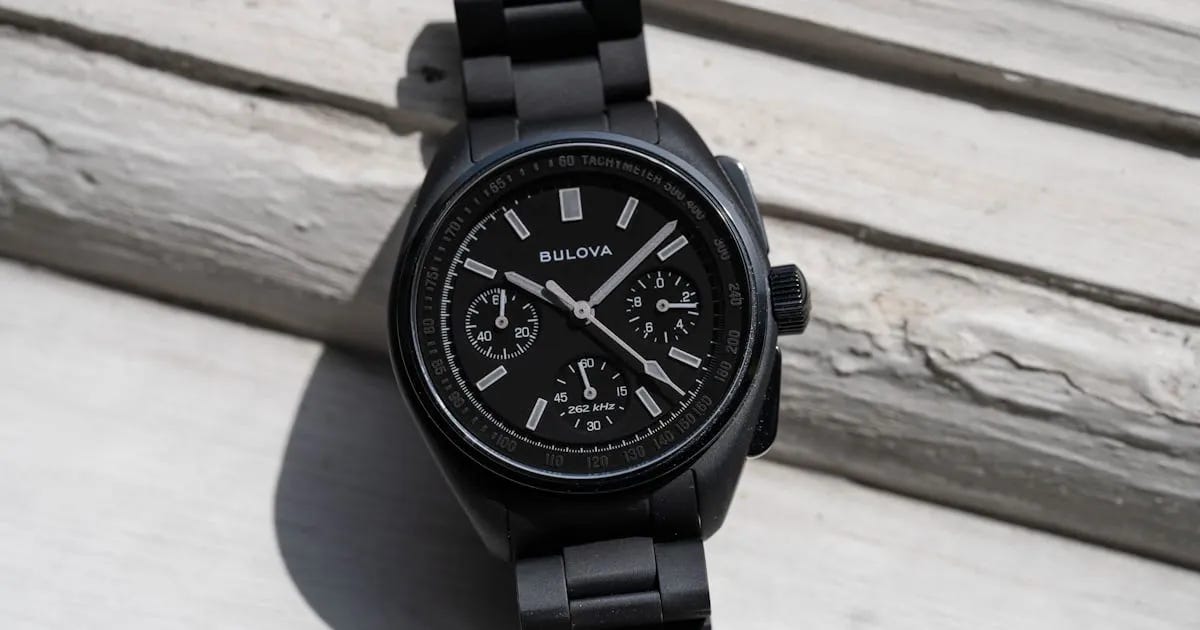
Introducing: The Bulova Lunar Pilot Black Hole [Live Pics]
Bulova’s Lunar Pilot Black Hole is a limited-edition take on the brand’s space-linked chronograph, now in a more compact 41mm case with a matte black PVD-coated case and bracelet. It features an ultra-dark Musou black dial, plus grey Super-LumiNova on the indices and hands for strong nighttime visibility. Inside is Bulova’s high-frequency NP20 quartz movement (262 kHz), enabling a smooth-sweeping chronograph hand and a 1/20th-of-a-second sub-dial. Priced at $1,650 and limited to 6,000 pieces, it’s positioned as a more wearable, modernized version of the Lunar Pilot while keeping 100m water resistance.
Cartier
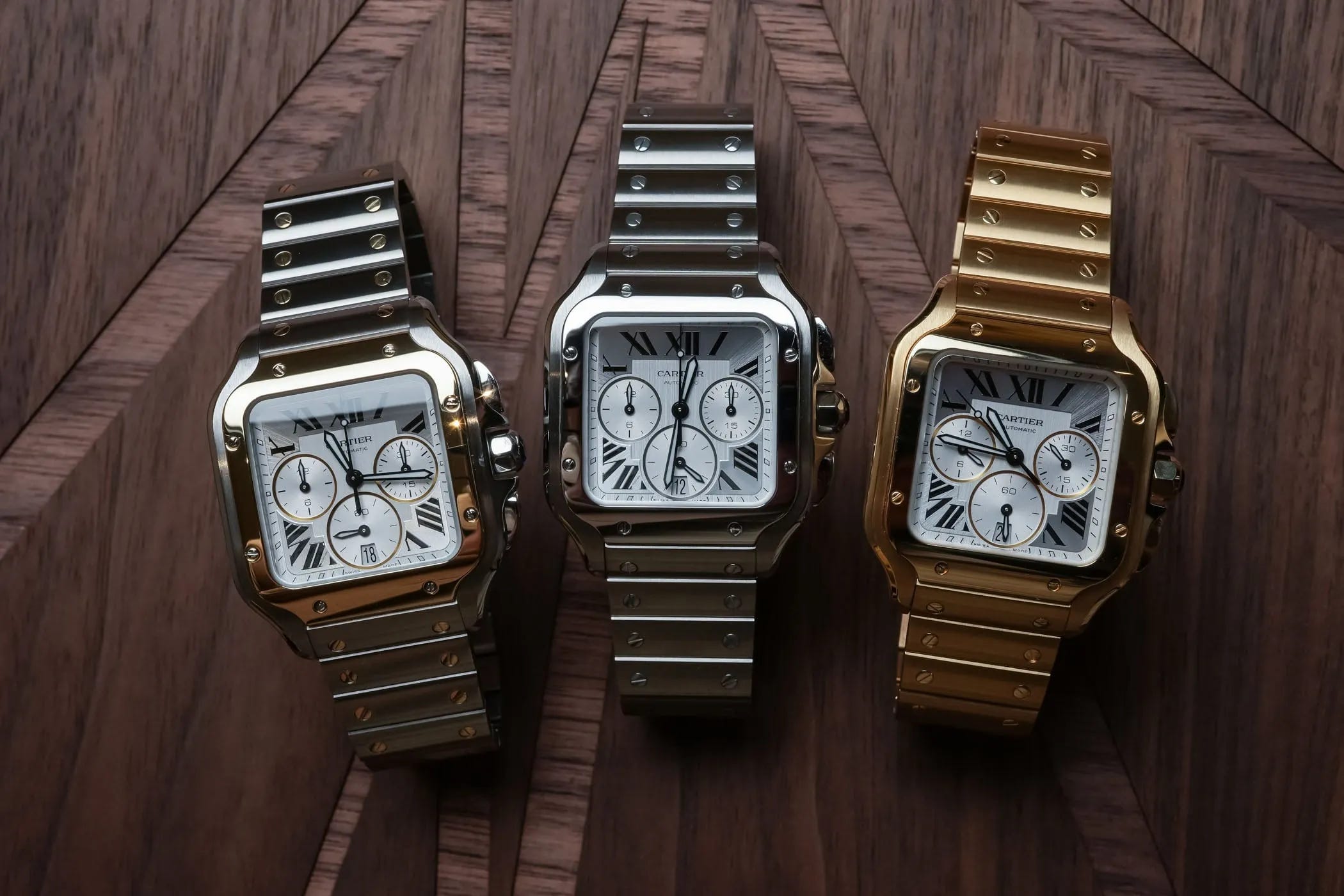
The New, Smaller Generation of Santos de Cartier Chronograph
Cartier’s 2026 Santos de Cartier Chronograph is redesigned around a more wearable LM-size case (39.8mm wide, 47.5mm lug-to-lug, 11.6mm thick) and returns to a conventional two-pusher layout. It keeps the automatic Calibre 1904-CH MC movement with a 47-hour power reserve, adds modern convenience through SmartLink bracelet sizing and QuickSwitch strap changes, and maintains 100m water resistance. The dial is refreshed with a rebalanced three-counter layout and contrasting sub-dial rings (rhodium or yellow gold depending on the version). Pricing starts at ~$14,076 (steel), ~$17,595 (steel & gold), and ~$70,380 (full 18k yellow gold), converted from €12,000 / €15,000 / €60,000 at ~1 EUR = $1.173.
Venezianico
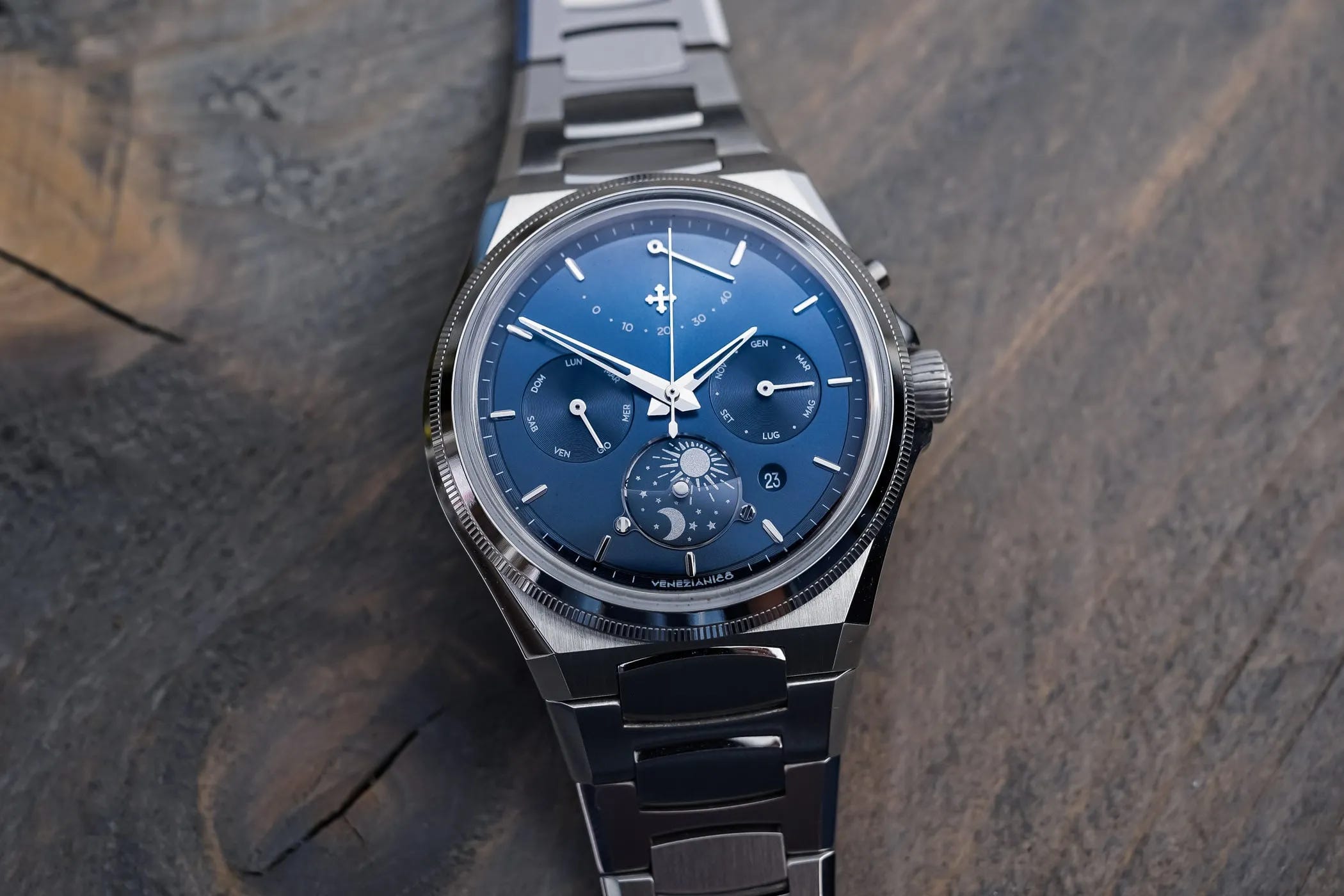
The new Venezianico Arsenale Calendario, An Accessible Take on the Integrated Bracelet Watch
The Venezianico Arsenale Calendario is an integrated-bracelet watch that packs a full calendar, power-reserve display, and a day/night indicator into a slim 40mm steel case (9.6mm thick). Design touches like a textured bezel and a sapphire-capped day/night disc add depth, while blue or burgundy sunburst dial options keep it visually bold but wearable. It runs on the Miyota 9100 automatic movement at 4 Hz with a 42-hour power reserve and is rated to 50m water resistance. The watch is priced at ~$1,408 (converted from €1,200 at ~1 EUR = $1.173), aiming to deliver complication and integrated-bracelet style at a comparatively accessible level.
Wren
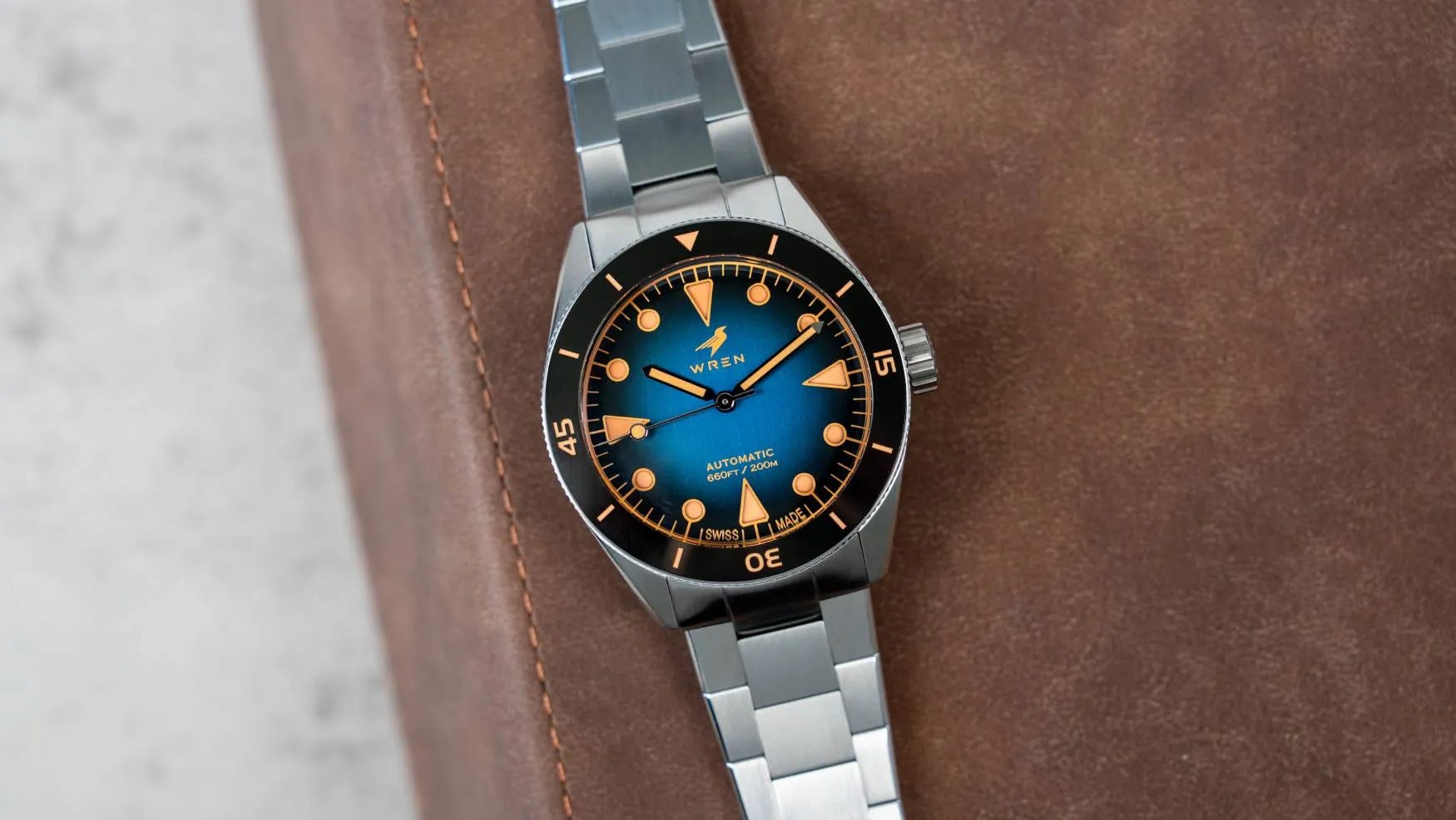
Wren Diver One Titanium Dusk
Wren’s Diver One Titanium Dusk adds a sunset-inspired gradient dial (blue to black) with orange lume accents to the brand’s lightweight diver lineup. The Grade 5 titanium construction trims thickness versus the steel version while keeping a 41mm diameter and a sleek, wearable profile, backed by a sapphire crystal and ceramic bezel insert. Powered by an ETA 2824 automatic movement with 38 hours of power reserve, it’s built for real use with 200m water resistance. The first batch is limited to 50 pieces and priced at $1,395, with bracelet or rubber-strap options designed for easy swapping and fine fit adjustment.
Wearing Time - Reviews
Dominique Renaud
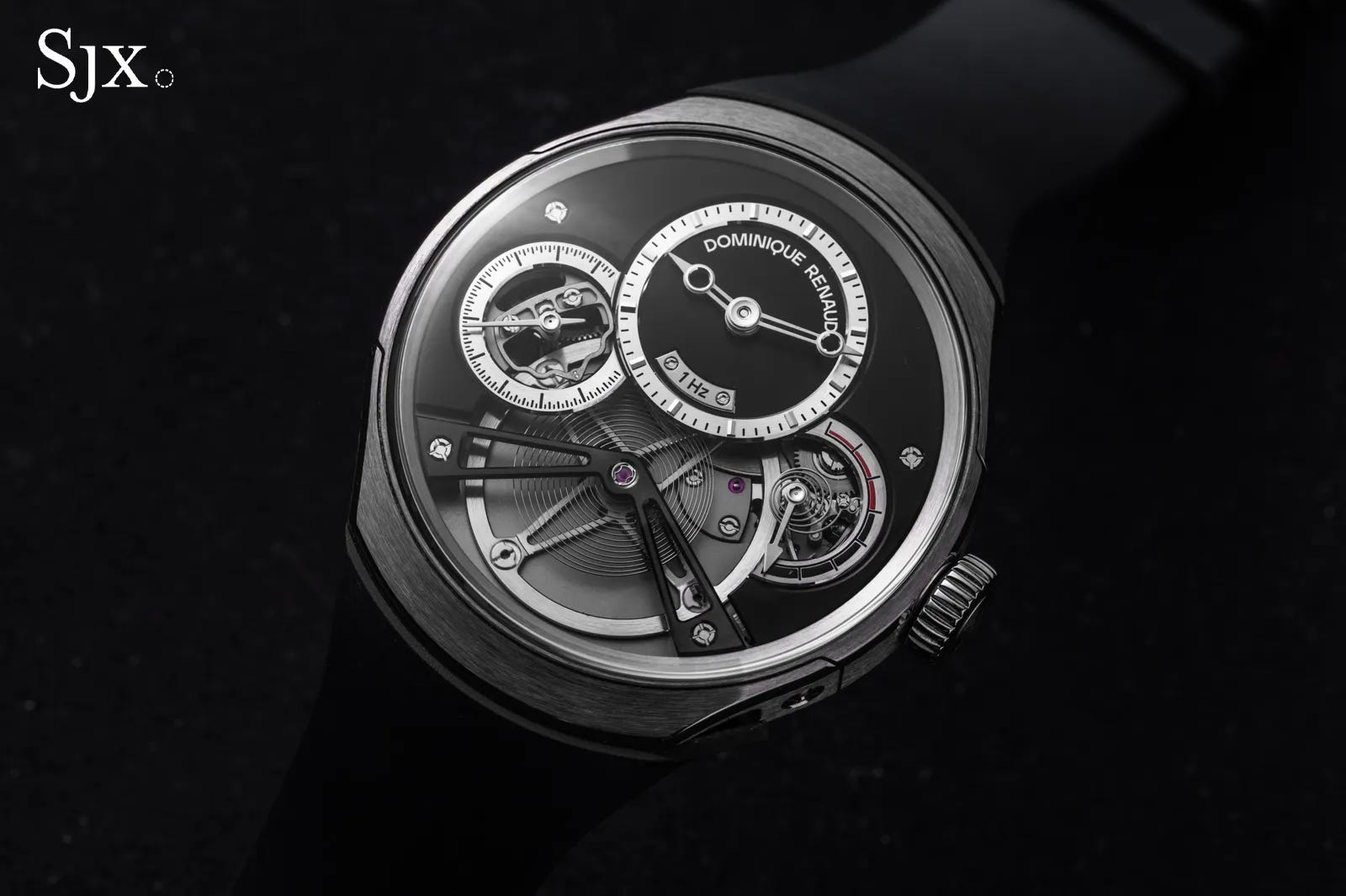
Dominique Renaud Pulse 60
Dominique Renaud’s Pulse 60 revives a slow-beating 1 Hz balance as a deliberate alternative to today’s high-frequency norm. The watch centers on a large 20mm titanium balance and a proprietary torque indicator, producing a hypnotic swing and a seconds hand that advances in two steps per second. Despite the low frequency, it’s engineered for real-world performance with a 96-hour power reserve and manual winding. The pod-like titanium case and interchangeable rubber straps (with optional 18k rose-gold lugs) reinforce the watch’s industrial-futuristic, collector-oriented positioning.
G-Shock
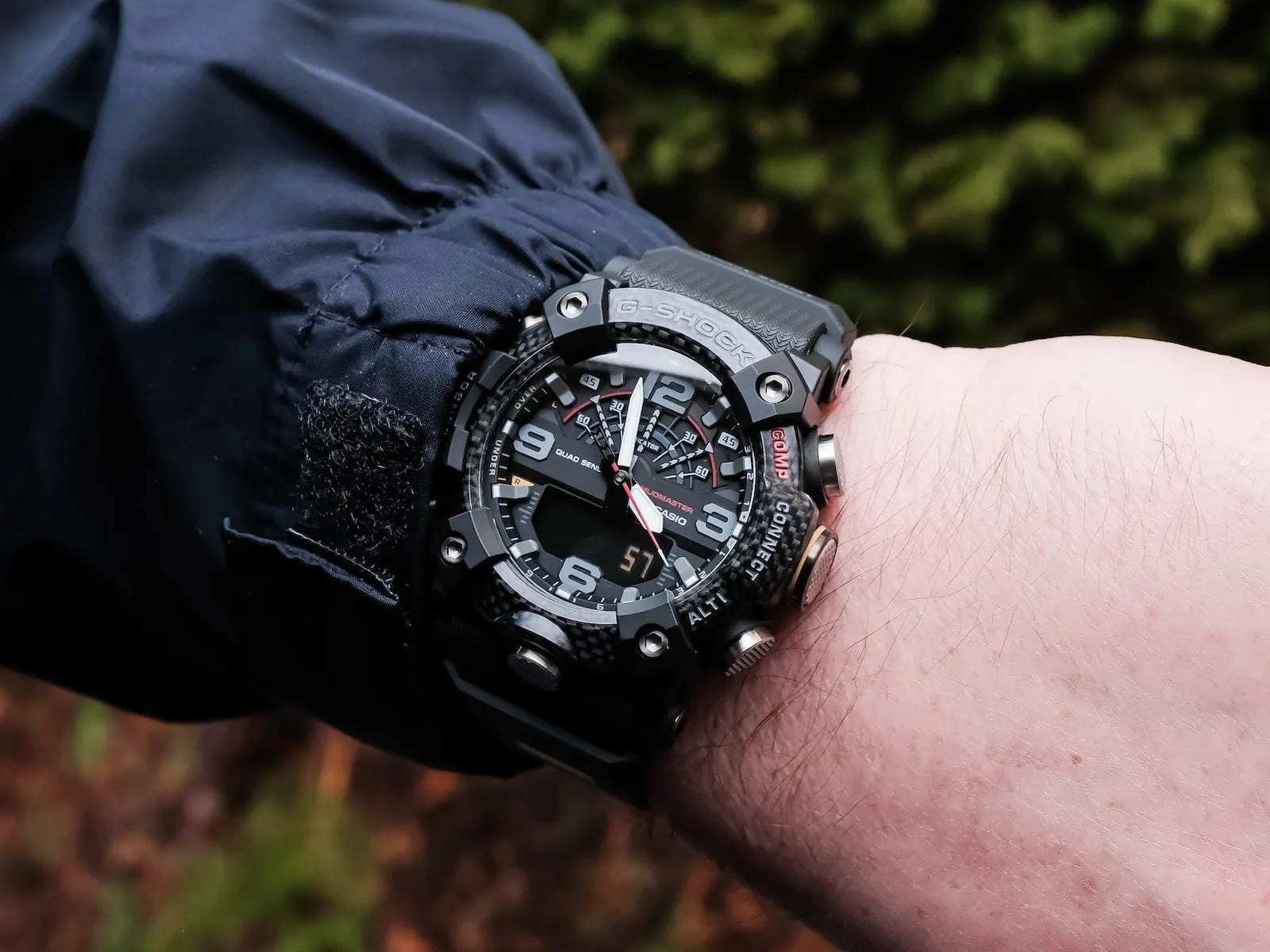
G-Shock Mudmaster Review: Reliable and Built for the Serious Tool Watch User
The G-Shock Mudmaster GGB100X-1A is designed as a rugged tool watch, pairing a carbon-reinforced, layered case construction with 200m water resistance for harsh conditions. Its bold analog hands and clear digital readouts make the extensive feature set—compass, altimeter, barometer, thermometer, step tracking, and Bluetooth—surprisingly usable for a watch with this many functions. In daily wear, it can be a dependable timekeeper with practical extras like a stopwatch and occasional temperature checks, even if many advanced features remain “on standby.” The large size and thickness give it real presence and tend to suit larger wrists best, while the resin strap keeps it secure.
Roger Dubuis
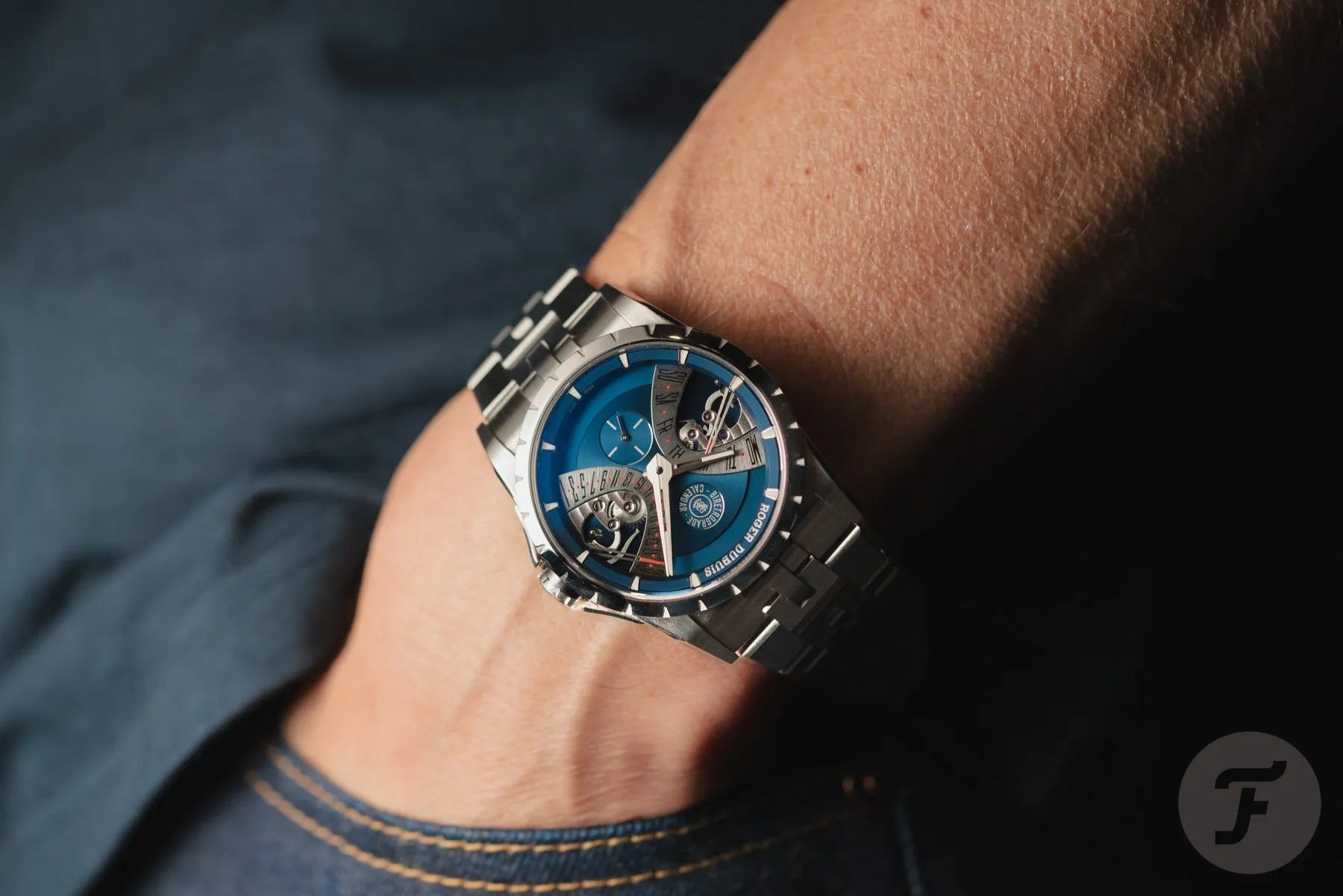
Hands-On With The Roger Dubuis Excalibur Biretrograde Calendar In Steel During Watches And Wonders 2026
The Excalibur Biretrograde Calendar in steel presents Roger Dubuis’ signature sporty high-horology style in a more wearable 40mm stainless-steel case with a “Cosmic Blue” dial. Its retrograde day and date displays add animation and character, while the multi-link bracelet contributes to comfort and a more versatile on-wrist feel. Power comes from the in-house RD840 automatic caliber with a 60-hour power reserve, visible through a sapphire caseback alongside extensive finishing. The watch emphasizes craftsmanship and brand codes—down to Geneva Seal certification and sporty red accents—while positioning itself as a comparatively approachable entry into the line.
Tudor
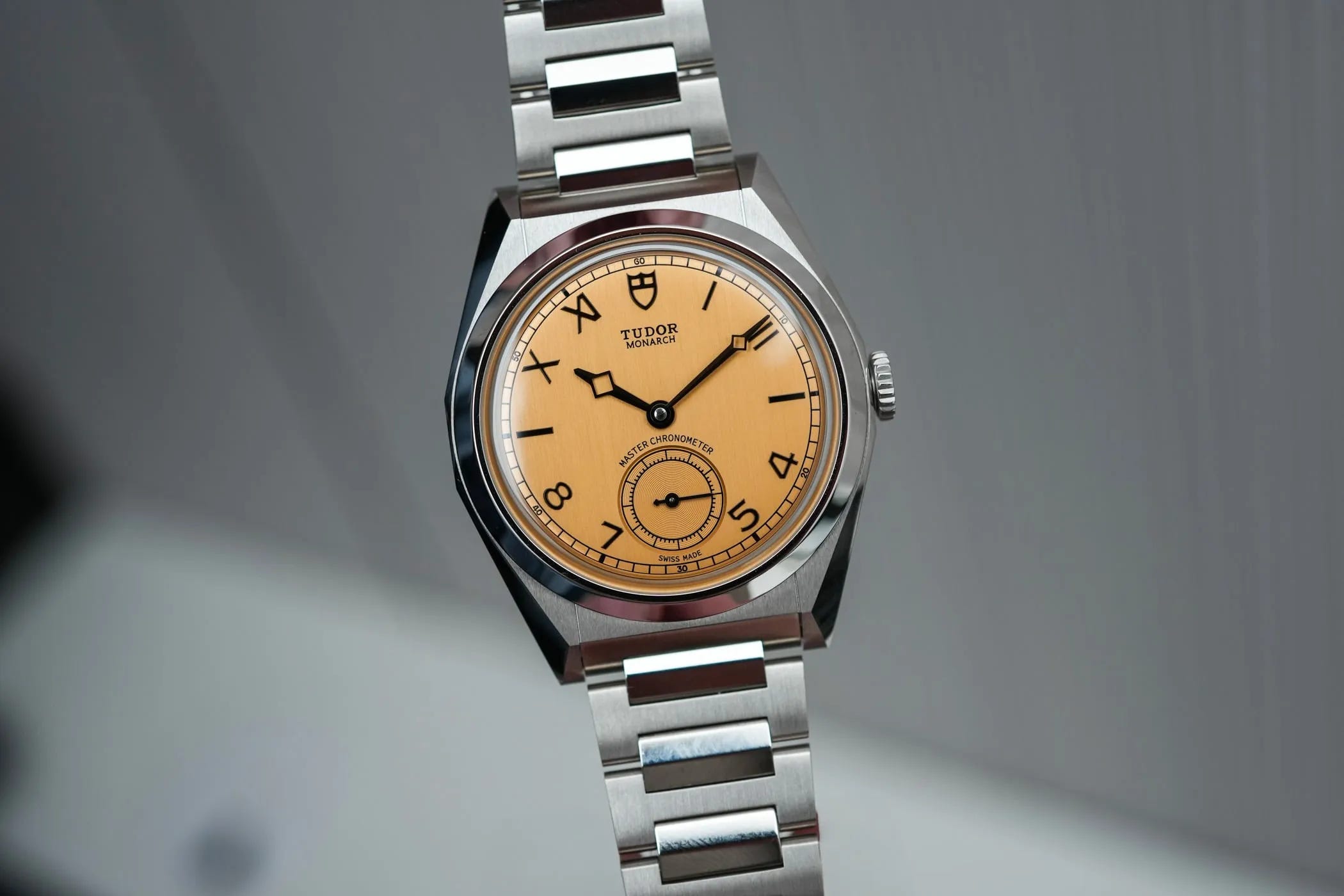
Hands-On: The Tudor Monarch, an Unexpected yet Succesful Return
Tudor brings back the Monarch name for its 100th anniversary with an all-new sporty-chic model that sits higher in the lineup without leaning heavily on retro nostalgia. The 39mm barrel-style case is sharply faceted yet classically constructed for strap changes, and it’s built for everyday durability with 100m water resistance and a screw-down crown and caseback. The standout is the dark champagne “papyrus” dial using an error-proof/California layout and a small-seconds display at 6, intentionally omitting a date for cleaner balance. Inside, the Kenissi-based MT5662-2U adds small seconds while keeping a 65-hour reserve and modern specs, paired with a bracelet featuring T-Fit micro-adjustment.
Yema
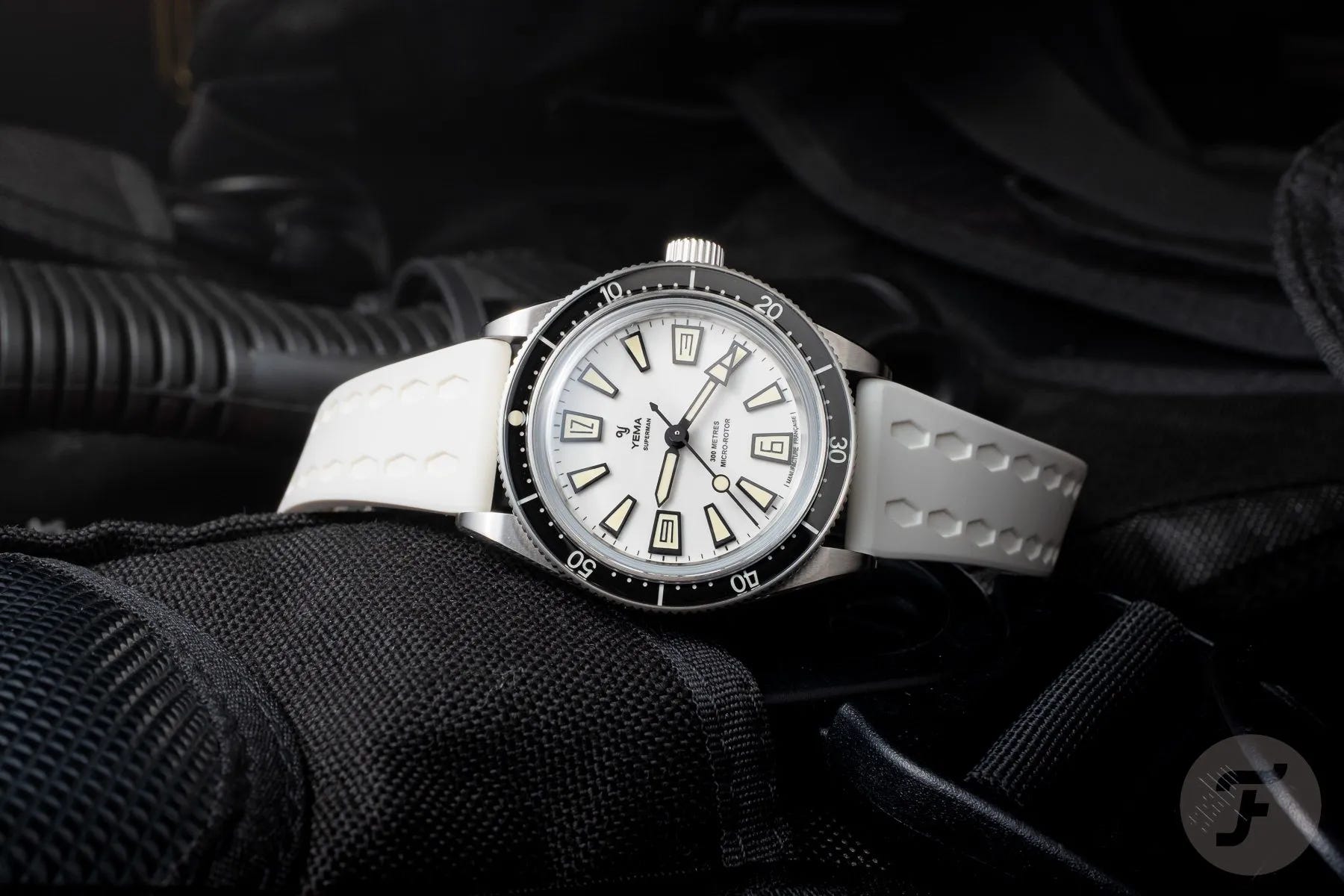
Hands-On With The Yema Skin Diver Slim Full Lume CMM.20 Limited Edition
Yema’s Skin Diver Slim Full Lume CMM.20 Limited Edition modernizes a classic dive-watch template with a 39mm case, 300m water resistance, and a full-lume dial that glows bright blue while the markers and hands glow green for contrast. It’s powered by Yema’s in-house CMM.20 movement running at 4 Hz with a 70-hour power reserve, finished in black to complement the black sapphire bezel insert. The luminous white FKM Viton strap extends the nighttime effect and adds a bold, playful counterpoint to the retro-styled markers and distinctive numeral accents. Limited to 400 pieces, it’s positioned as a collector-friendly blend of vintage inspiration, contemporary materials, and a high-impact lume concept.
Comparing Time
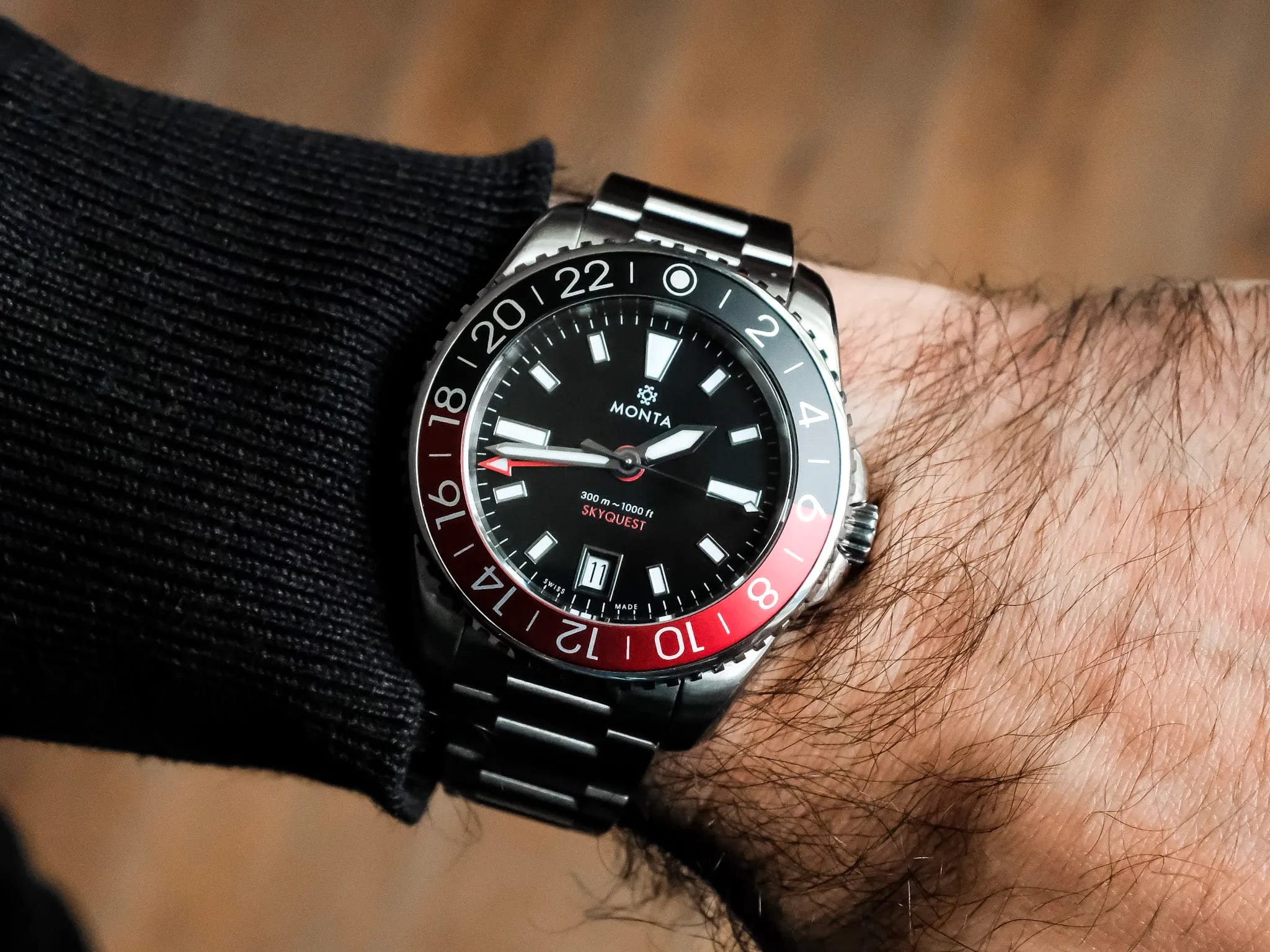
Microbrand GMT Watch Showdown: Monta Skyquest vs Jack Mason Strat-o-Timer
This comparison weighs the Monta Skyquest against the Jack Mason Strat‑o‑Timer across design, wearability, build quality, and value. The Monta is positioned as the more premium, refined option, emphasizing superior finishing, a high-quality bracelet, strong crystal/AR treatment, a 55-hour power reserve, and 300m water resistance. The Jack Mason is framed as the lighter, more tool-forward pick thanks to its Grade 2 titanium construction, flyer-style GMT functionality, and a comfort-first, casual-wearing approach with 200m water resistance. The conclusion is that Jack Mason delivers better value for most buyers, while Monta makes the case for those prioritizing a more elevated feel and finish.
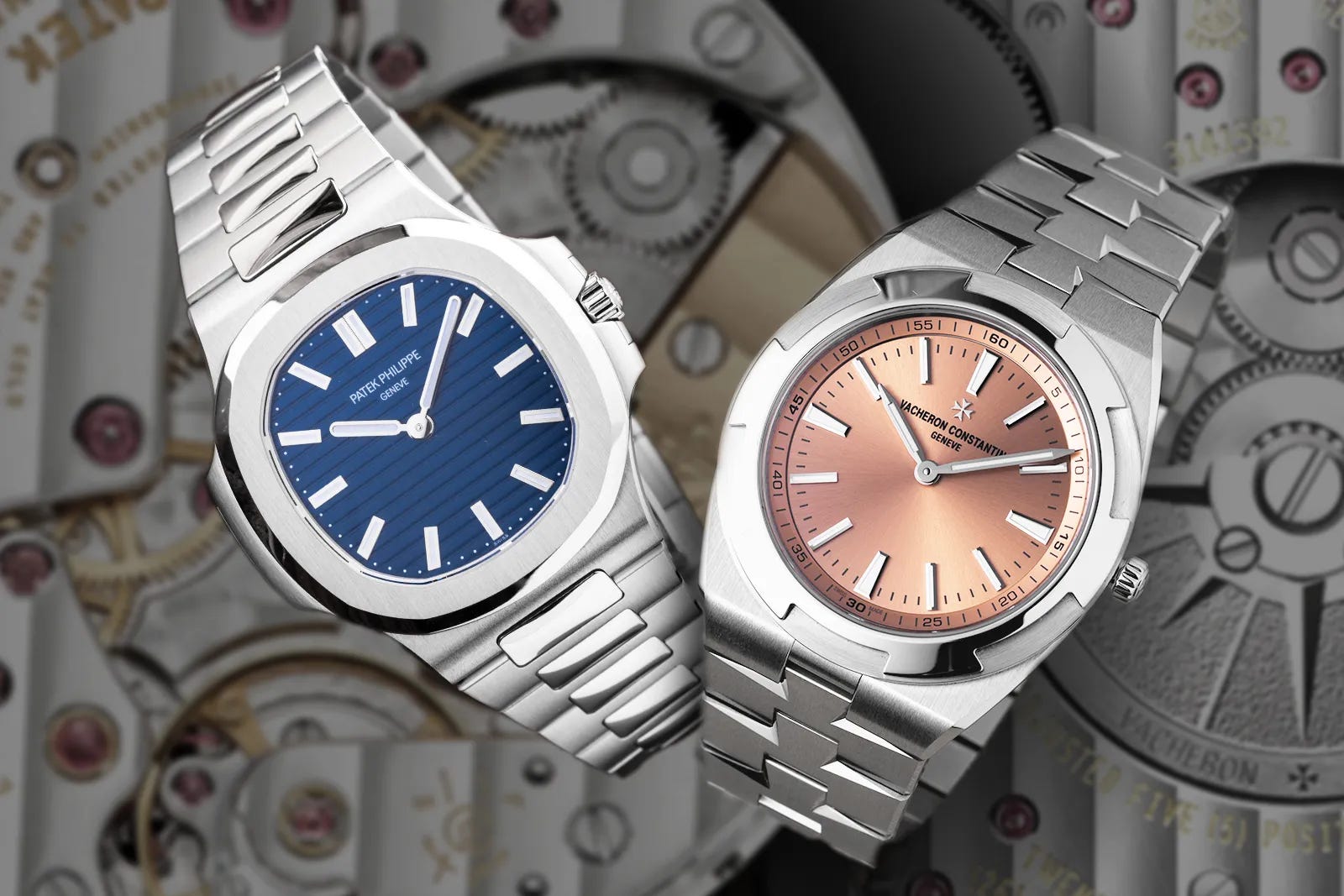
Face Off: Patek Philippe Nautilus 5610P & Vacheron Constantin Overseas Ultra-Thin
This face-off spotlights two limited-edition platinum sports watches with similarly slim, micro‑rotor automatic movements and a clean two-hand, no-date layout: the Nautilus 5610P and the Overseas Ultra‑Thin 2500V. The Nautilus leans into its classic 1976-derived identity with a navy dial and familiar bracelet design, while the Overseas differentiates with a salmon dial, Maltese-cross bracelet, and strap interchangeability for a more contemporary vibe. The article notes pricing is close, with the Overseas carrying a slight premium tied to its smaller production run. On the technical side, the Nautilus’ Cal. 240 offers a 45-hour reserve, while the Overseas’ newer Cal. 2550 stretches to 80 hours with bidirectional winding, giving Vacheron a functional edge alongside comparable high-end finishing and platinum execution.
Watches and Wonders 2026

Observations and Takeaways at Watches & Wonders 2026
Watches & Wonders 2026 was dominated by Rolex’s massive presence and attention-grabbing releases, including enamel-on-ceramic Daytona dials, a colorful “Jubilee” Oyster Perpetual dial, and an updated Yacht‑Master II with a refined caliber and regatta countdown. Across the fair, Cartier, Lange, and Patek Philippe leaned into both heritage and high complication, with highlights like Cartier’s Privé Les Opus, a “Lumen” perpetual-calendar tourbillon from Lange, and Patek’s Celestial Sunrise/Sunset with clever daylight-saving adjustments. Technical progress also stood out, from TAG Heuer’s compliant-mechanism chronograph concept to IWC’s more user-friendly perpetual calendar setting system, while brands like Tudor and Grand Seiko delivered strong spec-to-price offerings. Overall, the show balanced artistic experimentation, mechanical innovation, and a wide spread of pricing—from ultra-high complications to comparatively accessible enthusiast picks.
Opinion Time
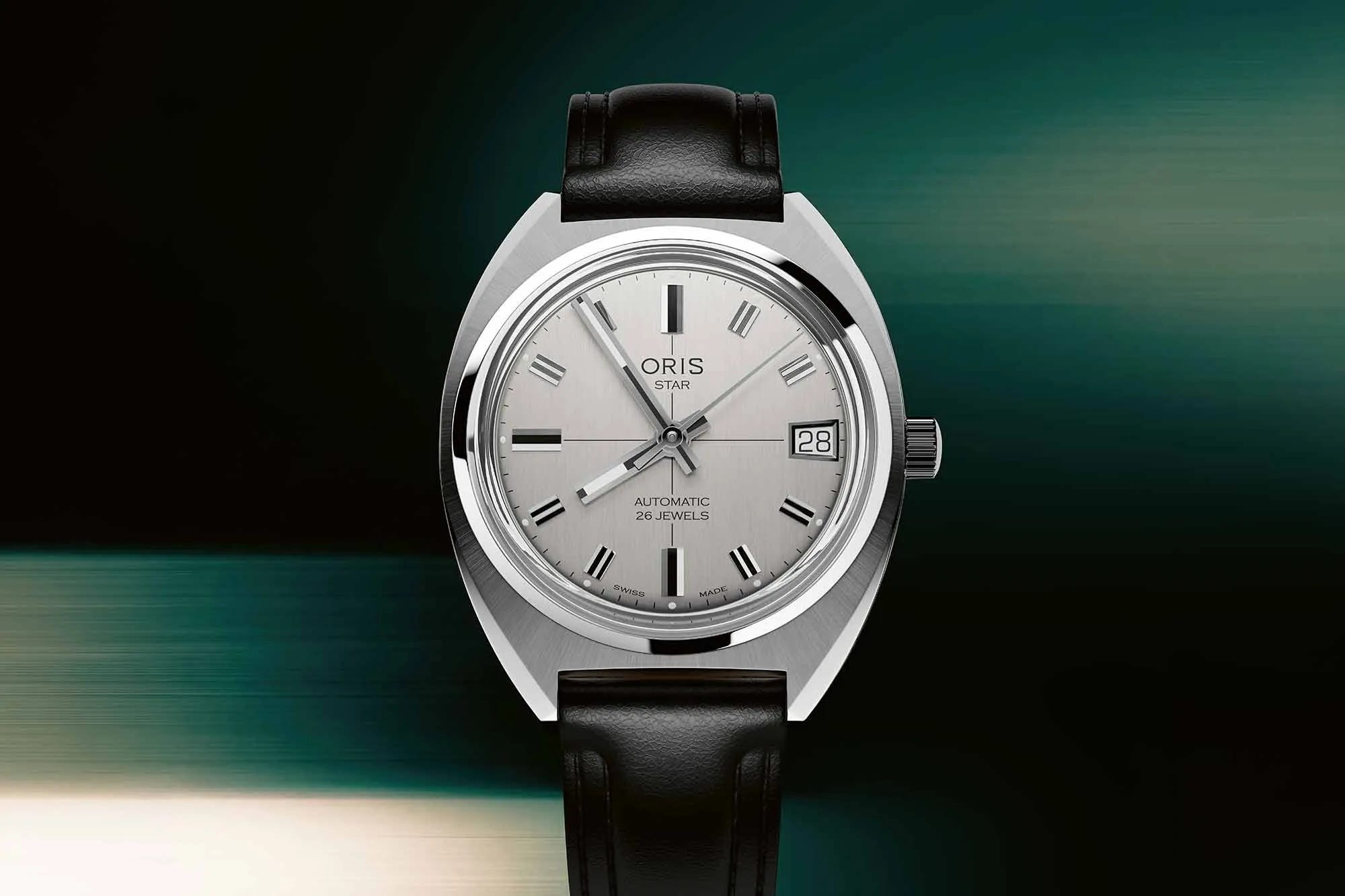
Opinion: What “Fair Pricing” Actually Means at Watches & Wonders
This opinion piece argues that although Watches & Wonders pricing can feel inflated, many releases are “fair” when viewed through the lens of design, finishing, brand positioning, and production realities. It points to watches like the Oris Star as an example of accessible value, delivering a faithful vintage-inspired concept at $2,300. It also frames higher-priced releases—like Tudor’s Monarch at $5,875—as justified by upgraded materials, more complex finishing, and a new Master Chronometer movement that elevates the model within the brand’s range. The takeaway is that rising prices reflect a bigger collector base and stronger demand, which in many cases supports the price increases even if they feel out of reach.
Event Time
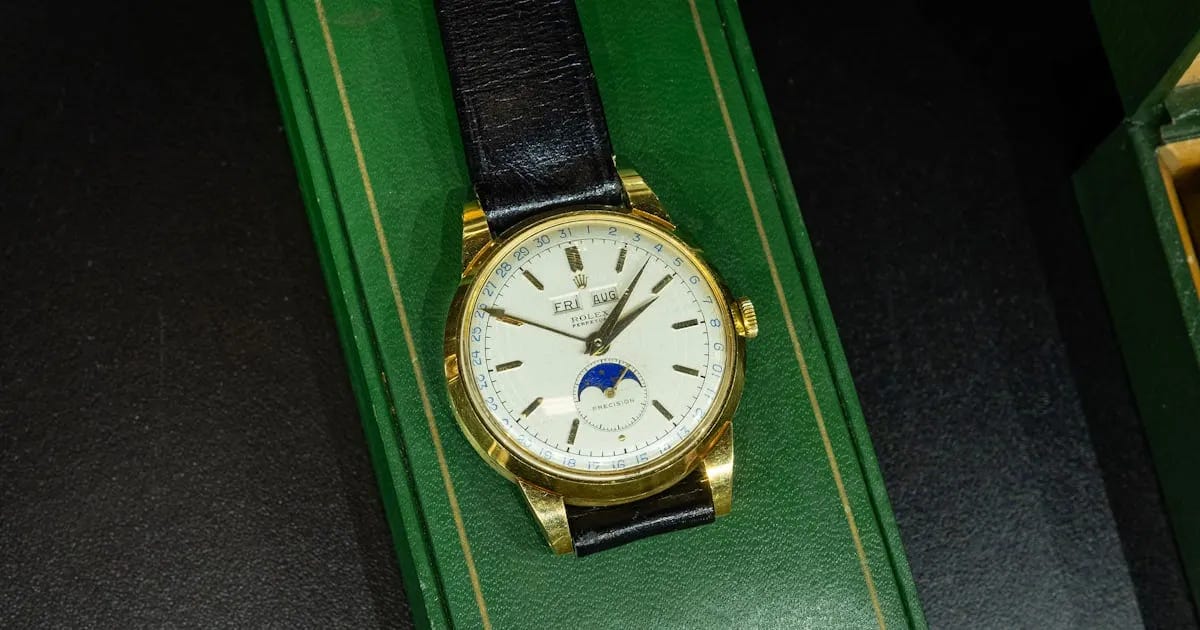
Photo Report: The Miami Beach Antique Show 2026
The Miami Beach Antique Show 2026 brought collectors and dealers from around the world to the Miami Beach Convention Center for six days of vintage watches and broader antiques. Attendees encountered everything from celebrated “trophy” references to rarer neo-vintage pieces from brands like Audemars Piguet and Patek Philippe, alongside growing interest in niches such as Piaget, vintage Movado, and unusual finds like a braille-enabled Patek Calatrava. The report also notes how higher gold values are helping push prices up, while collector conversations increasingly center on specific, highly targeted “hunt list” pieces—including overlooked or prototype-adjacent watches. With 800+ exhibitors and standout moments like the Davidoff × Menta GTG, the show read as a snapshot of a market defined by variety, specialization, and shifting price dynamics.
Watching Time - Videos

The Big Watch Brands Are In Big Trouble - YouTube
Andrew and James discuss how smaller independent watchmakers are pulling attention (and money) away from established big brands, driven by exclusivity, craftsmanship, and a post‑pandemic shift away from flipping. They note how hype and scarcity have pushed some independents far above retail, but warn of downsides: long waitlists, servicing challenges, and the risk that a founder-led brand’s appeal could fade if the founder steps away or the brand is acquired. They also observe a growing wave of new independents producing similar designs, making the space feel crowded and harder to differentiate.

The Best And Worst From Watches & Wonders 2026 - YouTube - WatchGecko
This discussion-style recap runs through Watches & Wonders 2026 with the hosts’ picks for the strongest releases and the biggest letdowns, mixing one attendee’s on-the-ground impressions with broader commentary. Highlights span a wide range of brands (from Frederique Constant and Nomos through JLC, Vacheron Constantin, Cartier, and Rolex), with specific enthusiasm for Vacheron’s 1921 and an Overseas dual-time variant. They also praise clever engineering in a sporty Parmigiani chronograph that presents like a clean three-hander when the chronograph isn’t running. The “most disappointing” section calls out Tudor, Bremont (despite progress with Altitude), and Hublot, including criticism of an ultra-high jewelry Big Bang tourbillon priced around £945k/“1 million.”

Watches & Wonders 2026: The Good, The Bad & The Ugly… (My Honest Take) - YouTube - The Honest Watch Dealer
Charlie (The Honest Watch Dealer) gives a candid Watches & Wonders Geneva 2026 rundown framed as “the good, the bad, and the ugly.” The video focuses on overall trends and brand-by-brand reactions, aiming to separate genuinely compelling releases from marketing noise and hype. Rather than deep technical breakdowns, it’s positioned as a viewer-friendly guide to what’s worth caring about (and what isn’t) coming out of the show. The tone is intentionally direct, emphasizing practical takeaways for enthusiasts deciding what to follow after the fair.

The Hot Seat with Justin 🔥 | Episode 1: Dan Pividal | The Truth About the Secondary Watch Market - YouTube - HOT HOROLOGY
Justin launches HOT HOROLOGY’s “The Hot Seat” with guest Dan Pividal (Pivot & Spine), a rare/neo‑vintage dealer who shifted from retail into full-time dealing in 2014. The conversation digs into how the secondary market actually works—pricing mechanics, liquidity, sourcing, and how trust/authentication get handled behind the scenes. It’s presented as a no-fluff look at the realities buyers don’t always see when shopping or trading in-demand watches. Overall, the episode frames the market as relationship- and credibility-driven, with practical insight into what makes deals (and valuations) move.
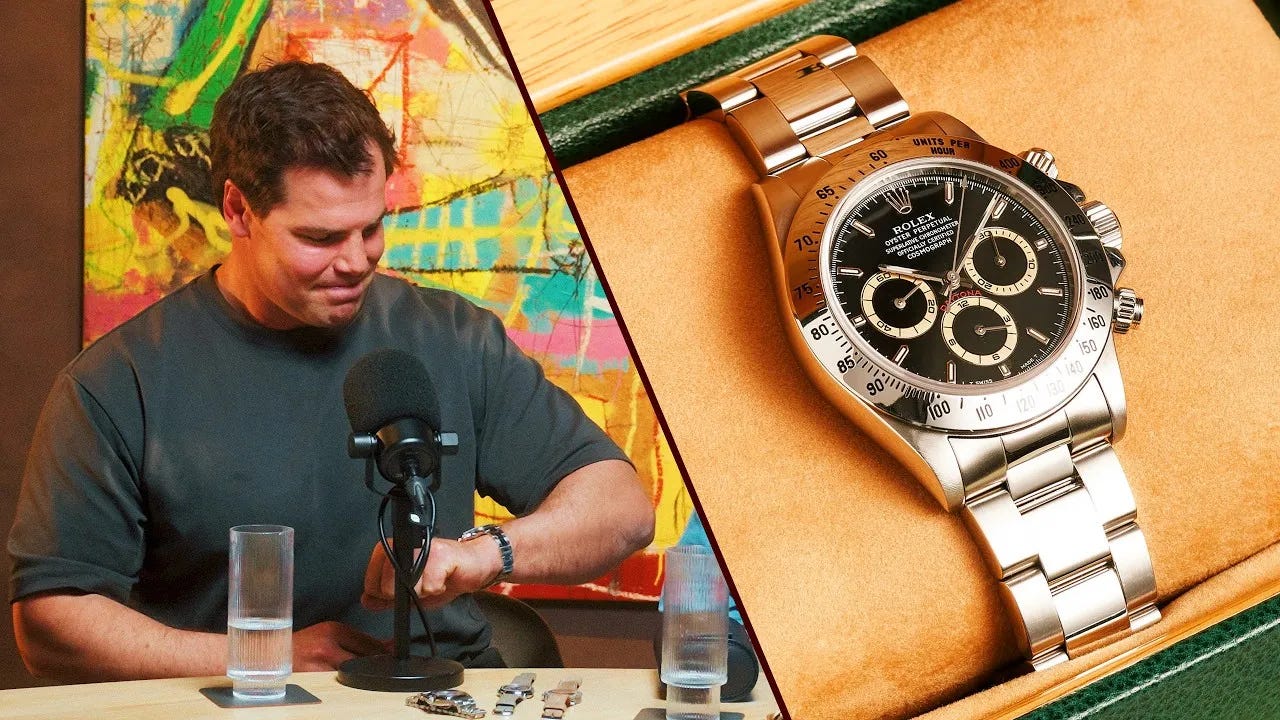
2 Weeks with a Grail Rolex Daytona... My Honest Take - YouTube
In this clip from the Four Married Men podcast, Justin shares a two-week real-world wear review of a “grail” Rolex Daytona. The focus is on how the watch feels and functions day-to-day after the initial hype wears off, including comfort, wrist presence, and the intangible “status” factor that keeps it so coveted. The takeaway is less about specs and more about lived experience—what genuinely surprises you (positively or negatively) once it’s on-wrist for a meaningful stretch of time. It’s aimed at collectors who want perspective beyond the mythology surrounding the Daytona.
Talking Time - Podcasts

Scottish Watches Podcast #774 : The Independent View With Pietro - Scottish Watches
This episode revisits Watches and Wonders through Pietro’s lens, focusing on how the independent-watch ecosystem extends far beyond the main fair into satellite showcases like Time to Watches, the AHCI, Chronopolis, and private hotel-suite presentations. Pietro calls out notable highlights ranging from technically ambitious independents (including Armin Strom’s minute-repeater resonance) to creative makers like Singer Reimagined and a roster of emerging brands. The conversation also touches on noteworthy releases from major houses—like a new Cartier Crash and the Bulgari Octo Finissimo—before shifting to community-building. It closes with Pietro introducing “Pietro’s,” a new London lounge meant to be a gathering space for horology rather than a purely retail environment.
BuyingTime at Auction
A few select current auctions that caught our eye on GetBezel.com
[Thursday’s auction watch, the 2015 Zenith Grande Class Tourbillon 45 White Gold / Black / Strap (65.0520.4035/21.C492) - was bid to $23,500 but did not meet its reserve. - make an offer]
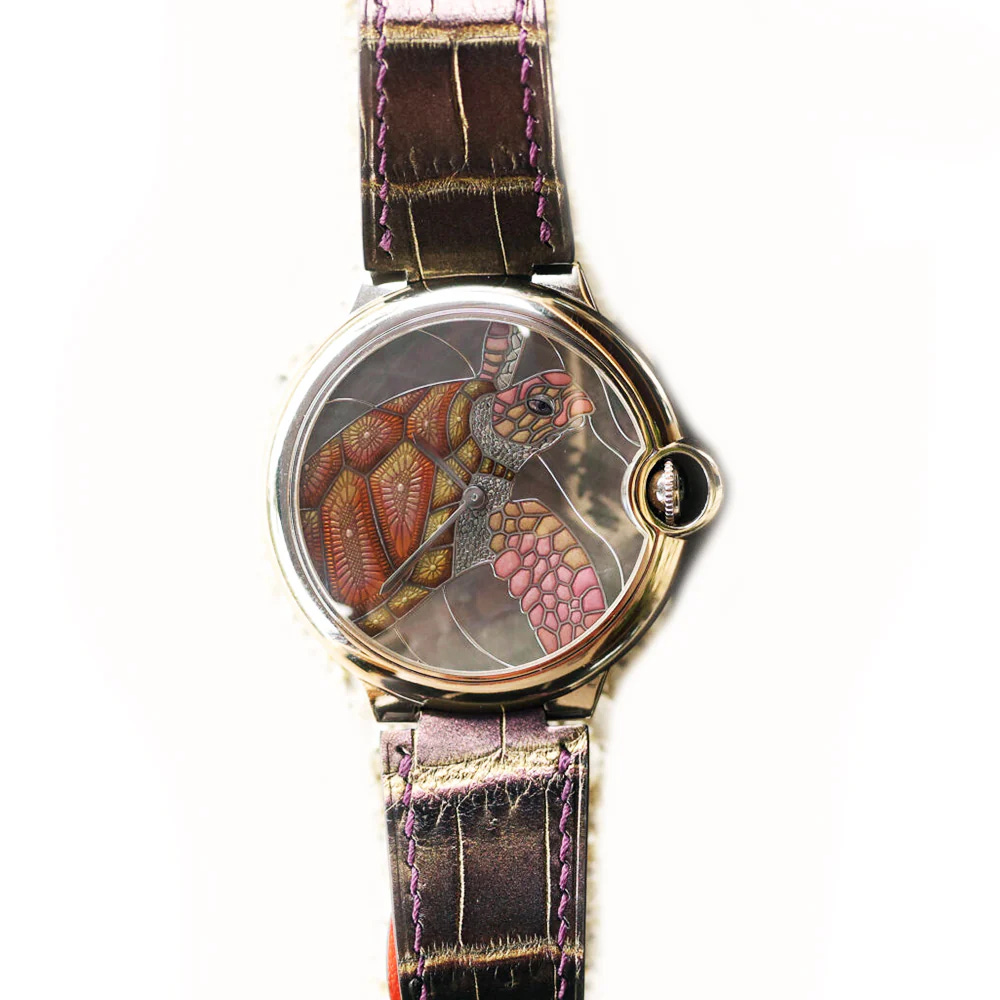
2011 Cartier Ballon Bleu de Cartier XL “Sea Turtle” 46 White Gold / Multi-Color Enamel / Strap - Limited to 40 Pieces (HPI00330)
Cartier’s Underwater Masterpiece Surfaces—The Ballon Bleu “Sea Turtle” That Was Never Meant to Be Seen Twice
There are Cartier watches, and then there are pieces that remind you that Cartier is, at its core, a jewelry house that occasionally bothers to tell the time. The 2011 Ballon Bleu de Cartier XL “Sea Turtle” falls squarely into the latter category—a watch that feels less like a product line extension and more like a one-off artistic flex that somehow made it into a run of just 40 pieces.
The Ballon Bleu itself, introduced in 2007, was Cartier’s answer to the modern round dress watch—soft, inflated case geometry, a signature crown guarded by a sapphire cabochon, and just enough visual distortion to make it unmistakably Cartier. But the “Sea Turtle” variant abandons any pretense of restraint. This is haute joaillerie disguised as horology, with a multi-color enamel dial depicting a sea turtle in motion, rendered in a way that feels closer to a miniature painting than a watch face.
Cartier’s métiers d’art pieces like this are typically produced in extremely small numbers, often for collectors who understand that the dial—not the movement—is the main event. The enamel work here is the story, requiring multiple firings and a level of craftsmanship that borders on obsessive. You don’t mass-produce something like this; you survive it.
At 46mm in white gold, the case gives the dial room to breathe, and that’s critical. Smaller and it would feel cramped; larger and it risks tipping into novelty. Instead, it lands in that peculiar Cartier zone where something objectively oversized still reads as refined because the brand simply refuses to acknowledge conventional sizing rules.
Inside, the automatic 1904 MC movement is doing its job quietly and competently, which is exactly what it should do. No one is buying this watch for a technical breakthrough. The movement is the supporting actor here, delivering reliability while the dial gets top billing.
In terms of value, this is where things get interesting. Standard Ballon Bleu models can trade anywhere from the low five figures upward depending on material and complications, but once you enter the world of Cartier’s rare artistic pieces, pricing becomes far less linear. Highly embellished or limited-production Cartier watches regularly push into six-figure territory, especially when enamel work and precious metals converge. A limited run of 40 pieces with this level of craftsmanship puts the “Sea Turtle” firmly in that collectible tier where comparables are scarce and buyer conviction matters more than comps. The watch is currently on Chrono24 with a listing price of $51,750.
Condition here is solid, with excellent dial integrity—which is the only condition metric that truly matters for a piece like this. Minor wear on the case and strap is expected and largely irrelevant; you’re not polishing enamel art back to life if something goes wrong, so the fact that the dial is described as excellent is the headline.
What you’re really looking at is a crossover object. Part watch, part art piece, part conversation starter that quietly signals the owner understands Cartier beyond Tanks and Santos models. This is not entry-level Cartier. This is insider Cartier.
As the auction heads toward its April 28 close at 4:45 pm EDT, the key question isn’t whether it’s worth the money—it’s whether the right buyer is in the room. Because with pieces like this, value is less about market averages and more about how badly someone wants a sea turtle painted in fire and trapped forever under sapphire.
And if you’re asking whether another one will come along soon, the answer is simple: it won’t.
Current bid: $26,000